Not Your Typical Fraternity– The Men of Alpha Gamma Rho

For the past two years, I have had the privilege of getting to know the great group of guys that belong to the Alpha Gamma Rho (AGR) fraternity at North Carolina State University. I was introduced to them through my boyfriend, Garrett (for a post on what dating a fraternity guy is like, her is the link) who is a member of the fraternity.
rush

What I love about this group, is they aren’t your typical fraternity. Sure, they like their tailgates and bow ties like any other good fraternity man would, but they also all have a common interest and passion in agriculture. So, while they are bonded in brotherhood, and all of have the commonality of being in college together, they are also bonded through agriculture. They don’t all have the same interests. Their majors include agriculture education, biological engineering, animal science, poultry science and everything in between. Some come from backgrounds of sweet potatoes and others come from pigs and cows. One thing is certain, they all love ag, and are all dedicated to both their fraternity and to the agricultural industry.

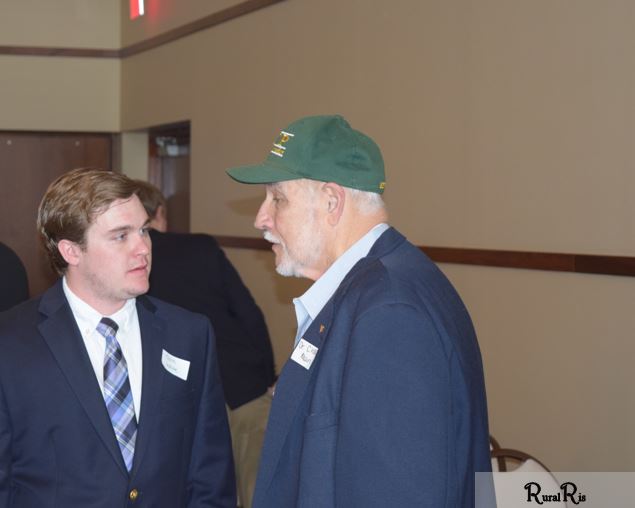
This weekend, AGR had their annual Founder’s Day banquet. This is an event to bring together AGR alumni from years past,  current brothers, and families of the brothers. It is a special day for all of the guys as they review both their struggles and achievements of the past year and share that with the alumni and their families. It only takes a few minutes in that room to know that the AGR men are passionate about their organization, each other, and an agricultural future.
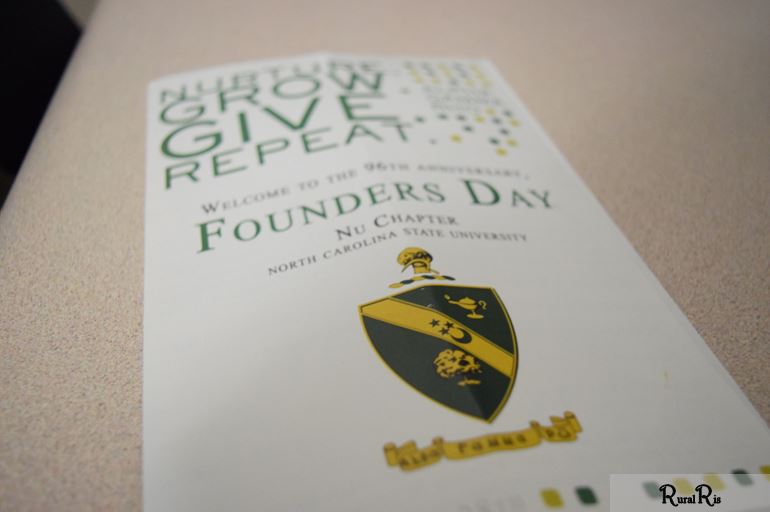
program

group

colin

award

At the luncheon, there were two guest speakers–Jason Brown and Bryan Blinson. Jason Brown is a former NFL player, who has recently retired and turned to farming. Jason has gone from the football field to the farming field and is loving the change. He has a passion for growing food and then donating it to those who are hungry. Jason was very honest with the group that he was not an experienced farmer. He was still learning and was doing all he could to learn. The AGR guys announced that they planned on going to his farm and volunteering an entire day’s worth of work to help Jason. After the event was over, I heard many vocalize how excited they were in helping out.
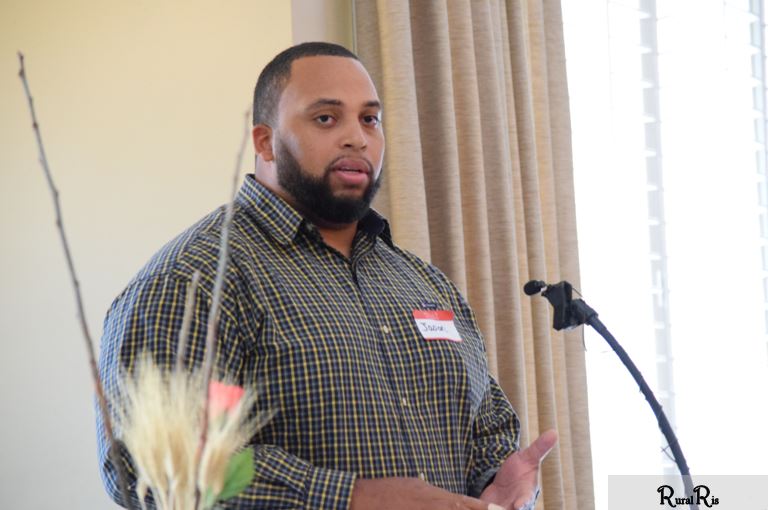
Jason Brown
Jason Brown

The second speaker is also a local farmer. Bryan is heavily involved in the cattle industry and an AGR alumnus. He reminisced about his AGR experiences and all that it meant to him. Something that stuck out to me was when Bryan highlighted the uniqueness of AGR. He explained that in other settings, he was the only ag guy, and would get picked on, but when he joined AGR, he was surrounded by like-minded people who all had the same interest. AGR was not your typical fraternity.
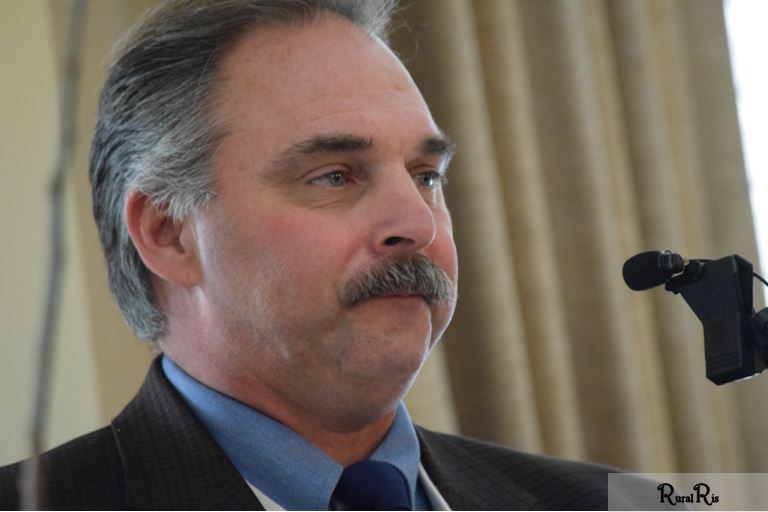
Brian Blinson
Bryan Blinson

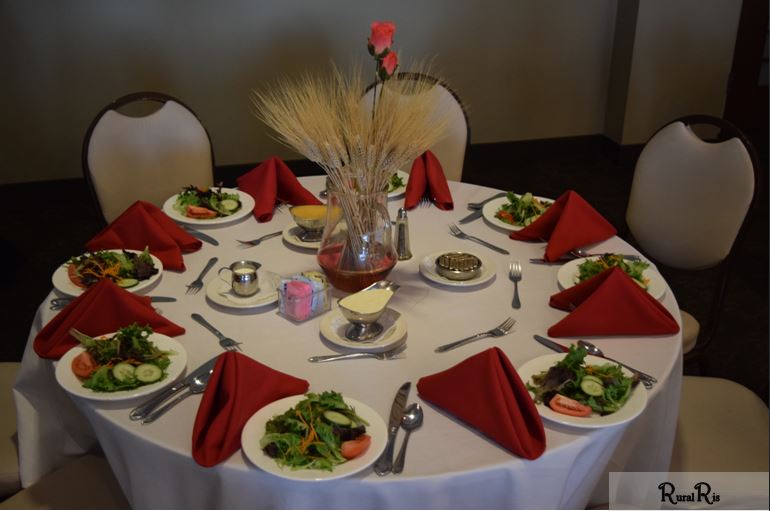
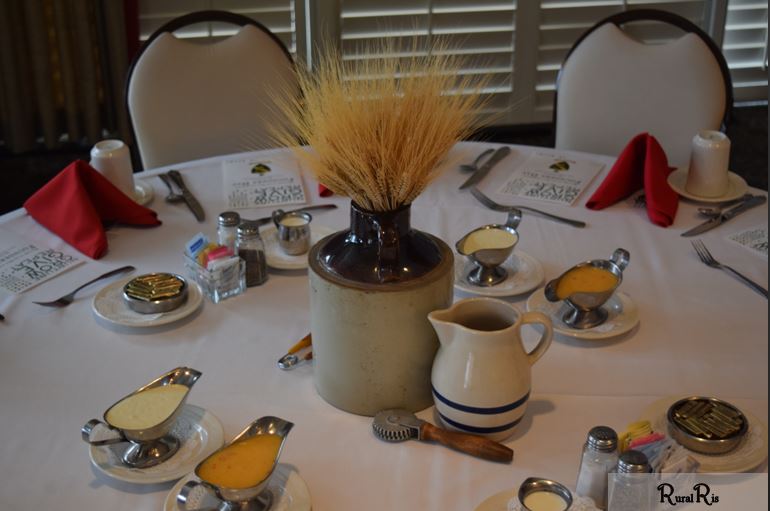
In addition to being able to get to know the AGR men and attend Founder’s Day, I was also able to have a part in making the event happen. I was excited to be organizing centerpieces and decorations. After many hours on Pinterest (because that is the only logical way to prepare), Garrett and I decided on an antique theme. His grandma has countless antiques, so we borrowed two boxes filled with kitchen utensils, churns, jars, and so much more. I ordered wheat (this is an AGR symbol) and there was also pink roses purchased (another AGR symbol). I went out with my brothers and cut sticks from the woods as decorations too. I was so nervous that it wouldn’t come together, but it all turned out great! The antique pieces turned into many a conversation piece. I’m very thankful that the guys let me have some creative fun at their event.
decordecor2

The guys of Alpha Gamma Rho are a stellar group of men who are already doing some pretty awesome stuff in the agriculture world. With the 3rd highest fraternity GPA at the university and an award for excellent financial management, they take their responsibilities seriously. They truly fulfill their mantra of “Making Better Men.” Thanks guys for introducing me to “not your typical fraternity”

 

I Have a Passion for Agriculture, but I Didn’t Go to College for Ag

Although I love agriculture, I chose not to get an agricultural specific degree in college. I chose to go to a college for my undergraduate degree that didn’t even have an agriculture program on campus, but that didn’t mean I left agriculture behind me. I brought it with me to school.

For as long as I can remember, I wanted to be a vet. It made sense to me. I loved animals, and loved working with all the livestock on my farm. Despite passing out at the sight of blood, I still was determined to go to vet school. I had it all planned out. I would attend North Carolina State University and double major in animal and poultry science. I’d graduate and then head to vet school to specialize in large animals. In high school, I was in preparation mode. I went to any animal and poultry science camps I could go to. I was taking advanced chemistry, but one day, my fast track came to a screeching halt.

I couldn’t tell you the exact day, but I came to the realization that I hated science and math. I got queasy at blood, and I didn’t want my passion of animals to become something that I viewed as just work. So, I did something incredibly scary–I changed my entire future plans. I didn’t even keep the same college I had planned on. I went out on a limb, and it ended up being the best thing of my life.

My new chosen major was communication at a small rural liberal arts college–Campbell University. I fell in love with both the campus and the major. I chose to concentrate in public relations and health communications. Although I was not in an agriculture degree, I brought the ag with me. I wrote as many papers as I could on communication in agriculture. My honors thesis was about creating transparency in the ag industry. I was even able to go New Orleans to present that paper where  many in the audience asked me about agriculture. They were inquisitive, and I was in a position to answer those questions which was super exciting!

M_G_0018

After graduating from my undergrad, I decided to go on to get my masters in communication. Although, I looked at degrees that were specifically agriculture communication, I chose to go to North Carolina State University (this time I was not looking at animal science). I am currently in my second semester there, and have written every research paper on agriculture communication.

While I love communication, it has been a bit bumpy at times incorporating agriculture into my studies. Typically, I am the only one with my interests. Often times I have to explain things, that to me are common knowledge. My papers often turn into a bloody mess from comments asking for elaboration on a term and to cite more. I also get a lot of comments that I sound like I am a public relations person for agriculture. I suppose, in a sense, I am. My passion just comes through. Thankfully, all of my professors have been open minded and really supported my interests!

Marisa_Grad_State4

While it can be frustrating to explain a lot of what I write and really work hard to explain my concepts, it has also meant I have been able to share my knowledge and passion with others. In both undergrad and grad school, I have had professors make an effort to visit me at the fair to watch me show animals and learn more about what I do. I have been able to stand in front of audiences and be a”public relation” person for ag, and answer questions. I have had the chance to hear what other people think about agriculture and try to understand that point of view. That has been an amazing aspect of majoring in a non-agriculture major–the discussions that have developed.

So, no, I didn’t major in agriculture. As much as I love it, that was not the path for me.  I chose to bring the ag with me to college, but that has been the best decision of my life. Sure, it has been a bit bumpy, but I have been able to share my passion with more than my fellow farmers. I brought agriculture to the classroom, and I hope to bring more communication to agriculture.

1511005_813228272024317_193577865_n


Farmers Take Field Trips Too

Sometimes I think I have a fairly good grasp of agriculture…sometimes. Most of the time, though, I am keenly aware that there is A LOT I don’t know. I may have competed in national competitions that look at how much you know about livestock, and won, but I will still tell you there is a lot I don’t know. Even the things I feel I have a good grasp on, there is always more to be learned from others. That is why farmers take field trips, and I got to go on two this past weekend.

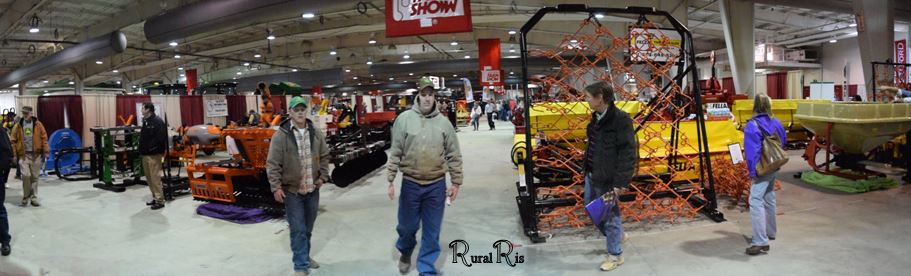
The first one was to the Southern Farm Show in Raleigh, NC. farm shwThe whole family went to tour the many buildings filled with farming equipment. There were tractors of every color and size, cattle chutes, irrigation systems, trailers, trucks–you name it, they probably had it.

farm showDespite being around farms all my life and living on one, there was some stuff, I had no clue what it was. My poor dad was bombarded with questions from my brothers and I. If you knew how much stuff was there, you’d feel for the amount of questions he had to field.

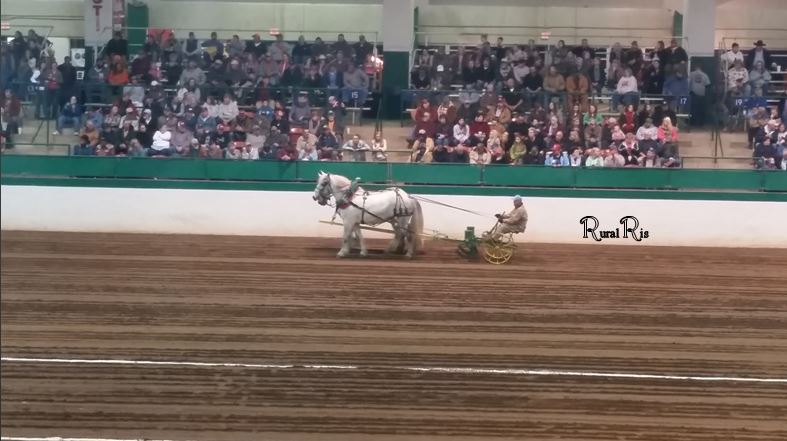
After the boys had climbed on almost every tractor, combine, and Bobcat, and questions had subsided, we made our way to the horse pull and coon jump. We watched draft mules and horses pull max weights of 6,500 pounds and 10,000+ pounds respectively. It was amazing to see their grit and gumption to move the sled with weights. We also got to see the coon jump which is where mules jump from a stand still over a pole. The winner of that contest, jumped 54 inches flat-footed. The coon jump contest originated with raccoon hunting. Mule owners would brag about how high their mules jumped chasing the coons. To prove themselves, they started coon jumping. Neat, huh?

horse pull


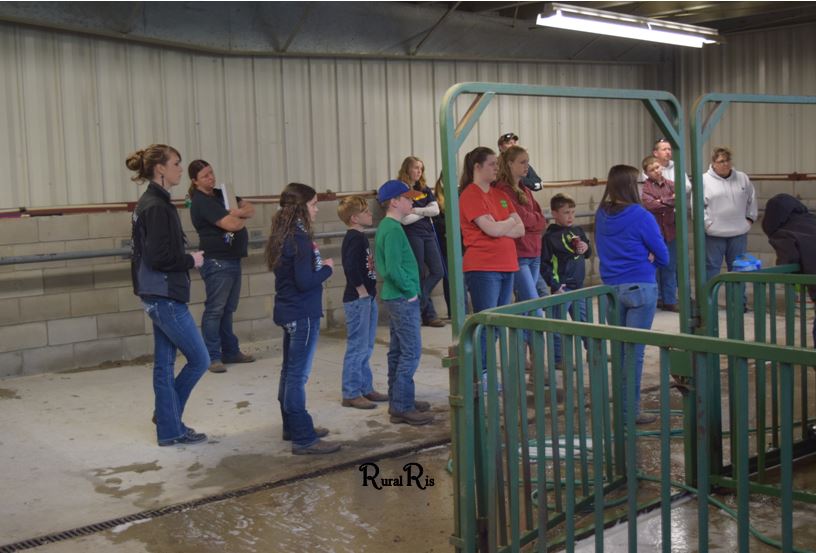
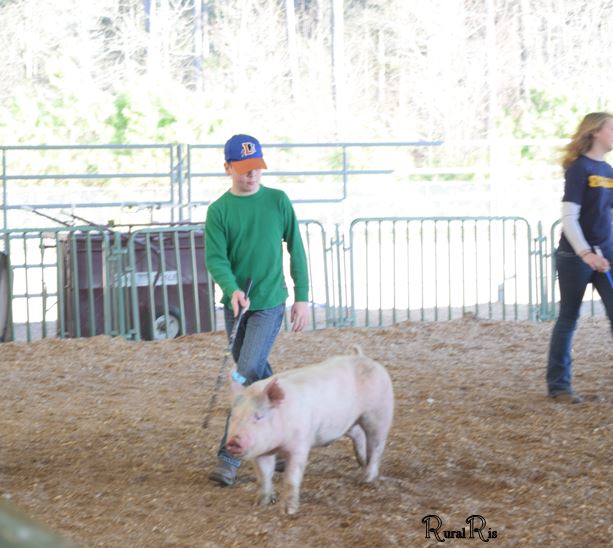
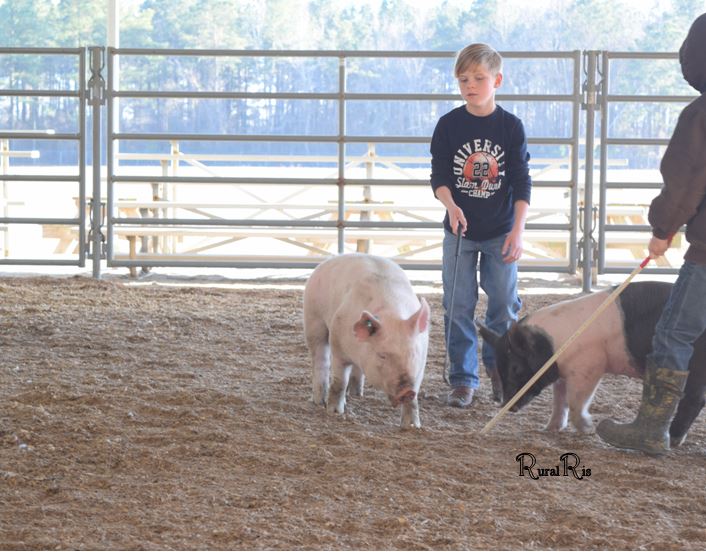
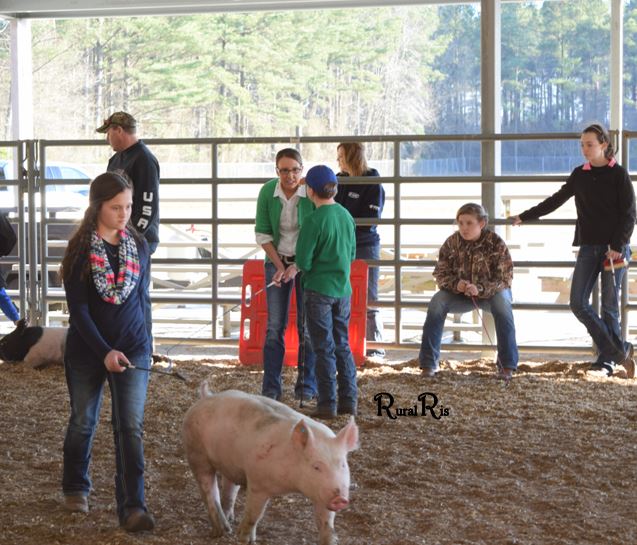
The second field trip was to Rocky Mount, NC to attend a 4-H show pig clinic. Mom, the boys and I went. pig clinicWe had a great instructor who talked about everything from picking out your pig, to feeding it, to showmanship. While a lot of it was review for me, there was some things that were brand new too. wasThe boys learned a lot too. They created a skit with the other youth about the right and wrong way to show a pig. Both Isaac and Gideon got on all fours to pretend to be the pigs. They were also able to reverse roles and practice showing with actual pigs too. It is a great warm up for the up coming show in April. issac and

gid

They asked great questions too.

questions

This morning they started to put their new knowledge to use  when they worked their own pigs. I quizzed them a bit too. “What did Mrs. Cally say you should do after walking the pigs?” They remembered after a little searching in their memories.


Even though we live on a farm everyday, we don’t know everything. There will always be someone who has a piece of knowledge that we don’t and it is important to seek out the opportunities that teach us new things. Not only is it fun, but we better ourselves in the process. Field trip for the win!

A World Without Ag Wednesdays: Avocados–“Are They a Vegetable or What?”

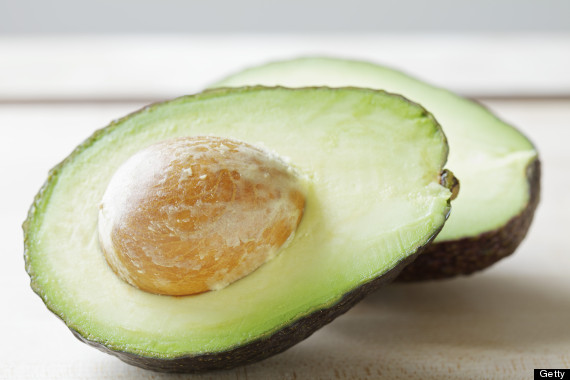
I have recently learned to truly appreciate the yummy avocado vegetable/fruit/green thing. What is it anyway? Avocados are actually a fruit, and more specifically a berry. Blew my mind too. According to Huffington Post article, a fruit is defined as having a tough outer layer, soft middle layer that encompasses the seed. Sounds like a avocado to me. There is a lot more to avocados then you would think.

Photo Cred: Huffington Post

History

Avocados came from Mexico and surrounding areas and were used by the Aztec people. Over the centuries, the avocado has been called many different names including Alligator Pear. Horticulturists did not like this name as it was misleading and negative. So the name avocado was settled upon. Avocados have obviously spread from Mexico to a wide range of places.

Where are all the avocados?


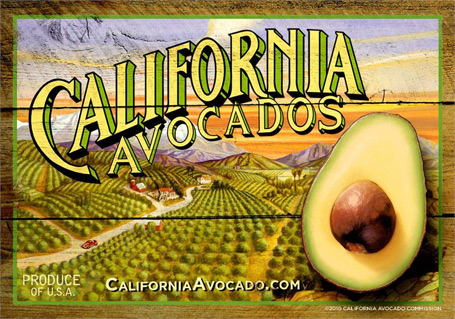
In the USA, California is the largest grower of avocados followed by Florida and Hawaii. In 2011 the value of the avocado industry was  $492.1 million, and the industry is growing.

125

Did you know?

  • There are over 1,000 varieties of avocados
  • Avocados can be different colors

    Photo Cred: University of California
    Photo Cred: University of California
  • Avocados grow on trees.
  • There is twice as much potassium in avocados than a banana.
  • Avocados will ripen more quickly in a paper bag with an apple or banana thanks to the gases circulating.
  • You can use avocados as a substitute for butter in baking recipes, and no it won’t make them green.
  • Avocados are packed with protein!
  • They aren’t just for eating. They make great beauty products.

How I used them

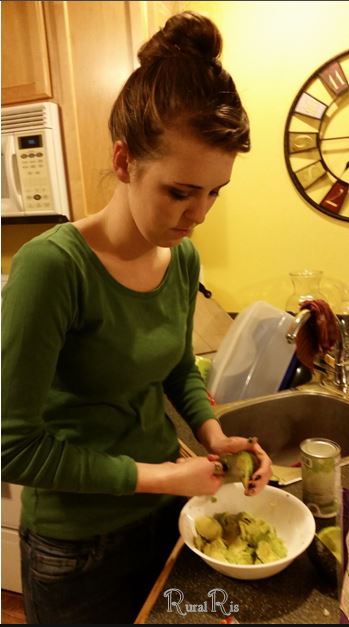
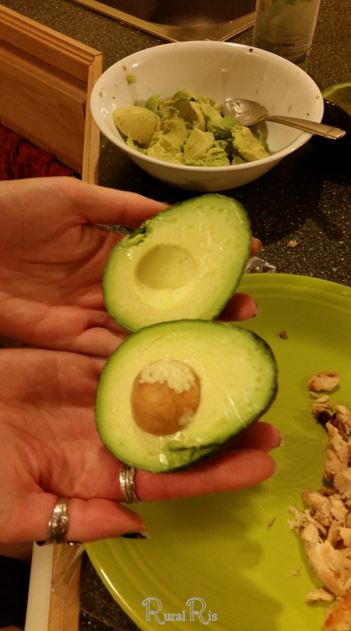
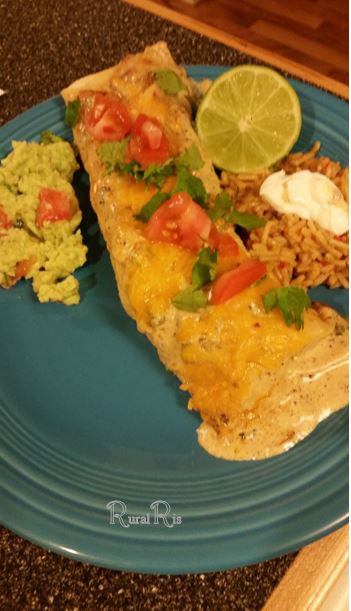
I used avocados for the first time at home this week, and it was delicious. I made guacamole to accompany chicken enchiladas I made (enchilada recipe to follow soon). I had to learn how to tell if they were ripe or not. I learned that you look under the button at the end of the fruit. Pop that button off, and if it is brown, it is too ripe. If it is a nice green, it is good. Also be sure that the fruit is not super firm. A little give is important.

So… here is the recipe I used. Not only was it healthy and yummy, but it was pretty too. I hope you enjoy!

Ingredients:

  • 3-4 ripe avocados
  • 1 1/2 tablespoons fresh lime juice
  • 1 large Plum  or Roma tomato, deseeded and diced
  • 1 tablespoon chopped cilantro leaves
  • 1/2 teaspoon ground cumin
  • 1/2 teaspoon salt
  • 1 jalapeno pepper
You can also add onions to this or other type of peppers.

Directions:
avocado green
I accidentally matched the avocado…
  1. Cut your avocados in half, and use a spoon to scoop out the seed. After this, spoon out the flesh and put in a medium bowl.avoo
  2. Add the lime juice to the avocado and use a fork to smash the avocado until creamy. Chunks are nice too.
  3. Finally, add the rest of your ingredients and stir. Serve immediately or store in the fridge.guac

PS How do you like to use avocados? Does the green bother you? I think they would make a great St. Patrick’s Day meal 🙂


Sources:

http://www.huffingtonpost.com/2013/08/22/avocado-health-facts-didnt-dont-know_n_3786419.html

http://ucavo.ucr.edu/General/General.html

http://www.agmrc.org/commodities__products/fruits/avocados/

http://www.inspiredtaste.net/20172/our-favorite-guacamole-recipe-with-video/

http://www.californiaavocado.com/assets/Uploads/Consumers/Healthy-Living/Health-Professionals/June-is-California-Avocado-Month.htm

Bridging the Gap from Farmer to Consumer

Only 2% of the population live on farms. That means that 98% of people do not know the ins and outs of farming and what all it entails. This happened thanks to the Industrial Revolution that drew people to urban areas. Around the same time that people were migrating to the cities and away from the farm, the media greatly diminished their coverage of farming and agriculture. Not only was the public physically removed from the farm, but they were mentally removed. An “out of sight, out of mind” situation became prevalent.As far as the population was concerned, farms still looked like grandpa’s red barn often seen in literature. In fact, though, farms look vastly different and have modernized just as the rest of the world has.

These major factors have created a huge gap between the consumer and farmer. With this gap comes questions from consumers. They want to know how their food is being grown and what is being put in their bodies. They want to know why farms don’t look like what they thought, and often times ask hard questions about farm practices. Answers are desired, and rightfully so. They deserve to know what they are consuming. There is a gap that needs to be bridged; however, this is easier said than done. An attempt must be made though.

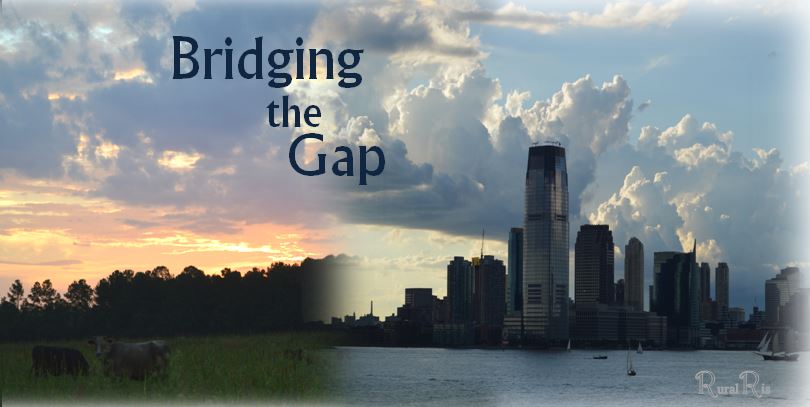
bridging the gap

Bridging the gap is not achieved by throwing information out there. That is not good enough. A conversation must be started. This is not any one group’s responsibility. Both consumers and farmers alike, must do their part. Consumers have a responsibility to ask questions. It is completely ok, to ask what is going on behind the food being eaten. Likewise, farmers should also be asking questions. Questions like “Where are you getting your information? What concerns do you have? How can I help you feel better about this?” can be helpful in situating exactly where the consumer is and what they are thinking. Sometimes they may not know what to ask or how to ask it. From questions, a conversation can ensue.

Conversations are of no use if they are done in a negative way that only widens the gap. The goal is to bridge it. It is important for both sides to approach the dialogue in a positive manner. The public should have an open mind. There are a lot of voices out there and a lot of opposing information. Researching issues and gathering information from reputable sources on both ends of the spectrum is crucial. The beauty of our society here is we have the freedom to make a choice. So when engaging in these conversations, it is crucial to come in with an open mind and an open heart. By heart, I mean a sense of compassion and respect. Aggressive behavior is not going to move the conversation forward, rather it is going to stop it in its tracks. Consumers also need to realize that what they learn, may not be what they expected. Farming isn’t the same, and that’s ok. The important thing is to talk about those changes and gain understanding about the why behind those changes.

As farmers, it is important that we are also respectful and gentle with our dialogue. So many times I have seen conversations, especially online, go south because of the negativity of the language. “Get your facts straight!” and “Don’t be ignorant!” are not words that promote a conversation. They are just our emotions and frustrations shining through. I know that as farmers ,we are passionate about what we do. I know I am. A lot of information out there that bashes farmers is hurtful and feels like a personal attack on our way of life, and our knee-jerk reaction is to scream and rant. This will get us no where. We need to take that passion and show everyone that we care and are passionate about what we do. We need to remember that it isn’t the public’s fault that they may not understand. It is simply something that has happened with time. The simple truth, is they aren’t around it like we are. When posts that are anti-agriculture surface, ignore them. Don’t share those posts and say things like “How can people say such horrid things. It is all lies!” Not only are you providing more views for that negative article, but you are not enticing a positive conversation. Share positive posts that highlight what wonderful people farmers are or cover tough topics, but are well written and not filled with rants. Equally important is the process of listening. If we do not take the time to listen, then we are shooting blindly. It is not about a persuasive argument (although, there are persuasive tactics in it), it is a conversation, and conversations require just as much listening (for both parties) as it does talking.

Bridging the gap doesn’t always mean standing on the same side of the gap. It is perfectly alright to agree to disagree. In fact, the likelihood of completely agreeing is slim to none. We should all learn to be able to say, “you know, I don’t think we are going to agree on this subject. Thankfully, we have the freedom and choice to be unique.” The bridge is still there. The option to learn more and have a conversation is still there, we may just stand on opposite ends of the gap. So long as we don’t throw things at each other, it can be a healthy relationship. It is also important to note that it does no good to argue with activists. They are just as staunch in their beliefs as we are our’s. We aren’t going to change their minds. Agreeing to disagree is the only way to keep some sort of peace, despite how tense it may be. Even if the opposing side does not agree to disagree, we do not have to be pulled into the unwinnable fight.

Between the worlds of urban and rural is a gap. This gap is filled with misunderstandings, confusion, and questions. Conversation is the bridge. Not everyone may come across the bridge, but at least it is there. All it takes is positive words…

“Hi, I heard you were a farmer. Can I ask you a few questions?”

“Absolutely! I’d love to share my passion with you. What would you like to know?”

Together we can bridge this gap. Will you join?

bridgeSource:

http://www.epa.gov/oecaagct/ag101/demographics.html


A huge thank you to The Center for Food Integrity for the Engage workshop they held that I was recently able to attend. They helped me to articulate these thoughts that were jumbled in my brain.

Fact Filled Fridays: Not All Wool is Itchy

Happy Friday everyone! I hope you have had a great week and are looking forward to a somewhat relaxing weekend. 🙂

Today I wanted to start a series of “Fact Filled Fridays”, where I throw some random facts out there that you may or may not know. If you have a specific question that you would like me to cover on these Fridays, feel free to shoot me a note!

Earlier in the week, I mentioned that I would explain the different types of wool, because it is super diverse. You may have had that  awful, super itchy wool sweater in your closet that you refuse to wear ever again or buy anything wool again. I get that. I have had those garments too, but through out the years, I have learned that wool is not all itchy. Allow me to introduce you to the many faces of wool.

Glossary:

Before I delve into the types of wool, allow me to give you some terms so you can more easily follow along.

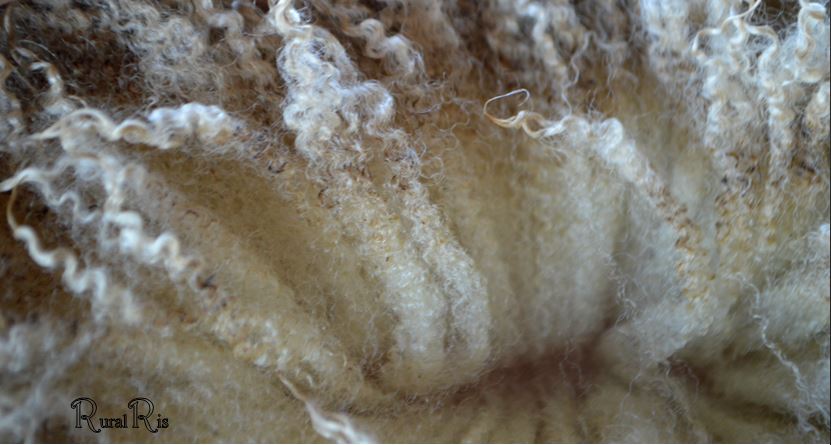
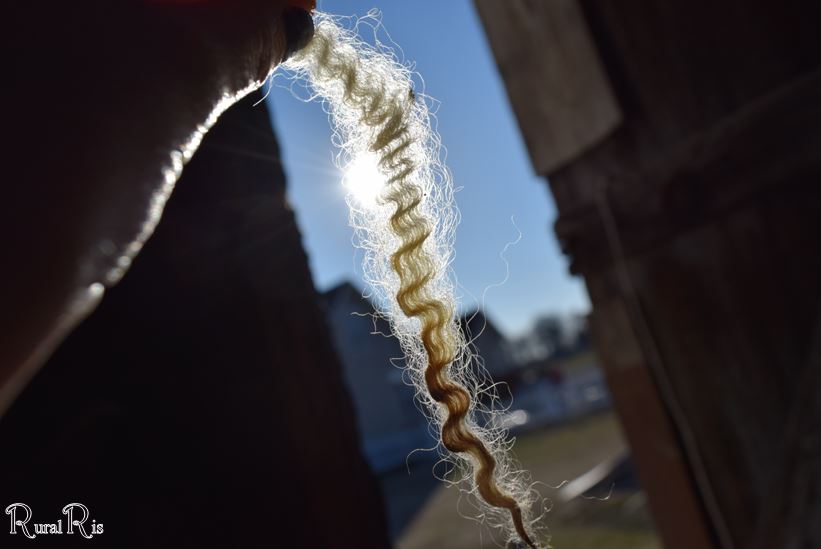
  • Crimp– this is the waves that you see in the wool fibers. The tighter the crimp, the finer the wool.wool crimp
  • Staple length–this is the length of the wool fiber.
  • Micron count–this is the measurement of the diameter of the wool fiber. It is a micrometer, meaning one millionth of a meter.The smaller the number, the finer the wool.

Types of Wool:

  1. Coarse– this wool is typical of your long-wool breeds like Lincoln, Border Leicester, and Cotswold. The crimp on these sheep are more like curls. longwoolEach fiber is of a longer staple length (6-15inches), making it coarser (micron:41-30) and inevitably itchier. Although it is coarser, it is also more durable. It is ideally used in outerwear garments that is not next to the skin. In addition to the long-wool breeds, there are also carpet-wool breeds that fall under the coarse category. These breeds include Scottish Blackface and Karakul. As the name implies, their wool is used for carpets.
  2. Medium — Ranging between the 22-30 micron count, this type of wool is great for various things from sweaters to outerwear garments. If you have sensitive skin, this may still feel itchy to you, but it will certainly make a great layering garment. It is produced by breeds such as the Corriedale, Columbia, and Southdown (the Southdown has more of a down type wool that makes it have more elasticity). It has a staple length of 3-6 inches.
  3. Fine– Alright, here is the moment you’ve been waiting for… the oh so soft wool category. This type of wool you could put on your baby. It is the perfect next to your skin wool.  It has a micron count of 17-22 and a staple length of 2.5-4 inches. The king of this category is the breed Merino. Coming in close to the king is the Rambouillet and Debouillet.

If all this isn’t enough, the fineness of the wool is contingent on the age of the sheep. The finest wool comes from the first fleece of a lamb. Same as humans. Kids’ hair is a lot softer than us big people.

The thing to remember is not all wool is itchy. It is all dependent on what sheep it came from. Typically, if it says Merino, you are dealing with a soft wool, and don’t forget #WearMoreWool.

alec wool

PS if you want to see all the breeds that I mentioned be sure to visit this site for those mentioned and more! (I’m  not responsible for time you may waste looking through all the many faces of sheep)

Source:

American Wool Council

World Without Ag Wednesdays: Lanolin Love

Oh my goodness. Where did the time go? Another semester of graduate school started today, as did the colder weather. True to North Carolina weather, it was in the 70’s on Sunday, and now it has barely gotten above freezing. Thankfully, I have a wonderful wool coat for the trek from the parking deck to my classes. No worries, guys, Rural Ris isn’t a popsicle yet–that may be in the morning though.

Tomorrow is supposed to be no higher than 27 degrees. Now, for those up north, I know 27 degrees is not that cold, but for us here in NC, it might as well be Antarctica. That much cold also means putting extra bedding down for the animals, setting out heat lamps, and making sure all pipes and hoses are drained. Depending how bad it gets, I may be swinging an ax trying to break the animals waters–funny sight for sure.

Anyhow, this first day of classes is now over, and I have survived. So, now on to “A World Without Ag Wednesday” where we highlight some of my favorite things.

ab397-wheatdivider

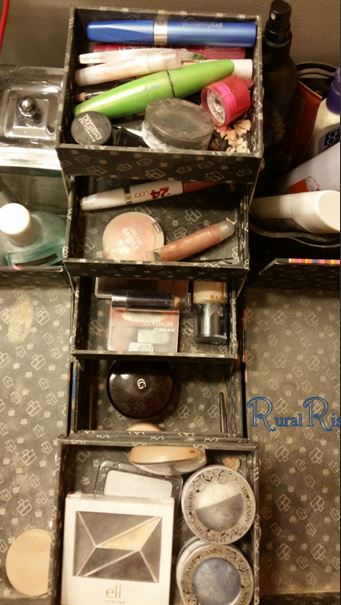
I may be a farm girl, but I am all about bling, dressing up, and makeup. Oh, makeup. It is inevitably dangerous for me to go into the makeup aisles of the local drug store. I just want all of it. makeup

Clearly, I don’t need anymore (that is only half of my makeup collection). What am I saying? You can never have too much makeup.

I also appreciate a good lotion, especially in the winter months when my hands get chapped. What I love even more is that agriculture has a part to play in my beloved makeup and lotion.

In a world without ag, a lot of makeup and hand creams would not be the same if it were not for lanolin.

What is lanolin?

Lanolin is the grease from a sheep’s wool. It is also called wool wax or wool fat. It is of a yellow tinge and comes from the oil glands of a sheep. When you touch a sheep or unwashed wool, your hands will feel greasy and sticky. This is the lanolin you are feeling. It is the equivalent of the oils you secrete.

How do you get lanolin from the sheep?

After the fleece is shorn from the sheep, it is scoured (boiled) in water with added salt. The lanolin floats to the top. It is then purified by shaking it with olive oil and water. The impurities will move to the water and the oil with the lanolin floating between the two properties.

What is it used for?

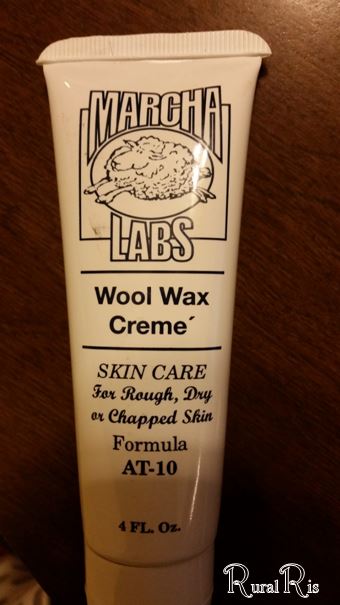
Lanolin is a great moisturizer and is often used in lotions. This is a favorite of mine:

wool cream

It can also be used in other cosmetics. Cool huh? Wait, it gets better!

Because lanolin is water-repellent, it is used on oil rigs as a corrosion inhibitor. In the same way, it is also used for spare auto parts when put into long-term storage. In addition, it can also be found in paints, and is used as a leather finish.

Embrace the lanolin love. It gets a bit messy when you play with sheep all day but makes fabulous products!


Sources:

http://www.pbs.org/weta/roughscience/series3/shakers/handcream.html

http://www.pbs.org/weta/roughscience/series3/shakers/handcream.html#lanolin3

Meet the New Additions

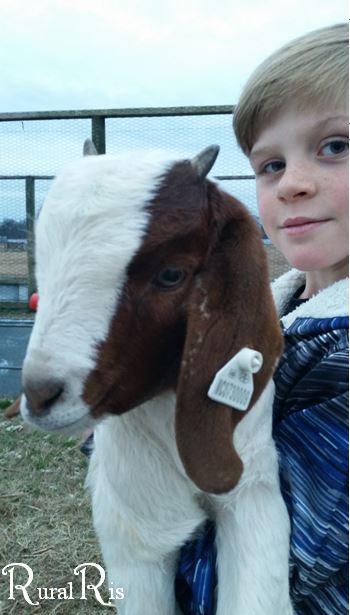
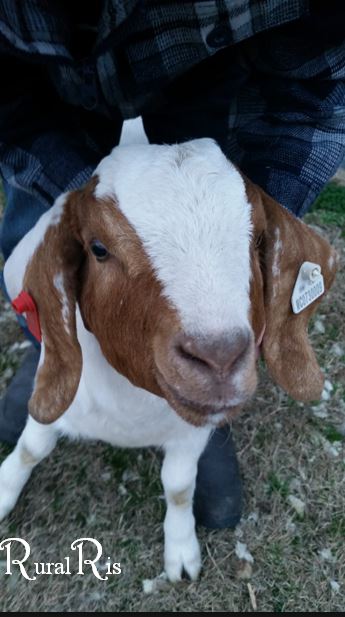
After 6 hours on the road, my brother, Alec and I finally made it home with two new show goats.

The little does were born in September and October. They have some growing to do, but I think they have some great potential. Without further adieu welcome this year’s goats for the spring show and sale in April to the farm.

I would like to introduce Hershey, shown by Gideon…

gid and hersehAnd Reeses, shown by Isaac.

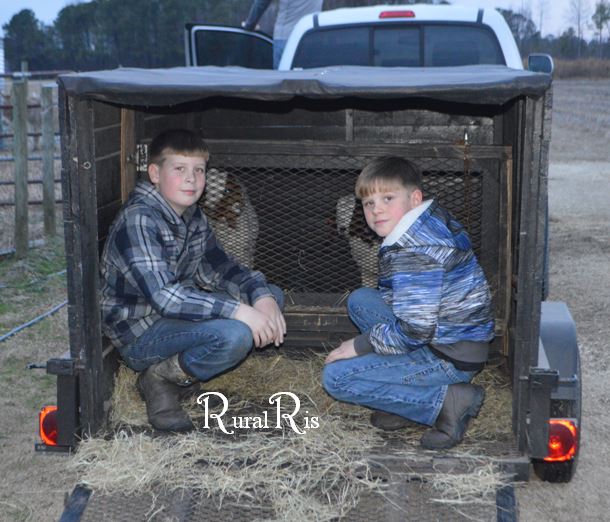
reesesThe boys were super excited to see their new goats, weigh them, and introduce them to their new home.

boys in trailerWithin 5 minutes, they were already wanting to practice showing them with collars and leashes. I told them they might want the newbies to get used to everything first. They agreed that rubbing them would suffice for now.

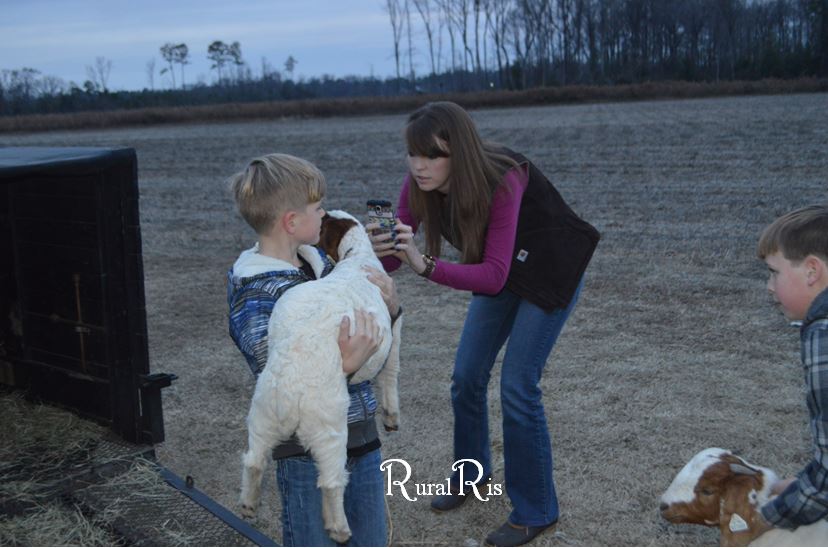
Of course, I had to snap a picture of the new additions for you guys. Can you say #blogger’slife?

take a picEven Sassy, the barn cat, had to come check things out.

sassStay tuned for two more little girls that will be added to the farm within the coming days. These ones will be much more pink and will say oink!

A World Without Ag Wednesdays: Confetti

Introducing “A World Without Ag Wednesdays”, where I highlight something that we wouldn’t have if it weren’t for agriculture. Be sure to check every Wednesday for a new feature!

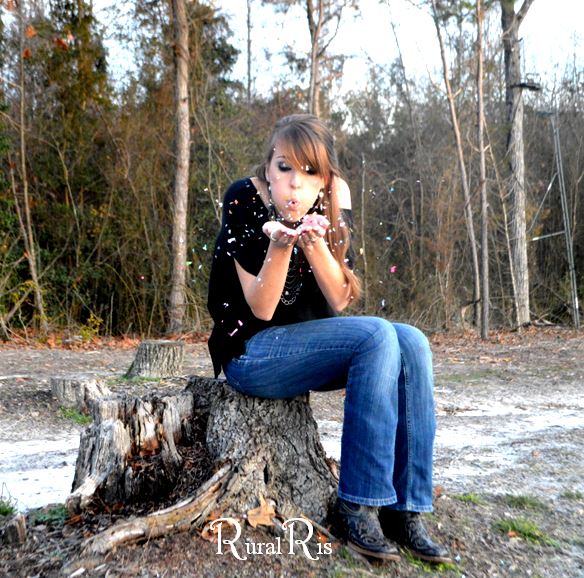
This week’s feature is confetti. Quite appropriate, since in just a few hours, over a ton of it will pour down on hoards of people in Times Square as the clock strikes midnight. You may have asked questions like, “How do they clean up all that mess?” (the answer to that is over 150 people work to clean it up by 8am the next morning), or thought, “Wow! The rainbow of paper sure is pretty!” Have you ever thought, though, “What would New Year’s Eve look like without confetti?”

confetti

Well, if it wasn’t for agriculture, we wouldn’t have confetti or the beautiful display on New Year’s Eve (maybe the cleanup crews would like that). You see, confetti is made from paper, and as many of us well know, paper comes from trees. Yes, trees are a part of agriculture too. In fact, it has its own fancy name, called silviculture. Silviculture comes from the word silvics–the knowledge of how trees grow, reproduce,  respond to changes in the environment, seeding requirements, and location (WVU Extension Service). Pretty neat, huh?

Here are some fun statistics for you:

  • 751.2 million acres of United States soil is forest land
  • 60% of United States forest land is privately owned
  • The United States is one of the leading producers and consumers of forest products
  • United States forest product industry produces $200 billion in sales every year and employs around one million people.


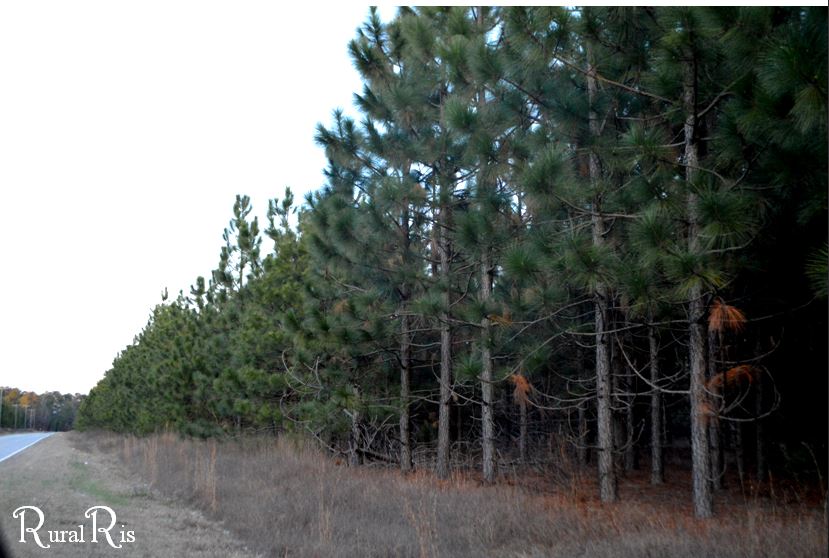
For me, the whole timber industry hits close to home. My grandfather recently harvested his pine tree plot. He planted those trees when I was born. 20 years later, they were cut down, and the land is now being replanted with pecan trees. Who knows, maybe those pines are part of the confetti falling from Times Square.

Pine trees purposefully planted to later harvest for products like confetti!


What used to be pines, is now being planted with pecan trees
What used to be pines, will soon be planted with pecan trees

So, when you count down to 2015 and watch all that confetti fall, remember to thank agriculture. Without ag, there wouldn’t be New Year’s confetti.


Sources:

http://www.wvu.edu/~agexten/forestry/silvics.htm

http://www.epa.gov/agriculture/forestry.html 

http://www.loggers.com/timber_facts.htm

http://newyork.cbslocal.com/2014/01/01/after-party-in-times-square-comes-the-cleanup/

5 Reasons Why I Want to Tell Agriculture’s Story

“There is no greater agony than bearing an untold story inside you.”

~Maya Angelou

Once again, the new year is upon us. In a little over a week, I will be headed back to school, and 2014 will be a memory. A new year also means those dreaded resolutions. This year, though, I’m excited for my New Year’s resolution. It isn’t to start working out, although I probably should. This year, I’m launching this blog. My resolution is to use this blog to tell my story — not a story about the many papers in graduate school or life with three brothers, but my story about agriculture. It is something I am passionate about, but when I look around, I see the effects of a day and age where less than 2% of the population lives or works on a farm. It is more important than ever for agriculture’s story to be told. So, for five reasons, my New Year’s resolution is to share my passion for agriculture with the world:

1. Because I think it is beautiful:

milo

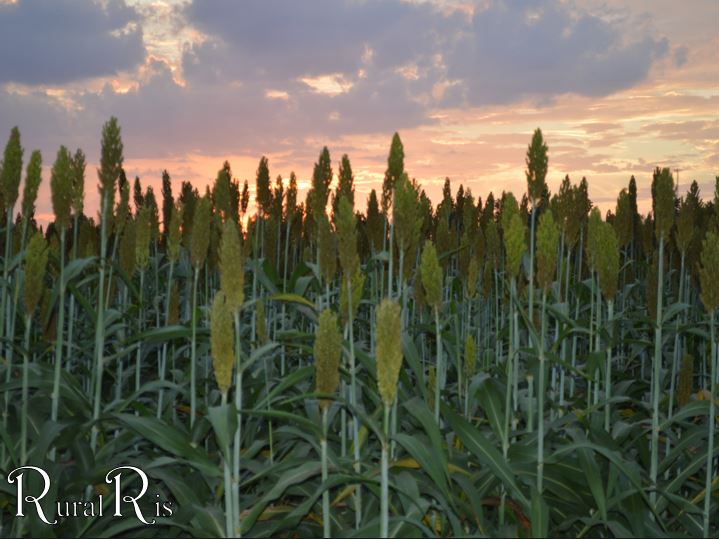
There is nothing quite like the sunset on a field of cropland, or a wobbly lamb walking for the first time that makes me want to whip my camera out at lightning speed. Agriculture is truly beautiful. Sure, there are ugly parts, but that’s part of life. Agriculture is truly a beautiful thing, and for me,  that is worth showing off.

2. So others don’t tell it for me: So many times pictures and words get twisted, and the damage is hard to undo. Instead of assuming that someone else will tell the public accurately what agriculture is all about, it is important that I tell my perspective. If I allow others to tell it, then the chances of incorrect information being told increases. I don’t want others putting words in my mouth. I’m much too opinionated to let that happen.

3. Consumers are curious and have a right to know: Consumers eat, wear and rely on the products that we produce. They give it to their kids and trust it is not just a quality product, but that it has been grown ethically. They trust us (we certainly hope), and it is my duty to tell them what is going on. Consumers often have never had the opportunity to step foot on a farm in their lives. They are curious about how it works. If our agriculture’s story isn’t told, they just get more curious, and may look in the wrong place. I owe it to them to show them just what lies beyond those barn doors. So, I welcome questions, and would love to give you a farm tour.

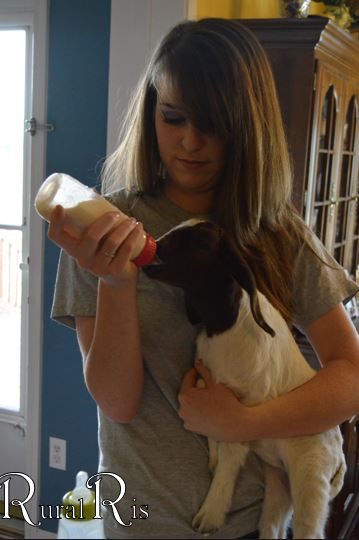
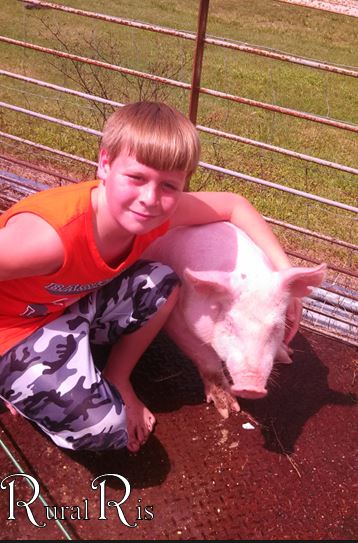
4. I’m passionate about ag: Farming is hard work. I’ve had mud and poop slung on me in places I really didn’t like. I’ve had countless blisters on my hands, a goat managed to give me a black eye, and there have been times I thought my fingers would fall off from the cold. Even still, I love it. I am passionate about the little lamb jumping around or the pigs that give me muddy kisses. I care about the impact agriculture has on the community and what it has to offer. If I didn’t find such joy in farm life, I wouldn’t do it.  Why else would I stay up till all hours of the night with an animal,

bottle

or brave all types of weather?

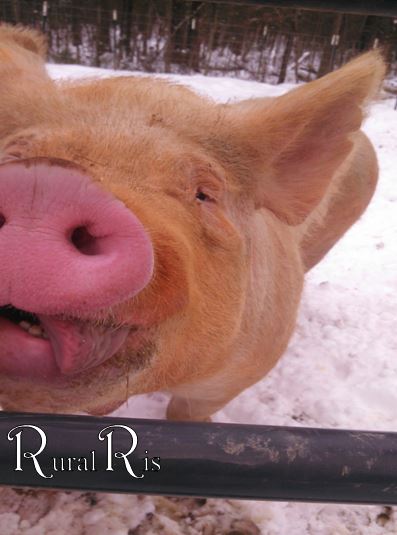
snow pig

What are those smiles about? Because we, not just me, but others are passionate about agriculture. My passion is my drive to tell the world what gives me joy.isaac

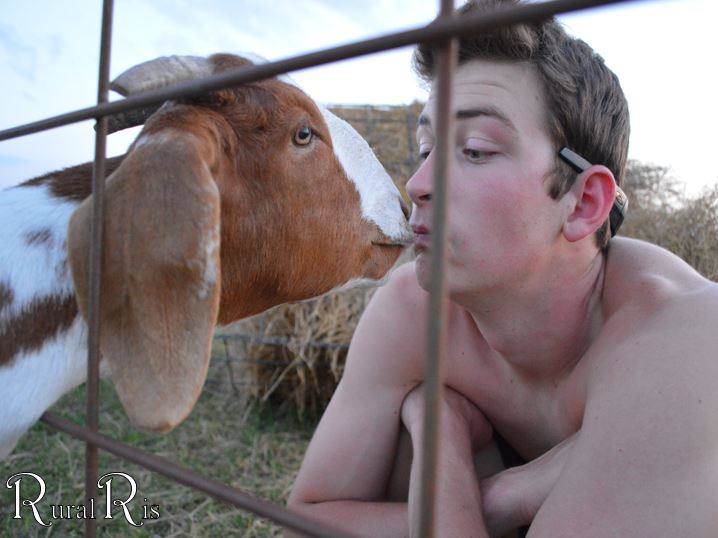
5. I live it: Day in and day out, my family and I feed the animals and care for them. With so much interaction, I think it is safe to say, that I know the farm better than an outsider and can tell that story better. Biographies are nice, but autobiographies are better. I can make it come alive in ways that no one else can because my family and I live it. We stare at in the face everyday.

kiss

So, those are my reasons. It is why I’m starting this blog. I truly believe that agriculture is a story worth being told. It is my passion, and therefore, I want it told right. I want the emotions I have for it to bleed through. I want the public to reach a better understanding of what exactly it takes to get from farm to table. I hope to allow people to see what I see. I think the agriculture I know should not be kept to myself and remain untold, which lands me here, on this blog.  It is definitely the most exciting New Year’s resolution I’ve ever had.

Happy New Years!


Capture