What You Aren’t Being Told About “Hog Farm Pollution”

If you drive down many Eastern North Carolina roads, you may see a billboard that looks like this:

Raise A Stink

They are doing just what they say–raising a stink, but it is a stench much worse than any pig poop could possibly smell. These billboards are part of a campaign started by the Waterkeeper Alliance organization to blame hog farmers for polluting local waterways. Although their aim is to make a positive difference in the community, this organization is causing harm, defaming an industry, and do not have their facts straight.

It is important that not just the other side of the story is told, but that facts are put out there, so that the public can be informed. Pollution is a serious issue that should not be taken lightly; however, there are a few things that the Waterkeeper Alliance isn’t telling you–things you should know to get the whole picture.

Who is the Waterkeeper Alliance?

The Waterkeeper Alliance organization is an international group represented by 240 local groups on 6 continents. They are environmentalists who focus on maintaining and promoting clean waterways. They have been active in campaigns against dairy farmers in New York and hog farmers in North Carolina along with various other campaigns. Last year (2014), they, along with their local subsidiary, The Neuse Riverkeeper Foundation filed an intent to sue against a NC farm, that gave the farm 90 days to complete a list of demands or else the organization would file suit against the farm. Although the farm worked with the organization to meet demands, the Waterkeeper Alliance has launched the billboard campaign against all NC hog farmers.

What claims have been made by the Waterkeper Alliance?

The Waterkeeper Alliance makes many claims that can be found on their website. Here are a few to note:

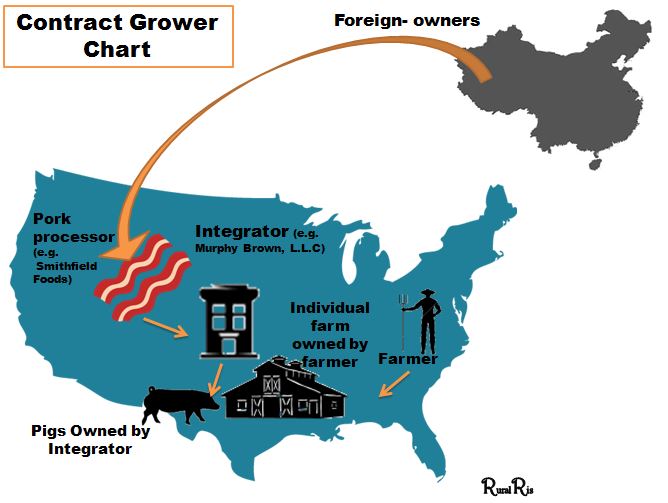
  • Waterkeeper Alliance seeks to expose the fact that foreign-owned corporations are reaping the profits made possible by the antiquated lagoon and sprayfield system of hog waste disposal, while placing an unfair burden on local contract growers.
  • Many people “are unaware of how much environmental damage and human pain and suffering these industrial swine operations are inflicting on people and their environment,” Rick Dove, North Carolina CAFO manager for Waterkeeper Alliance
  • “For too long, factory farms in North Carolina have been disproportionately located in minority communities where residents are forced to endure the smell, water quality impacts and the embarrassment associated with the facilities operating near their homes. Through this campaign and multiple other fronts, we’re working toward the day when people living near these operations are granted their right to swimmable, drinkable and fishable waterways,” Marc Yaggi, executive director at Waterkeeper Alliance
  • “Using so-called lagoons and sprayfields to dispose of hog waste is an outhouse method that must be replaced. A number of systems that will do away with lagoons and sprayfields have been tested and approved for implementation. It is time to put an end to this problem and the best place to start is by educating the public about what is happening to their water, air and communities.” Rick Dove,North Carolina CAFO manager for Waterkeeper Alliance

There is a lot packed into these claims, so let’s dissect them and look at what the hog farm scene looks like.

Hog Farm Fast Facts:

  • First, let’s make sure we don’t call large hog farms factories. Even though they are on a much larger scale, they are still a farm, and should be called as such. The majority of these farms are still family operated too.
  • The hog farming chain can be a little confusing with its many parts. Here is a chart that will hopefully help.pig integrator
  • North Carolina is the second largest producer of hogs in the U.S. and contributes $2.9 billion to the economy
  • Large hog farms keep pig waste in large pits called lagoons.
  • No new lagoons are allowed to be built
  • Hog waste is used as fertilizer for crops.
What are the Waterkeeper Alliance not telling you?

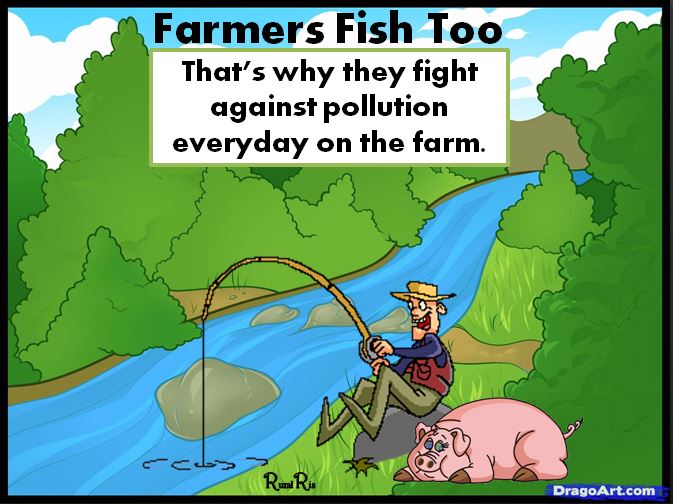
The Waterkeeper Alliance makes it sound like pig farmers have absolutely no concern for the environment, and they are irresponsible with the waste from the farms. This is the farthest from the truth. Farmers are some of the most avid hunters and fishermen out there. Why would they want to pollute the very waters that provide that recreation? In addition, many of their families live within the vicinity of these farms. Would farmers purposely pollute and cause damage to their own family? I don’t think so.

Even if farmers didn’t care (which they most certainly do) they are required by law to adhere to strict regulations as to when, where, and how they can deposit and manage the waste in the hog lagoons. These regulations are put in place by the Department of Water Quality and are monitored throughout the year. Hog waste is never allowed to be dumped into waterways; however, human waste is permitted to be dumped in the rivers once it has been treated. Although the majority of pollutants have been removed from the waste, the volume put in streams is still high and the pollutant mass can still be high in streams (NCSU).

The Waterkeeper Alliance demands a waste water treatment facility to deal with the hog waste in a more environmentally friendly way; however, human waste water treatment facilities are not perfect either. According to the EPA, there are over 22,000- 75,000 sanitary sewer overflows (SSO’s) that occur each year due to blockages, line breaks, sewer defects that allow storm water and groundwater to overload the system, lapses in sewer system operation and maintenance, power failures, inadequate sewer design and vandalism. The only thing a hog waste water treatment facility is going to do is cost the pork industry millions of dollars, driving the cost of bacon and porkchops through the roof. According to Feeding America, North Carolina is ranked in the top 10 states for food insecurity, and higher pork prices will only drive food insecurity up.

The Waterkeeper Alliance draws on various studies that show the effect of hog farms and hog waste on the surrounding community; however, these studies often show inconclusive data and rely on speculation. Yet, the Waterkeeper Alliance states them as fact. Beyond any of this, though, are the facts that they are hiding about the regulations that hog farmers have to abide by:

  • Lagoons are required to have substantial grass planted around its banks to prevent erosion.
  • Crops meant for direct human consumption, are not allowed to have hog waste sprayed on them as fertilizer.
  • Lagoons must be kept under a certain level at all times to prevent overflows into waterways.
  • Rain is stressful to a hog farmer as it increases the levels of the lagoons and soaks the fields to where they cannot be sprayed on. With no where for the rising lagoon water to be sprayed, hog farmers often times have to hire tanks to haul it away. They have even flown men in from other states to help in the effort of managing the lagoons during a heavy rain season.
  • Hog farmers have to take lagoon samples of the waste to make sure the nitrogen and phosphorus levels are appropriate within 30 days of spraying on fields.
  • If hog farmers know a neighbor is having a party or an outdoor function, they try not to spray as to disturb them.
  • The majority of farms are off of a dirt path away from most homes. By law, they must be 1,500 feet from a residence and 2,500 feet from a school, church, hospital, or park.
  • Farms are inspected twice a year by the Department of Environment and Natural Resources (DENR). According to the NC Pork Council, during 2000, 98% of the 6,000 inspections of NC’s 2,500 hog farms were found to have no direct discharges of organic waste water to the surface waters of the state and 94% found no signs of over-application to fields.
  • If there happens to be a hog waste spill in the rivers, the farm is required to report it and could be fined.
  • Spills are typically caused by equipment malfunctions.

The organization claims that there are better innovative ways to deal with hog waste out there, but hog farms are stuck on the antiquated ways of spraying on fields. Many hog farms are collaborating with scientists and innovators on various ways to improve hog waste management. Many of these innovations are in a trial period or are so expensive that the cost outweighs any benefit. The goal is to provide affordable pork to the public and  do so in an ethical manner. Farmers are being ethical and careful in how they manage hog waste.

The Waterkeeper Alliance may also tell you that the Neuse is one of the most polluted rivers and fish are at an all time low; however, the Neuse River basin does not boast the most amount of hog farms. The Caper Fear River Basin has the most hog farms. If hog farms were the cause of the river pollution, then why is the river basin with the most concentrated hog farms, not the most polluted? It doesn’t add up.

Cape Fear
http://scorecard.goodguide.com/env-releases/aw/nc-riverbasin.tcl?image_id=030300&huc6=030300

What Now?

While the Waterkeeper Alliance is not calling for an end to large pig farms, they are saying some nasty things that does not tell the whole story by any means. It is ok for them or anyone to ask questions and even challenge certain practices. It is important that hog farmers look at ways to constantly improve, but the current billboard campaign does not ask questions and challenges in an unhealthy manner. The Waterkeepr Alliance is suggesting that hog farmers are unethical in their environmental practices, but the Waterkeepr Alliance is not being ethical in their efforts by defaming an industry, causing the potential for increased pork prices, and not telling the whole story.

If you see these billboards remember that there is another side to those signs. They look something like this:
billboars

Show and Sale 2015: Preparation Days

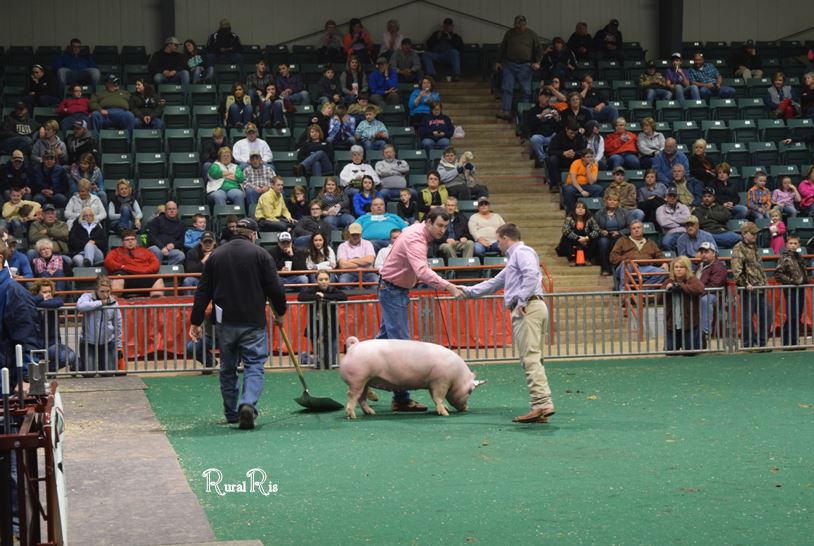
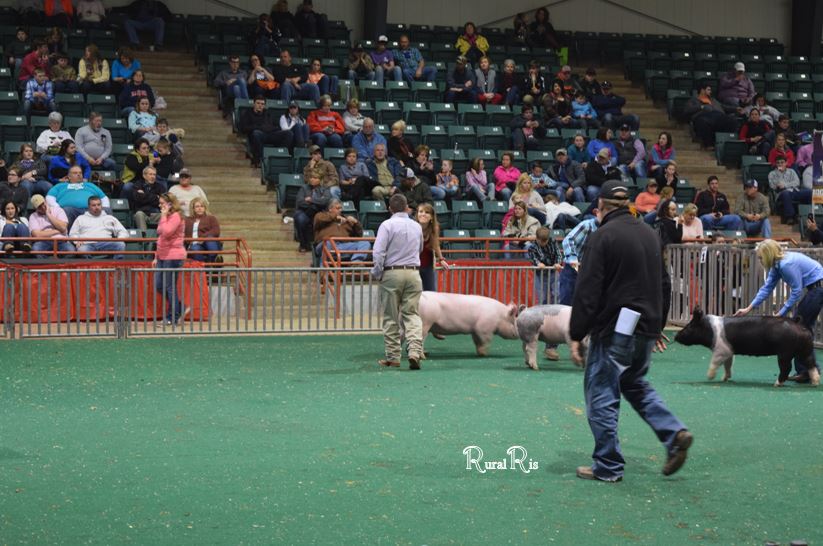
This week marks one of my favorite weeks of the year–our county’s livestock show and sale. While I can no longer show because I’m an old lady now, I do get to go watch my brothers and other youth younger than me show.Even though the show is not until Wednesday and Thursday, preparations are in full swing.

Prep work for the show starts days beforehand. In reality, it really starts the day we get the animal. From that moment, feeding, training, practicing, and learning are all done in preparation for the big day. It is a matter of hard work and some serious dedication. This week, there has been some added prep work that goes along with the days leading up to the show.

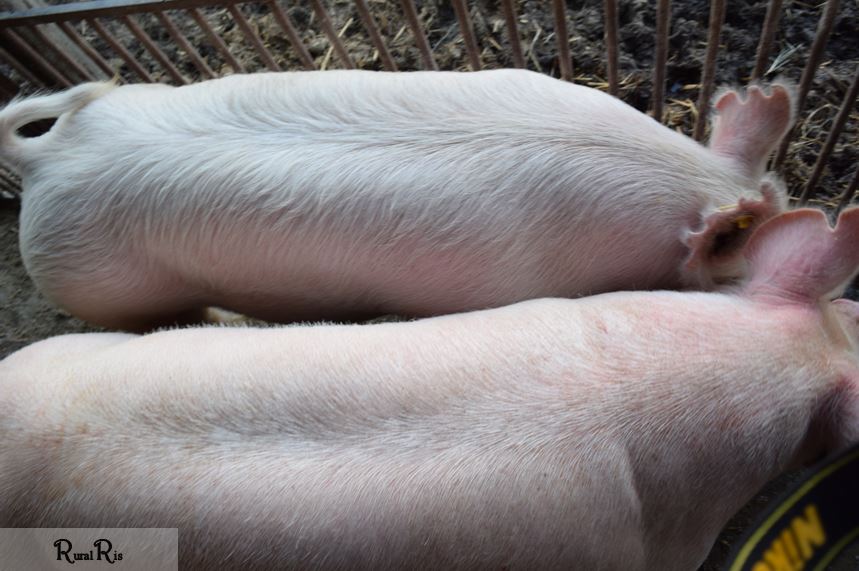
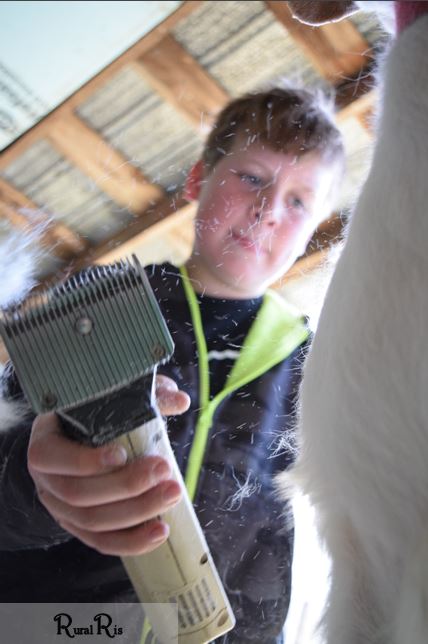
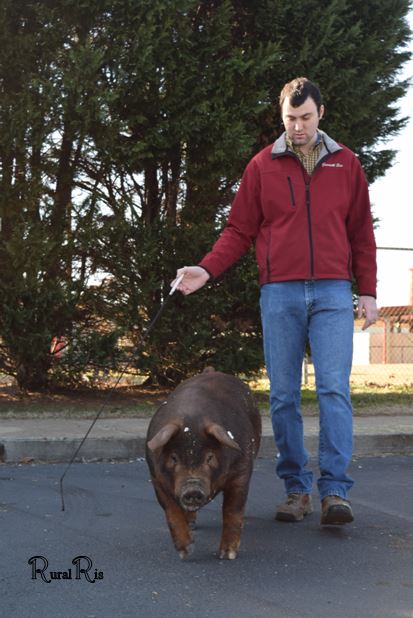
Yesterday, the boys and I finished clipping the goats and pigs. We trimmed the goats’ hooves and horns and then moved on to haircuts. I let the boys trim all they can by themselves on both sets of animals. After they have done all they can, I come in and do the tricky parts and touch-ups. When they get older and more experienced, they can do it all by themselves. Clipping is always an adventure, because the animals don’t always want to cooperate. I was covered in goat hair after the goats. We had to clip the pigs on the go as they walked around their pen. I was standing on my head a couple of times or had to let them chew on my boot to preoccupy them while the boys clipped. It is an adventure that requires an immediate shower afterwards.

Can you see the difference clipping makes?

ss4

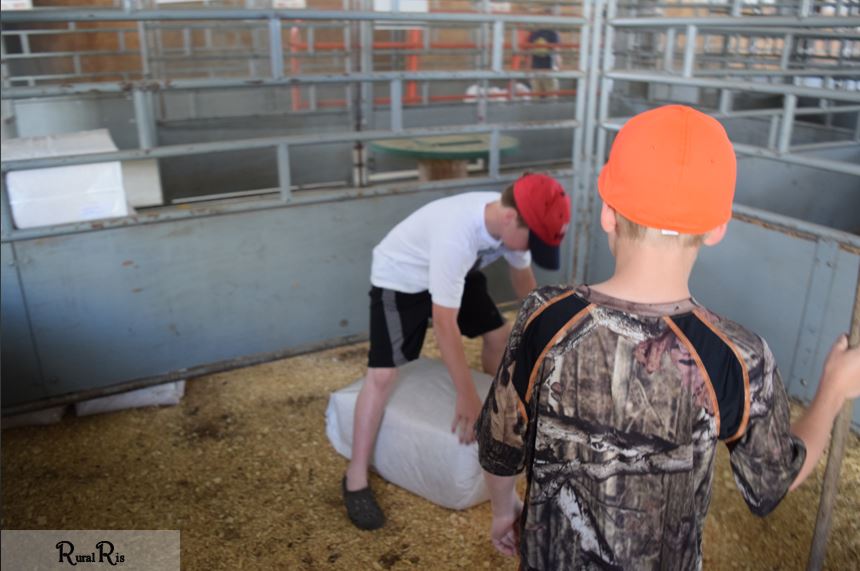
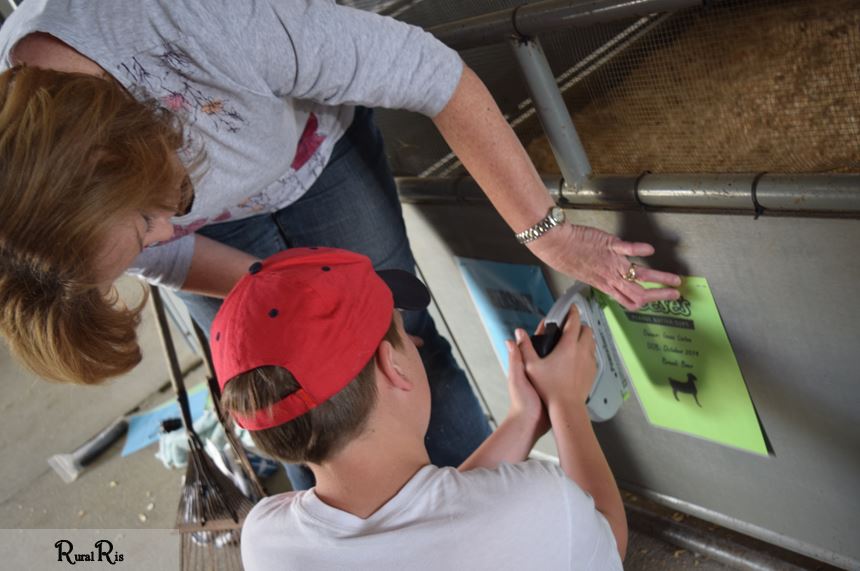
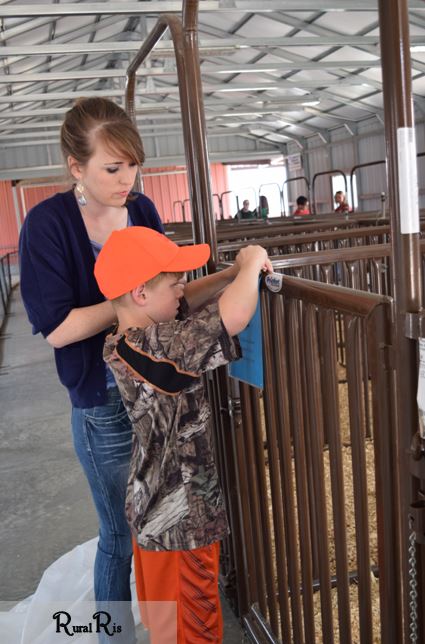
Today, we went to the fairgrounds to set pens up. The boys picked their pens out, spread shavings, and dusted off the fencing. On Wednesday morning we will go back to weigh in the animals and put them in their pens. Wednesday evening is the goat show, and the hog show will be Thursday morning, followed by the sale that evening.

ss11ss12ss14ss13

Well, that is the latest from the farm. We have a big week coming up. If you are in the area, feel free to drop by the Wayne County Fairgrounds to cheer our showman on! If you can’t come by, stay tuned for updates as the show progresses via social media or here on the blog.

It was n”ICE” to have a good day!

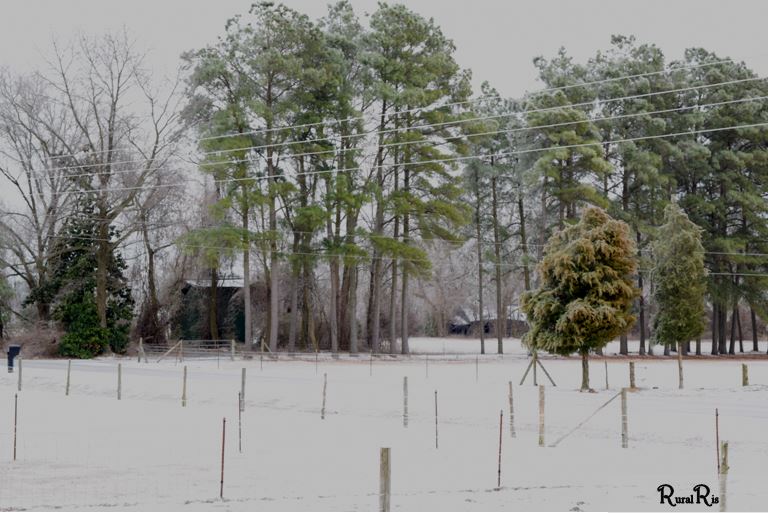
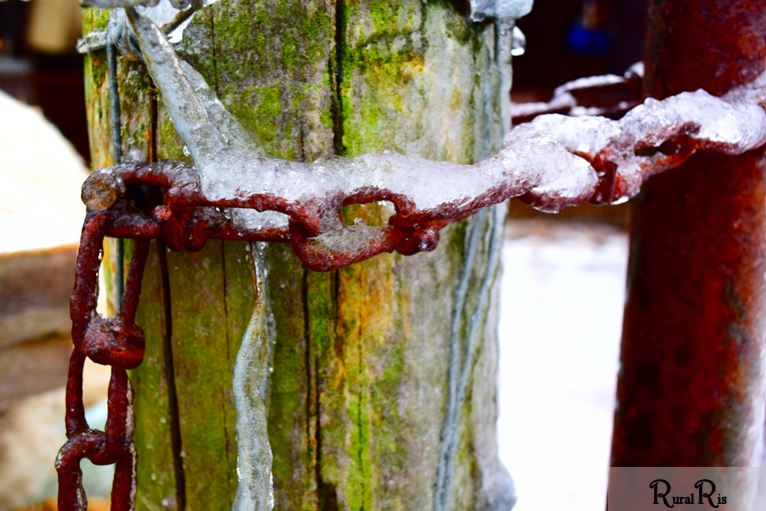
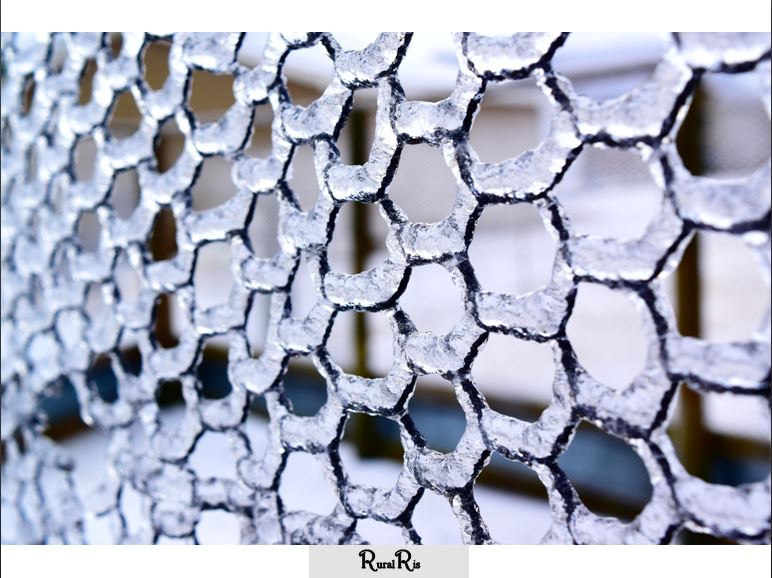
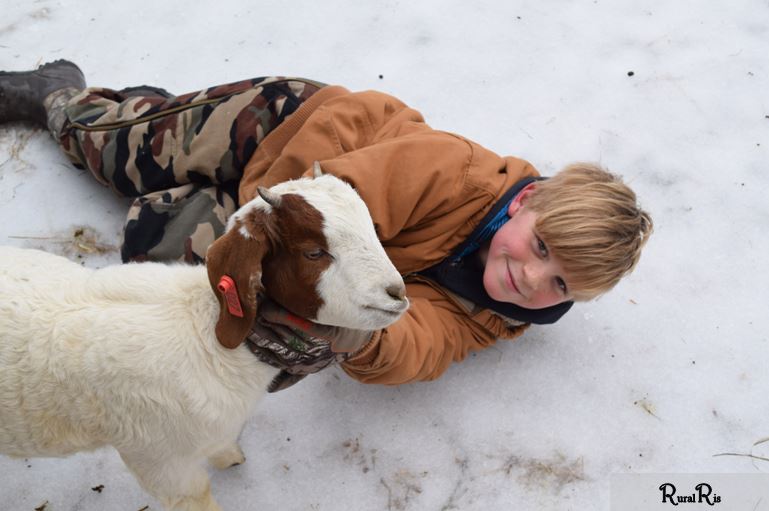
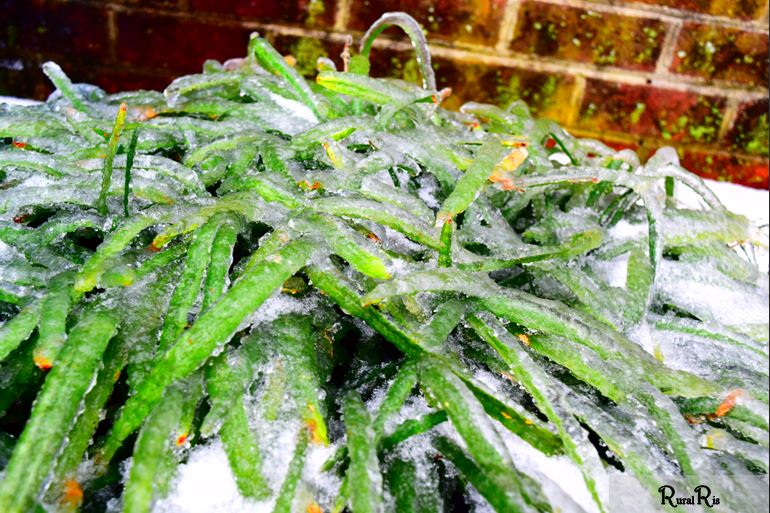
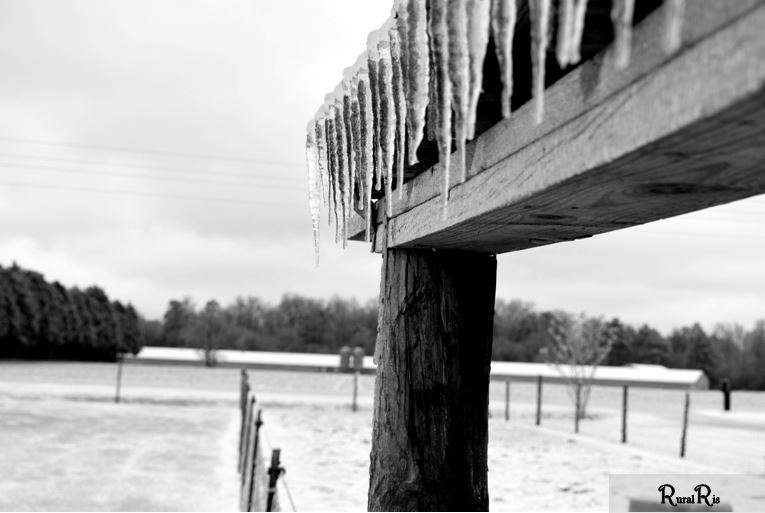
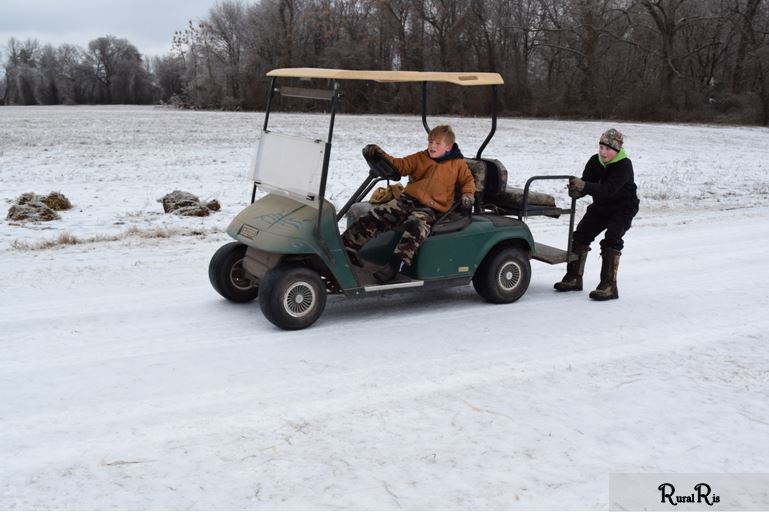
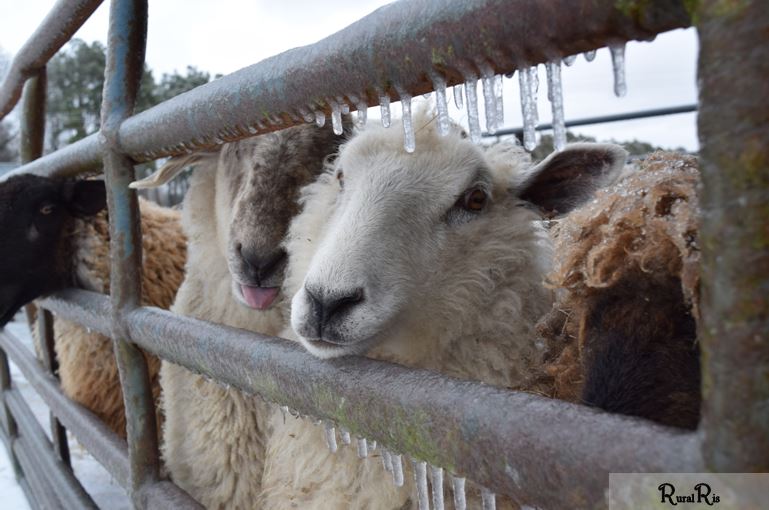
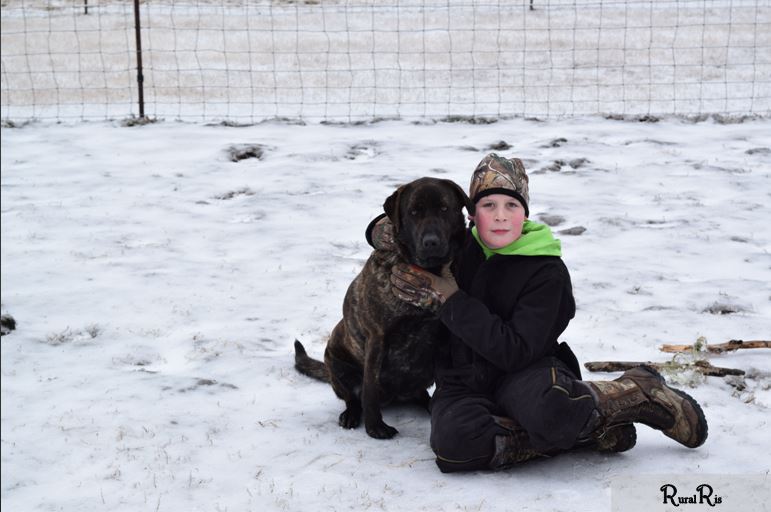
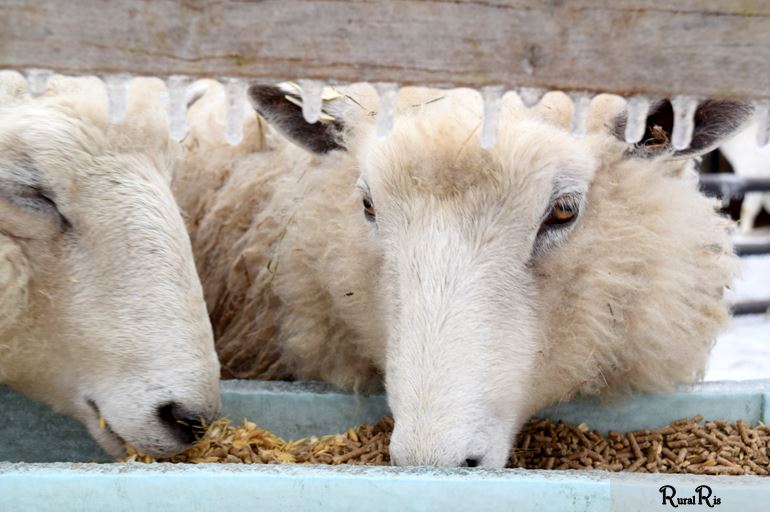
Around two inches of ice covered the landscape today. While it was pretty gross to do chores in, it made for some pretty pictures. Enjoy!


scen heart chain

Apparently, Rocket is adverse to going in his shelter.

twig pig ice arrow chicken coop shep pasture goat and gid monkey graass isicles golf cart sheep issac and all sheep eating


Our little fighter, made it through the night. We have been tending to her throughout the day, giving her bits of milk. While we were amazed that she made it this far, we are not out of the woods yet. The next few days will be crucial. She does not like to suckle on the bottle, but we are working with her. Time will tell, but until then, she is a little miracle that I like to snuggle with on the couch. 20150217_173910[1]

I Heart Pigs: Did You Know Pigs are Organ Donors?

heart pigs

With Valentine’s Day on the horizon, there has been an explosion of pink, red, and hearts. While, I think my favorite hearts are those in chocolate form, there are other hearts that I think are pretty swell. Pig hearts for example are pretty awesome. Now before you assume I’m a fan of eating pig hearts, let me clarify that this is not what I am referring to. I’m talking about how scientists are raising pigs to be organ donors for humans, including heart transplants.

This phenomenon is called xenotransplantation. While other species have been considered for the job, pigs complete the majority of the criteria. Apes are more closely related to humans; however, they are not in abundance and have the potential to carry diseases such as HIV. Pigs, when raised in a clean area, can pose less disease threat and are in abundance. The only problem with pigs as organ donors is the high response of a human’s immune system to the pig organ. Scientists are tackling this problem through genetic modification. There have been great strides made over the last decade that provide promising results for organs that are accepted by a human body. There is still much testing to be done though, but you can imagine the potential!

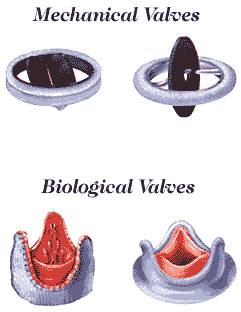
We aren’t just talking about hearts, but kidneys and livers too. In addition to this, pig heart valves have been used in human hearts for over 30 years. These are called biological valves. They do not last as long as mechanical valves, but they do not require long-term use of a anticoagulant.

heartvalves1
The purpose of the heart valve is to regulate blood flow. Source: http://www.cts.usc.edu/hpg-heartvalvesurgery.html
Source: http://www.cts.usc.edu/hpg-heartvalvesurgery.html


I am so in awe of not only what science can do, but also the potential and hope it brings to people. If you didn’t heart agriculture before, then you definitely should now. I also have another reason to love pigs, as if they weren’t great enough already. I hope everyone has a wonderful Valentine’s Day tomorrow, filled with love and many hearts. Just watch out for the crafty Cupig 🙂


Sources:

http://mervsheppard.blogspot.com/2011/12/xenotransplantation-using-pigs-as-organ.html

http://articles.chicagotribune.com/1996-11-11/news/9611110192_1_pig-organ-pig-hearts-human-heart

Pig Valve Transplants For Patients Needing Heart Valve Replacement Surgery

http://www.cts.usc.edu/hpg-heartvalvesurgery.html

Farmers Take Field Trips Too

Sometimes I think I have a fairly good grasp of agriculture…sometimes. Most of the time, though, I am keenly aware that there is A LOT I don’t know. I may have competed in national competitions that look at how much you know about livestock, and won, but I will still tell you there is a lot I don’t know. Even the things I feel I have a good grasp on, there is always more to be learned from others. That is why farmers take field trips, and I got to go on two this past weekend.

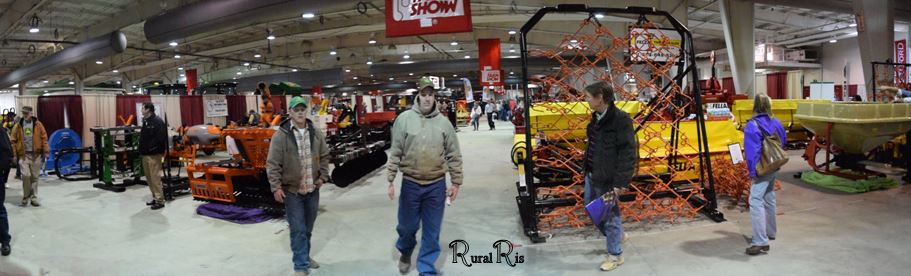
The first one was to the Southern Farm Show in Raleigh, NC. farm shwThe whole family went to tour the many buildings filled with farming equipment. There were tractors of every color and size, cattle chutes, irrigation systems, trailers, trucks–you name it, they probably had it.

farm showDespite being around farms all my life and living on one, there was some stuff, I had no clue what it was. My poor dad was bombarded with questions from my brothers and I. If you knew how much stuff was there, you’d feel for the amount of questions he had to field.

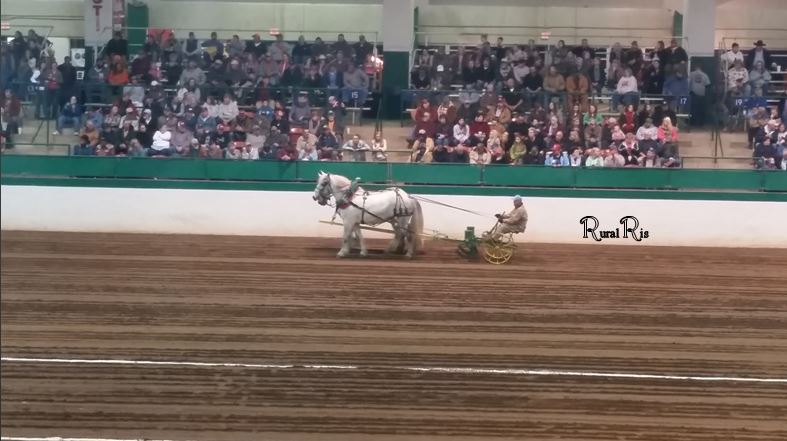
After the boys had climbed on almost every tractor, combine, and Bobcat, and questions had subsided, we made our way to the horse pull and coon jump. We watched draft mules and horses pull max weights of 6,500 pounds and 10,000+ pounds respectively. It was amazing to see their grit and gumption to move the sled with weights. We also got to see the coon jump which is where mules jump from a stand still over a pole. The winner of that contest, jumped 54 inches flat-footed. The coon jump contest originated with raccoon hunting. Mule owners would brag about how high their mules jumped chasing the coons. To prove themselves, they started coon jumping. Neat, huh?

horse pull


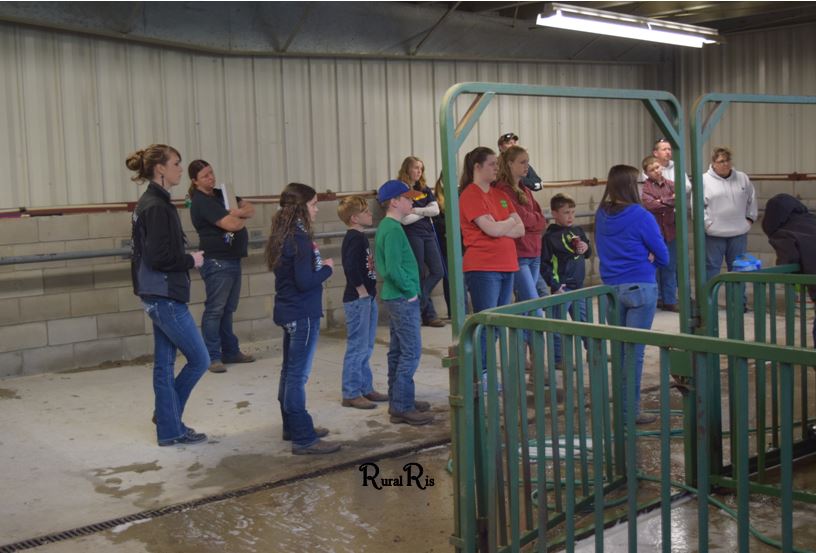
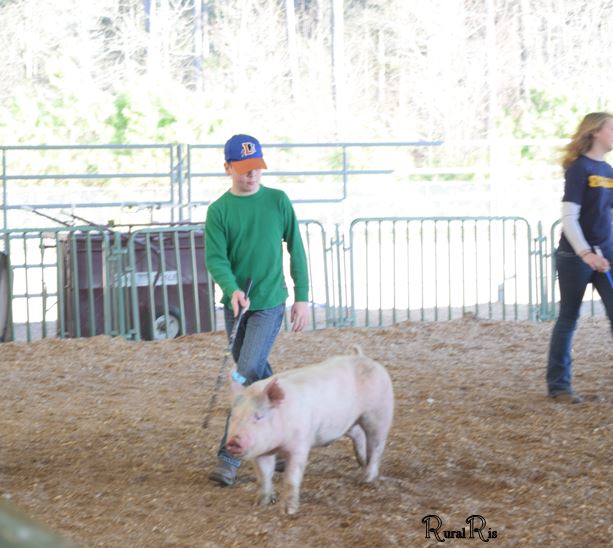
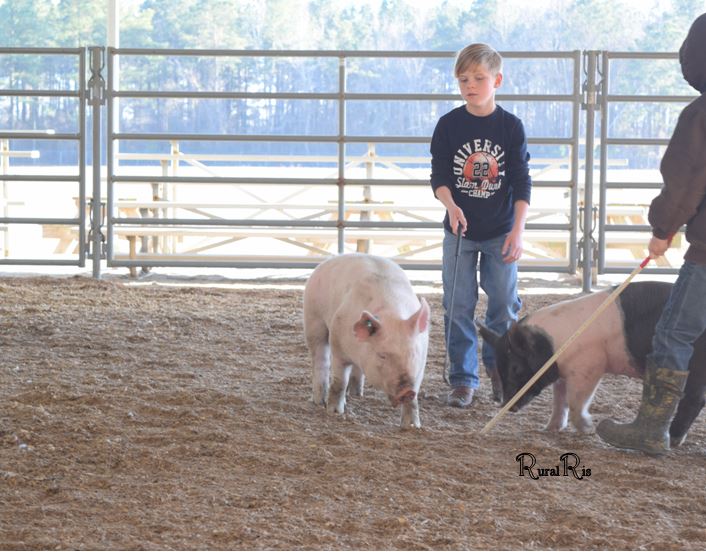
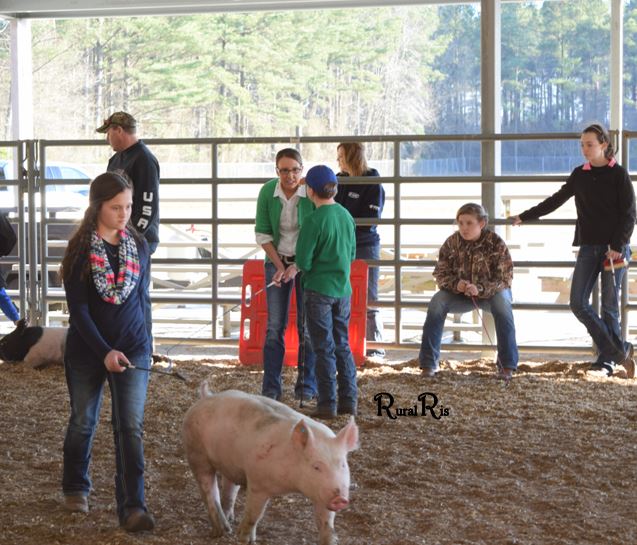
The second field trip was to Rocky Mount, NC to attend a 4-H show pig clinic. Mom, the boys and I went. pig clinicWe had a great instructor who talked about everything from picking out your pig, to feeding it, to showmanship. While a lot of it was review for me, there was some things that were brand new too. wasThe boys learned a lot too. They created a skit with the other youth about the right and wrong way to show a pig. Both Isaac and Gideon got on all fours to pretend to be the pigs. They were also able to reverse roles and practice showing with actual pigs too. It is a great warm up for the up coming show in April. issac and

gid

They asked great questions too.

questions

This morning they started to put their new knowledge to use  when they worked their own pigs. I quizzed them a bit too. “What did Mrs. Cally say you should do after walking the pigs?” They remembered after a little searching in their memories.


Even though we live on a farm everyday, we don’t know everything. There will always be someone who has a piece of knowledge that we don’t and it is important to seek out the opportunities that teach us new things. Not only is it fun, but we better ourselves in the process. Field trip for the win!

A Peachy Pig Trip to Georgia

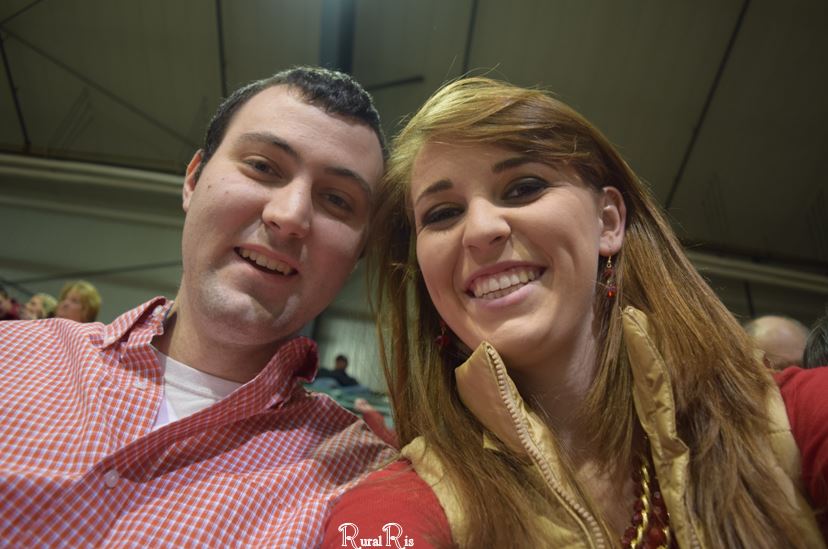
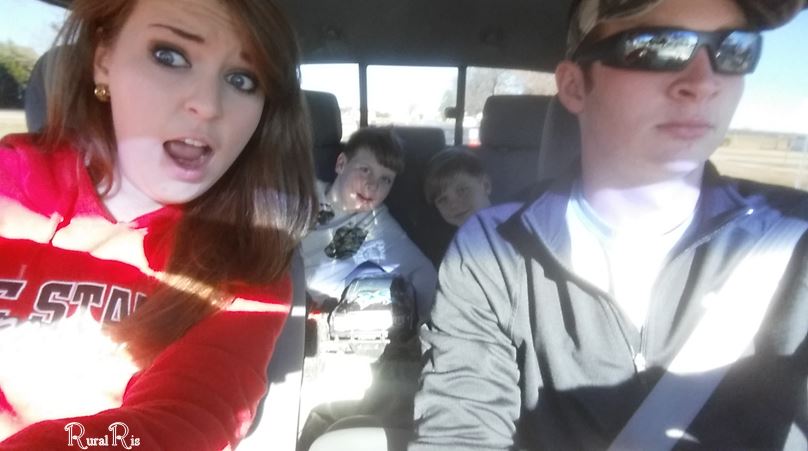
While everyone was watching Katy Perry’s many wardrobe changes and cheering on their team during Super Bowl, I was on my way back from Perry, Georgia. Our Super Bowl food of choice was Taco Bell, which is not easy to eat in a truck. Somehow I managed to not spill (shocking I know)! Anyway, yesterday was the end to several days in Georgia showing pigs at the National Junior Swine Association (NJSA) Eastern Regional show. I hitched a ride (leaving NC at 4am) with my boyfriend Garrett and his folks to the show, and compared to last year, it was a lot warmer and a lot less white–aka not snowing.

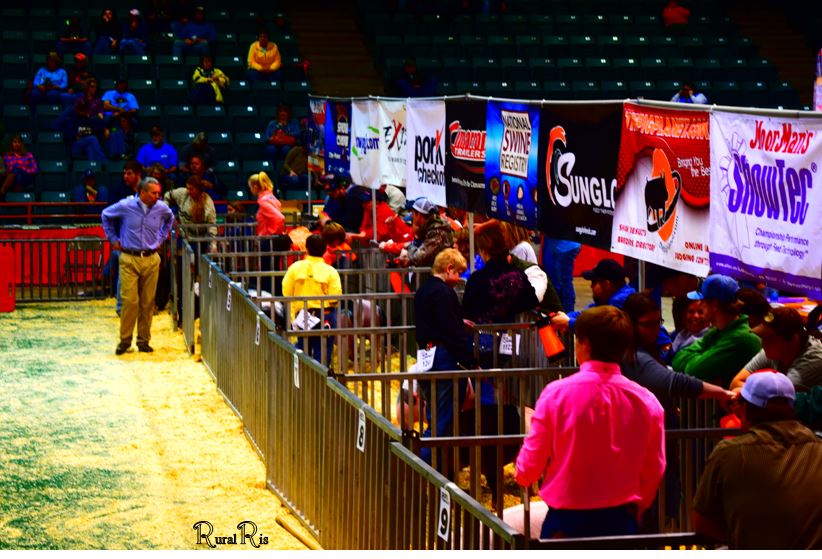
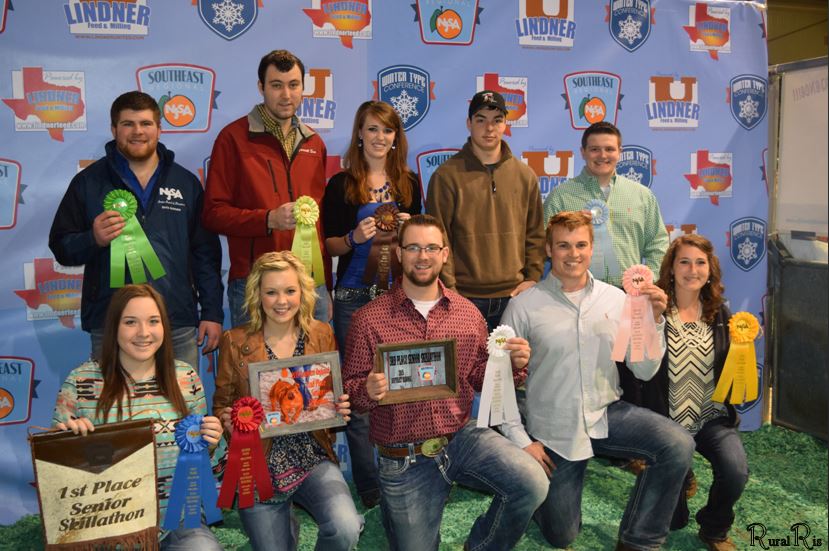
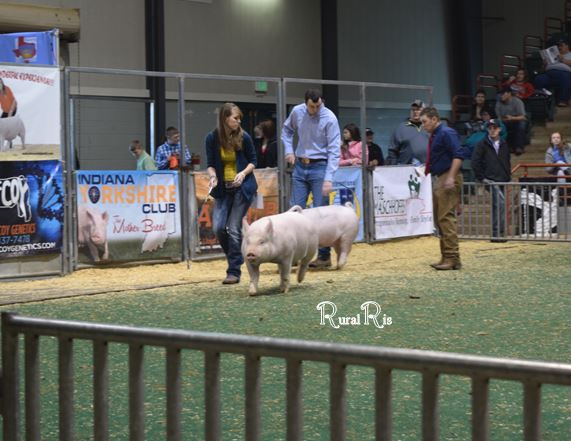
NJSA shows deal with four purebred breeds of pigs–Duroc, Landrace, Hampshire, and Landrace. There is also crossbreds, but to show a crossbred, you have to show a purebred. I went to my first NJSA show last year in Georgia and really enjoyed it. Because there are a lot of shows all year round, people get to know each other and it becomes quite the community with pizza parties, games for kids, and of course piggies. The show consists of showmanship classes, skillathon, and both barrow and gilt classes divided in breeds. In the open show (for all ages), there is also boar classes. All in all, there are about450 contestants and 700pigs, if I could guess. You can see why it lasts from Wednesday to Sunday. effectOne of the cool things about dating someone with similar interests as you, is you enjoy doing those things together. Garrett and I met showing pigs and doing livestock events. We talk about pigs and livestock more than most things. Even though we share a passion, that doesn’t stop us from being competitive with each other. We still compare who has more ribbons, but we also help each other out too. This show, he beat me in skillathon with a 7th place and me 8th, but I beat him in sweepstakes with a 10th. He brought home the coolest prize though–a new pig. This show consists of a sale in addition to the show. After selling all our Yorkshire pigs we brought and showed, Garrett (well, his dad) bought a cool Duroc gilt. After much debate, she was named Hazel, and is now the lone red pig in a bar filled with white ones back home.

hazel

I’ve decided that instead of giving you all the many details of our time in Georgia like spilling my drink at Steak ‘N Shake or getting pig pee on my pants, I’ll give you a bunch of pictures of our peachy pig time in Georgia.

me and g

skillathon

perry

gilts show

garrett judge

me and judge


Bringing Home the Bacon

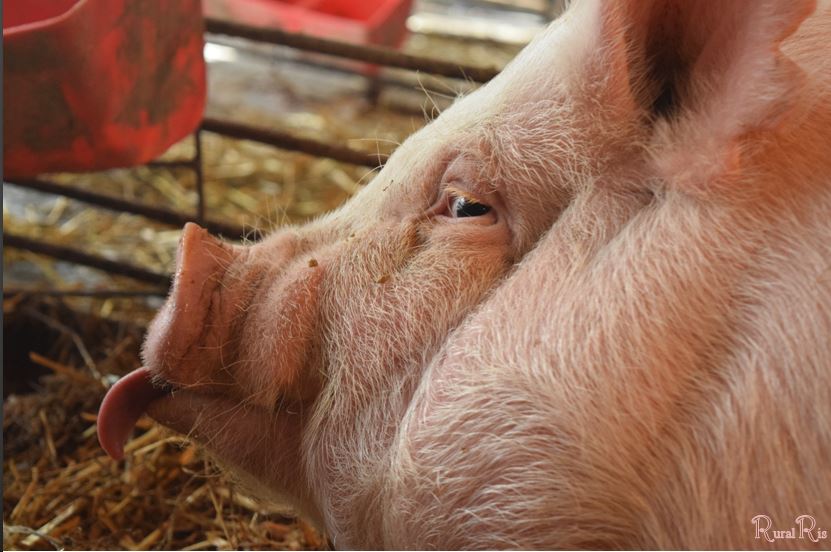
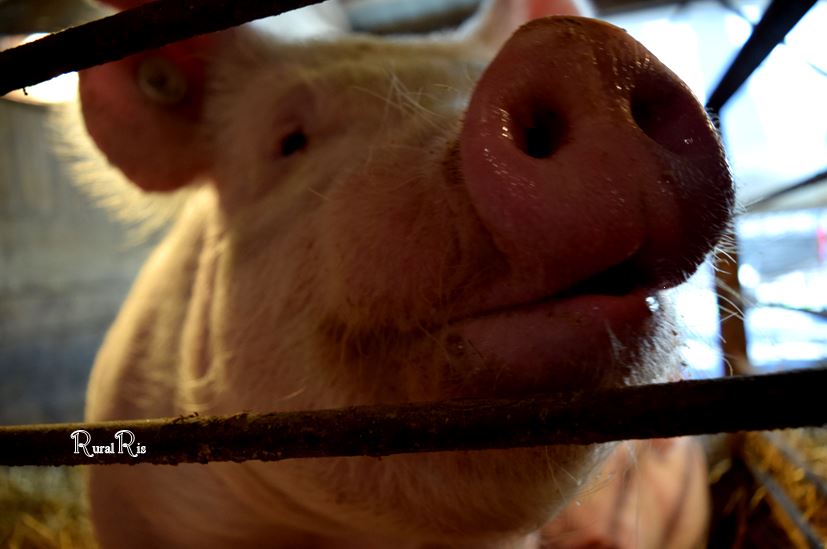
The highly anticipated show pigs are officially here!! I get extra excited about getting pigs, because, well they may be my favorite. Shhhh… don’t tell the others. I hate to play favorites, so I’ll just say I like them A LOT! They are, however, my favorite animal to photograph. They have such personality and are always doing something goofy. Check out this girl:

pig tongue

I told you they are hams (pun intended), but before I show you more of the photo shoot I had with the little porkers, I wanted to share with you the behind the scenes of bringing home the bacon.

A house that won’t blow down

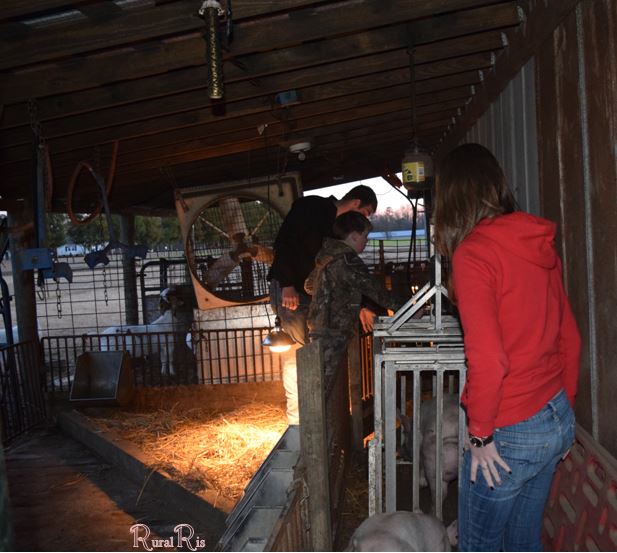
When we first started showing pigs, we kept them in a dirt lot with a shelter. While this may sound like the perfect habitat for pigs, it really wasn’t. They rooted up the entire pen, creating craters that were begging for a twisted ankle. The pigs would get sunburnt from laying around, and it was a huge mess. So now, our pigs are kept on a concrete floor under a shelter. They have a bedding box, heat lamps for the cold, and a fan for the heat. Unfortunately, concrete floors mean we have to clean the poop everyday, but it is loads better than what we had before.

Before we could bring the pigs home, we had to clean and scrub the pen (sheep had been occupying it for a few months). We laid down fresh bedding and even built a new “wall”. By wall, I mean we put up a fabulous tarp to break the wind during the winter.

I’m pretty sure our toes and hands were frozen by the end of it, but it looked great. We had a house that wouldn’t blow down or be blown into.

What makes the bacon?

Of course, pigs don’t grow off of air. They have to have pig food. We get ours from a local mill that blends a special mixture of corn, vitamins, minerals, soybean meal, and more together to make a delicious meal. Alec ran to the feed store to pick up the sustenance for the pigs.

fee

This little piggy went wee, wee all the way home…

Today was the day to pick up the pigs. Ahhhh!! I had already picked out the two pigs we were getting at a previous farm visit (if I don’t pick them out ahead of time, I have been known to take over an hour to pick one out). See Farms is about an hour from our house, and we have been getting pigs from them for about two years. We have typically had great success with them including two champion titles and a first place at NC State Fair. It helps that they are nice folks and live close by. All three of my brothers and I piled in the truck with trailer in tow to head to Raleigh, NC.

bros

Once there, the Sees showed us the pigs as well as the new litter of pigs they had. They were gracious enough to let me snap a bunch of photos of all the pigs. I was able to capture some good ones like these:

pig


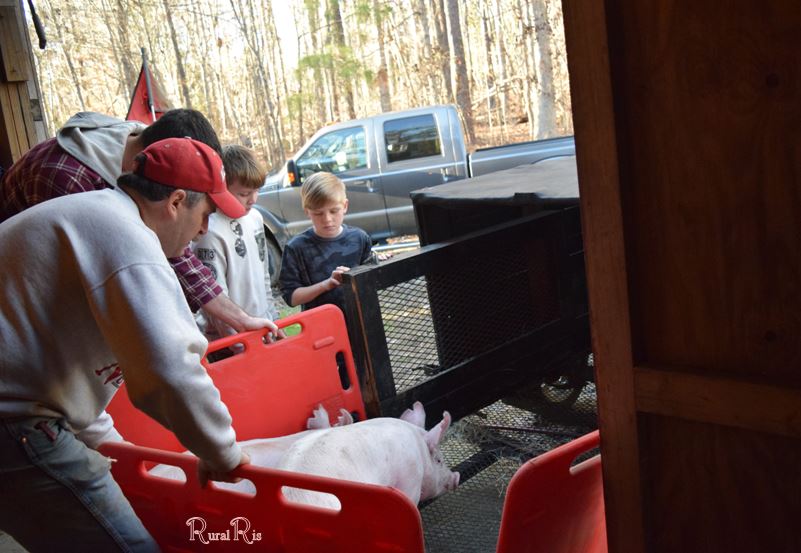
baby piggiesLoading the pigs up into the trailer went pretty smoothly. One of the pigs was super loud, grunting the whole time, but she didn’t give any problems.

loading

After loading them, I told Isaac that the money to pay for them was in the front seat of the truck. He ran to go get it and returned, handing the money to me. I told him, “Oh no. That isn’t for me. Give it to the Sees.” You know, teaching them young about business transactions (really, I think it just teaches them the sting of dropping a chunk of money).

The boys decided to name their two gilts (girl pig) Halo and Miss Bacon. When we arrived home, we unloaded them and ran them through the scales to determine their weight. In case you are curious they were 145 and 110 pounds.

weigh

We then let them into the pen, to which they explored contentedly. I commenced partaking in another photo shoot.

Bringing home the bacon is a little more than just picking up pigs. It includes tarps, frozen fingers, feed runs, photo shoots, and some money. It is all most definitely worth it! A big thanks to See Farms for these beautiful girls!

see farms


A World Without Ag Wednesdays: Marshmallows

Of all of the byproducts that pigs and other animals give us, I think marshmallows are one of the most fun. I mean, they are squishy, delicious, and a necessity in hot chocolate and at campouts. I decided to write a poem for this week’s World Without Ag Wednesdays. I hope you enjoy!

Ode to Marshmallows

Oh marshmallow, oh so white,

Although now, you come in colors so bright.

You’re fluffy and sticky,

But definitely not icky.

Made from pig byproducts like gelatin.

Some people say, “oh what a sin!”

How can they, though,

When your attendance is imperative in the campfire glow?

This brings me to your relationship with chocolate and grahams.

Wow! That combo is a grand slam.

Your glory doesn’t stop there.

You and hot chocolate are quite a pair.

Pigs love you as a treat,

That’s how we get them ready to compete.

Mini, or jumbo–we love all of them.

Thanks to pigs and ag we have the marshmallow gem.

hot chocolate

I also wanted to share this fun video. I hope everyone knows that this is NOT how we get marshmallows. It is simply a humorous video 🙂