Teeth Tell the Tale

BEa teethWhat does this picture say? Would you believe those teeth tell a tale? Well, they do.

Goats have eight incisors on their bottom jaw. With those eight teeth, we can generally determine how old the goat is. Just like humans lose teeth as they get older, so do goats, except they don’t have a goat tooth fairy. The picture above is of a goat that is over four years old. She has lost all her teeth and grown large ones. If a goat gets past eight years old, the teeth will look worn. The photo below is of Lulu, who is getting close to nine years old. You can see the start of wear on her teeth compared to the four year old goat in the first picture. There is more gaps and her teeth are narrower.
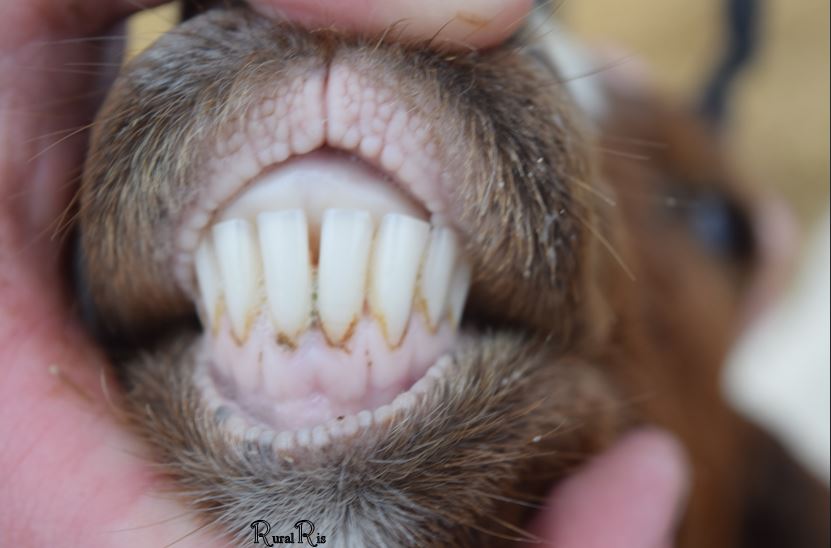
lulu tetth

They will lose their first pair of teeth after turning one year old, and a pair each year after that. The first two teeth to go are the middle pair. This next goat lost her first set of teeth in October. She is already working on her second pair. They aren’t quite all the way in.
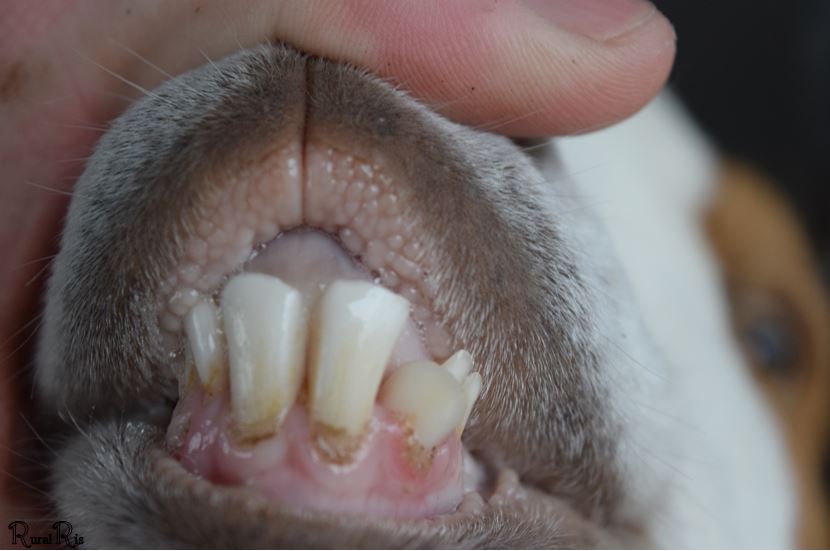
lady teeth

And this little guy hasn’t lost any yet:
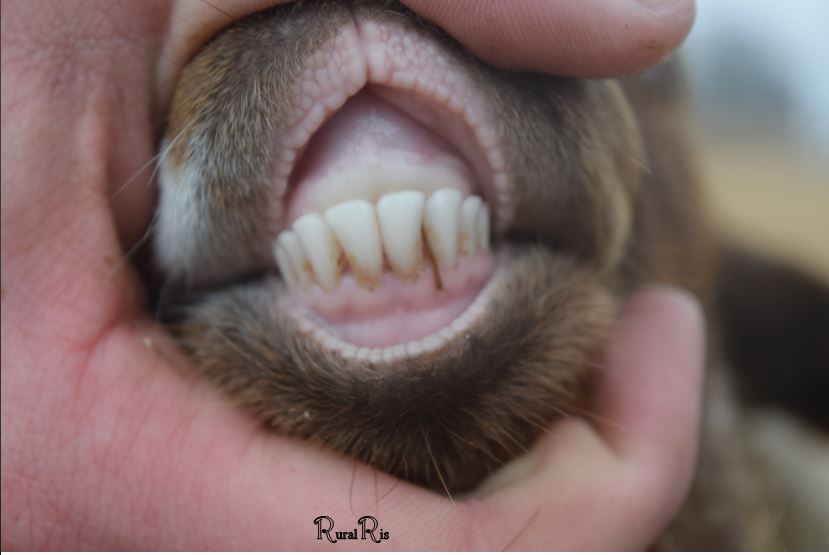
bulelt teeth

His teeth are smaller and all the same size.

Why is this important?

Although we keep records of when our goats were born and know how old they are, sometimes we buy goats from sales that do not give us records. We can look at their teeth to see how old they are and whether or not they are too old to breed. We also have to know how old a goat is for showing purposes. We are not allowed to show goats over a year old except at the state fair. At many shows, officials will check the teeth of the goat to see if they are eligible or, when at the state fair, if they are in the right class. We have had to change classes at the state fair a few times when the goat was late losing their teeth or lost them early. Silly goats.


Your turn!!

We’ve covered what different ages looks like. Now it is your turn to give it a try. How old do you think this goat is? Comment below with your answers.

Capture

Happy Farm Fact Filled Fridays!
Bringing Home the Bacon

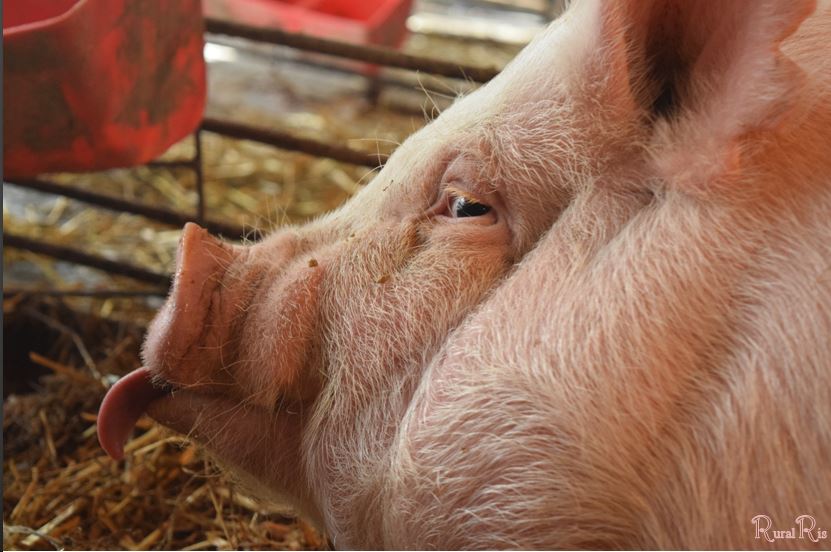
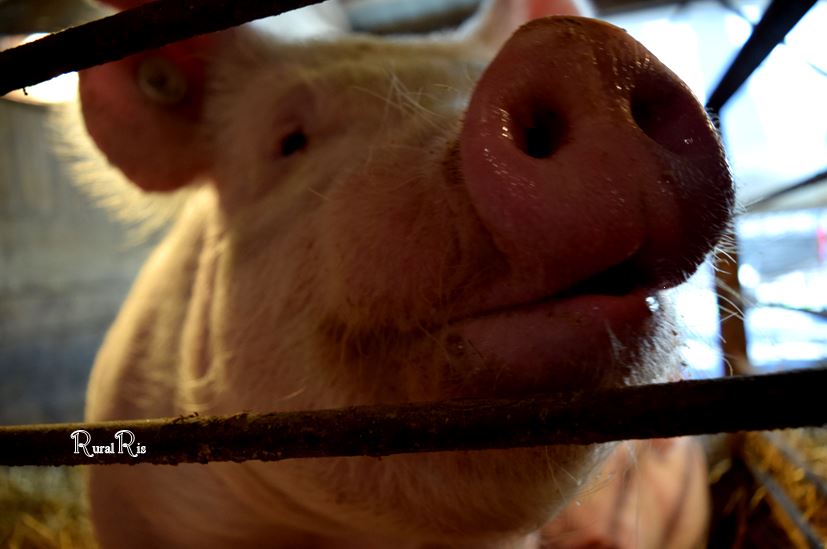
The highly anticipated show pigs are officially here!! I get extra excited about getting pigs, because, well they may be my favorite. Shhhh… don’t tell the others. I hate to play favorites, so I’ll just say I like them A LOT! They are, however, my favorite animal to photograph. They have such personality and are always doing something goofy. Check out this girl:

pig tongue

I told you they are hams (pun intended), but before I show you more of the photo shoot I had with the little porkers, I wanted to share with you the behind the scenes of bringing home the bacon.

A house that won’t blow down

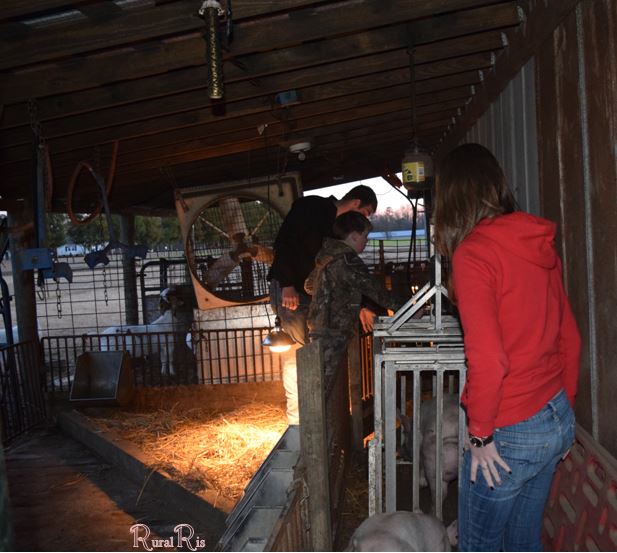
When we first started showing pigs, we kept them in a dirt lot with a shelter. While this may sound like the perfect habitat for pigs, it really wasn’t. They rooted up the entire pen, creating craters that were begging for a twisted ankle. The pigs would get sunburnt from laying around, and it was a huge mess. So now, our pigs are kept on a concrete floor under a shelter. They have a bedding box, heat lamps for the cold, and a fan for the heat. Unfortunately, concrete floors mean we have to clean the poop everyday, but it is loads better than what we had before.

Before we could bring the pigs home, we had to clean and scrub the pen (sheep had been occupying it for a few months). We laid down fresh bedding and even built a new “wall”. By wall, I mean we put up a fabulous tarp to break the wind during the winter.

I’m pretty sure our toes and hands were frozen by the end of it, but it looked great. We had a house that wouldn’t blow down or be blown into.

What makes the bacon?

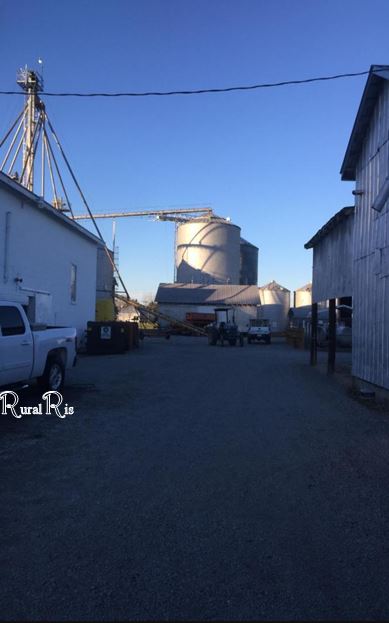
Of course, pigs don’t grow off of air. They have to have pig food. We get ours from a local mill that blends a special mixture of corn, vitamins, minerals, soybean meal, and more together to make a delicious meal. Alec ran to the feed store to pick up the sustenance for the pigs.

fee

This little piggy went wee, wee all the way home…

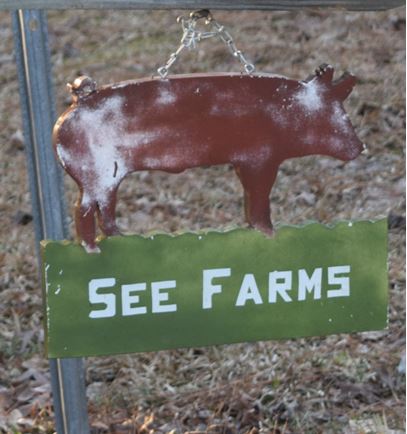
Today was the day to pick up the pigs. Ahhhh!! I had already picked out the two pigs we were getting at a previous farm visit (if I don’t pick them out ahead of time, I have been known to take over an hour to pick one out). See Farms is about an hour from our house, and we have been getting pigs from them for about two years. We have typically had great success with them including two champion titles and a first place at NC State Fair. It helps that they are nice folks and live close by. All three of my brothers and I piled in the truck with trailer in tow to head to Raleigh, NC.

bros

Once there, the Sees showed us the pigs as well as the new litter of pigs they had. They were gracious enough to let me snap a bunch of photos of all the pigs. I was able to capture some good ones like these:

pig


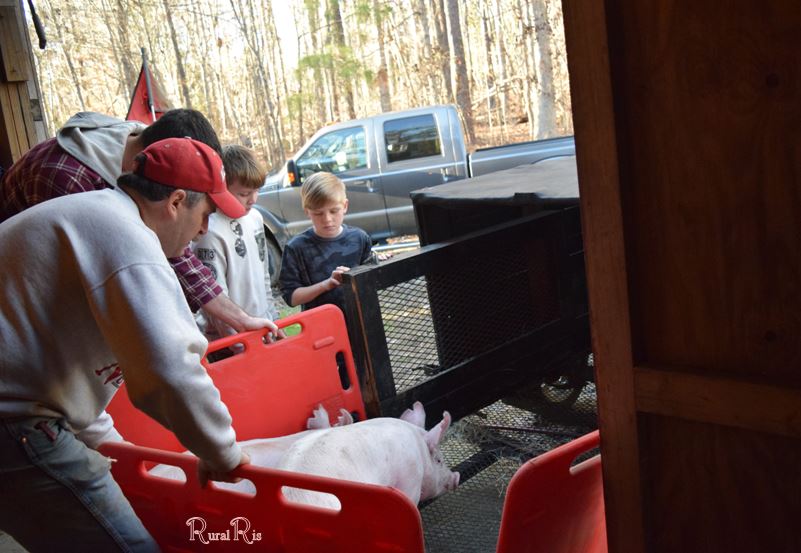
baby piggiesLoading the pigs up into the trailer went pretty smoothly. One of the pigs was super loud, grunting the whole time, but she didn’t give any problems.

loading

After loading them, I told Isaac that the money to pay for them was in the front seat of the truck. He ran to go get it and returned, handing the money to me. I told him, “Oh no. That isn’t for me. Give it to the Sees.” You know, teaching them young about business transactions (really, I think it just teaches them the sting of dropping a chunk of money).

The boys decided to name their two gilts (girl pig) Halo and Miss Bacon. When we arrived home, we unloaded them and ran them through the scales to determine their weight. In case you are curious they were 145 and 110 pounds.

weigh

We then let them into the pen, to which they explored contentedly. I commenced partaking in another photo shoot.

Bringing home the bacon is a little more than just picking up pigs. It includes tarps, frozen fingers, feed runs, photo shoots, and some money. It is all most definitely worth it! A big thanks to See Farms for these beautiful girls!
see farms


Chewing Cud and Ruminating

Have you ever wondered what’s up with cows chewing their cud? What is that stuff and why do they do it? Maybe you don’t even know what I’m talking about. That is perfectly ok because we are about to cover cud and more.

Cud Chewing
Cud Chewing

Let’s start with the fact that cows are ruminant animals, along with  goats, sheep, and deer. A ruminant animal means they have 4 compartments to their stomach. They don’t have 4 stomachs, but rather it is 4 rooms that make up one stomach. Each “room” has its own special job and name. Before getting to that, let’s first go to the beginning–the mouth.

Photo Cred: UKAg, Agripedia

Ruminants do not have upper incisors, only lower. These are for plucking food. They do have pretty sharp upper and lower molars, though that grinds their food. These teeth are most useful the second time around. I realize that sounds really strange, but ruminants mostly swallow their food whole. They will regurgitate it to chew it again. I’m getting ahead of myself, though.

So, the cow has swallowed the hay. The food travels through the esophagus and hits the first compartment of the stomach–the rumen.

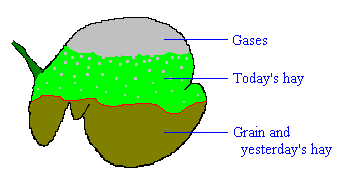
Rumen

This is the largest part of the stomach (holding 4-6 gallons)  and is responsible for a lot of fermentation. Over 50-65% of starch and soluble sugars are absorbed here. Bacteria break down the food and cause carbon monoxide, methane, and hydrogen sulfide to form.

Photo Cred: Colorodo State

These gases build up which results in, well, a belch. More than a belch, though, it is the process of regurgitating the food to re-chew it. Yumm, seconds! Animals chew their cud many hours a day, usually when the animal is resting. Ever heard of the phrase “I’m just ruminating (thinking)?” After breaking down the food even more by chewing the cud, the animal swallows and the food goes into the reticulum.
Reticulum

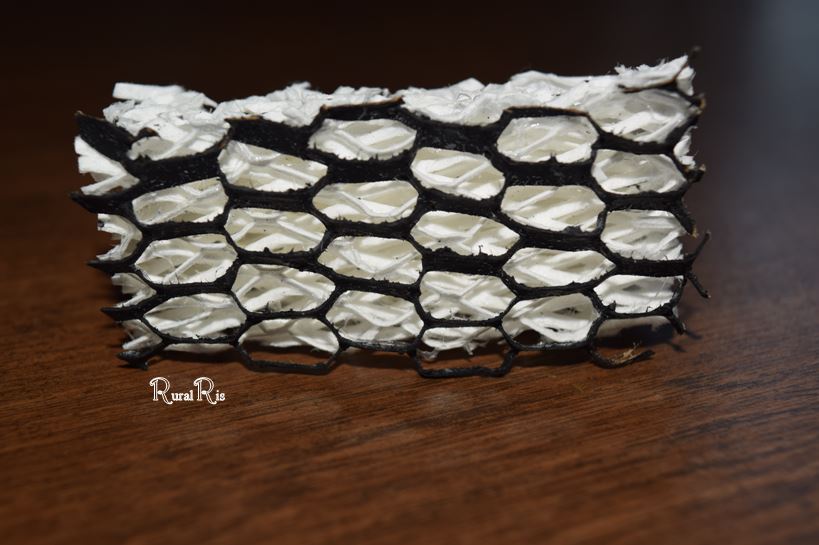
Separated from the rumen by a flap of tissue, this part of the stomach looks like a honeycomb and works like a water filter to catch foreign objects that cannot be digested. filterBecause it catches things like metal or nails, it is often called the hardware stomach. These objects can puncture the reticulum and make its way to the heart causing hardware disease. Hopefully the animal just doesn’t eat “junk” food.

Omasum

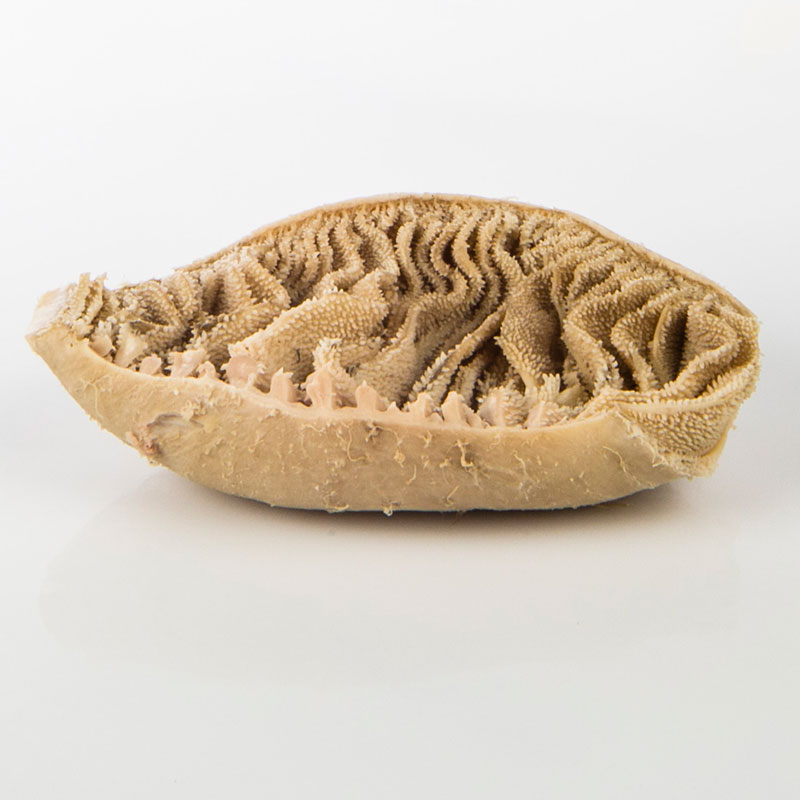
After being sloshed around in the rumen and reticulum, it moves to the omasum. Here, a lot of the water is absorbed. This is a pretty big job, considering that the food that enters, is 90-95% water. The omasum is also called the butchers bible because it looks like it has a lot of pages.

Photo Cred: ABP
Photo Cred: ABP

These pages create more surface are a to absorb the water before heading into the final chamber.

Abomasum

Welcome to the true stomach! The part of the stomach is most like humans, where hydrochloric acid breaks down the rest of the food. There are chief cells on the walls of the abomasum that secrete mucous to protect it from acid damage.

After the abomasum, food travels through the intestines and ends up in little balls of poop (sorry for the graphic mental image).

***

That, my friends, is why cows and other animals chew their cud. They are ruminant animals. Ruminants don’t start chewing their cud until a few weeks or months after they are born. Young ruminants have an esophageal groove that shoots milk straight to the omasum and abomasum. They can get their nutrients in a hurry that way. When they do start chewing cud, I don’t recommend getting cud on you or being near their faces when they burp. It is really gross and stinky.


Sources:

http://www.thebeefsite.com/articles/2095/understanding-the-ruminant-animals-digestive-system

http://www.vivo.colostate.edu/hbooks/pathphys/digestion/herbivores/rumination.html

http://www.abpoffal.com/products/beef/omasum/

Fact Filled Fridays: Not All Wool is Itchy

Happy Friday everyone! I hope you have had a great week and are looking forward to a somewhat relaxing weekend. 🙂

Today I wanted to start a series of “Fact Filled Fridays”, where I throw some random facts out there that you may or may not know. If you have a specific question that you would like me to cover on these Fridays, feel free to shoot me a note!

Earlier in the week, I mentioned that I would explain the different types of wool, because it is super diverse. You may have had that  awful, super itchy wool sweater in your closet that you refuse to wear ever again or buy anything wool again. I get that. I have had those garments too, but through out the years, I have learned that wool is not all itchy. Allow me to introduce you to the many faces of wool.

Glossary:

Before I delve into the types of wool, allow me to give you some terms so you can more easily follow along.

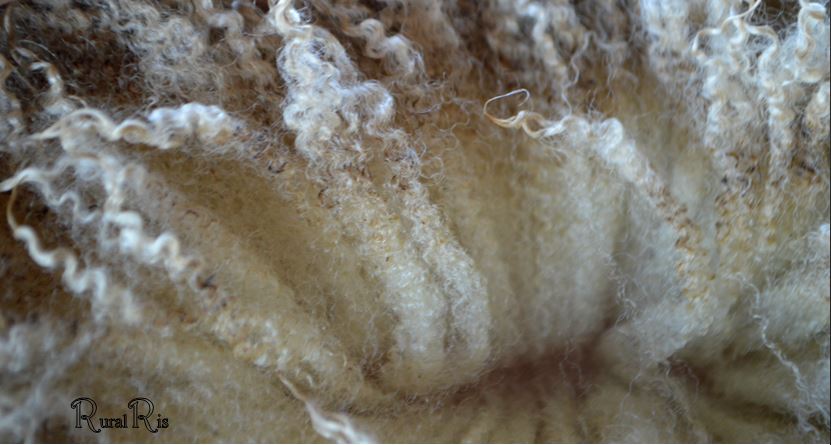
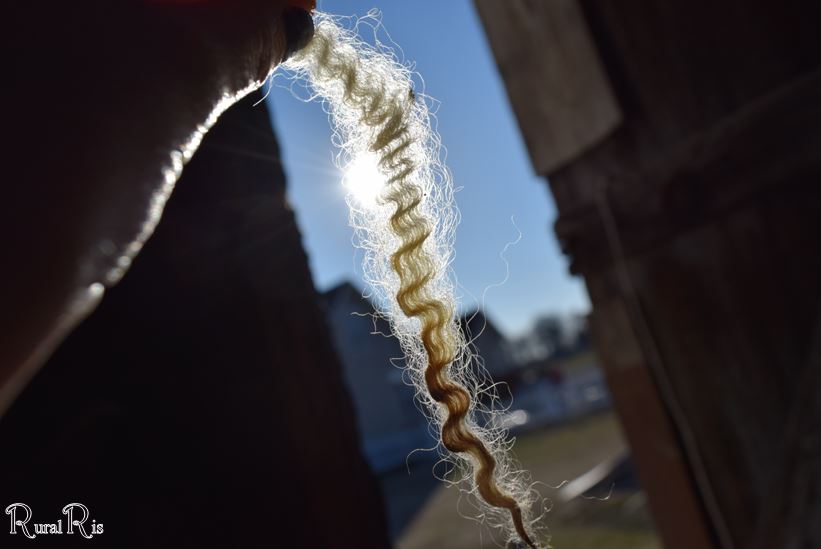
  • Crimp– this is the waves that you see in the wool fibers. The tighter the crimp, the finer the wool.wool crimp
  • Staple length–this is the length of the wool fiber.
  • Micron count–this is the measurement of the diameter of the wool fiber. It is a micrometer, meaning one millionth of a meter.The smaller the number, the finer the wool.

Types of Wool:

  1. Coarse– this wool is typical of your long-wool breeds like Lincoln, Border Leicester, and Cotswold. The crimp on these sheep are more like curls. longwoolEach fiber is of a longer staple length (6-15inches), making it coarser (micron:41-30) and inevitably itchier. Although it is coarser, it is also more durable. It is ideally used in outerwear garments that is not next to the skin. In addition to the long-wool breeds, there are also carpet-wool breeds that fall under the coarse category. These breeds include Scottish Blackface and Karakul. As the name implies, their wool is used for carpets.
  2. Medium — Ranging between the 22-30 micron count, this type of wool is great for various things from sweaters to outerwear garments. If you have sensitive skin, this may still feel itchy to you, but it will certainly make a great layering garment. It is produced by breeds such as the Corriedale, Columbia, and Southdown (the Southdown has more of a down type wool that makes it have more elasticity). It has a staple length of 3-6 inches.
  3. Fine– Alright, here is the moment you’ve been waiting for… the oh so soft wool category. This type of wool you could put on your baby. It is the perfect next to your skin wool.  It has a micron count of 17-22 and a staple length of 2.5-4 inches. The king of this category is the breed Merino. Coming in close to the king is the Rambouillet and Debouillet.

If all this isn’t enough, the fineness of the wool is contingent on the age of the sheep. The finest wool comes from the first fleece of a lamb. Same as humans. Kids’ hair is a lot softer than us big people.

The thing to remember is not all wool is itchy. It is all dependent on what sheep it came from. Typically, if it says Merino, you are dealing with a soft wool, and don’t forget #WearMoreWool.

alec wool

PS if you want to see all the breeds that I mentioned be sure to visit this site for those mentioned and more! (I’m  not responsible for time you may waste looking through all the many faces of sheep)

Source:

American Wool Council

Meet the New Additions

After 6 hours on the road, my brother, Alec and I finally made it home with two new show goats.

The little does were born in September and October. They have some growing to do, but I think they have some great potential. Without further adieu welcome this year’s goats for the spring show and sale in April to the farm.

I would like to introduce Hershey, shown by Gideon…

gid and hersehAnd Reeses, shown by Isaac.

reesesThe boys were super excited to see their new goats, weigh them, and introduce them to their new home.

boys in trailerWithin 5 minutes, they were already wanting to practice showing them with collars and leashes. I told them they might want the newbies to get used to everything first. They agreed that rubbing them would suffice for now.

Of course, I had to snap a picture of the new additions for you guys. Can you say #blogger’slife?

take a picEven Sassy, the barn cat, had to come check things out.

sassStay tuned for two more little girls that will be added to the farm within the coming days. These ones will be much more pink and will say oink!

Quick, Add Muck Boots and Raincoats to the Christmas List

I didn’t know I was getting waterfront property for Christmas this year. With over two and a half inches in 24 hours and no signs of letting up, Christmas Eve has turned into a monsoon. I hope Santa has some sort of boat sleigh, because he is going to need it.

DSC_0254

As I went to feed this morning, I realized that my muck boots have holes in them. Those puddles that resemble lakes quickly spilled into my boots. Is it too late to add muck boots to the Christmas list?

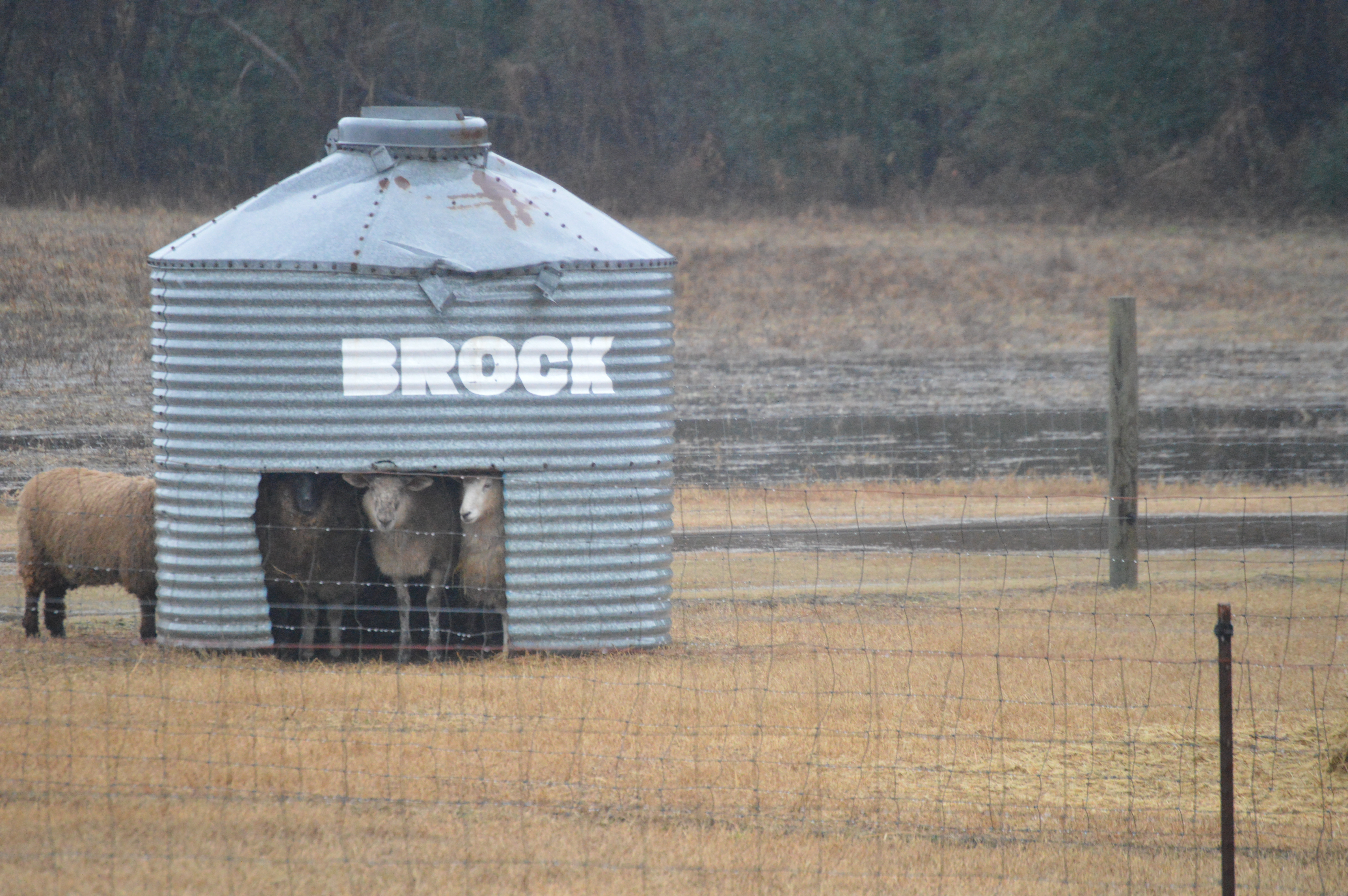
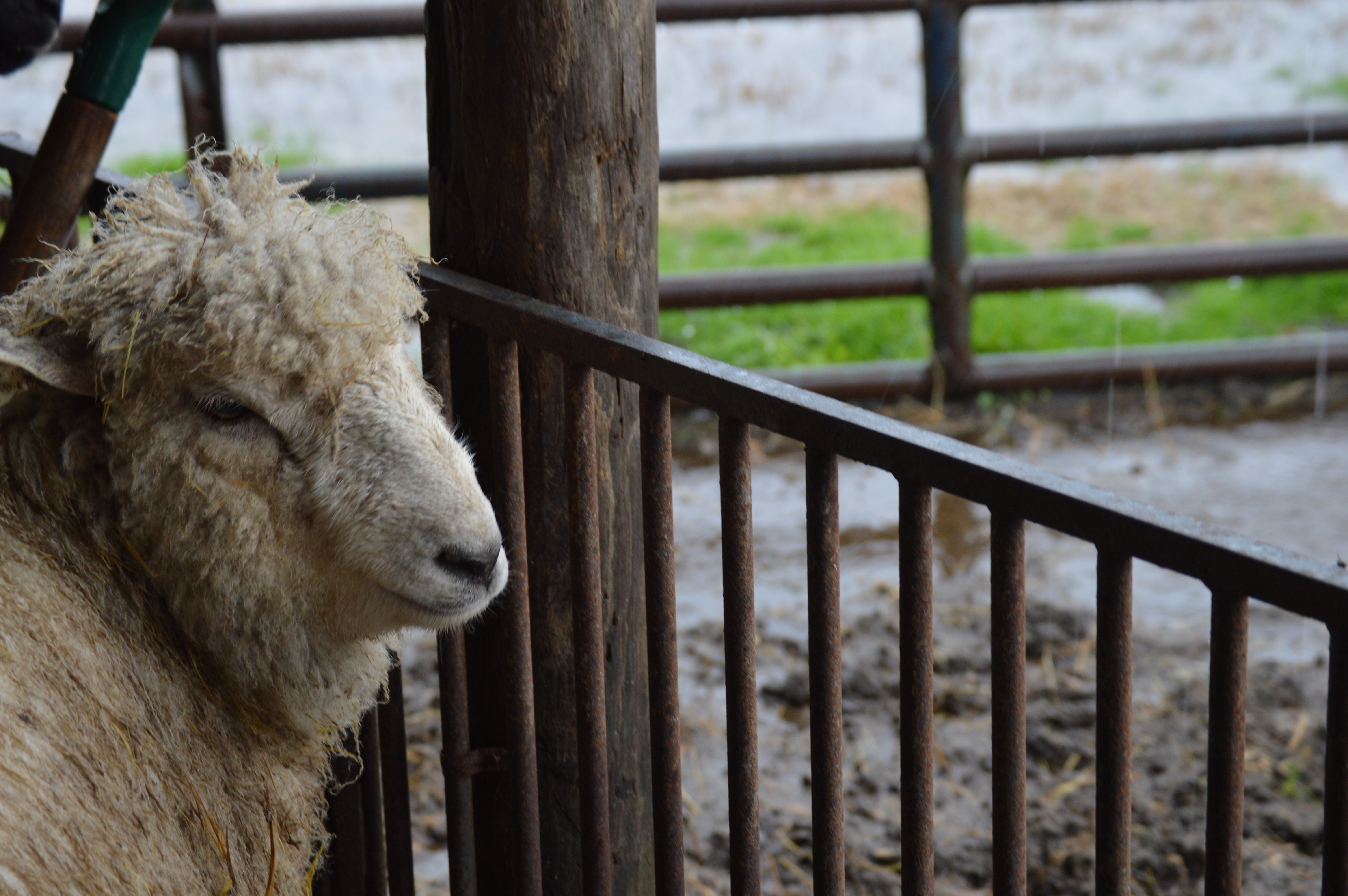
I wasn’t the only one having issues with the rain. The sheep were not pleased and hunkered in their grain bin shelter.

DSC_0233

They were bribed to come up to the bigger shelter with feed, but stopped abruptly when a big, scary puddle stood in their way. They danced for a while before the thought of feed overcame their fear. Soon, six lambs had made their way to both dry land and food. I wonder if the sheep are asking for raincoats and muck boots from Santa too?

"I am not amused"
“I am not amused”

Merry Christmas Eve everyone! If you recently got waterfront property like I did, stay dry out there.


PS Santa, if it isn’t too late, I’d really like waterproof muck boots. Thanks!