Almost Free Food, Frog Legs, and a Tractor Parade–All at the Got to Be NC Festival

I love when a few of my favorite things combine together to make a fun day. Last Saturday, my family and I went to the Got to Be NC Festival.

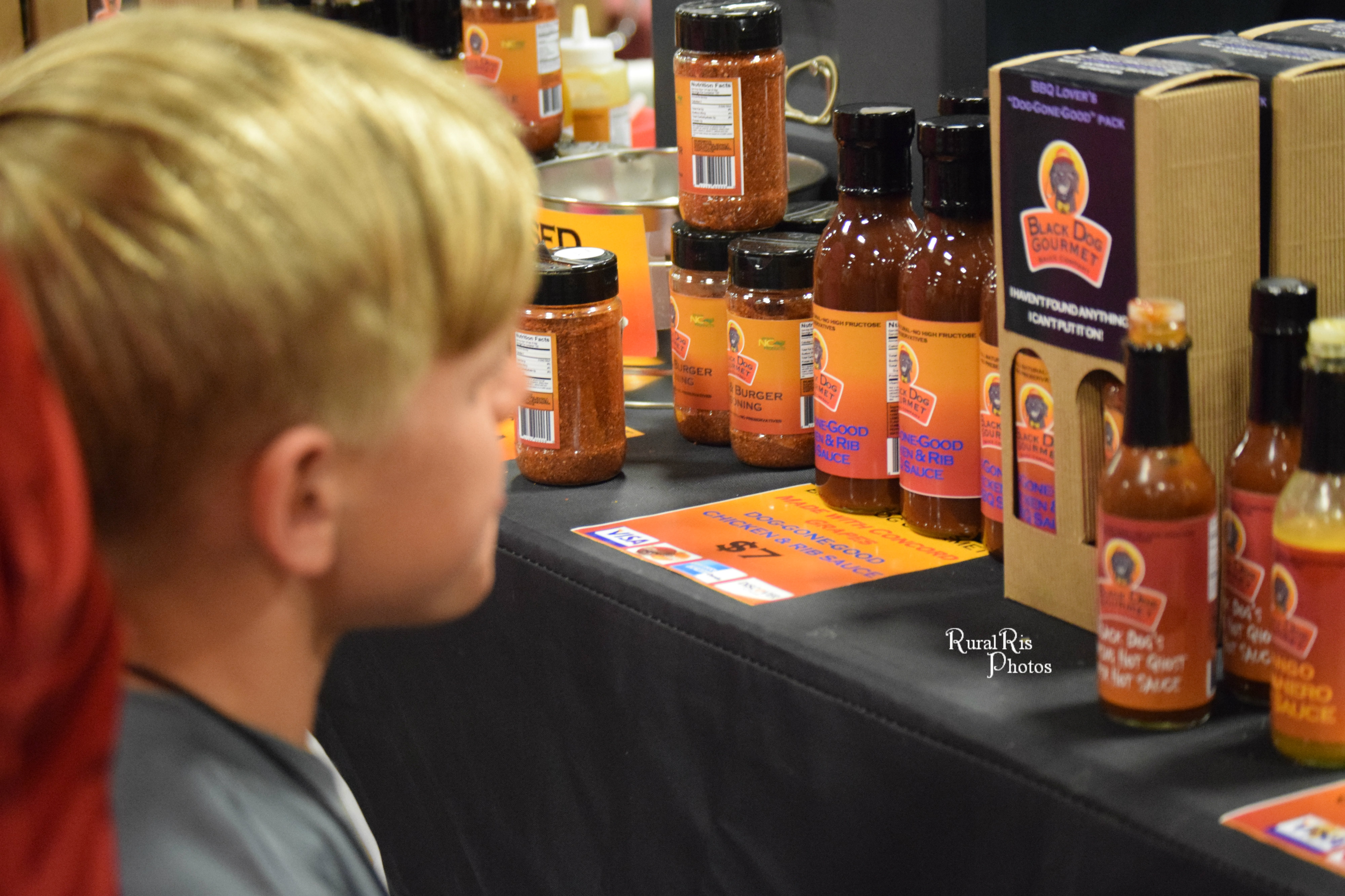
This event is held at the NC State Fairgrounds and hosts a ton of North Carolina vendors and products. There is a tractor parade, flea market, rides, and games. One of my favorite parts (actually it was the BEST part) was trying lots of food. One of the great things about the event is you can pay $2 for all-day access into a giant building filled with food vendors that are giving away all sorts of free food. FREE FOOD! After writing that, I’m realizing that the $2 negates the free part, but it is basically free and so very worth it. Even cooler was the fact that all of the food was NC based. There were peanuts, hot sauces, mints, wine, dips, Bright Leaf hot dogs, and so much more. My favorites had to be Cherry Orchard Food’s pretzel dip mixes (we got the buffalo bleu and chili, cheese, bacon flavors) and the pickled green beans and Bloody Mary mix by Bruce Julian. Of course, I could have stayed at the Bright leaf hotdog station forever, but I feel like that is a given. Gideon was in heaven with all of the hot sauce samples (the boy absolutely loves hot sauce and has never found one he couldn’t handle). Isaac was obsessed with Sunshine Energy drink. Thankfully, he didn’t get wound up off of the samples. All in all, the $2 was absolutely worth it!
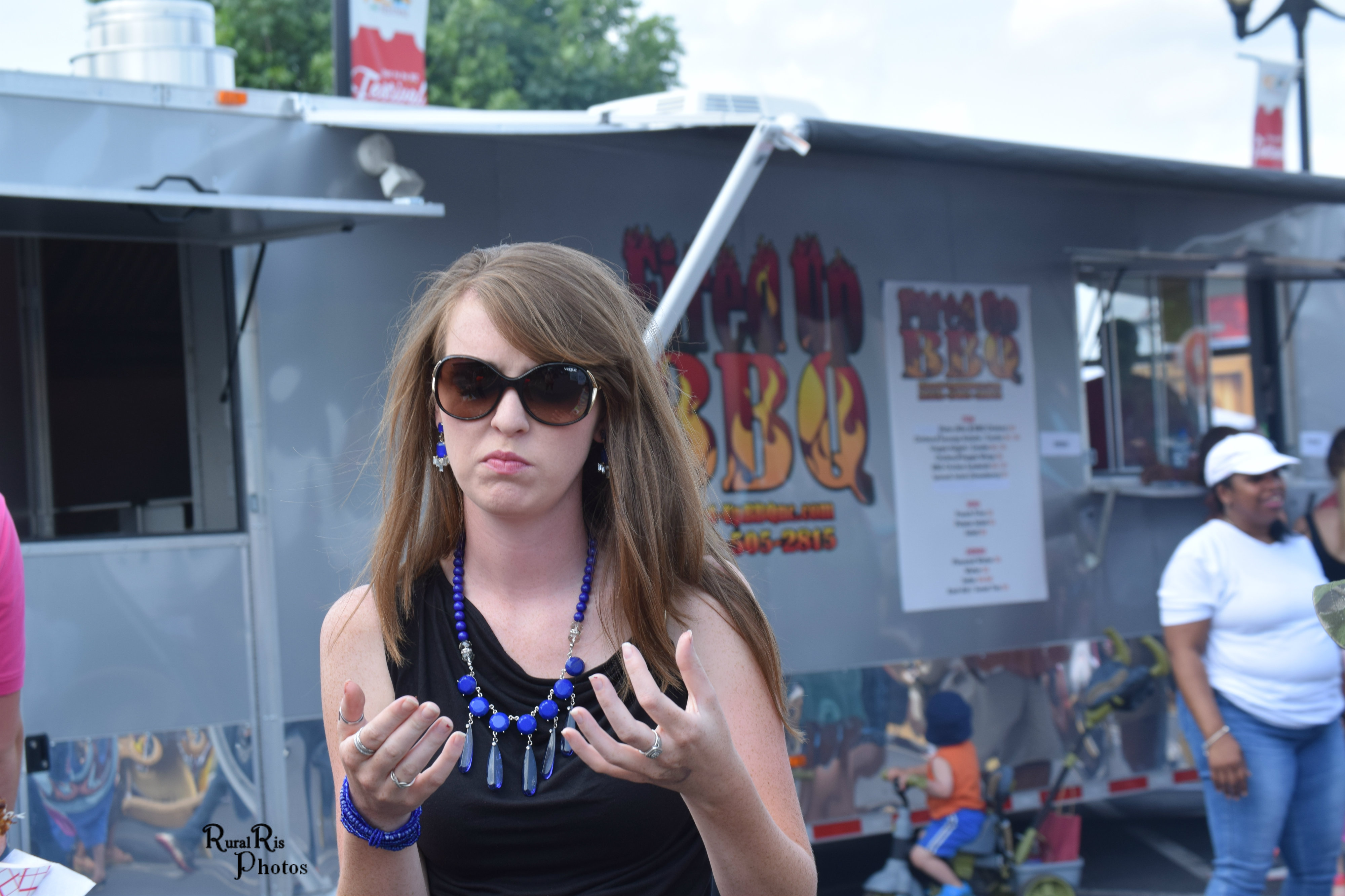
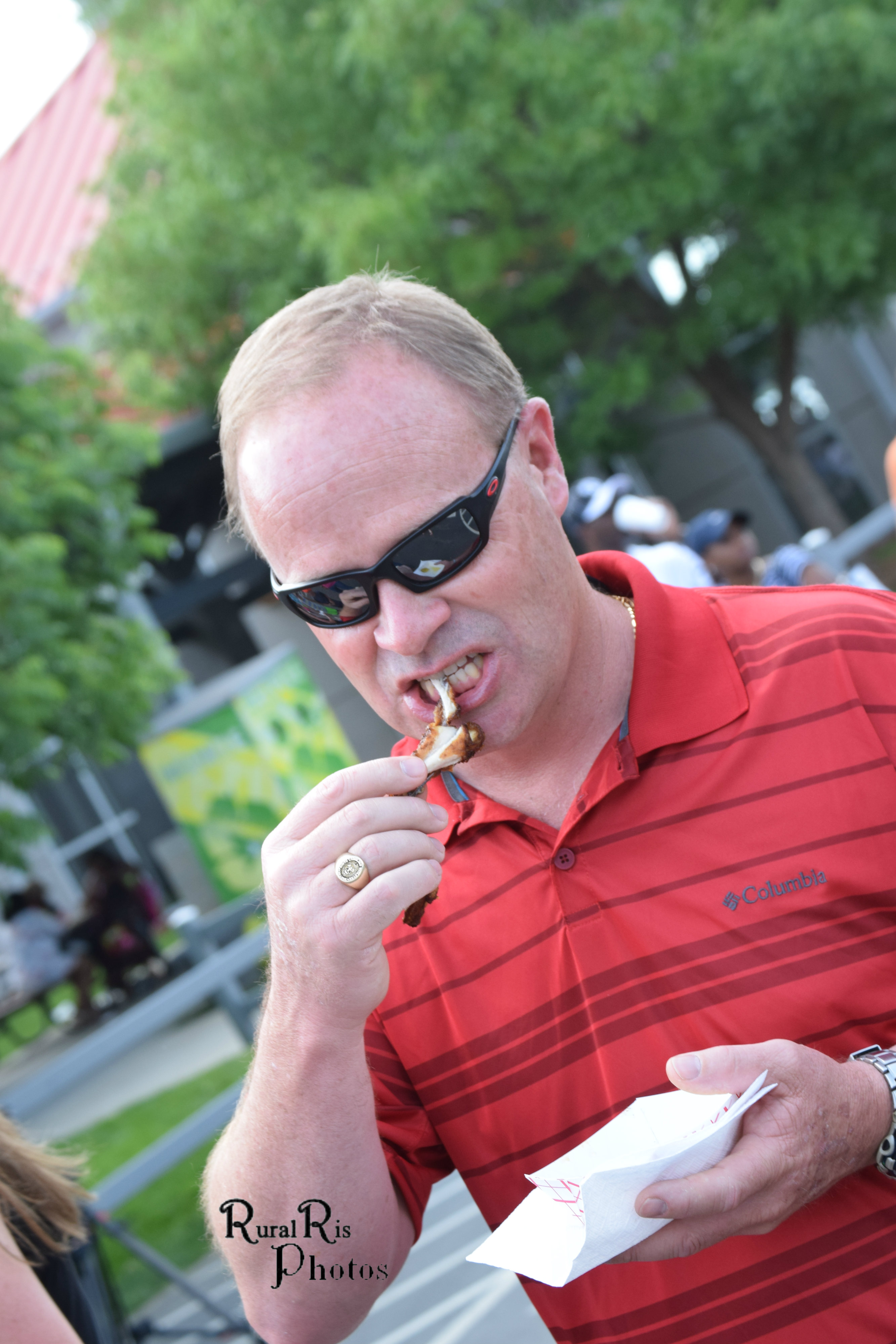
hot saueI paid another $2 to try some very odd food. I ordered deep fried sweet tea. It was essentially a doughnut drenched in very syrupy tea. While it wasn’t bad, it was too sweet for me. Daddy ordered frog legs.dad frog Now, if you know me, you know I HATE frogs. I am utterly petrified of them, yet somehow, for some reason, I ate a bite of the frog legs. frog legs
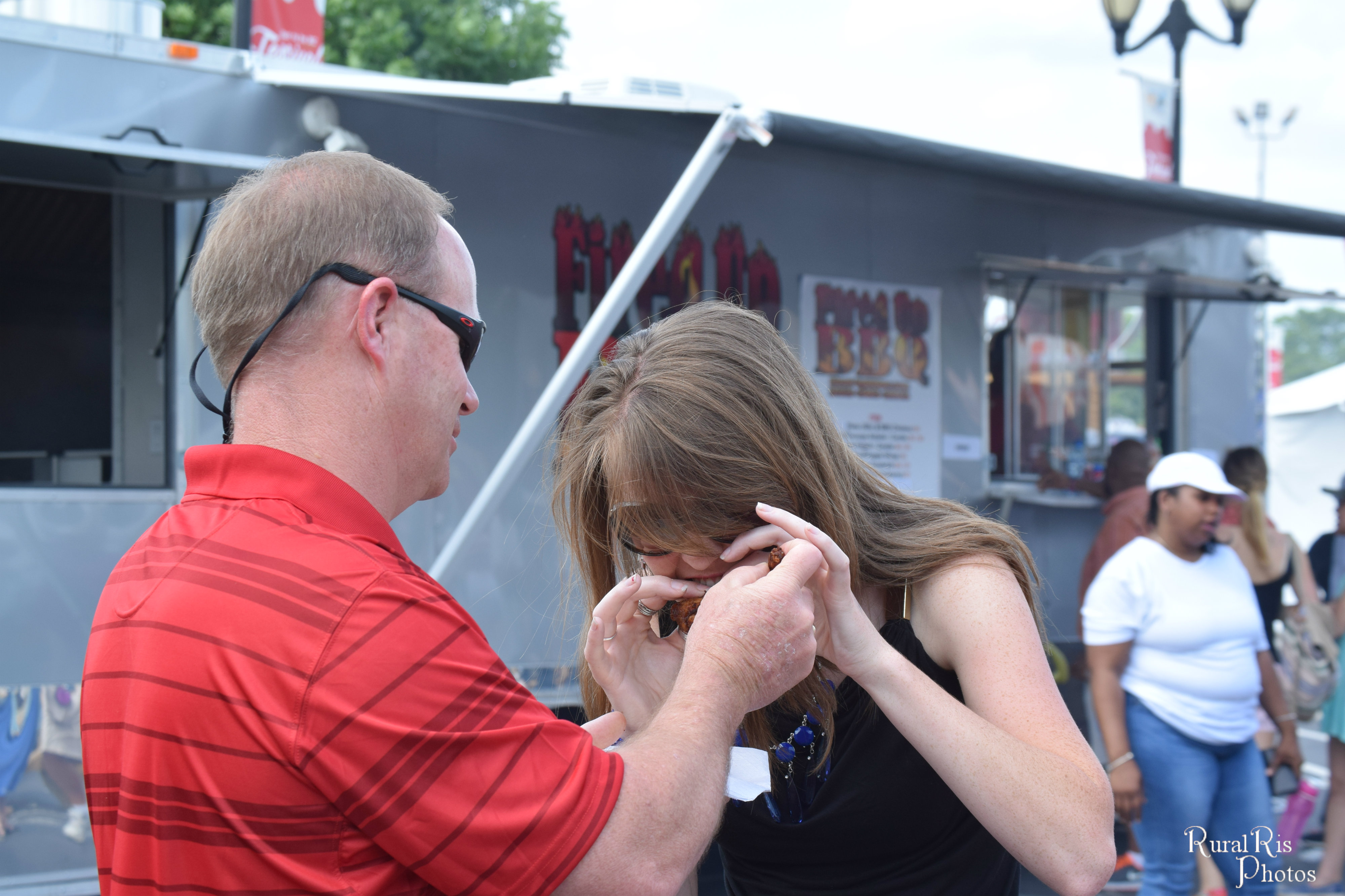
did i really
Obviously, I was thinking about what I just did…

I know. I may be going insane, but it wasn’t half bad until I actually thought about it. Then it wasn’t so good. I can cross it off my bucket list, though (not that it was really on it). Adding to the craziness, was our photo bomb guy. Do you recognize him?
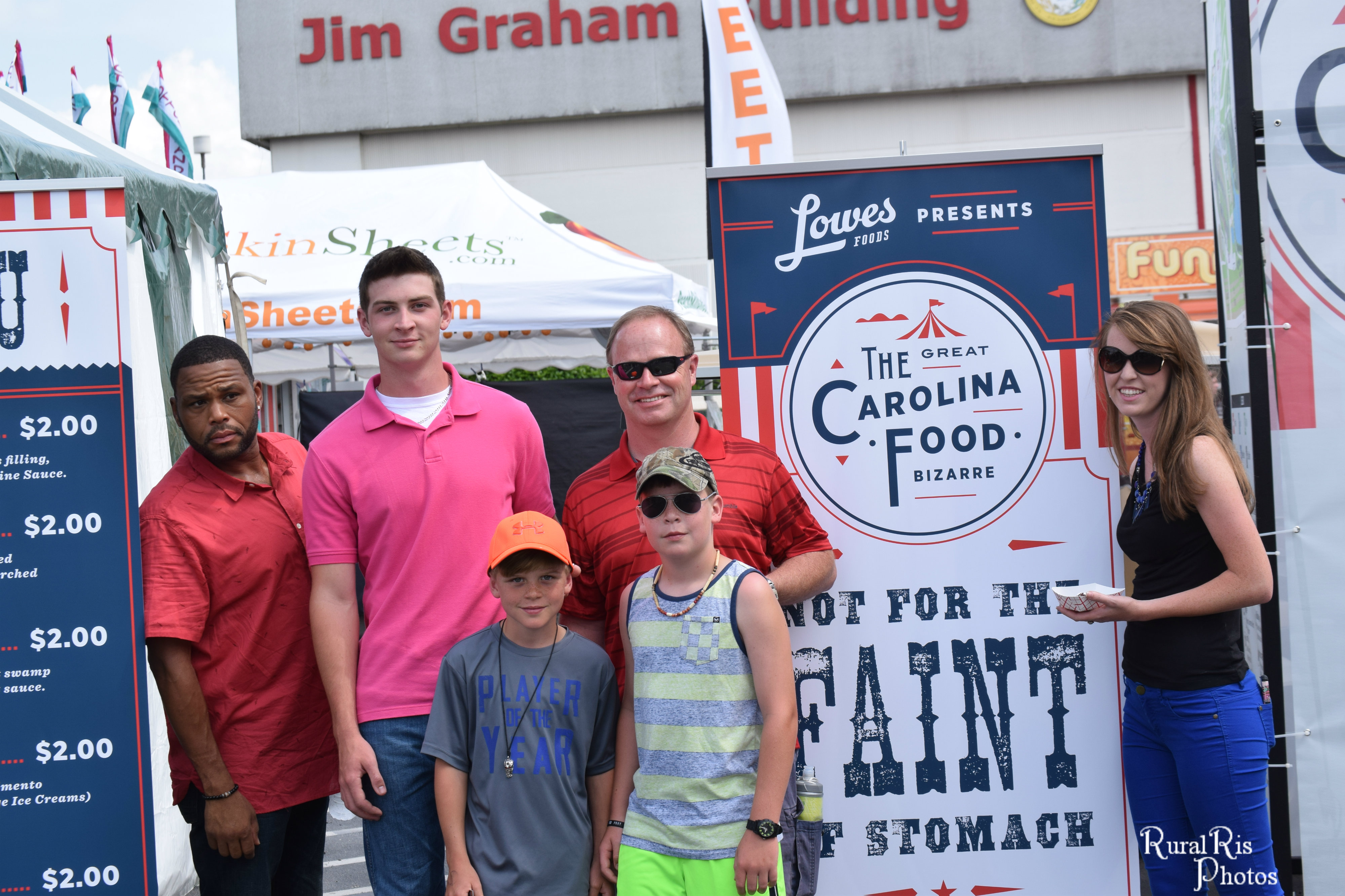
anthHe is Anthony Anderson, an actor. He has played in movies like Transformers. He was at the festival, filming for a food show, and he totally photo bombed us! Too funny!

Our main point in being at the event was not food, believe it or not. My brother, Alec, and I both received NC State Fair Livestock scholarships along with 22 others and were invited to come to the shin dig for a ceremony. The scholarship is brand new, and was started with a change to the NC State Fair livestock sale. A percentage of the proceeds of the Sale of Champions goes to the scholarship fund. Awesome, huh? Alec and I were very honored to receive the scholarship and participate in the festivities. We met the NC Commissioner of Agriculture and got to ride in the tractor parade. Our families were able to ride in the parade too. It was perfect.
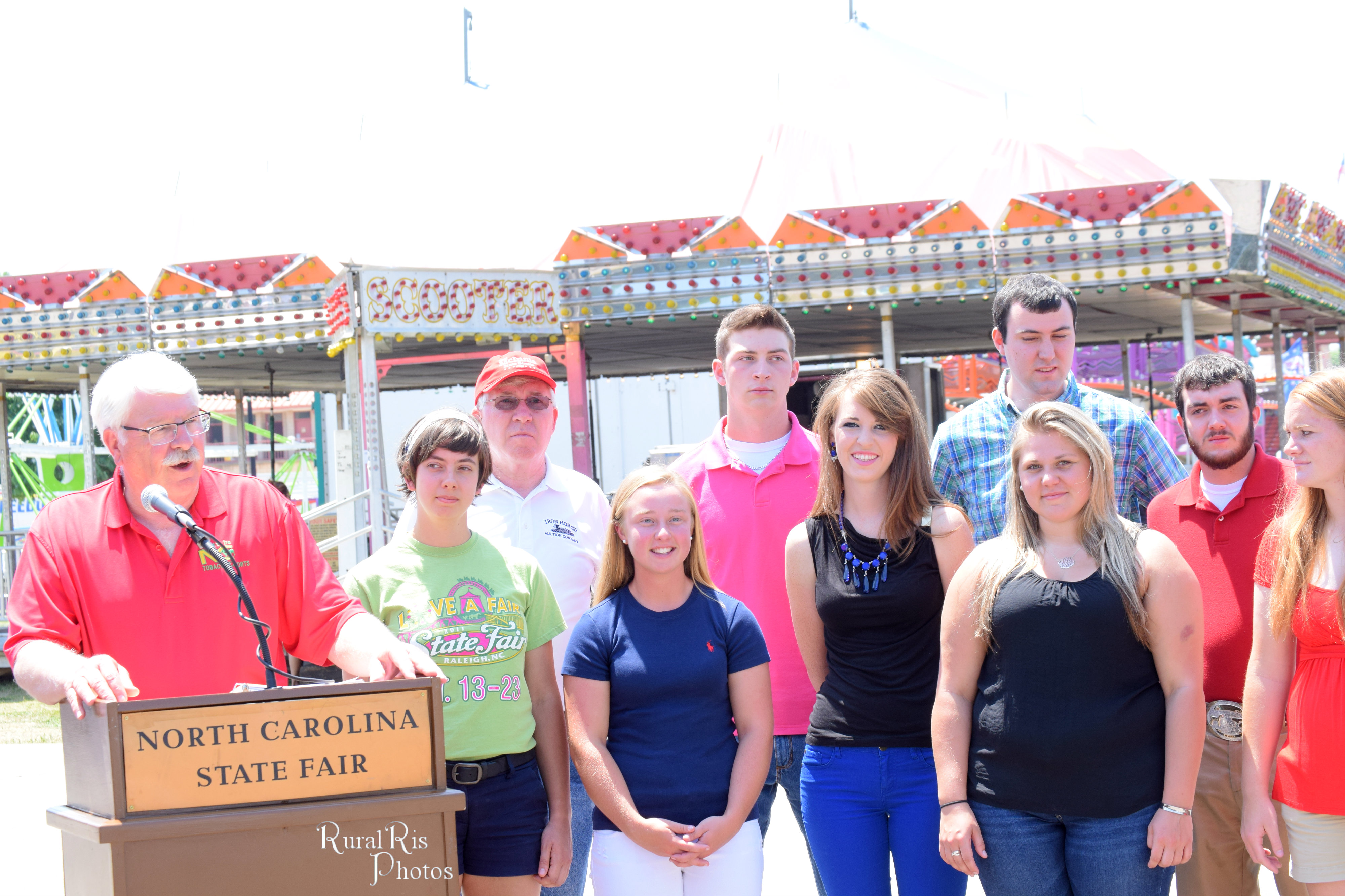
scholarshipIt was also a nice final hurrah. Garrett and his family (he and his sister also received the scholarship) were able to come to the festival. Garrett was leaving that day to drive to Illinois where he would be working as an intern all summer for Maschoff’s, a large hog company. I’m super proud of him, but it was bittersweet to see him go.
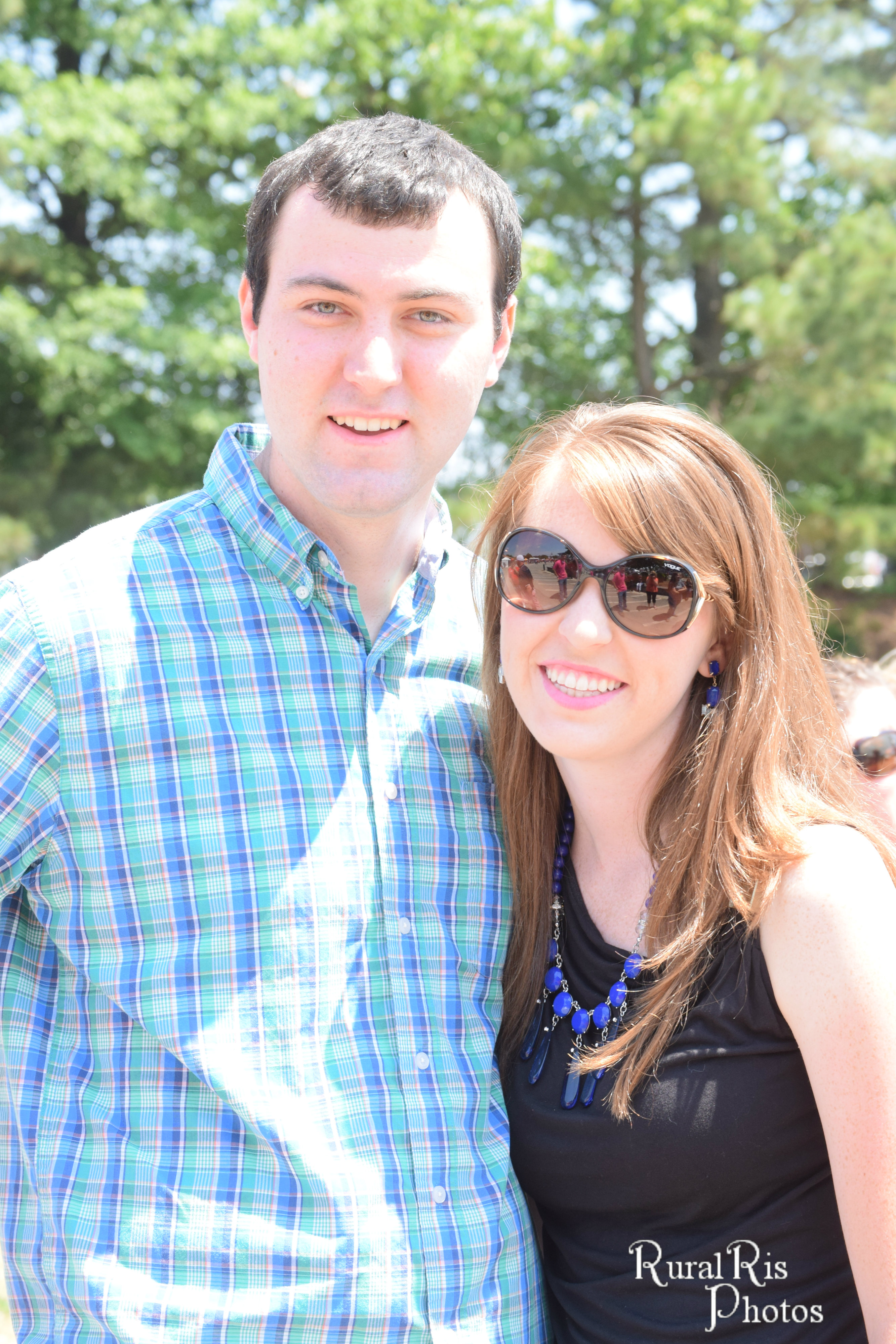
g and mI jokingly told him I was now single for the summer. No worries, I’ve only gone on one date so far. They were short, blonde and cute. Don’t you agree?
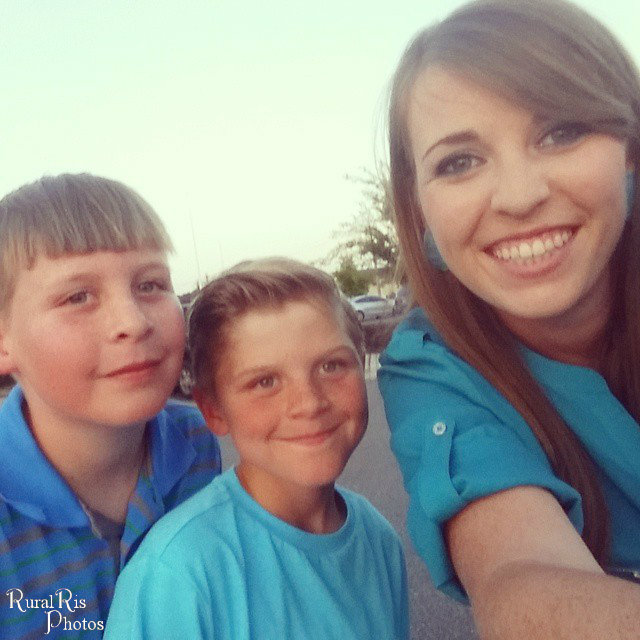
date night with boysThe rest of the day was spent walking around and enjoying everything.
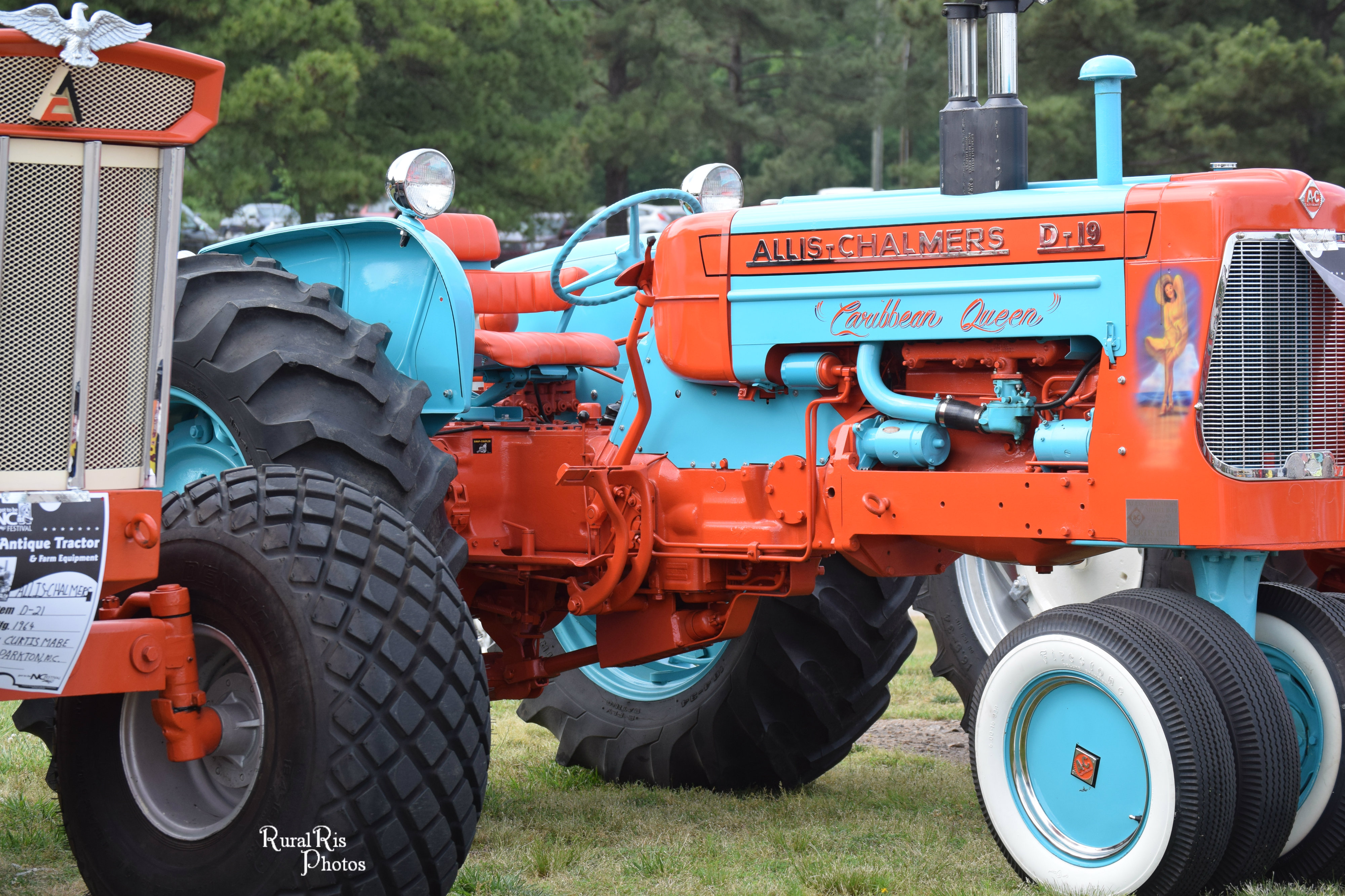
paradetractor paradeag festboys and matag fest boys dadSo, there you go–a quick recap of some of the happenings around. I strongly recommend the Got to Be NC Festival and definitely the $2 entry to try all the NC based foods.
An Endangered Species: The Farm Family–You Can Help!

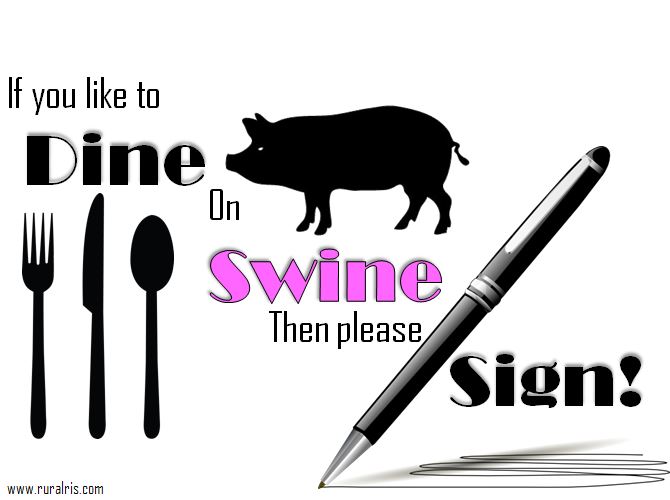
Coming across a petition for or against something happens about as often as gas prices change. OK, maybe not quite that much, but they do pop up quite often. Some petitions seem rather silly or only matter to a select few, but there are those certain petitions that can make an impact on many lives. They have the potential to make a difference and they matter to more than just a few individuals. I’m not talking about the petition I saw regarding Bojangles’ Cheddar Bo Biscuits and their goal of making sure every Bojangles establishment sells the cheesy goodness (although, it is a good thing to petition for). The petition I have in mind that is worth taking time to sign is the Protect North Carolina Farm Families. If you like to dine on swine, then you should definitely sign!

swine and dine

What is the petition about?

This petition has been created as a result of a large amount of attacks on the swine industry for many years.The industry has been put in a poor light by bad press, activist groups, and lawsuits regarding animal welfare and the environment (read about the latest major attack here). The petition’s goal is to bring attention to the good that the industry provides (such as jobs and the economy) and highlight the families behind the farms. The goal is to get 10,000 signatures by June to send to Governor Pat McCrory.

Why is this petition and movement so important?

Sadly, there are groups that have not only stirred up trouble regarding the hog industry, but they have also caused a lot of grief and harm. Not only have they had rallies in Raleigh and put up billboard campaigns, but they have filed countless lawsuits, against both larger and smaller farms, most of which are family owned. There have been cases of bankruptcy and the loss of those farms. Even within the larger companies, individuals are being singled out for lawsuits causing a lot of stress and burdens. At times, the only thing these families are guilty of is owning a farm. While there may be cases of neglect and poor management, the majority of cases do not involve this. Almost always, farmers try to negotiate and mediate with these groups to reach an understanding or agreement; however, it is often that this does no good.

With all that being said, farmers are your neighbors. They are your friends. They are the people you go to church with or see at your kid’s baseball game. Farmers are families, trying to make a living like anyone else. Not only are they families like yours, but they have a passion for what they do. They work hard to create a quality product for you. The life of a farmer is unpredictable, with unforgiving weather, disease outbreaks, and property damages. Add to this unpredictability, the potential for groups to sue them. It is often a scary world for farmers.
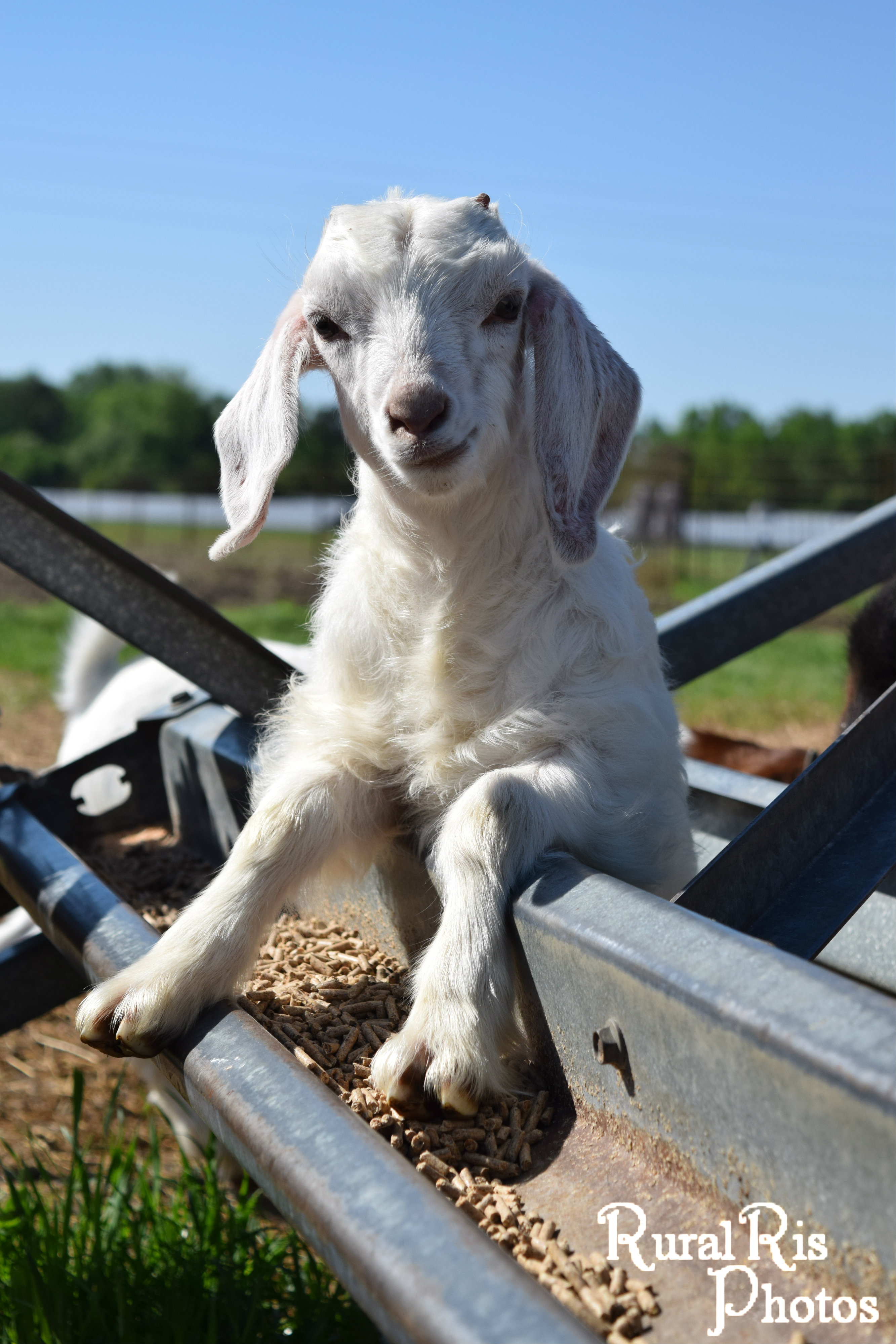
By  signing this petition, you are not only showing your support of farmers, but you are helping families–moms and dads, kids, grandparents. You will also be helping your own family. Showing support for farmers and the job that they do, helps ensure an affordable product for you. What is that product, you ask?  Bacon, pork chops, sausage, and ham. It isn’t just the delicious products that complete your breakfast meal, it is also everyday products you may not realize are made possible by pigs. Do you like s’mores? Marshmallows are made possible by pigs. How about the Superbowl? They are throwing a pigskin football. If that doesn’t get you, there is also insulin, soap, crayons, just to name a few. The point is, that if you sign this petition you are helping to keep products like these affordable for your family. It is a win-win situation. More than one family wins. Signing this petition is important, and your voice matters. The goal is 10,000. Make sure you are among those marks.

I don’t support hog farming practices, so I shouldn’t sign this petition

While I would encourage you to do as much research as possible about hog farming practices, I understand that you may simply just not agree with them. By signing this petition, you are not really supporting those practices, but rather, you are supporting FAMILIES and their livelihood. I don’t know of many who would disagree with that cause. Not only are you supporting families, but you are joining a community. In this community, you can have conversations and learn. Please, do not get hung up on the fact that you may not support certain practices. Look at the larger scope and support your fellow human, join a conversation, and be willing to learn. Perhaps we may learn a thing or two from you. I would ask, that if your mind is closed, to please open your heart up to a family much like your own.

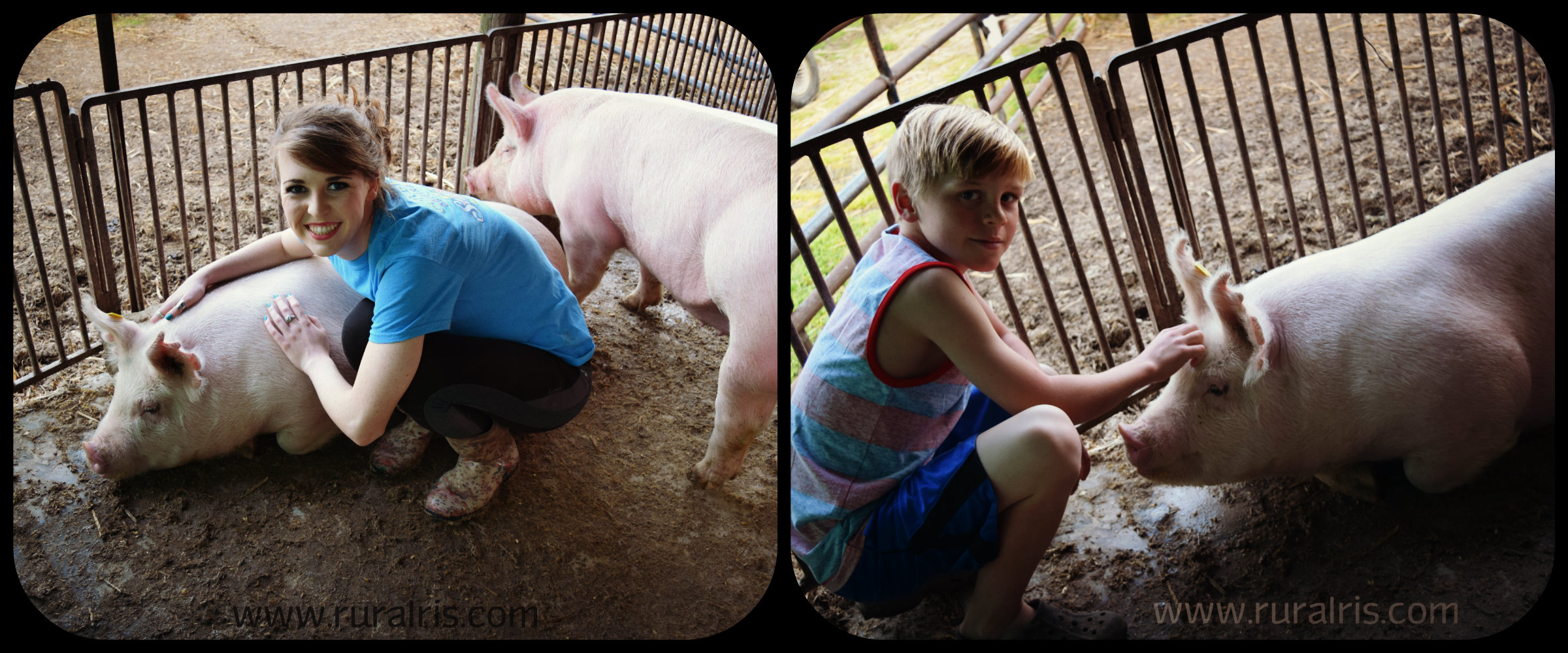
collage pigs

I don’t have the time

I promise you that you have time. It takes less than 5 minutes. Click on this link and SIGN! It is just that simple. It took you longer to read this post than it would to sign it.

I want to do more than sign!

Great! You can become a sponsor for the initiative. Your logo will be featured on the site. You can also do something as simple as sharing this petition as much as possible. Get your family and friends to sign. Tell your farming story. Tell your friend’s farming story. Share your support for NC farm families in any way you can, whether that is a bumper sticker, word of mouth, or through Facebook. Know that every little thing counts.

Whatever your stance is, wherever you are from, please be sure to sign the petition to support NC Farm Families. It takes less than 5 minutes and is a worthy cause. Farm families are already an endangered species with less than 2% of the population accounting for farm families. With recent attacks, some may not survive. If you like bacon and you like to dine on swine, then please SIGN! If you aren’t a bacon fan, that’s fine. Have a heart, take part and support local families. Thank you in advance! Your support means the world!


Giant Jenga and a Farm Visit

One of my favorite things to do is share agriculture with others (I’m sure it is in no way obvious), especially kids. This past week, we had a passel of kids come out and visit the farm, and it was a blast!

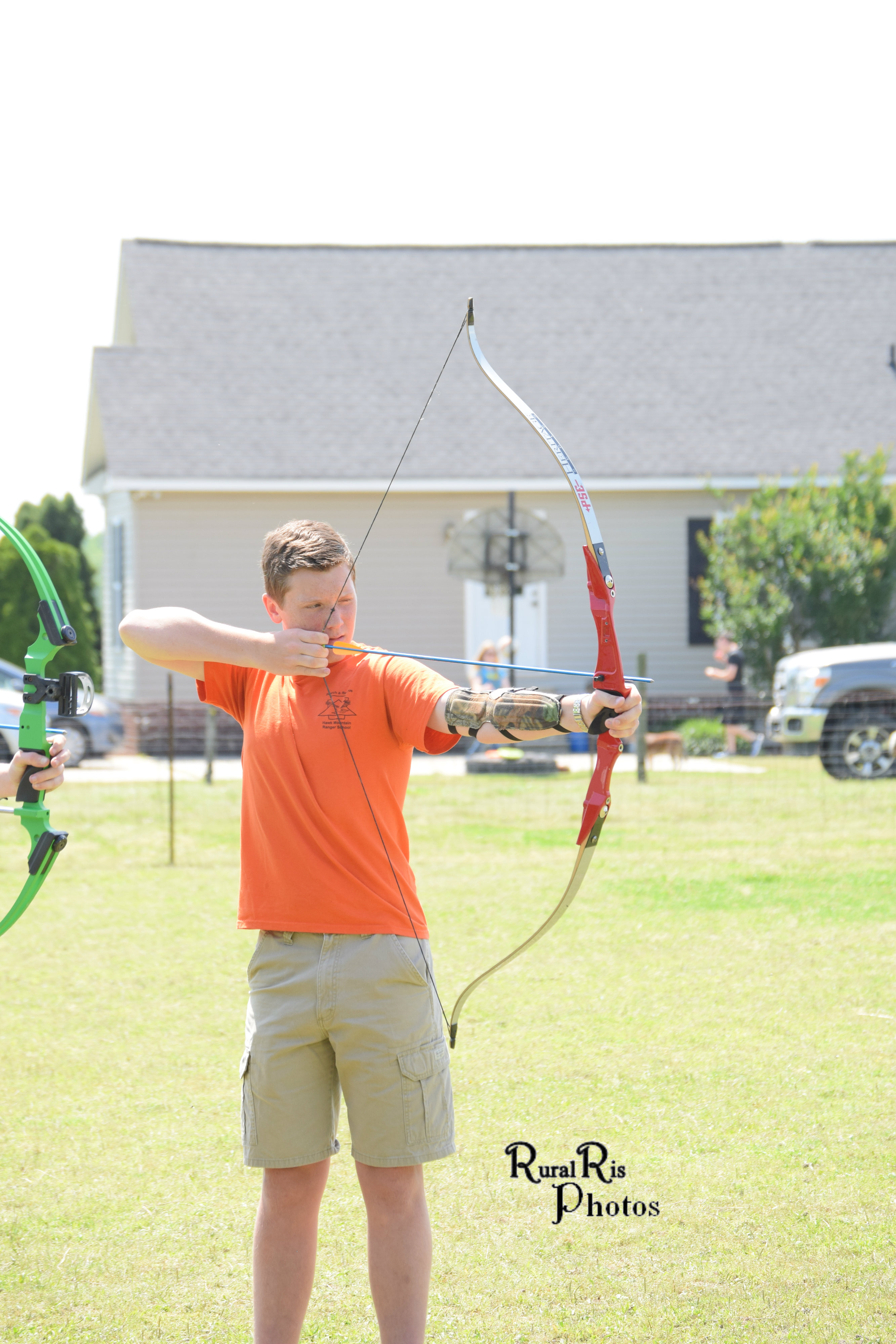
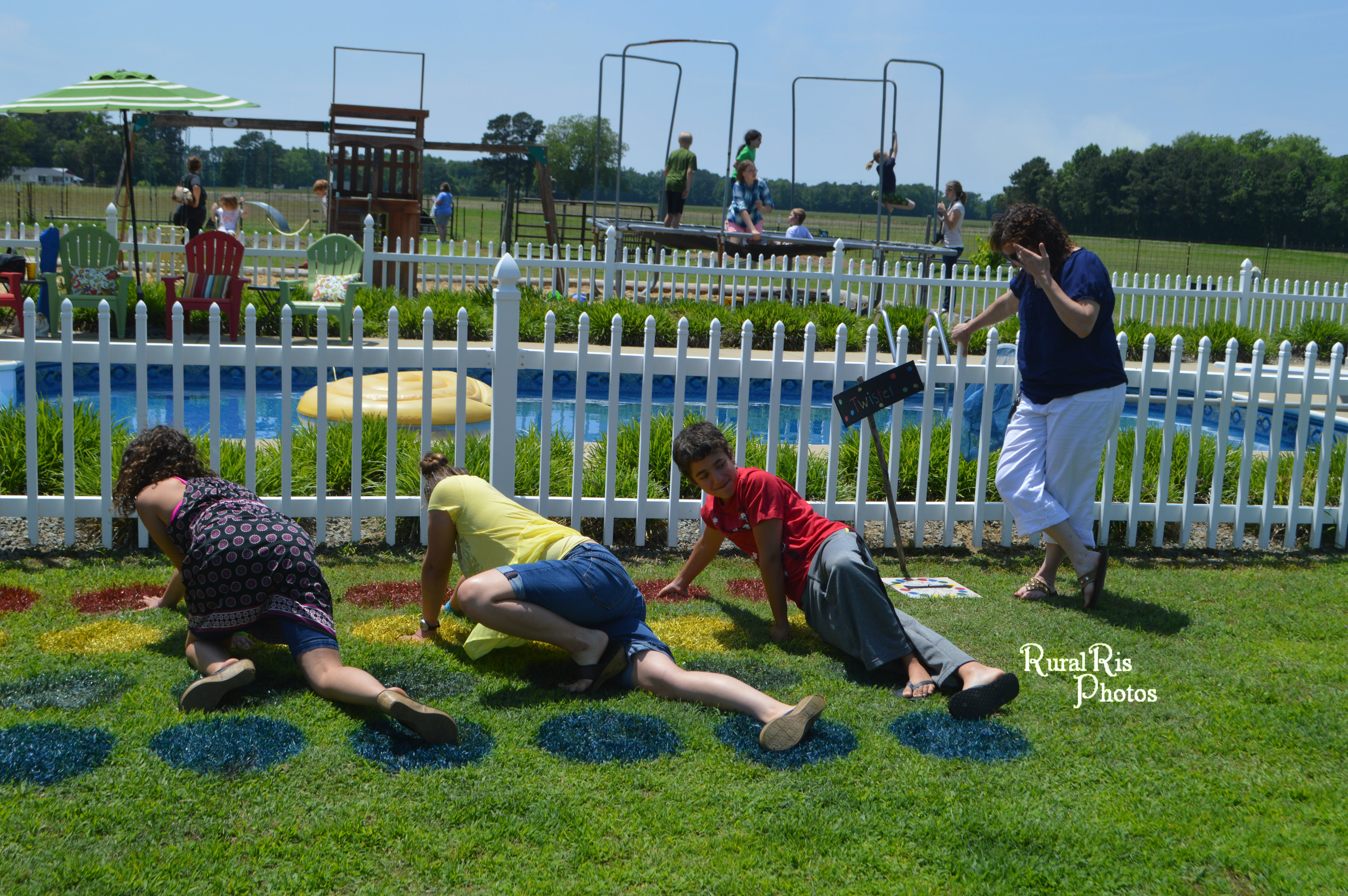
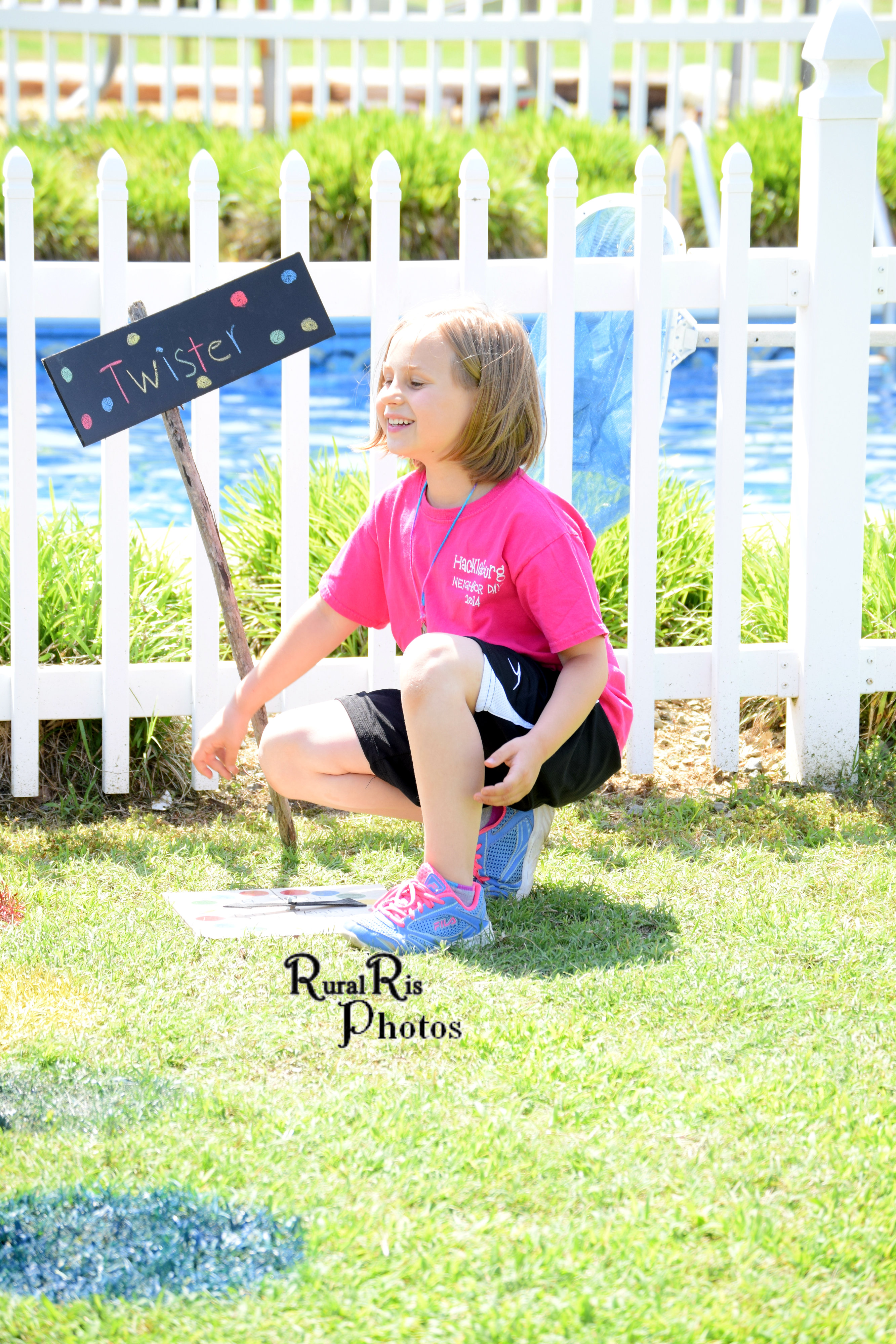
Mom’s 4-H club came out for their end of the year party. We had a ton of games for them to play like giant Jenga, lawn Twister, Kerplunk, giant tic-tac-toe, corn hole, washer toss, horseshoes, pick-up sticks, and even a fossil dig! We also set up an archery station and hay ride. While it was a lot of work making all of the games, it was also a lot of fun. We went through a ton of spray paint and hot glue. We also may or may not have used chainsaws, battled mosquitoes, and gotten sunburnt while preparing for the big day. It looked great in the end, if I do say so myself.

The games were ready, but we were inviting the group to a farm. It only makes sense to introduce them to a bit of farm life. We penned up a few of the more friendly animals and the babies for the kids (and parents) to interact with. Minus Dodger, all the animals behaved. Dodger was nice to the people, but he has jealousy issues and did not want to share the attention. Since he decided to be a bully to the other animals, I tied him up outside the pen beside me.

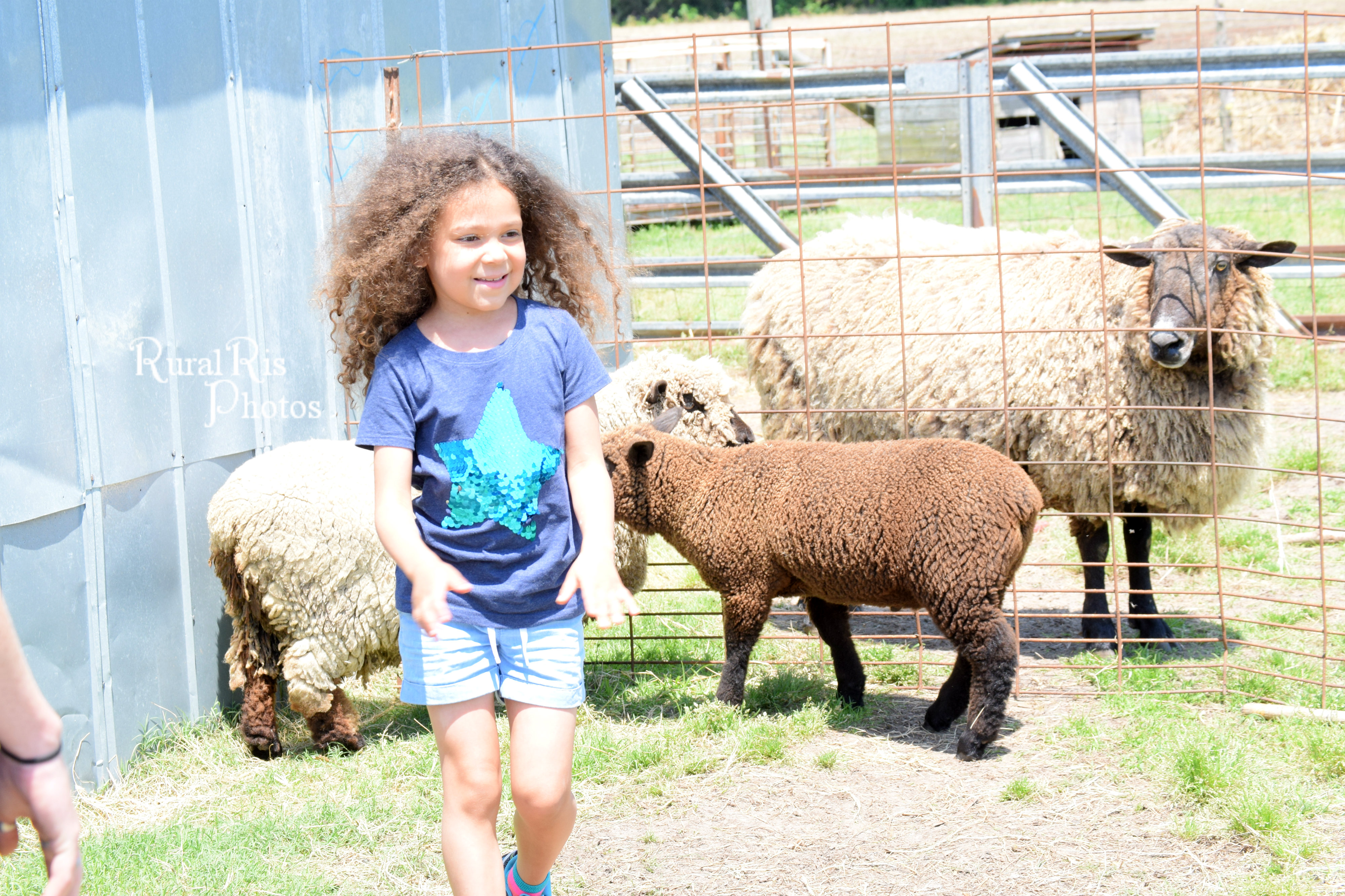
The day ended up being a great success. Some of the kids had never been on a farm before, so that was really special to have them experience farm life. I watched some kids walk into the pen, very hesitant and somewhat nervous, but by the end of the day, they were going in there and catching the goats all on their own. They cracked up at the goats nibbling their clothes and even fed the animals treats. Many questions were asked, and it was so fun to answer them. Garrett even brought pigs from his farm to let the kids see and touch. All in all, the kids were able to interact with a donkey, goats, sheep, and pigs.
I think it is so important to share agriculture and farm life with others. When only 2% of the population live on farms, many do not get to experience what it is like. Sure, they didn’t learn what it is like to shovel manure, give shots, or trim hooves, but they did get to have a hands-on experience with livestock and learn a bit too. To me, that is what it is all about. Take a look at some more pictures from the day, and if anyone wants to come back out, especially to learn the dirty side of farming, then come on!

petarch

twista

twister

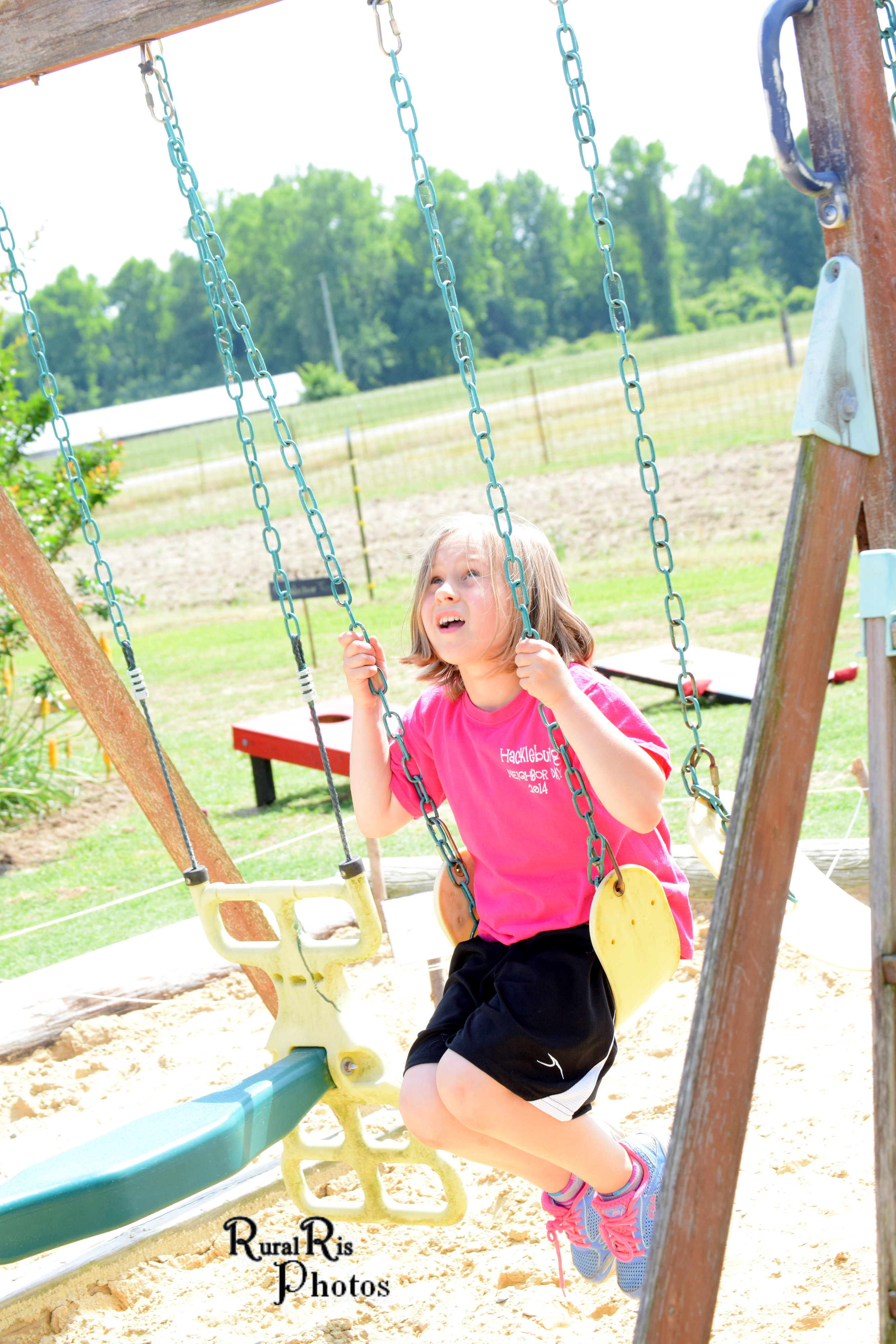
sheep and abswing

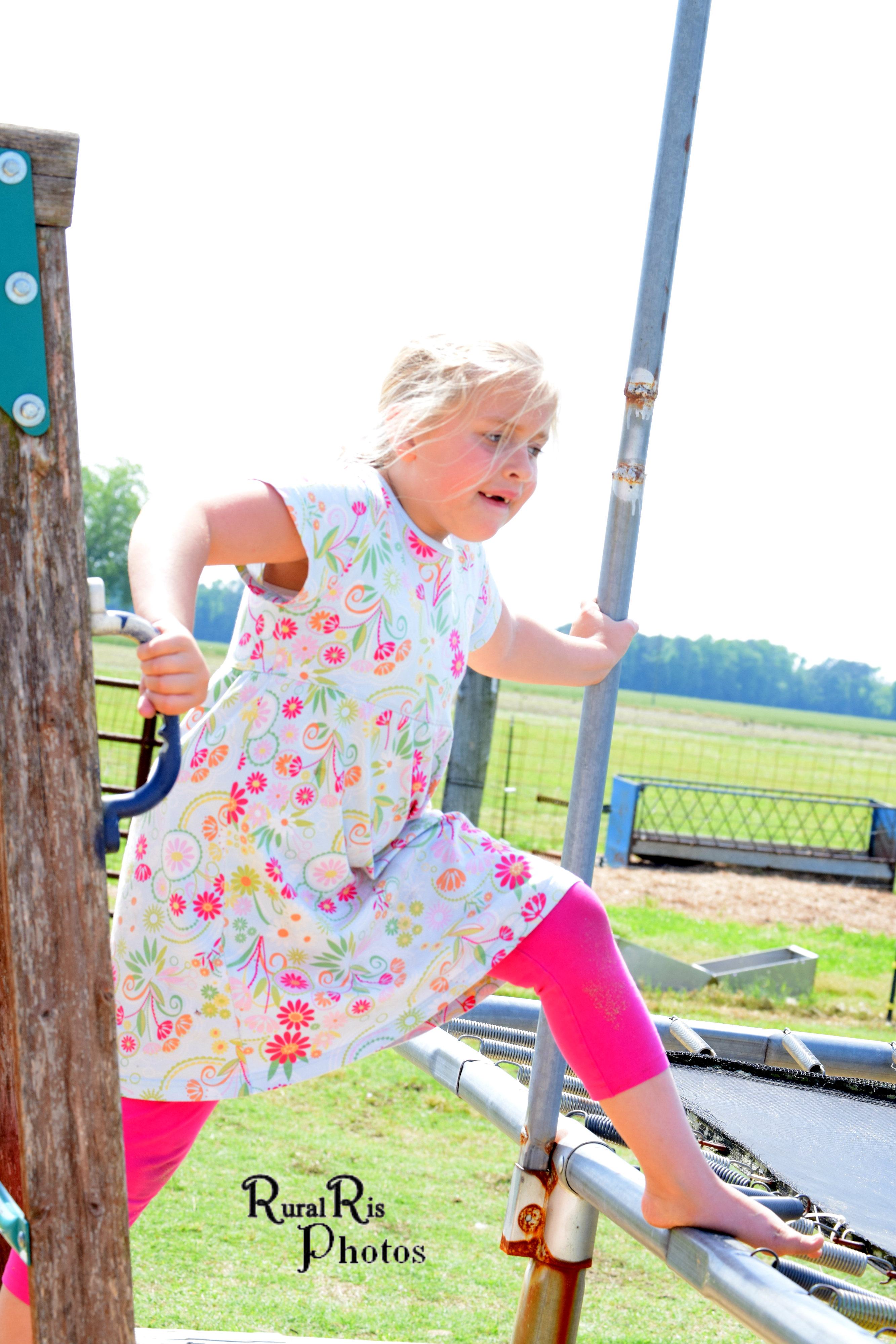
archerytrampoline

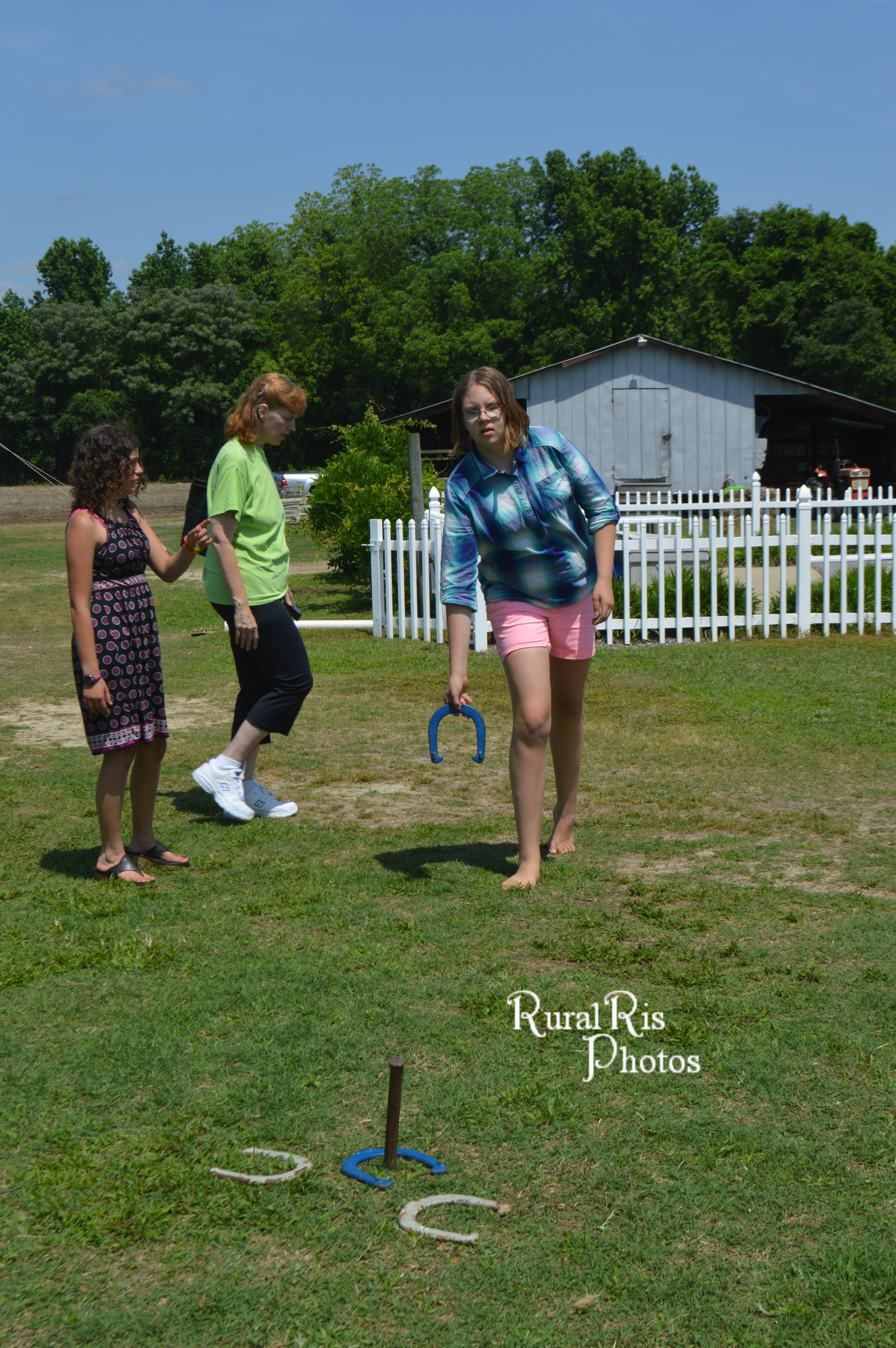
petting mhorseshoes

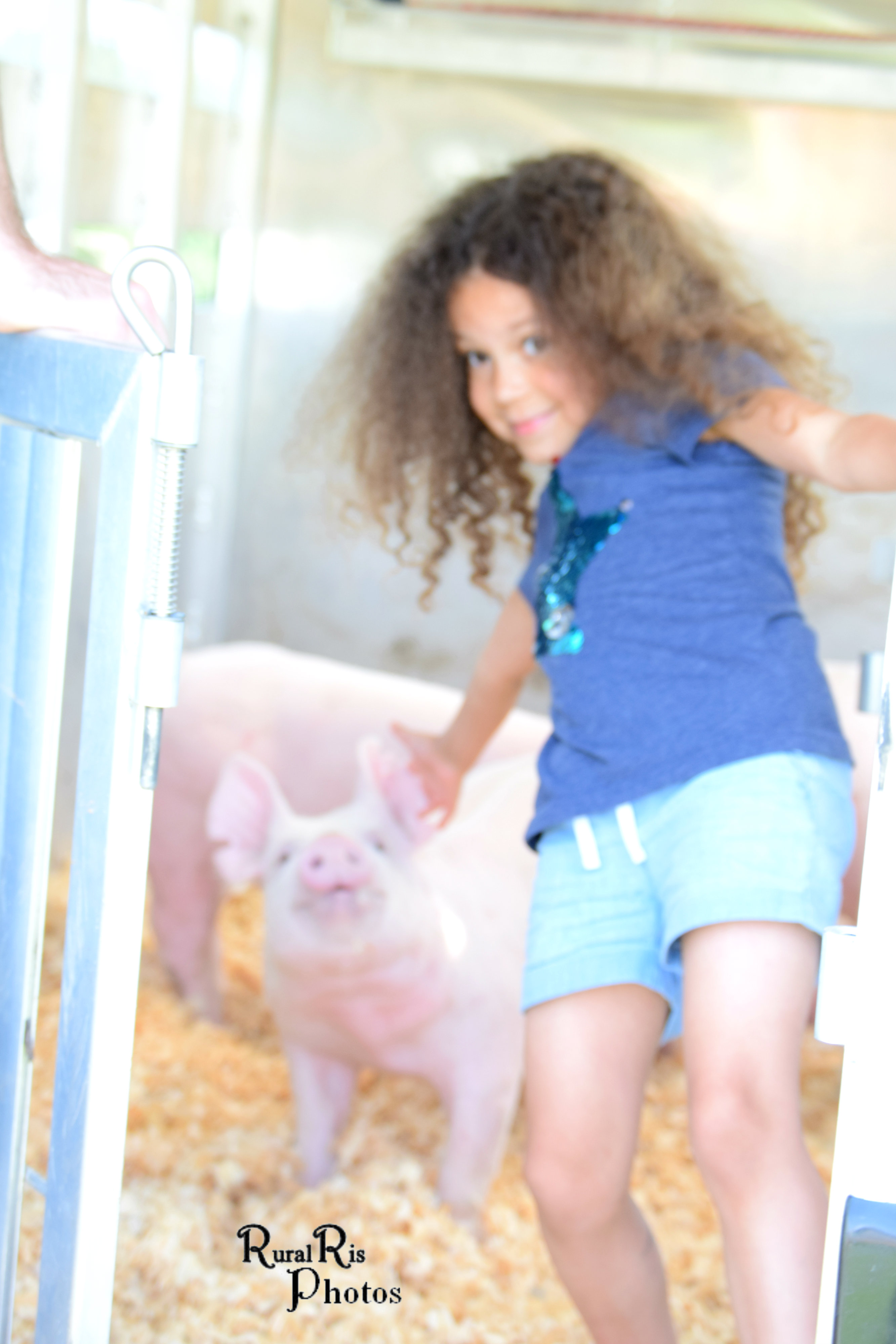
abby pighay ride

Bucks and Trucks: More Than I Bargained For

I was already feeling a bit ambitious, deciding to go 7 hours one way to get a single goat. Little did I know, I would need even more ambition to get back home.

For months, I had been on the hunt for a new buck. We have owned ours for quite a while, and it was time for some new blood. I started to follow various online sales and Facebook goat pages to see if I could find any. Finally, I found one that wasn’t in Timbuktu and was in the budget. After contacting the owners, I made arrangements to pick him up yesterday. He was in West Virginia, towards the Pennsylvania border. I decided I was going to be ambitious and travel 14 hours in a day to pick up a buck I had never seen in person. I’m fully aware I may be a tad crazy, but it is hard for me to pass up a good deal–especially when we are talking livestock.

I persuaded Garrett to go on my crazy adventure with me (he should get some kind of boyfriend award since he did have to wake up at the crack of dawn, ride in the car all day, and pick up a goat when he is a pig guy). He also suggested we take his family’s truck since it had a box in the back of the bed, preventing the need to haul a trailer. We agreed to meet in Rocky Mount at 8 am sharp, grab Bojangles (because that makes any 8 am day better), and head out. Our ETA was 3 o’clock.

wv

Several hours down the road, we decided to start looking for lunch. I found a sign that directed us to the wonderful Chick-fil-A. This was a no-brainer stop. I cannot tell you how excited I was for my spicy chicken sandwich and waffle fries. We obtained the food goodness and got back on the road. As we were trying to get back on the highway, I turned down a one-way street. As I turned, we heard a noise. I asked what that was. Garrett replied with a shrug (he was focused on his cool wrap). A hundred feet later, we stopped at a stop sign. When I went to go, the truck didn’t want to. I slowly tried again. Still, it wouldn’t do anything. Garrett told me to wiggle the gear stick to make sure it was in drive. We then proceeded to try different gears. After no success, Garrett told me to put the four-ways on. “Where are they?” said a very flustered Risa. Garrett was very calm and told me where before getting out of the truck. By this time, there were a line of cars behind us. I waved them around us. Garrett came back to the truck after investigating and said a very dreaded word–transmission. Now, I don’t know much about vehicles, but I know that when transmissions are mentioned, it isn’t good and $$$ comes up. My heart sank as I looked around. It was hot, we were blocking a road, this was not the best part of town (most houses were boarded up), we were 5 hours from home, and the buck was still an hour away. Suddenly, my enthusiasm for my spicy chicken sandwich was gone. As Garrett called a tow truck (thank goodness he had AAA), he told me to try and eat my sandwich anyway.

SOS...We need a tow
SOS…We need a tow

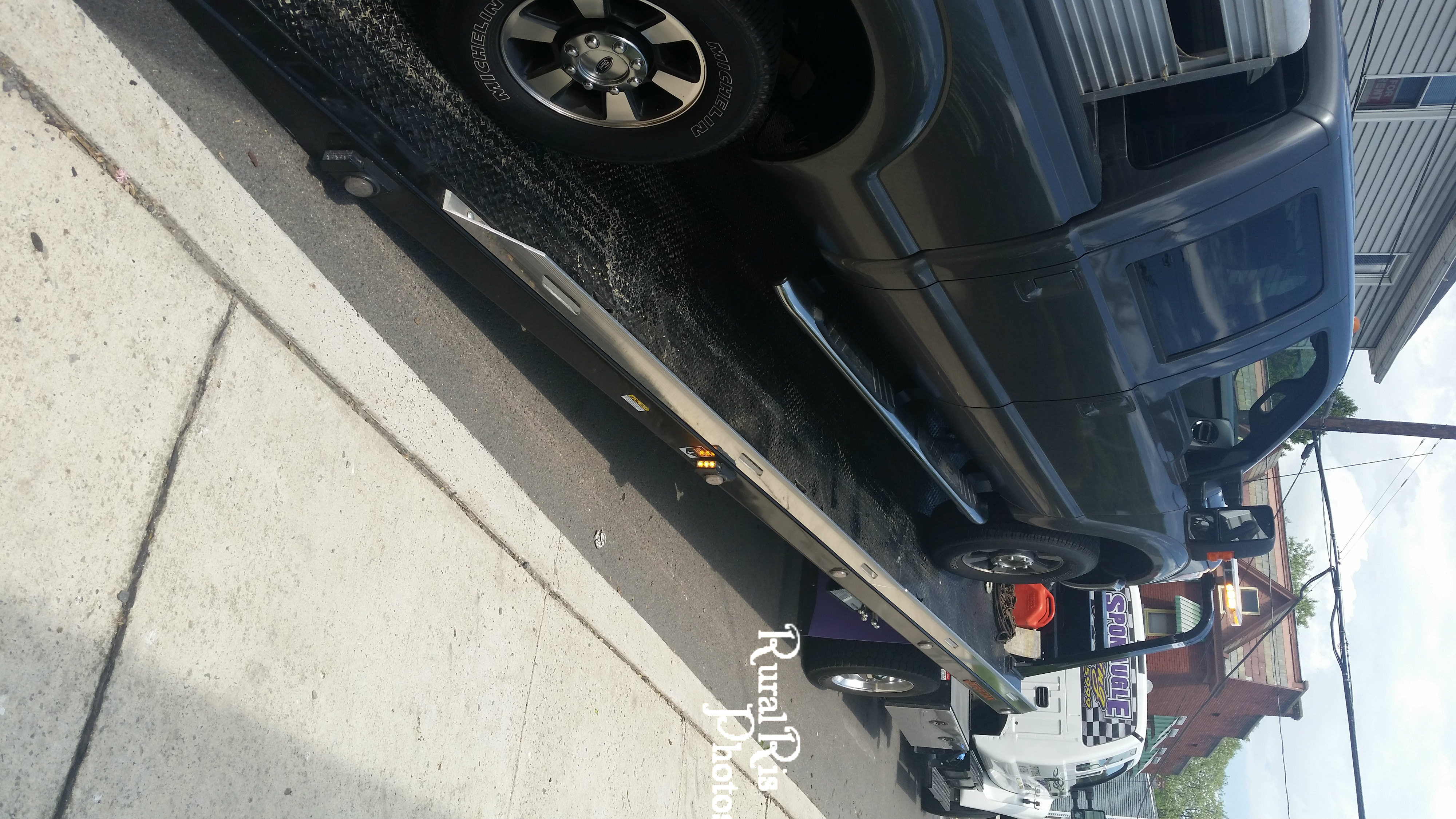
We waited for close to 30 minutes for the tow truck. While we were waiting, we attempted to push the truck across the road to a parking deck. Even with the help of a couple of ladies, it didn’t go so good. Finally, we were able to back (more like reverse roll) the truck away from the stop sign and onto the side of the road. In one of the houses sat 4 people, who called Garrett over to “just talk” (we were a little sketched out and they were a bit tipsy). Finally, the tow came, and after deliberating which shop was our best bet, we were towed from Cumberland, Maryland to Frostburg, Maryland. tow

We had been told that they could look at the truck and probably work on it that day; however, when we arrived, we were told that they could barely get a look at it and could almost promise that they couldn’t fix it that day. Long story short, we weighed our options, decided against the extortionate tow to another town, and took our chances at the shop. We were hoping against hope that it was a simple fix.

We waited in the waiting room, looking through the window at the mechanics working. The next thing we knew, our truck was cranked and moving! I held my breath as the mechanic came in to talk to us (I swear it is like waiting in a doctor’s office). He said, “You know that slim chance of it just being a matter of putting two hoses back together? Well, you got that slim chance.” The transmission line had become corroded and broke at the joint. It was able to be patched, and the transmission had not been torn up from the incident. I was dancing in my head.

After paying, Garrett asked me if I still wanted to go get the goat or just head home. Remember, ambitious is the theme of the trip, so of course, I said let’s go down the road further and get that goat. Off we went. While breaking down sucked, it was good that we broke down where we did, because further up the road, there was absolutely nothing. It was just backroads and mountains. We finally hit West Virgina and began to climb the mountain where the goat was located. This was a very winding, bumpy road with pot holes like you wouldn’t believe. We had to cross a single-lane bridge, and make a u-turn on the side of a mountain. After the trek up, we finally made it to our destination. Our detour had put us 3 hours behind, so I did not want to lollygag looking at goats. I decided the buck looked good, so we led him up part of the mountain to the truck. It took 3 men to pick him up and load him. After paying and a thanks, we hit the road once again.

popper

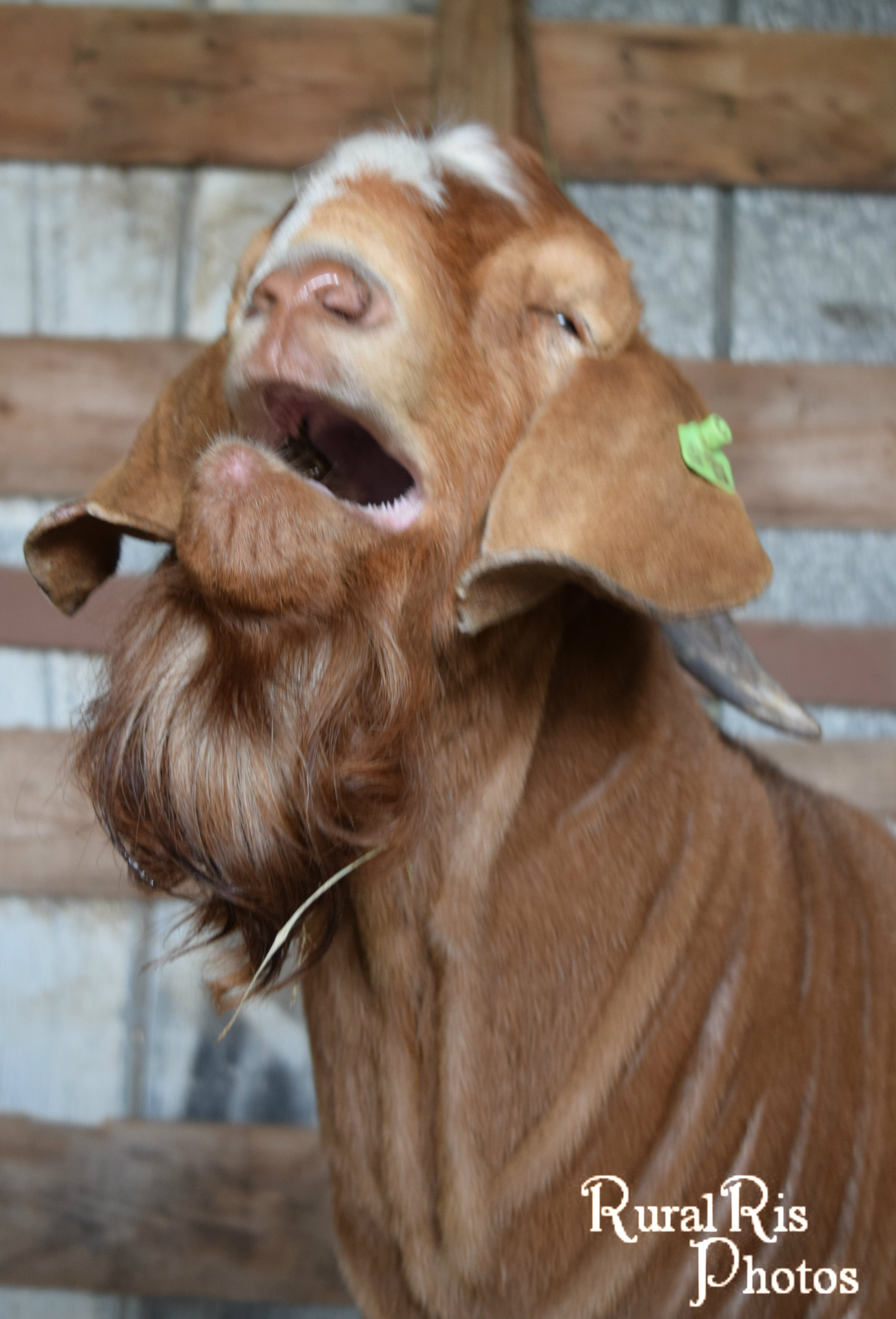
It was a long 7 hours home. Garrett and I kept each other awake by playing road games, singing to the radio, and eating super sour gummy bears. We arrived home at 2:15 a.m. I put a halter on the buck, but when he jumped from the truck, he kept running and ripped the rope from Garrett’s hands. We then spent the next 15 or so minutes trying to catch him in the dark. He wasn’t acting crazy, but was disoriented and wanted friends. Anyway, we caught him and put him in a pen with food and water. Garrett and I dragged ourselves into the house to hit the sack. Our faces looked a lot like the goat’s–we were so tired.buck 5

The day hadn’t gone as planned; then again, it was a Monday. It could have been much worse, though. All I know is, between bucks and trucks, I got more than I bargained for! Maybe I’ll name the buck Transmission. For now, meet our new herd sire, while I catch up on some sleep.

buck4

buck2

buck 1

buck3


What You Aren’t Being Told About “Hog Farm Pollution”

If you drive down many Eastern North Carolina roads, you may see a billboard that looks like this:

Raise A Stink

They are doing just what they say–raising a stink, but it is a stench much worse than any pig poop could possibly smell. These billboards are part of a campaign started by the Waterkeeper Alliance organization to blame hog farmers for polluting local waterways. Although their aim is to make a positive difference in the community, this organization is causing harm, defaming an industry, and do not have their facts straight.

It is important that not just the other side of the story is told, but that facts are put out there, so that the public can be informed. Pollution is a serious issue that should not be taken lightly; however, there are a few things that the Waterkeeper Alliance isn’t telling you–things you should know to get the whole picture.

Who is the Waterkeeper Alliance?

The Waterkeeper Alliance organization is an international group represented by 240 local groups on 6 continents. They are environmentalists who focus on maintaining and promoting clean waterways. They have been active in campaigns against dairy farmers in New York and hog farmers in North Carolina along with various other campaigns. Last year (2014), they, along with their local subsidiary, The Neuse Riverkeeper Foundation filed an intent to sue against a NC farm, that gave the farm 90 days to complete a list of demands or else the organization would file suit against the farm. Although the farm worked with the organization to meet demands, the Waterkeeper Alliance has launched the billboard campaign against all NC hog farmers.

What claims have been made by the Waterkeper Alliance?

The Waterkeeper Alliance makes many claims that can be found on their website. Here are a few to note:

  • Waterkeeper Alliance seeks to expose the fact that foreign-owned corporations are reaping the profits made possible by the antiquated lagoon and sprayfield system of hog waste disposal, while placing an unfair burden on local contract growers.
  • Many people “are unaware of how much environmental damage and human pain and suffering these industrial swine operations are inflicting on people and their environment,” Rick Dove, North Carolina CAFO manager for Waterkeeper Alliance
  • “For too long, factory farms in North Carolina have been disproportionately located in minority communities where residents are forced to endure the smell, water quality impacts and the embarrassment associated with the facilities operating near their homes. Through this campaign and multiple other fronts, we’re working toward the day when people living near these operations are granted their right to swimmable, drinkable and fishable waterways,” Marc Yaggi, executive director at Waterkeeper Alliance
  • “Using so-called lagoons and sprayfields to dispose of hog waste is an outhouse method that must be replaced. A number of systems that will do away with lagoons and sprayfields have been tested and approved for implementation. It is time to put an end to this problem and the best place to start is by educating the public about what is happening to their water, air and communities.” Rick Dove,North Carolina CAFO manager for Waterkeeper Alliance

There is a lot packed into these claims, so let’s dissect them and look at what the hog farm scene looks like.

Hog Farm Fast Facts:

  • First, let’s make sure we don’t call large hog farms factories. Even though they are on a much larger scale, they are still a farm, and should be called as such. The majority of these farms are still family operated too.
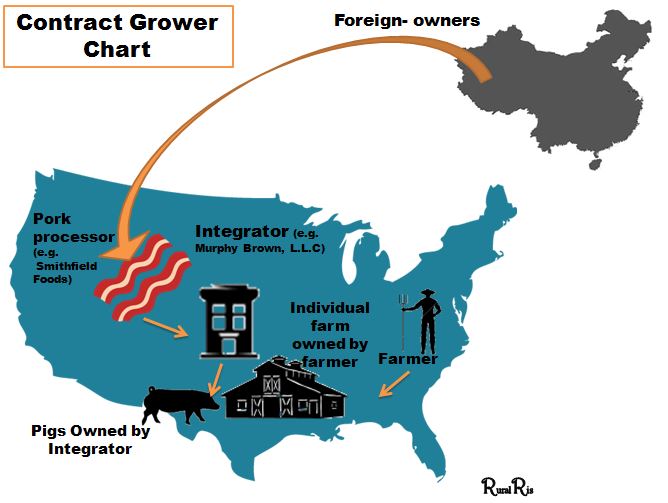
  • The hog farming chain can be a little confusing with its many parts. Here is a chart that will hopefully help.pig integrator
  • North Carolina is the second largest producer of hogs in the U.S. and contributes $2.9 billion to the economy
  • Large hog farms keep pig waste in large pits called lagoons.
  • No new lagoons are allowed to be built
  • Hog waste is used as fertilizer for crops.

What are the Waterkeeper Alliance not telling you?

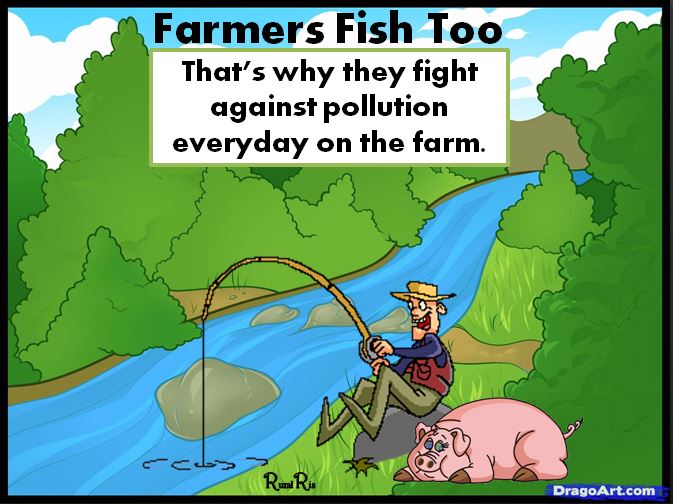
The Waterkeeper Alliance makes it sound like pig farmers have absolutely no concern for the environment, and they are irresponsible with the waste from the farms. This is the farthest from the truth. Farmers are some of the most avid hunters and fishermen out there. Why would they want to pollute the very waters that provide that recreation? In addition, many of their families live within the vicinity of these farms. Would farmers purposely pollute and cause damage to their own family? I don’t think so.

Even if farmers didn’t care (which they most certainly do) they are required by law to adhere to strict regulations as to when, where, and how they can deposit and manage the waste in the hog lagoons. These regulations are put in place by the Department of Water Quality and are monitored throughout the year. Hog waste is never allowed to be dumped into waterways; however, human waste is permitted to be dumped in the rivers once it has been treated. Although the majority of pollutants have been removed from the waste, the volume put in streams is still high and the pollutant mass can still be high in streams (NCSU).

The Waterkeeper Alliance demands a waste water treatment facility to deal with the hog waste in a more environmentally friendly way; however, human waste water treatment facilities are not perfect either. According to the EPA, there are over 22,000- 75,000 sanitary sewer overflows (SSO’s) that occur each year due to blockages, line breaks, sewer defects that allow storm water and groundwater to overload the system, lapses in sewer system operation and maintenance, power failures, inadequate sewer design and vandalism. The only thing a hog waste water treatment facility is going to do is cost the pork industry millions of dollars, driving the cost of bacon and porkchops through the roof. According to Feeding America, North Carolina is ranked in the top 10 states for food insecurity, and higher pork prices will only drive food insecurity up.

The Waterkeeper Alliance draws on various studies that show the effect of hog farms and hog waste on the surrounding community; however, these studies often show inconclusive data and rely on speculation. Yet, the Waterkeeper Alliance states them as fact. Beyond any of this, though, are the facts that they are hiding about the regulations that hog farmers have to abide by:

  • Lagoons are required to have substantial grass planted around its banks to prevent erosion.
  • Crops meant for direct human consumption, are not allowed to have hog waste sprayed on them as fertilizer.
  • Lagoons must be kept under a certain level at all times to prevent overflows into waterways.
  • Rain is stressful to a hog farmer as it increases the levels of the lagoons and soaks the fields to where they cannot be sprayed on. With no where for the rising lagoon water to be sprayed, hog farmers often times have to hire tanks to haul it away. They have even flown men in from other states to help in the effort of managing the lagoons during a heavy rain season.
  • Hog farmers have to take lagoon samples of the waste to make sure the nitrogen and phosphorus levels are appropriate within 30 days of spraying on fields.
  • If hog farmers know a neighbor is having a party or an outdoor function, they try not to spray as to disturb them.
  • The majority of farms are off of a dirt path away from most homes. By law, they must be 1,500 feet from a residence and 2,500 feet from a school, church, hospital, or park.
  • Farms are inspected twice a year by the Department of Environment and Natural Resources (DENR). According to the NC Pork Council, during 2000, 98% of the 6,000 inspections of NC’s 2,500 hog farms were found to have no direct discharges of organic waste water to the surface waters of the state and 94% found no signs of over-application to fields.
  • If there happens to be a hog waste spill in the rivers, the farm is required to report it and could be fined.
  • Spills are typically caused by equipment malfunctions.

The organization claims that there are better innovative ways to deal with hog waste out there, but hog farms are stuck on the antiquated ways of spraying on fields. Many hog farms are collaborating with scientists and innovators on various ways to improve hog waste management. Many of these innovations are in a trial period or are so expensive that the cost outweighs any benefit. The goal is to provide affordable pork to the public and  do so in an ethical manner. Farmers are being ethical and careful in how they manage hog waste.

The Waterkeeper Alliance may also tell you that the Neuse is one of the most polluted rivers and fish are at an all time low; however, the Neuse River basin does not boast the most amount of hog farms. The Caper Fear River Basin has the most hog farms. If hog farms were the cause of the river pollution, then why is the river basin with the most concentrated hog farms, not the most polluted? It doesn’t add up.

Cape Fear
http://scorecard.goodguide.com/env-releases/aw/nc-riverbasin.tcl?image_id=030300&huc6=030300

What Now?

While the Waterkeeper Alliance is not calling for an end to large pig farms, they are saying some nasty things that does not tell the whole story by any means. It is ok for them or anyone to ask questions and even challenge certain practices. It is important that hog farmers look at ways to constantly improve, but the current billboard campaign does not ask questions and challenges in an unhealthy manner. The Waterkeepr Alliance is suggesting that hog farmers are unethical in their environmental practices, but the Waterkeepr Alliance is not being ethical in their efforts by defaming an industry, causing the potential for increased pork prices, and not telling the whole story.

If you see these billboards remember that there is another side to those signs. They look something like this:

billboars

Name Game and Babies

Every animal (minus the poultry) that has come on our farm has been named. For over a decade, I took the lead in naming everything. I even had a name book and have frequented baby naming sites solely for the purposes of naming animals. Some of my favorite names have been London, Cairo, and Fancy. Some of the more unique ones have been Technical Difficulties (he was always causing issues) and Slim Jim. Naming an animal was always thought out, and often times, they would go days without a name just to make sure their name matched their personality. It is one of my favorite parts of having livestock; however, my job has begun to be taken over by my little brothers recently. That is a tough pill to swallow.

It isn’t that I necessarily mind that they are naming the animals (I make sure I get a few to name), but it is more what they are naming them. The latest twin goats that were born are just an example.

peek a boo

Lady had her first set of kids this week–two big girls (11 and 8 pounds). They are really beautiful, and I was quite excited about how they looked. I felt that they should have pretty names, but Isaac and Gideon wanted to name them. I was ok with this and was hoping I could throw some good names they liked out there. I was wrong.

mudd
Mud Pie is on the left and Tres is on the right


I found the babies and called for the boys to come out and come look. The following conversation ensued:

Isaac: “Lady! Look how pretty your babies are. Aren’t you a good momma? Risa, Lady is my show goat, that means I name the babies right?”

Me: “Lady is yours but the buck is mine.”

Isaac: “That’s true. Can I still name them?”

Me: “We will talk about different names, but you can name them.”

Gideon: “Tres! We should name that one Tres. That is the number 3 in Spanish right?”

Me: “Let’s just wait until tomorrow to name them that way we can think on it.”

The next day while we were feeding, Isaac and Gideon came riding up on the golfcart saying “How are Tres and Mud doing?”

Me: “Who and who?”

Gideon: “That’s their names–Tres and Mud.”

All I could think was dear heavens, I’m going to have pretty little does named after wet dirt and the other after a foreign number 3.

Me: “Ummm… well… I was thinking since the mom is named Lady, we could do something like Duchess.”

Grandma: “What about Maddie and Tae? They are country singer girls that were on TV.”

Gideon: “No, no, Tres. Her name is Tres.”

Isaac: “How about Mud Pie?”

Me: “Why Mud?”

Isaac: “Her face looks like mud to me.”

Me: “Alright…”

Later I went in the house and told Mom: “I need a hug. I have baby goats named after Spanish 3 and mud.”

She laughed.

run to mom

babies in a bucket

Mud Pie has a brown spot on her booty

smelling flowers

So, yes, I swallowed the pill, stepped down from my position as namer and relinquished the reigns to an 8 and 10 year old. I’ve had a good run (I’m still adamant that I get to name things; I just have to share, and the boys are good with this), and at least I could name some of the babies this year. Speaking of those guys, here are some updated pictures of all the little ones. They are growing super fast.

Miracle is such a big girl now


If we let Miracle out, she likes to run around with the boys.
She even thinks she is big enough to drive
Cash man is a stud, even though Miracle is out growing him
Lilly is the diva of the group. She is prissy, loves to climb, and knows she is special.
Grover has to belly crawl to nurse from mom these days. He will be weaned before too long.

10 Reasons Why Sponsoring a Youth Livestock Show is Worth the Money

1. These kids have great character.

This group of kids work hard for months, working with and caring for their animal. Many of them wake up early before school to feed and come home to work with their animal after school too. They work in the heat, rain, snow, and ice and deal with equipment malfunctions, sick animals, escape stock, and trying to get an animal to gain weight for the show. It isn’t easy and takes an incredible amount of dedication. If that isn’t enough, these kids love what they do! They have a passion for showing and that shines through. For our county’s spring show, the participants give up a whole spring break to show their animal, exhibiting their dedication.

success

These youngsters are filled with camaraderie for each other, and are always willing to chip in to help. They often exhibit excellent sportsmanship, congratulating each other on a job well done. They attend workshops before the show to learn more, and compile a record book of their efforts after the show. The show is not a one and done day deal. It take months, and these kids are willing to do it. If you want to see hard working, responsible, dedicated, passionate, kids who are all often friends, look no farther than livestock show participants.

2. Raising livestock is expensive

i use to have money

It doesn’t matter if you buy a cheap goat or the most expensive one on the farm, raising an animal is expensive. Feed, medication, and supplies all goes into costs. Feed on the cheap end is around 10 dollars a bag, but to raise the best show animal possible, you are looking at 15 and even 20 dollars a bag, and these bags may not even last a week, depending on the species of animal. If you are lucky enough to not have to buy any medication for your animal, there is still the costs of supplies such as clippers, halters, hog sticks, shampoo, brushes, and more. Those in the livestock joke that showing is not a money making business; however, getting close to breaking even would be nice.

3. The money goes to next year’s livestock project

For most, showing livestock is addictive. It is hard to do it just once, which brings up the matter of next year. Money received from the sale, often goes toward next year’s livestock project. Next year holds the hopes of bettering oneself and seeing friends from the previous year. Having the funds to invest in another livestock project is crucial, and even having a larger budget thanks to the sponsors of the sale holds the promise of being able to perform better in the next show.

4.Much of the money goes into a college fund

I cannot tell you how many show families I know, that their rule is any money made from the sale goes into a fund for college. After more than a decade of showing for some of these kids, they have a substantial fund to put towards college. The sale is more than money for a kid who shows a pig. The sale provides scholarships for the future education of youth. With rising tuition costs, this is major. Becoming a buyer in a livestock show and sale is often sponsoring a scholarship for a child’s college fund. It is literally adding to the piggy bank.

5. It teaches the kids financial and budgeting skills

As a part of a good livestock project, youth keep track of their expenses and what they make at the sale. For our sale, they must do a worksheet that tracks their outcome, income, and their profit or lack of profit. When I was little, I did not realize the extent of money that went into my livestock project until that worksheet was filled out. At that moment, I realized just how much finances went into showing livestock.

6.You will be appreciated forever

There are one of two ways that a child gets a buyer/sponsor. The first is if they personally ask an organization or individual to support them in the sale. The second way is to have someone in the sale crowd to bid on their animal. Either way, the excitement  and appreciation that accompanies the knowledge that someone is sponsoring you is profound–not just for the child but for the parent as well. While not every child gets the same amount of money, any amount is celebrated and appreciated. Don’t be surprised to receive a picture and thank you letter later from the child you sponsored.

thx

7. You don’t have to bring an animal home

Although giving money is often referred to as a buyer and the sale is run like any other auction with the words “SOLD!” stated, it does not mean that you take an animal home. The only thing you are taking home is the image of smiling child. The only one bringing animals home is the person bidding on support price.

8. It is crucial in helping to continue the program

A show’s success is often contingent on the individuals it comprises of. Parents, youth, and volunteers all take part in the program. Sponsoring the show and sale, helps support these individuals and the program and therefore allows it to continue for years to come. Show and Sales are often many decades old and are attended by generations of people. It is a tradition that would be tragic to die.

legacy (2)

9.You are impacting the next generation in a profound way

It goes beyond providing financial support to a child, by sponsoring, you are impacting that child at a much deeper level. They notice when someone bids on their animal. They know when they are being supported or when they aren’t. Believe me, they are grateful for that support. It provides encouragement and excitement along with finances for their endeavors.

10. Because there is nothing cuter than a kid at the end of a hog stick or show halter

Need I say more?

baby boys

Through My Lens: 2015 Livestock Show and Sale

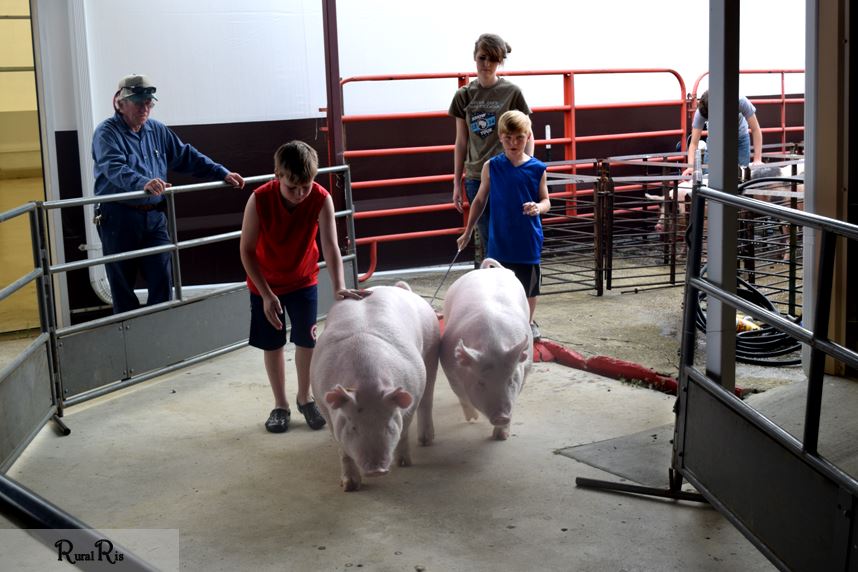
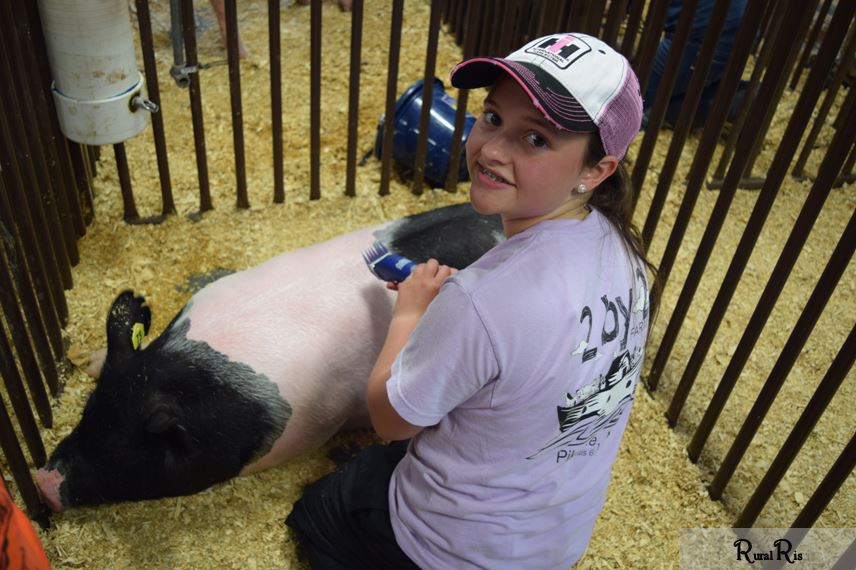
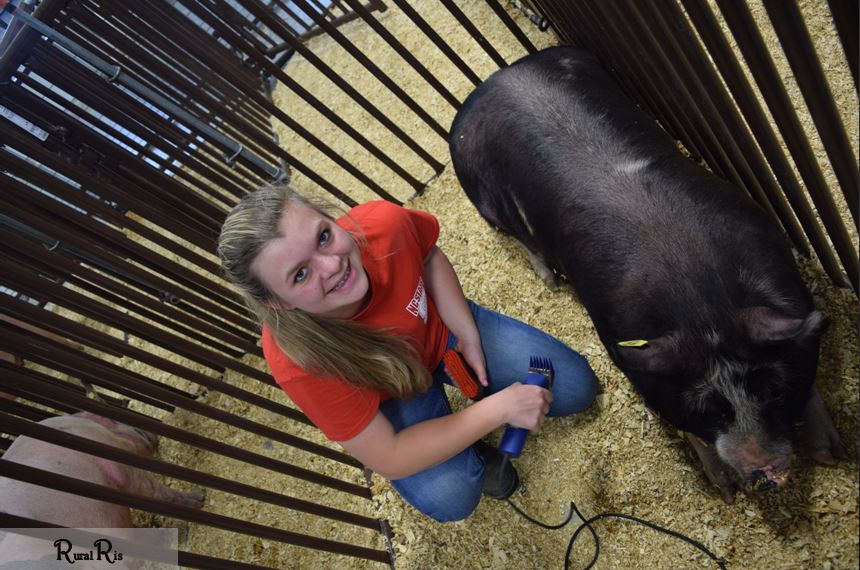
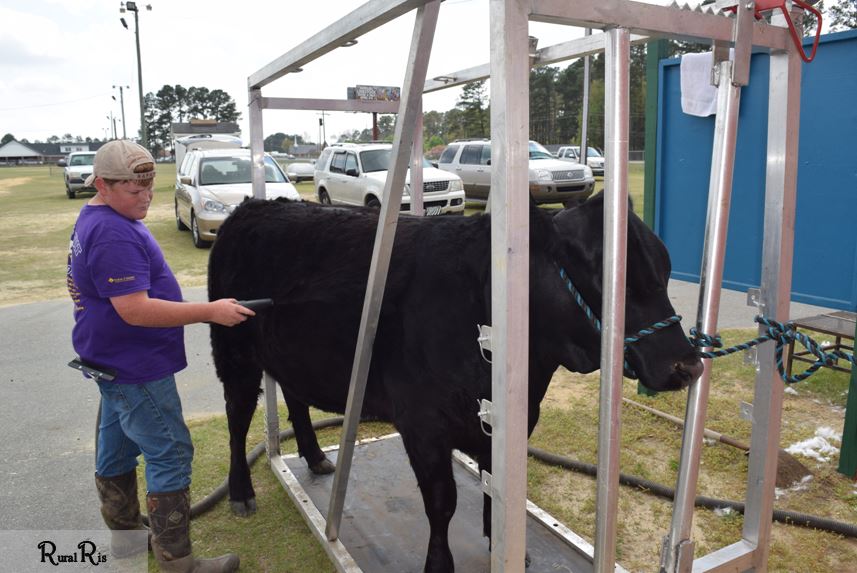
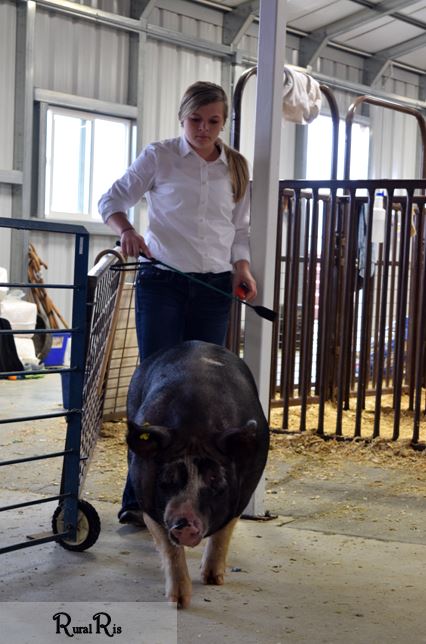
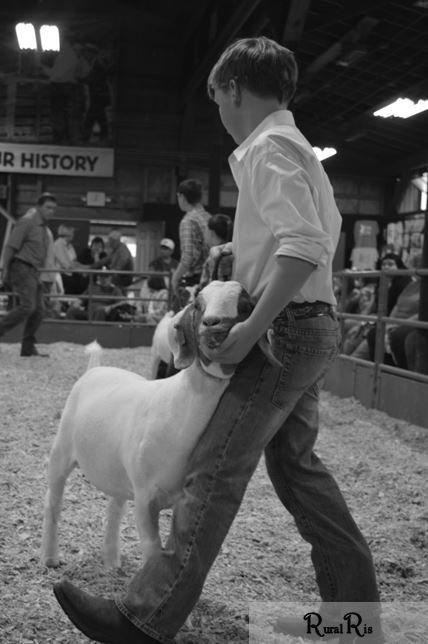
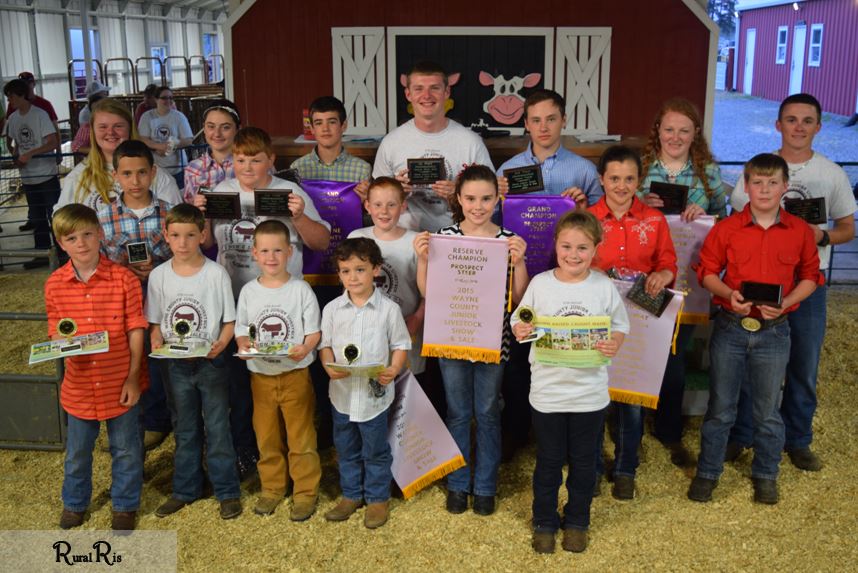
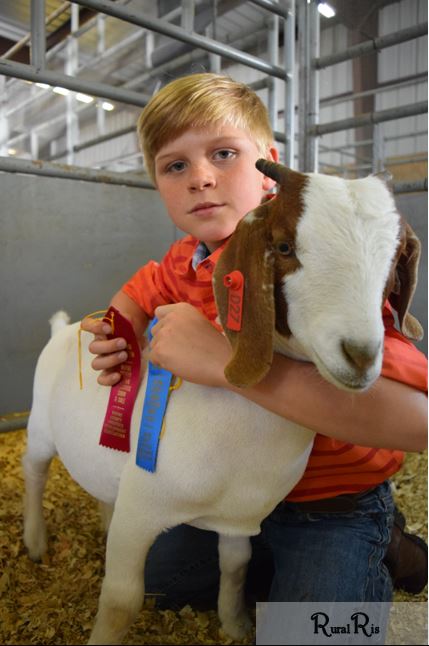
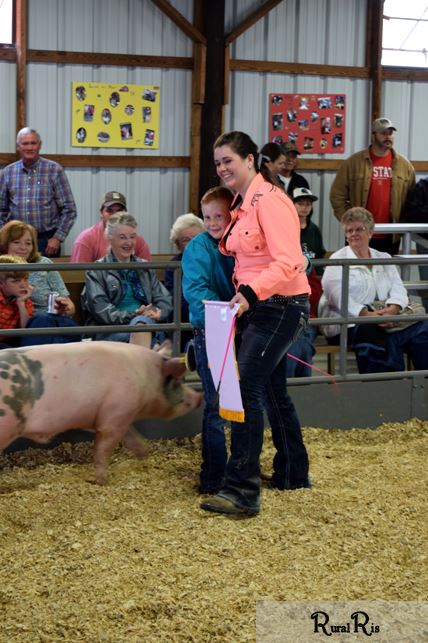
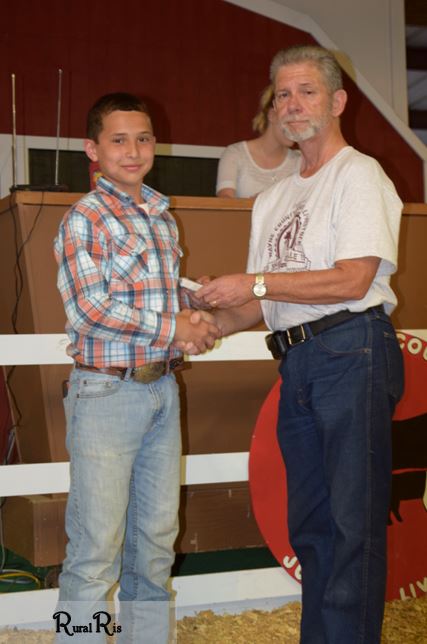
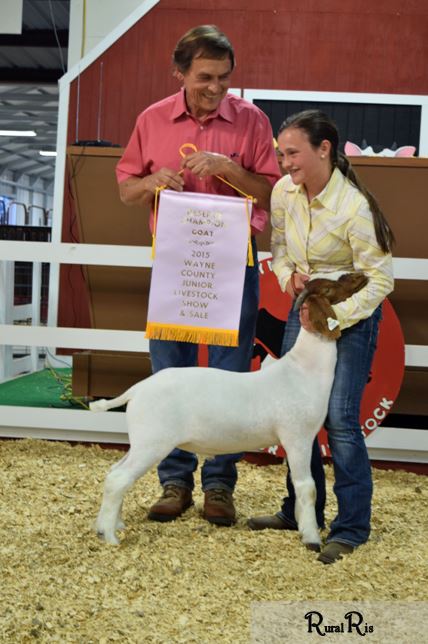
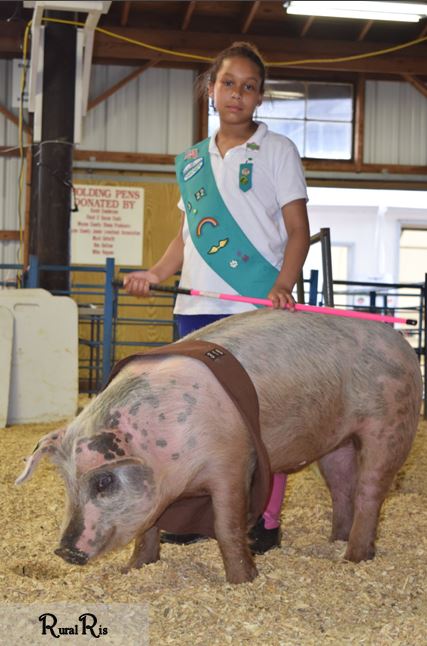
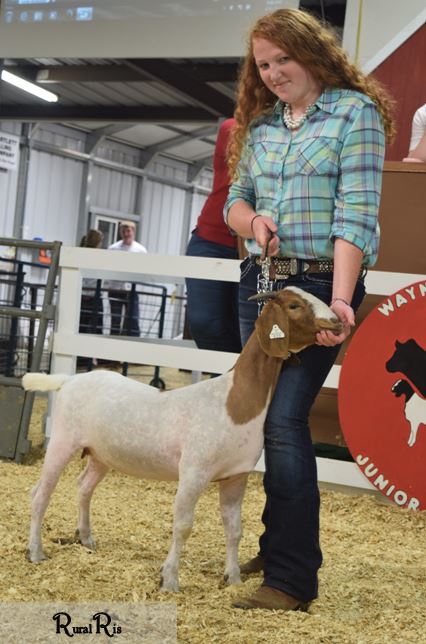
After two days of showing, a day of clean-up, some ribbons, lots of goats, pigs, and cattle,many great showmen, and 800 pictures later, the 2015 Wayne County Junior Livestock Show and Sale is over. Yes, I did say 800 pictures later. I won’t say I went crazy with being the designated photographer; I’ll just call it thorough. While I have to go through those 800-some pictures, I won’t make you go through them all. Rather, I wanted to highlight my favorites and tell the story that I see in those pictures. The Show and Sale has always been one of my favorite weeks of the year, and many of these photos capture why it means so much to me. I hope you enjoy the show through my lens.

Shave and a Hair Cut…

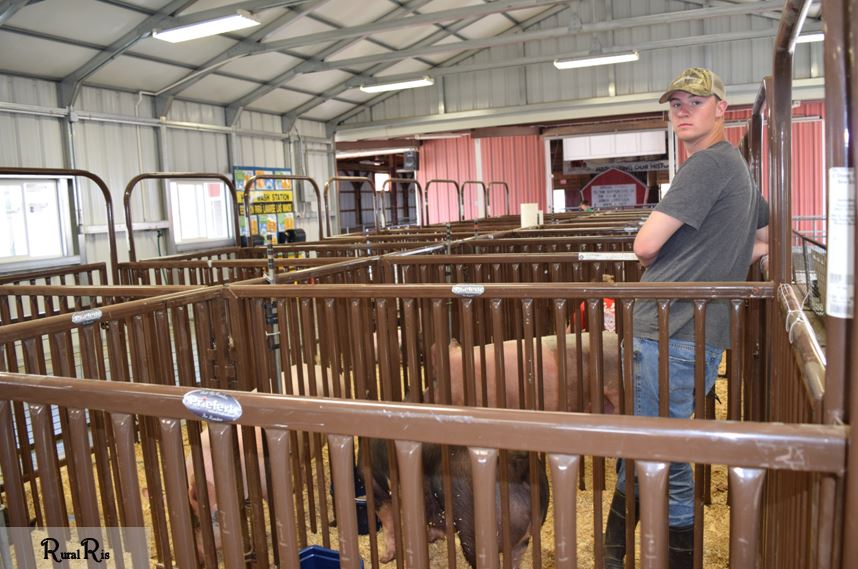
After everyone has weighed their animal in, the barn is buzzing with the sound of clippers and water is flying in the wash pits. You can see kids helping fellow showmen with their fitting and hear a lot of laughing at various animal antics. Washing pigs typically ends up with the showmen just as wet as the pig, yet somehow smellier than their porky friends. Cows come away fluffier, and goats whiter and slicker. You could say it is the time of makeovers.

Busting Suds

destiny
Family Affair


Davis
Bath time also includes treats and compliments


candid
“We want out! Water is absolutely no good!”


pis
Oh, so you guys were white pigs. I thought you were brown…

Clean Cut

Pigs have a lot more hair than you would think


Yay for cooperative pigs!

dan

Show Time!

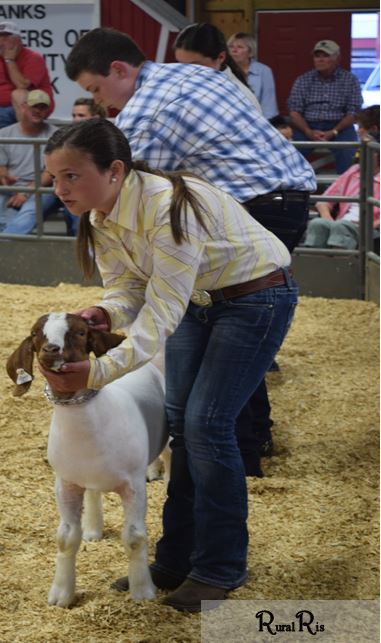
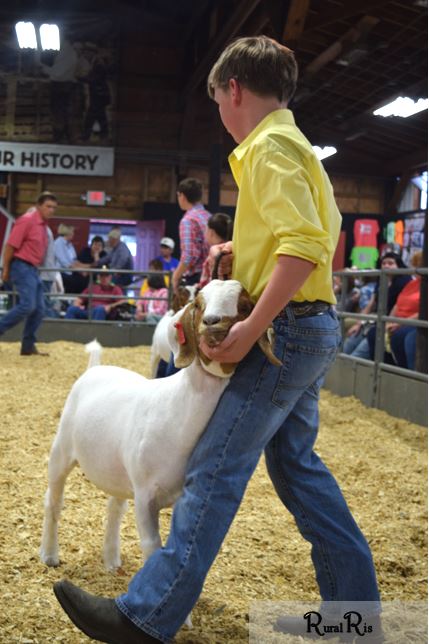
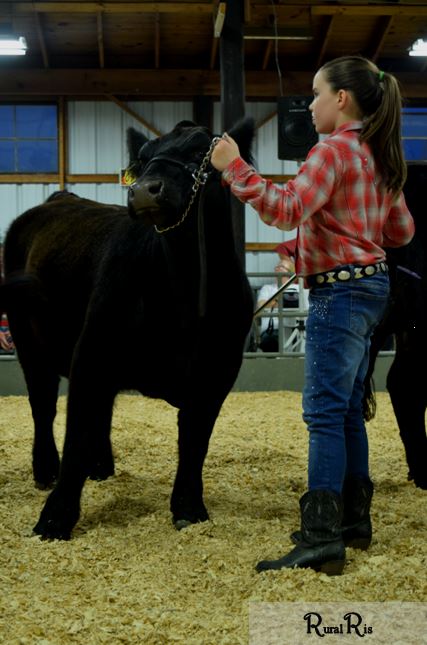
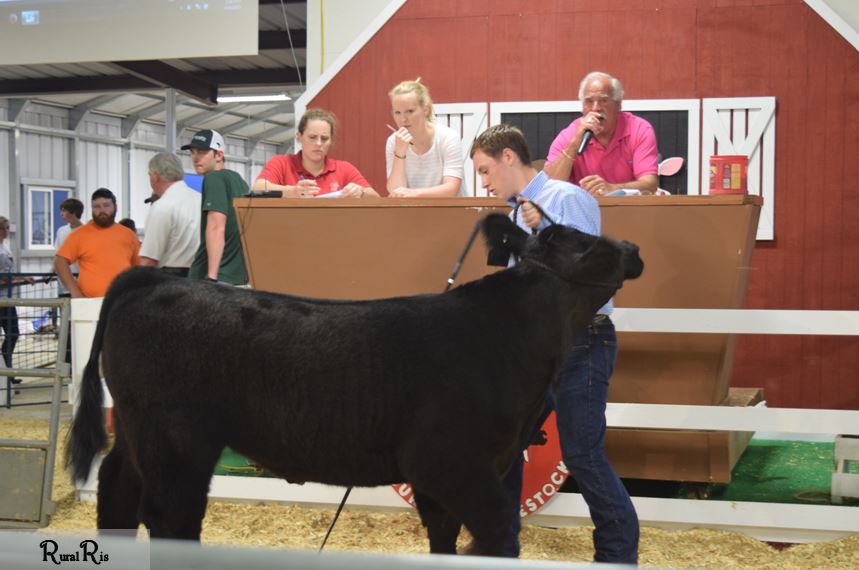
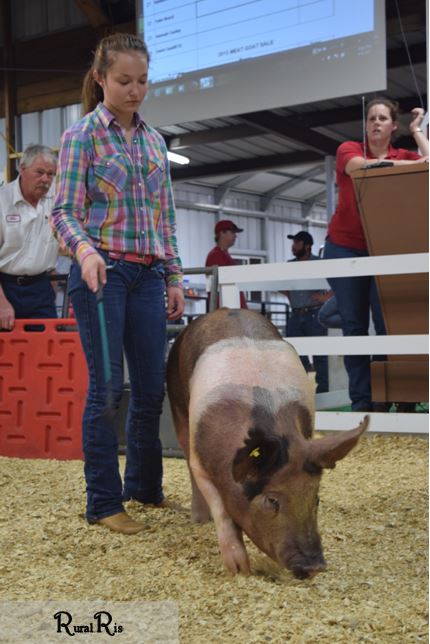
The jitters are strong, but the excitement has never been higher. It is show time! The goat show was first on the list followed by cattle. The next morning was hogs. I think everyone did an amazing job, but most importantly, I saw a lot of smiles in the ring.

sss

dan colordaniel bw

Payton

novice
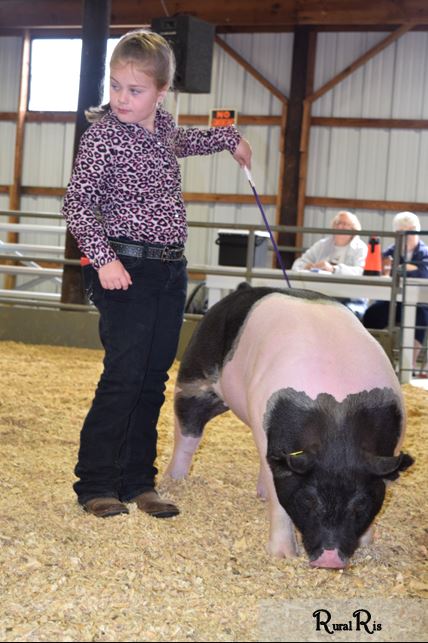
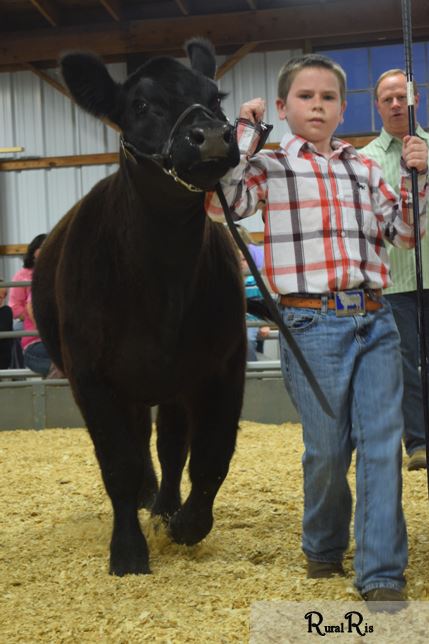
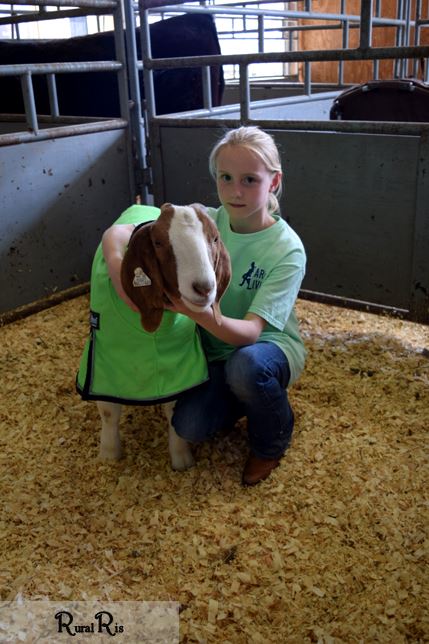
One of my favorite parts to watch is the novice division. These munchkins are not only cute as a button, but they are serious too. They know their stuff and can out show some older kids!

taylor

colorbw


sasser and cowkeilley

These two kids had major guts. Their calf outweighed them by a lot, and the calves were not always cooperative. Despite one getting loose once and a lot of prancing, these two stayed focused and never gave up. I was impressed with them, for sure.

Always, keep your eyes on the judge…

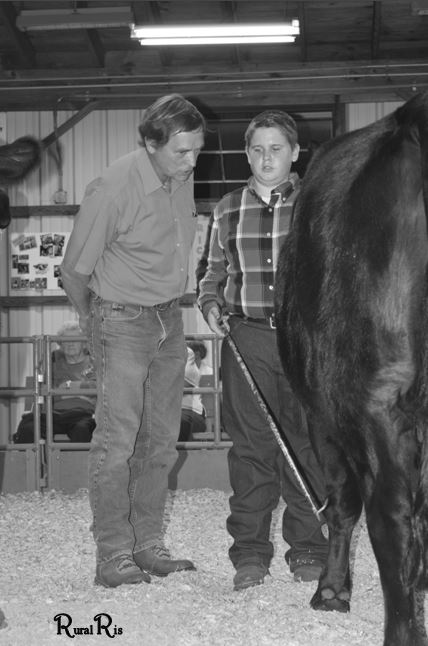
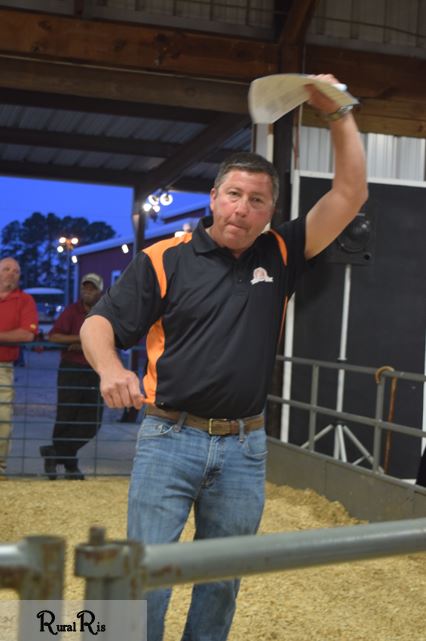
Our judge for the show, judged all three species and did a great job with the kids. While you show each species of livestock in a different way, there is always one rule that applies across the board–keep your eyes on the judge at all times. I think every child in the show had at least a little conversation with the judge, answering his questions, or just telling him about their animal. I always love the facial expressions that the kids make, and I can’t help but try to read their lips to see what they are saying to the judge.

judge spotlight

judge

gid and judge

Banners and Ribbons

While showing livestock is a competition, it goes far beyond the ribbons and banners. As the quote goes “ribbons fade and buckles tarnish, but the friendships and memories last forever.” I couldn’t agree more. I was always taught by my parents that we weren’t in it to win, although we strive to do our best and winning is nice. We do it for the lessons, the memories, and the pure enjoyment of it. Showing livestock is not a money making activity. Trust me, we go in the hole almost every time. We do it because we love it.

banners

awards

ribbons

hugs
I absolutely love the camaraderie in this photo. The smile and embrace says it all.
One of the most prestigious and meaningful awards to me is the Sportsmanship Award. The recipient is voted on by their fellow showman for exhibiting exemplary sportsmanship.
One of the most prestigious and meaningful awards to me is the Sportsmanship Award. The recipient is voted on by fellow showmen for exhibiting exemplary sportsmanship. This includes helping others, congratulating fellow showmen, working with their animal, and just having a good spirit.

champCity Slickers and Costume

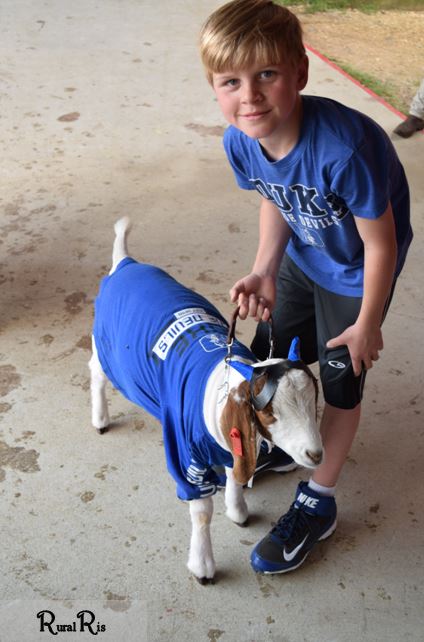
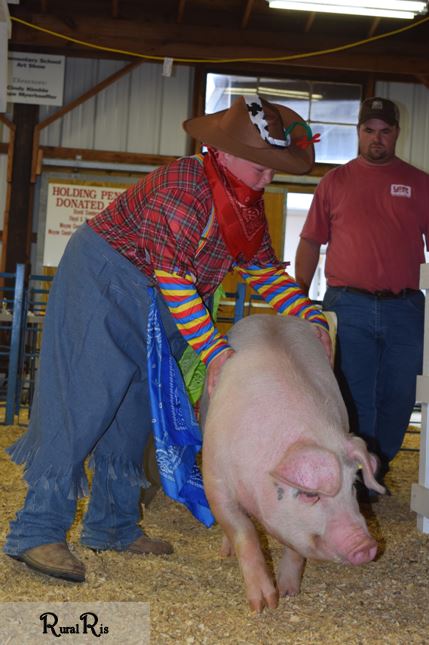
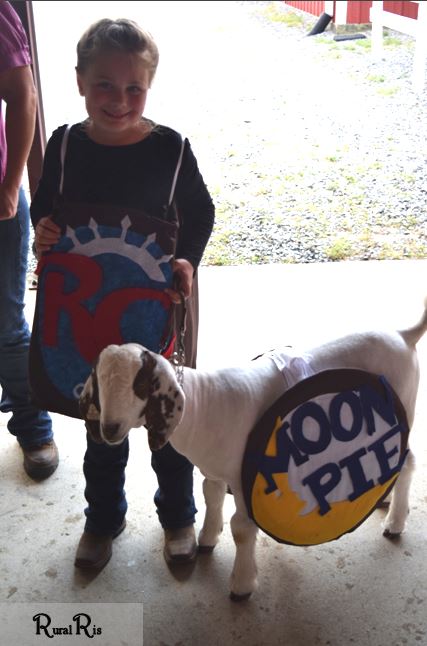
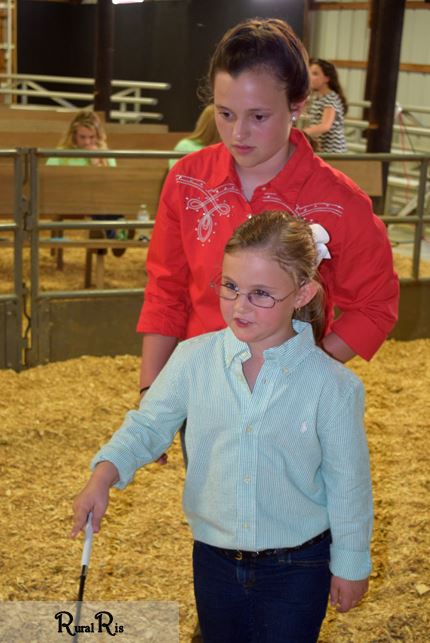
A fun aspect of the show is the costume class and city slicker class. Costume class winners are chosen by the audience. There are always some really creative get-ups. City slicker class is for anyone who is not able to show or just wants to experience the world of livestock showing for a few moments. They are paired with a showman and get to take a spin around the ring, learning about showing. It is great to see the mentorship of the showman, and the excited faces of the “city slickers.”

des cos

duke

baseball

marshal clown

moon pie

marshall and city

city

kylle

SOLD!!

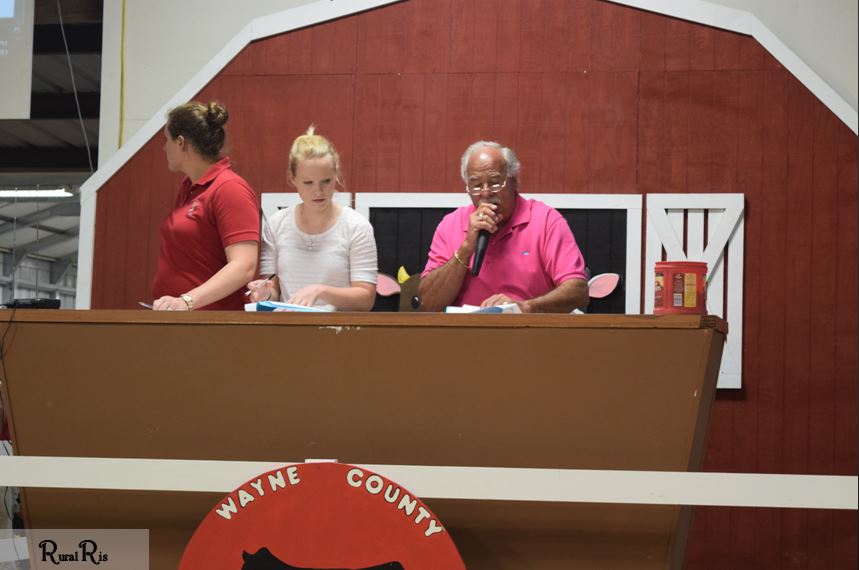
After the costume and city slicker classes, the sale begins. The barn is filled with people, as the auction begins. Every child walks through the ring with their animal, to sell. The way our sale works, is there is support price and sponsorship money. Support price is the price per pound of the animal. For example, the hogs weighing from 273 to 280 pounds went for .50 cents per pound. After support price is established, every child brings in their animal for sponsorship money. Sponsorship money are donations given by individuals and businesses in the community to the child. These sponsors do not buy the animal, but rather, bid on the amount to give the child. This helps kids earn money for their livestock project next year, and many use it for a college fund. I want to thank all the buyers for their support. You have made a contribution that goes beyond the ring. You have made a difference in all of these kids’ lives!

mary

Sold
Sold

sold

saleCandids

My favorite pictures often come from behind the scenes. These are the pictures that represent the day to day happenings of the show. It is here where the best faces are made, where competitors turn into friends, and the bond of the youth and their animal shines through. The majority of the show happens outside of the ring.

india

sw

caleb bwcaleb color

outlaw

tay and mary
These two competed against each other in cattle and goats, but remain best friends sharing a fellow passion.


young

sasser
Family is an important part of the show, and is often a multigenerational ordeal. For many it is a tradition that has been passed down for years.


marshall

goatl

mary and cow

md
I love this photo for personal reasons. These are my parents. For 13 years they have helped at the show, getting there early and leaving late. They wrestle animals, shovel poop, answer questions, and still help us with our animals too. They represent the many people who make this event happen. They just happen to be my favorite.
Paperwork and auctioning
What would we do without our ringman to break up pig fights?
What would we do without our ringmen to break up pig fights?

alan

pw

tay gid

Cleanup, cleanup, everybody do their share…

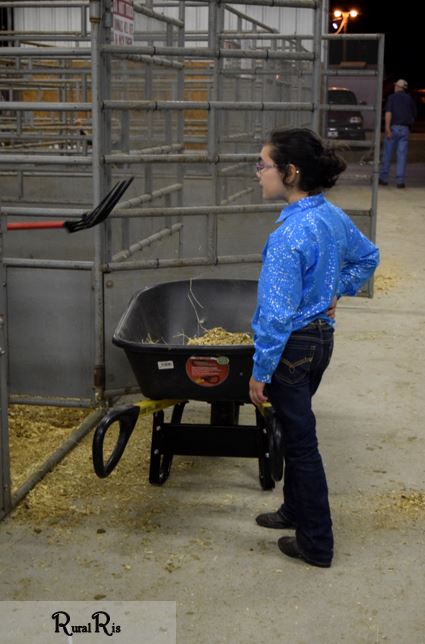
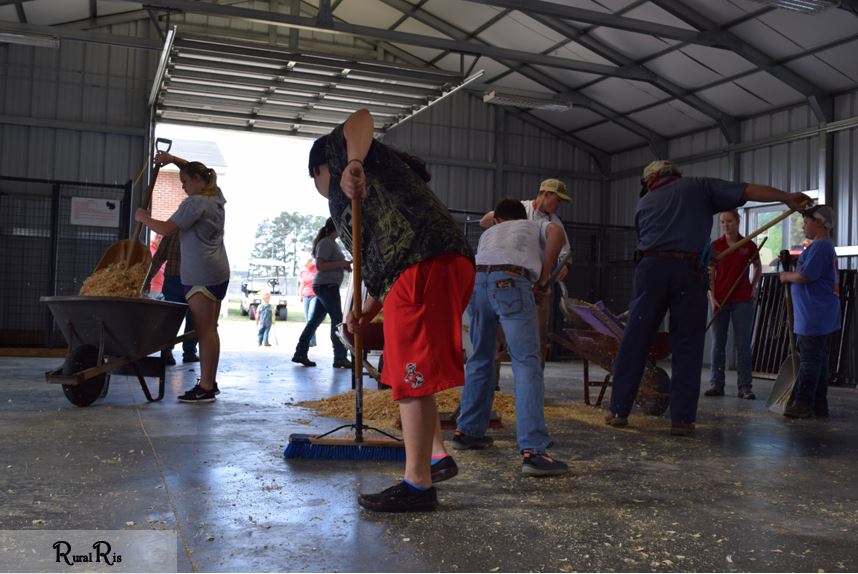
The last thing that has to be done is cleanup. All pens have to be shoveled and aisles swept. Goat and cattle pens are done the night of the show, and others come back the next morning to clean the hog pens after the pigs have left.

cleaning

cleanHeaded home…

After a total of 4 days of setting up, showing, selling, and cleaning, the show is over. Months of preparation and hard work has come to a close. Another year has passed, and it is time to go home.

headed homeBefore we know it, the Show and Sale will be upon us again, but for now, I think I’m going to put my boots aside, and reminisce over the week. While I hope these images have given you a glimpse into the week, looking through the lens does not do the reality justice.

Show and Sale 2015: Preparation Days

This week marks one of my favorite weeks of the year–our county’s livestock show and sale. While I can no longer show because I’m an old lady now, I do get to go watch my brothers and other youth younger than me show.Even though the show is not until Wednesday and Thursday, preparations are in full swing.

Prep work for the show starts days beforehand. In reality, it really starts the day we get the animal. From that moment, feeding, training, practicing, and learning are all done in preparation for the big day. It is a matter of hard work and some serious dedication. This week, there has been some added prep work that goes along with the days leading up to the show.

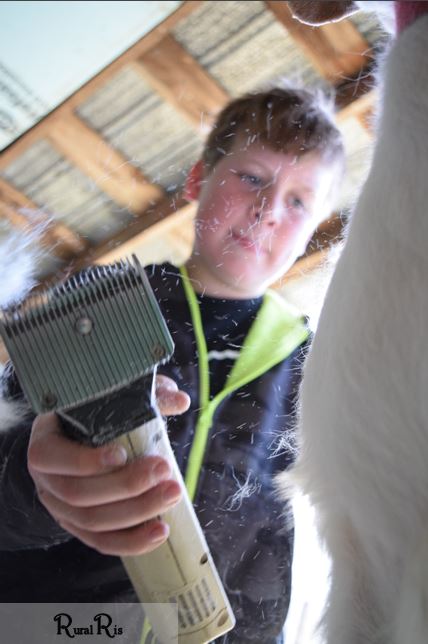
Yesterday, the boys and I finished clipping the goats and pigs. We trimmed the goats’ hooves and horns and then moved on to haircuts. I let the boys trim all they can by themselves on both sets of animals. After they have done all they can, I come in and do the tricky parts and touch-ups. When they get older and more experienced, they can do it all by themselves. Clipping is always an adventure, because the animals don’t always want to cooperate. I was covered in goat hair after the goats. We had to clip the pigs on the go as they walked around their pen. I was standing on my head a couple of times or had to let them chew on my boot to preoccupy them while the boys clipped. It is an adventure that requires an immediate shower afterwards.

Can you see the difference clipping makes?

ss4

Today, we went to the fairgrounds to set pens up. The boys picked their pens out, spread shavings, and dusted off the fencing. On Wednesday morning we will go back to weigh in the animals and put them in their pens. Wednesday evening is the goat show, and the hog show will be Thursday morning, followed by the sale that evening.

ss11ss12ss14ss13

Well, that is the latest from the farm. We have a big week coming up. If you are in the area, feel free to drop by the Wayne County Fairgrounds to cheer our showman on! If you can’t come by, stay tuned for updates as the show progresses via social media or here on the blog.

The Story of the Egg

There was a time when an egg was nothing spectacular to me. It was just a thing that you couldn’t toss around like a football. It wasn’t supposed to sit on a wall lest it have a great fall. It came from a chicken, magically it seemed. Just a squawk and suddenly we have an egg whilst the chicken beamed. This brings me to the age old conundrum of what came first the egg or the chicken? Regardless, both are here now, and an egg can grow up to be anything it wants, especially chow. It won’t ever hatch into a chicken unless there is a rooster in the pen. Otherwise it can be scrambled,poached , boiled, or fried. It can be devillish and at Easter, dyed. This doesn’t even touch the amount of cakes and goodies they make happen. Eggs are King Bacon’s queen in the Kingdom of Breakfast. Eggs, my friends, are pretty amazing, if you ask me, but how do they come to be?

An egg is all a part of a chicken’s reproductive cycle. A female chicken is born with as many follicles or ova as she will ever have in her life. The ova will turn into the yolks of an egg as the hen matures. As you can see in the picture below, there are larger and smaller ova. The larger ones, are the ova that are the most ready to turn into an egg.


Picture 1


So the egg starts its journey in the ovaries of a chicken, but it still has a ways to go. Here you can see the rest of the reproductive track of the chicken:

Picture 2

In each of these sections, different parts of the egg develop. It isn’t just the shell, whites, and yolk.

Picture 3


It typically takes 25 hours for an egg to develop  and be laid. Light and feed do affect the amount of eggs laid by a hen. The genetics and breed of a hen determine the color of the egg shell. It has something to do with the amount of proteins put in the shell. Chickens naturally lay shades of white, brown, and green/blue eggs.

I wish somebody made 3X3 egg cartons!
Picture 4


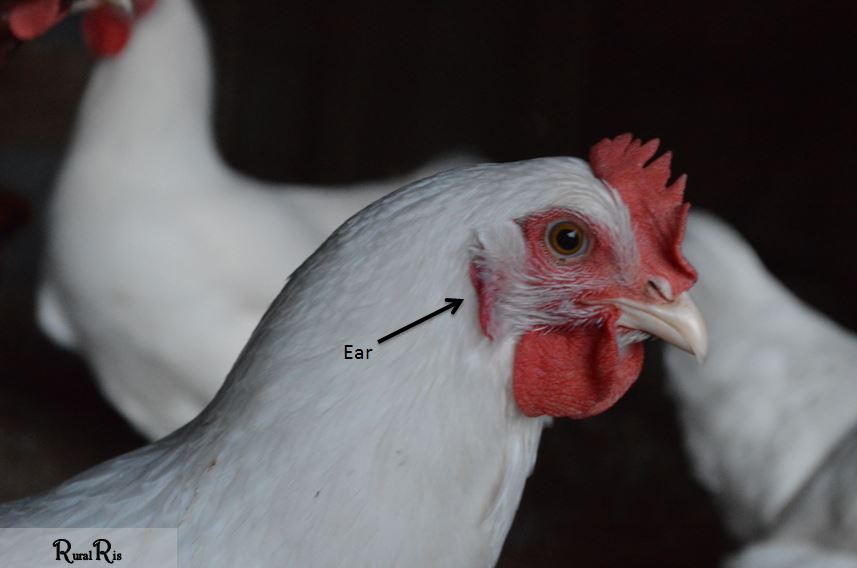
Most times the ears of a chicken can tell you what color eggs they will lay. Red ears are indicators of brown eggs and white ears mean white eggs. Pretty handy, huh?

This chicken has a red ear, so she lays brown eggs.

Their genetics and breed also affect the size of the eggs. It is also interesting to note that when a hen first starts laying eggs, weird things can happen. Sometimes, they are extra tiny eggs or the shell may not develop fully. After a few weeks they get into the swing of things, though.

Is there a chick in there?

Any egg you buy from the store will not be fertilized. Those hens are not exposed to roosters at all. Local farms may have a rooster with their hens, but a chick will not develop unless they have been left out in certain temperature. If you have ever seen something in the yolk that you thought was an embryo, you are probably seeing a meat spot or blood spot.

Picture5

It is just a malfunction on the hen’s part. Most likely a blood vessel burst, and the egg was involved. It is completely fine to eat, it just might not be as pretty when you crack the egg open.

Egg Bloopers:

A hen is not perfect and neither are her eggs. You may be used to eggs looking the exact same if you buy them from the store, but they look the same, because they have been candled (a light shone through them to detect imperfections like meat spots). They go through a rigorous grading procedure. These imperfections do not make the egg bad to eat, it just makes them not uniform. Store eggs are uniform, because that is what the standard is. An egg may be rejected to go to a store, because it is too big, has bumps on it, has a meat spot, or is not the right shape. If an egg is too long or too big, it won’t fit in the cartons correctly and will be more likely to break. So, shape matters, and odd shapes will not go to the store. Sometimes eggs get little bumps on them. These are calcium deposits. Again, it doesn’t affect the quality of the egg, just the uniformity. Double yolk eggs are also rare in a store, because eggs are candled, and these are considered abnormal. Double yolks happen when two ova drop down and get enveloped by the shell simultaneously. A final blooper that can occur in egg development is a ridge. Eggs can break inside the hen. When this happens, the chicken repairs the egg before it is laid. This causes a ridge in the shell. Bloopers happen. You just probably won’t see them in a store.

And that my friends, is the story of the egg. They are as unique as you and I, and are quite the spectacle. I hope you will share the story of the egg with all as you color Easter eggs this weekend!

And you and eggs lived happily ever after.

The End


Picture Credits:

1,2,3, 4, 5