A World Without Ag Wednesdays: Sorghum

Today’s feature is a neat little crop that is attracting some attention of late–sorghum. If you are gluten intolerant, then chances are you know about this upcoming grain. More on that later.

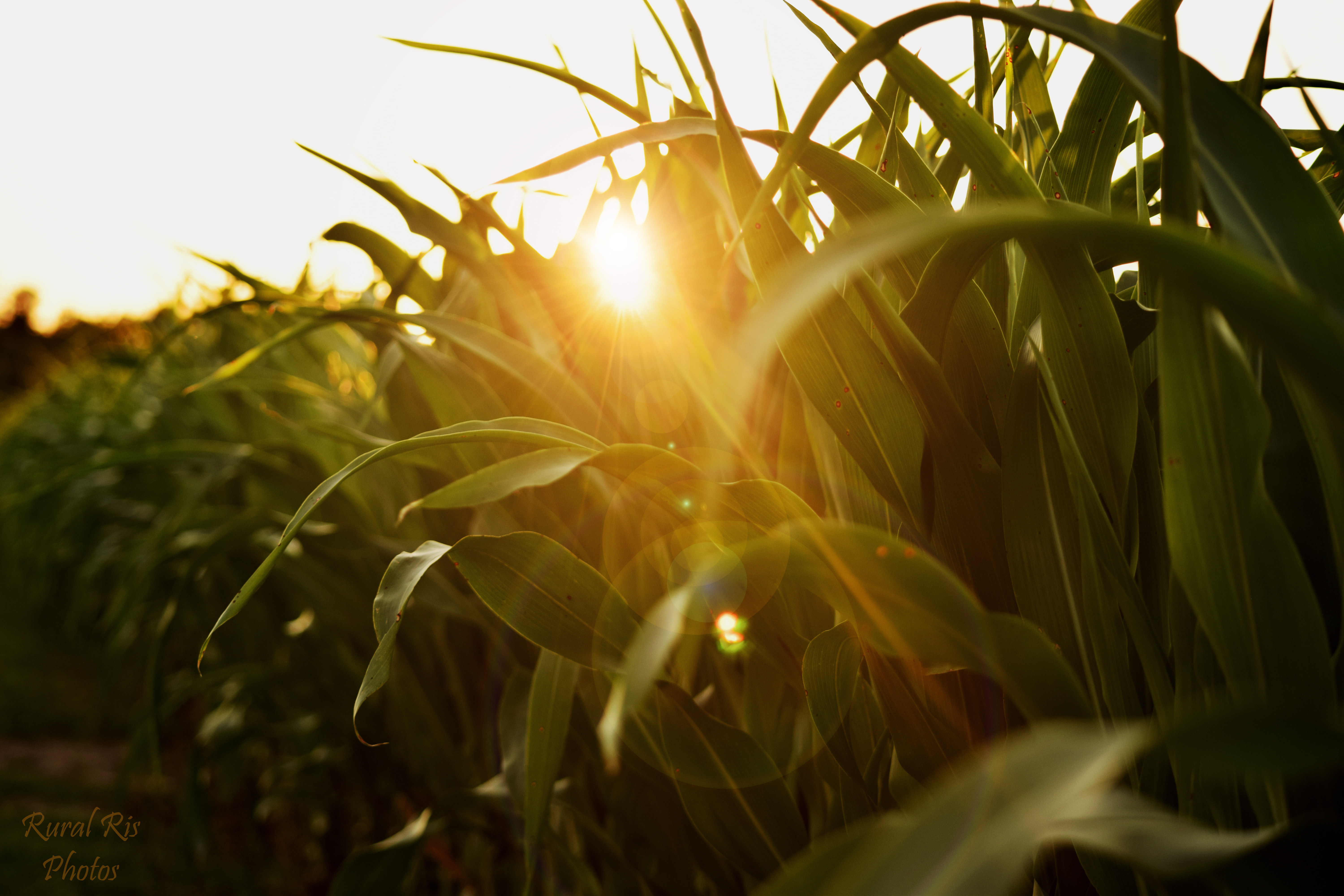
Sorghum is often confused with corn, especially early on. It looks very much like young corn. So, if you’ve ever wondered why that field of corn is missing its tassels and isn’t tall, it’s because it is probably sorghum, and you may be seeing more of it in the future.
sorghum

Rising Stardom

The name sorghum comes from the Latin word “Syricum (granum)” and the Italian word “sorgo” which all means grain of Syria. Sorghum ranks fifth in the cereal grain line up of the world, falling behind wheat, rice, corn, and barley. Of the 66 countries that sorghum is grown in, the United States is the largest producer! That is pretty major when it was just introduced in 1757 to America. Sorghum originated in Egypt over 4,000 years ago, so it took a while to get to the USA. It is now finding loads of uses.

Jack of All Trades

Sorghum comes in three main types–grain, forage, and sweet. Grain sorghum is of a shorter variety (5ft) and is used for livestock feeds, human consumption, biofuels, and pet food. Forage sorghum is taller (6-12ft). Because it has more to it, it is primarily used for silage (fodder that is preserved in a silo through anaerobic acid fermentation and fed to livestock). Sweet sorghum is harvested before it seeds and is pressed to get the juices to make biofuels.

Biofuels and Ethanol

30 to 35 percent of sorghum is used for ethanol production. One bushel of the grain produces 2.7 gallons of ethanol. Sweet sorghum is more hardy than crops like corn (it only requires 7 inches of water to produce the first bushel), making it a more ideal source of renewal fuel. In 2012, the USA produced 15 billion gallons of ethanol from plants. The federally mandated Renewable Fuels Standard will double that production to 30 billion with 8 years. Sweet sorghum is one of the crops that will be responsible for this increase in ethanol production. A big job for the crop.

Livestock Feeds

46 percent of American sorghum is used for livestock feed. Sorghum can take the place of corn in feeding operations. Because it is more hardy than corn, it is often more attainable and cheaper (maybe that is why it is often called poor man’s corn). It is fed to beef and dairy cattle, swine, and poultry as a source of protein and energy. Most of sorghum is used for grain (7 million acres), but there is a decent portion used for silage (350,000 acres).

Human Consumption

Sorghum has become the go-to cereal grain for those who are gluten intolerant. It can take the place of wheat flour in many baking goods. There is good news for beer lovers too. New Grist is a beer made from sorghum and rice. Brewed in Wisconsin, this was one of the first gluten-free beers back in 2006. Interestingly, it also got the government to change its definition of what beer is. Under the government’s policy, the starting recipe for all beer had to be 25% malted barley. With this new sorghum beer, things had to be redefined, and so it was.

Besides helping out those with gluten intolerance, sorghum is also a whole wheat that is super nutritious and has antioxidants similar to blueberries. So, basically you cant go wrong.
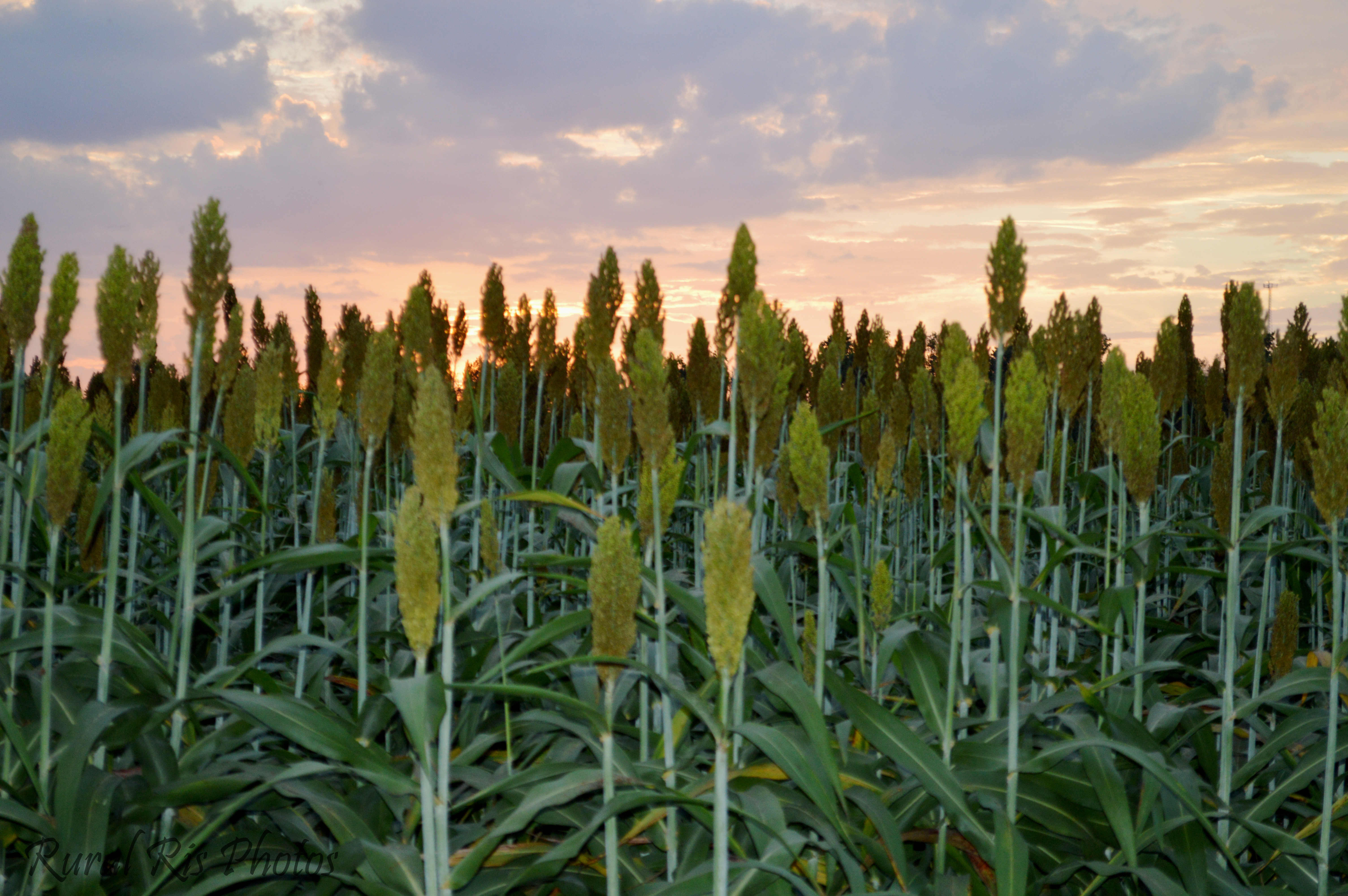
sorghum

From Field to Food, Feed, and Fuel

Sorghum is harvested in different ways depending on its purpose. If it is going to be used for grain, a combine is used to pick the seed heads. If being used for silage, than it will be cut with either a chopper or a hay cutter. After this, it then goes to its various destinations, ready to be enjoyed!

grasshopper


Sources:

National Sorghum Producers

Whole Grains Council 1

Whole Grains Council 2

Sorghum Checkoff

Sweet Sorghum Association

Kansas State Fair


A World Without Ag Wednesdays: Tomatoes

With 4th of July approaching, I thought it appropriate to highlight a piece of ag that one of our founding fathers helped promote–tomatoes.

I absolutely love tomatoes. Sadly, our garden tomatoes are not doing well, and I have yet to have a tomato sandwich with homegrown produce. Sad days, I know; however, I can find comfort in the fact that tomatoes are a popular food and no longer thought to be poisonous. How in the world such a wonderful food could be feared is beyond me, but thanks to a few individuals, especially Thomas Jefferson, tomatoes are now celebrated and devoured.

During Colonial times, folks related tomato plants with the poisonous nightshade plant, and only grew tomatoes for ornamental purposes. Not everyone was so paranoid about the plant, though. In South and Central America, where tomatoes originated, people had no qualms eating them. In France, tomatoes were called pomme d’amore, or “apple of love,” suggesting that they were also loved, but some experts say that this name was mistaken for the Spanish words “apple of the Moors.” It is thought that the first tomato came from Peru. Interestingly, all parts of the tomato plant are poisonous except for the fruit.

It took the efforts of Thomas Jefferson and his family to make the tomato go from feared to celebrated…well supposedly the Jefferson family is responsible for the tomatoes popularity. It is up for debate, but is generally accepted. Jefferson grew tomatoes in his garden where his daughters and granddaughters used them in all sorts of recipes like gumbo and pickling. When a prominent family like the Jeffersons use tomatoes (and don’t die of poison), you can well imagine that its popularity quickly rose.

Source:http://blaine.org/sevenimpossiblethings/?p=1470

Identity Crisis

To set the record straight, tomatoes are fruits, but if you ask the Supreme Court of 1893, they were to be considered a vegetable. You see, there was a tariff on vegetables, but not on fruits. A tomato importer sued a tax collector on the basis that tomatoes were fruits and did not need to be taxed. Ultimately, the Supreme Court got involved and ruled that botanically speaking, tomatoes were fruits, but in layman terms they were vegetables. In addition tomatoes were eaten at dinner with other vegetables, unlike fruit that was typically eaten for dessert. So now, tomatoes have an identity crisis.

American Pride and Production

The United States is one of the leading producers of tomatoes, only coming behind China. They contribute $2 billion in annual farm cash receipts according to the USDA. Tomatoes are grown for either fresh-market or processed. Those that are used for processed are machine picked while fresh-market tomatoes are hand picked. There are also several thousand varieties of tomatoes, and some are better for processing, while others are better for fresh-market. Fresh-market tomatoes are grown in all 50 states, and California grows the most tomatoes overall. It is definitely a far cry from the feared fruit of Colonial days.

Tomato Basil Sandwich…Summertime Favorite

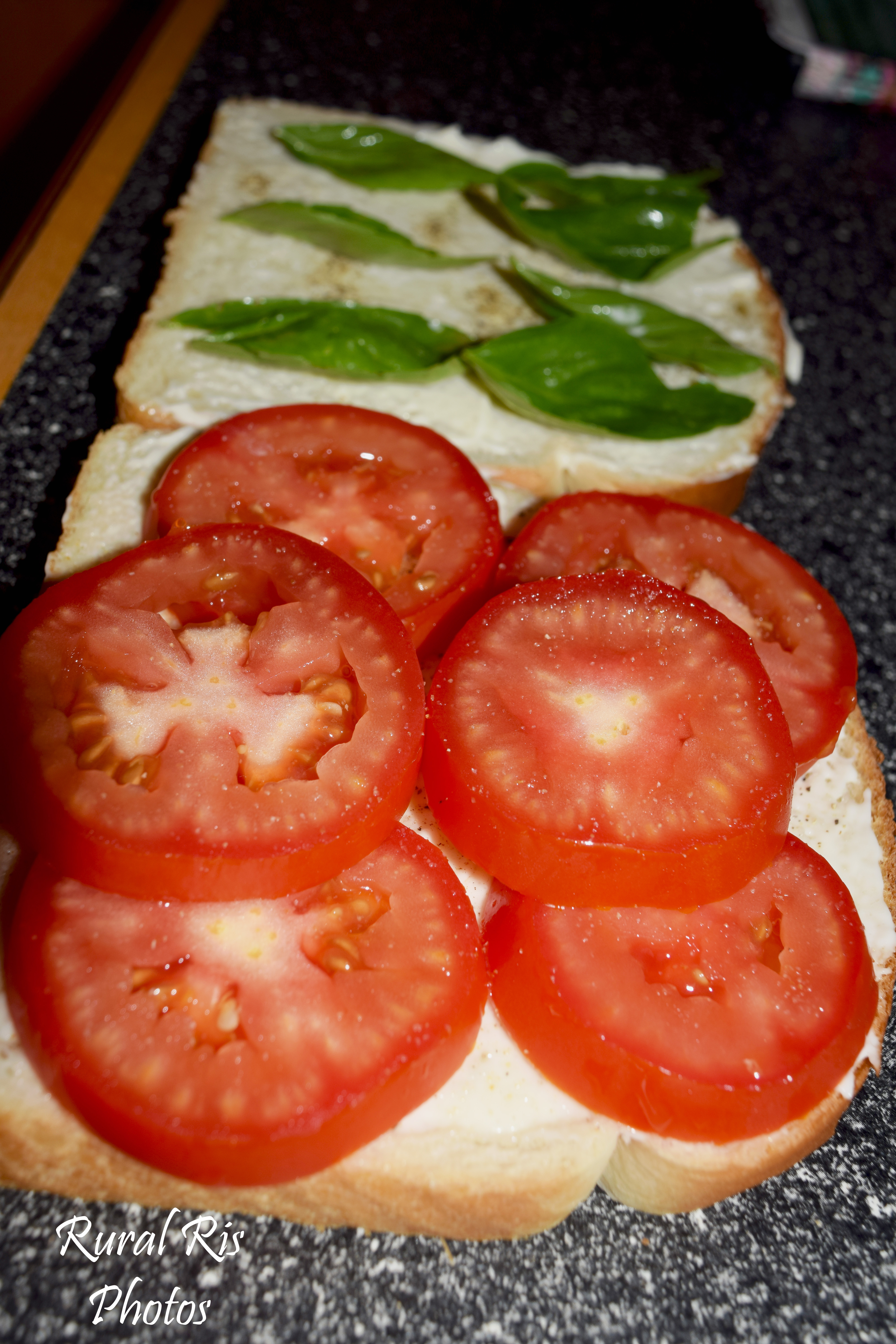
tomatoWhile I love tomatoes in everything and are one of my favorite snacks, one of my favorite ways to use them in the summer is to make a tomato basil sandwich. It is the simplest thing to go out to the garden (when it will actually grow tomatoes), grab a tomato and make a sandwich. All it takes is two slices of bread, spread with mayonnaise, salt and pepper, sliced tomato, and a few basil leaves. Bam! Quick, yummy, and definitely not poisonous! Thanks Jefferson!


Sources:
http://www.ers.usda.gov/topics/crops/vegetables-pulses/tomatoes.aspx

History of Tomatoes

http://www.tomatodirt.com/tomato-facts.html

The Fort

The boys have wanted a fort for quite sometime, and these past few weeks their dream came true. I am amazed at what my dad can engineer all by himself. Using a lot of stuff that we already had (telephone poles, pallets, windows, and tin) as well as a few bought items (plywood). It took a couple of Saturdays and nights after work to get it done, but the end product is fabulous! Two-stories of handmade awesomeness. The boys have padlocked the door, so only they may enter, decorated with chairs, a table they made, and a rug. Upstairs, they have drug cots up to sleep in once it ever gets cool enough. On days they spend in there, you can see them hauling a cooler full of ice and drinks with them.

It is a special thing built by all, engineered by dad, wished for by the boys, and where imagination runs rampant. It is “The Fort.”

fort2

fort4

fort8

fort11

fort9

Fort1

fort7

fort10

fort5

fort6

fort17

fort14

fort19

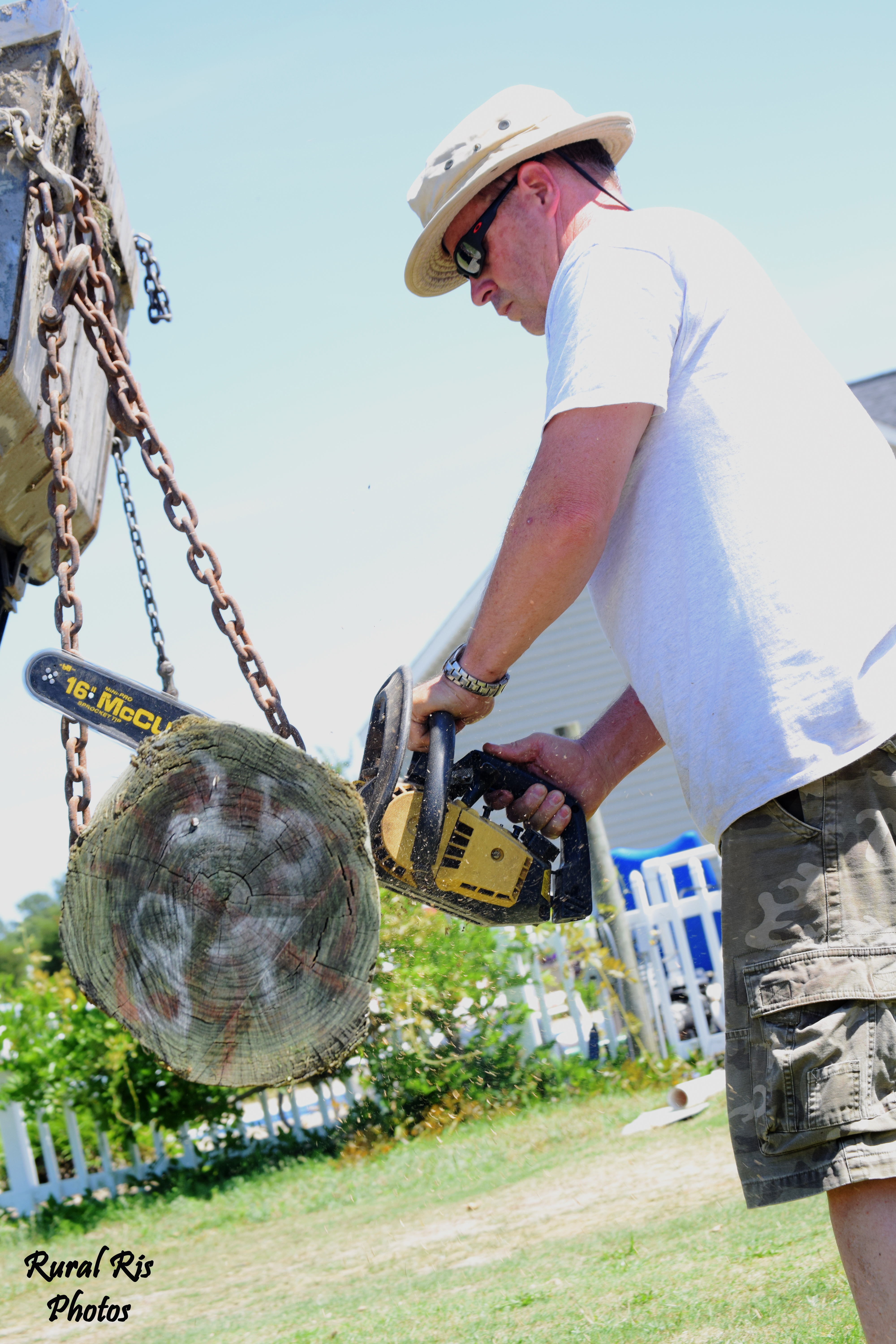
saw

fort15

fort12

fort20

fort16

fort13

Got to Be NC Show Pig Sale–We Are No Longer Pig-less!

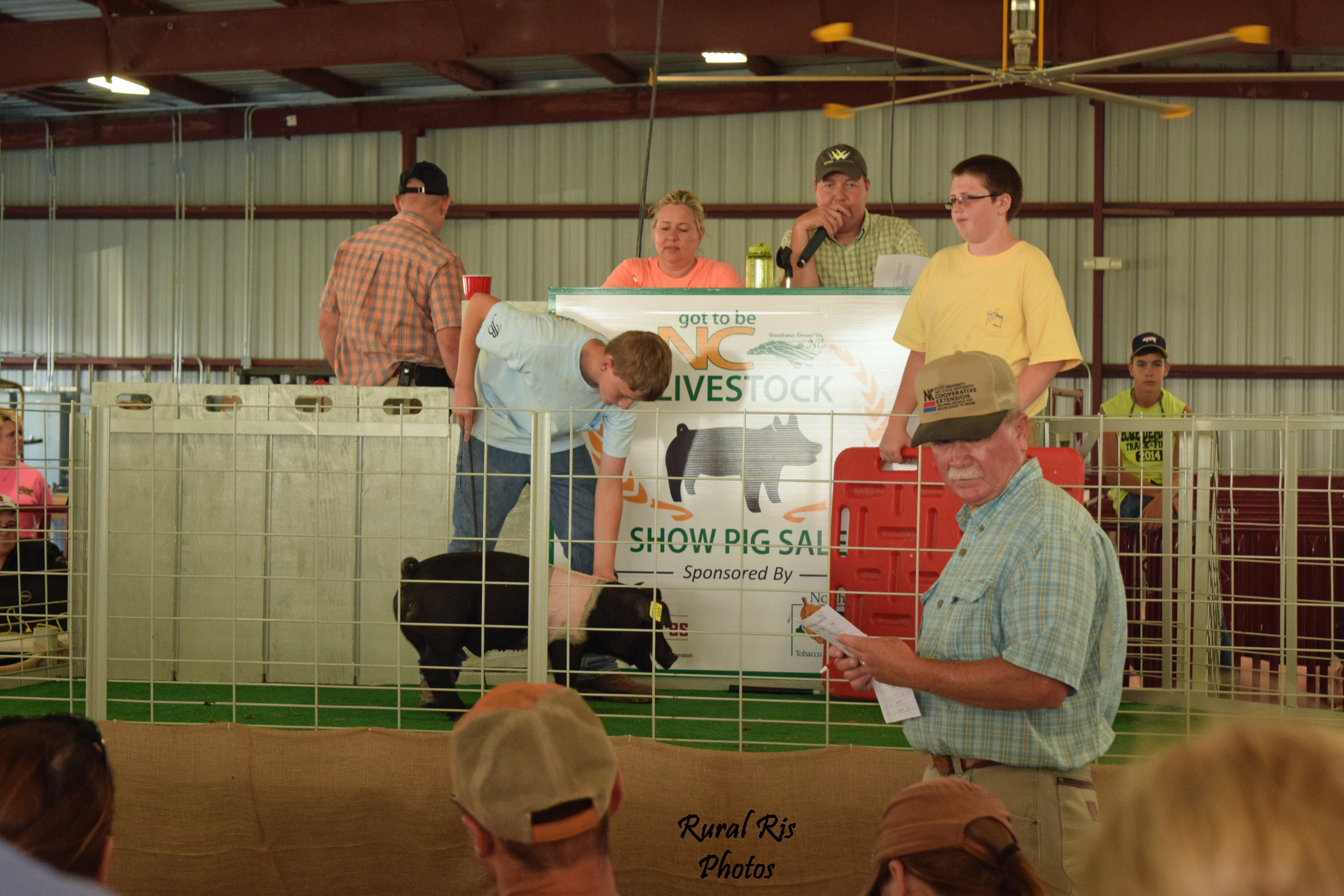
If you follow me on Facebook, you may have seen where Alec and I traveled 1,200 miles and photographed/videoed 85 pigs at 12 farms all across the state for the Got to Be NC Show Pig Sale. We did it within 5 days and it was quite the adventure. Honestly, though, I loved it! After hours of editing videos and photos, they were posted on the online portion of the sale through Willoughby Sales. All there was left was to wait for the sale.

sale1

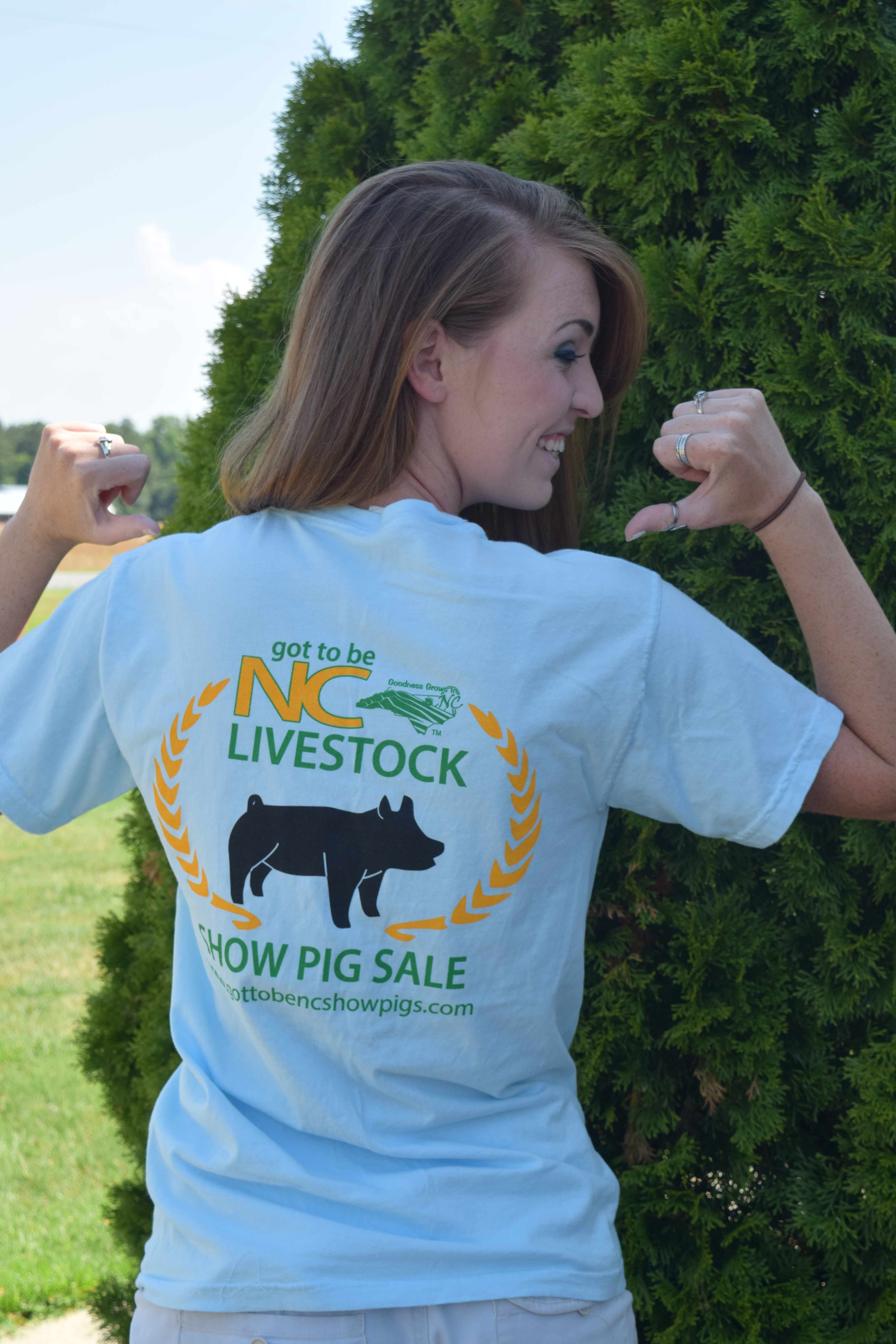
Alec and I both planned on buying a pig at the sale. We had each picked out our favorites and set budgets for ourselves. I was stoked. When we arrived at the sale, I was excited to see so many people there. This was the inaugural sale, and I wanted it to do well. Because there was an online portion, there would be bidders both on the grounds and over the internet. It was a big deal for NC show pigs. As far as I know, this was the first of its kind in the state. There was free food, free t-shirts for buyers, and a lot of great folks.

DSC_0576

The problem with sales is you have to be strategic. I had 3 pigs picked out that I was interested in, but my favorite one was later in the sale line up. I was in the conundrum that I could wait until my favorite with the risk that it would go too high, and my other favorites would then be gone as they were earlier in the line up. I’m telling you, strategy and a bit of gambling is needed.

Alec’s first pick pig went too high for his budget, so he moved to the second, but when it got in the ring, he decided he didn’t like it. So, on we went to the third pig which went too high also. At this point, I’m getting a little squirmy for Alec. Our top 3 pigs for him were gone, and now it was a matter of picking one as they came through. One little guy came through the ring, and I nudged Alec that I liked this one. Alec watched him for a bit then bid. He got in a slight bidding war with another guy, and ended up calling it quits once he hit his budget. Dad and I finally talked Alec into going another $25. That won the pig.

alec bid

My bidding was much less eventful. I decided to pass up two pigs I liked to wait for my favorite and got her with no competition. I was stoked!

sale2

Overall, I think the sale went well, especially as it was the first year doing it. Sure, there were some no-sales, but that’s alright. I hope to see it grow, and more people support it in the future.

sale7

sale8

sale3

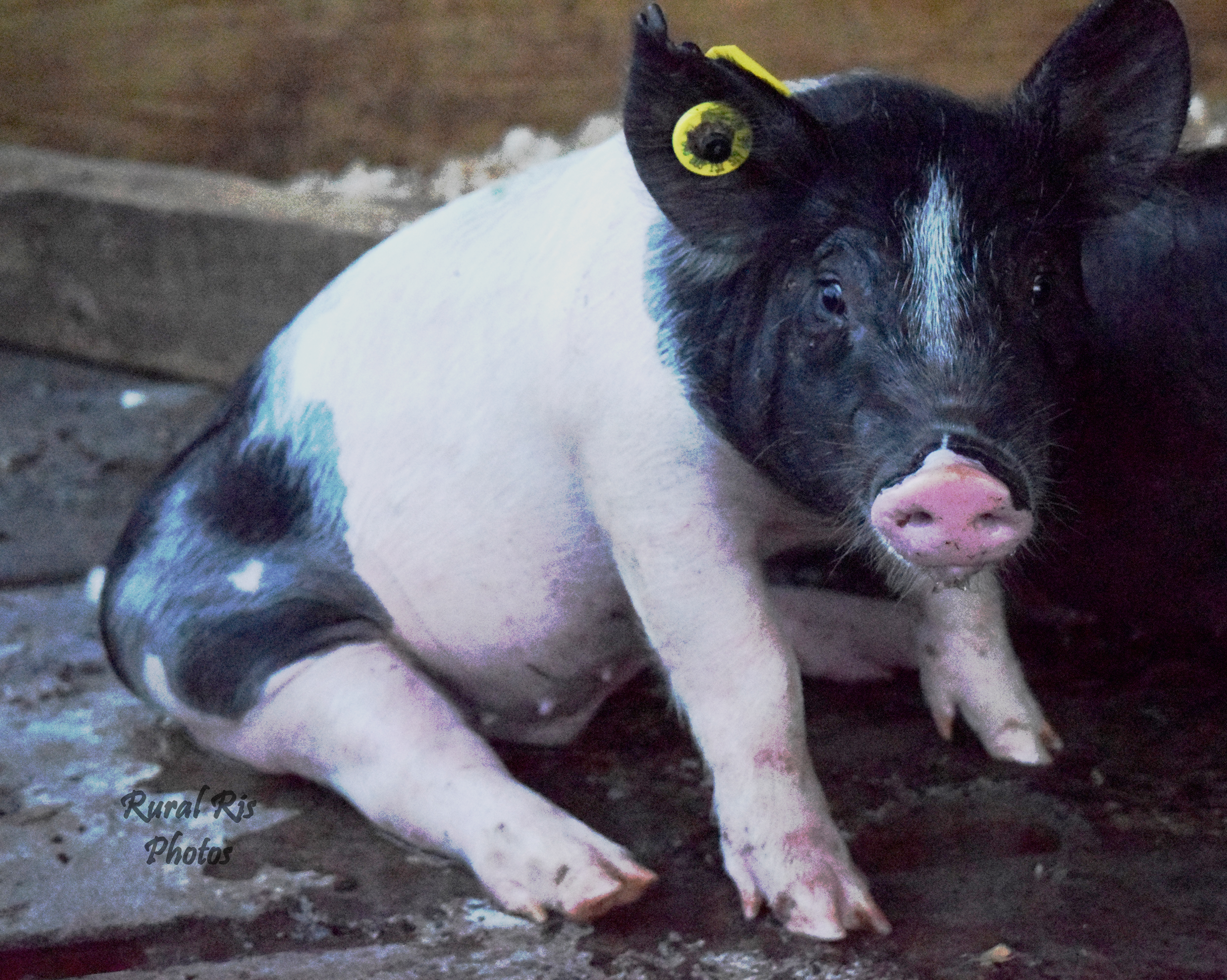
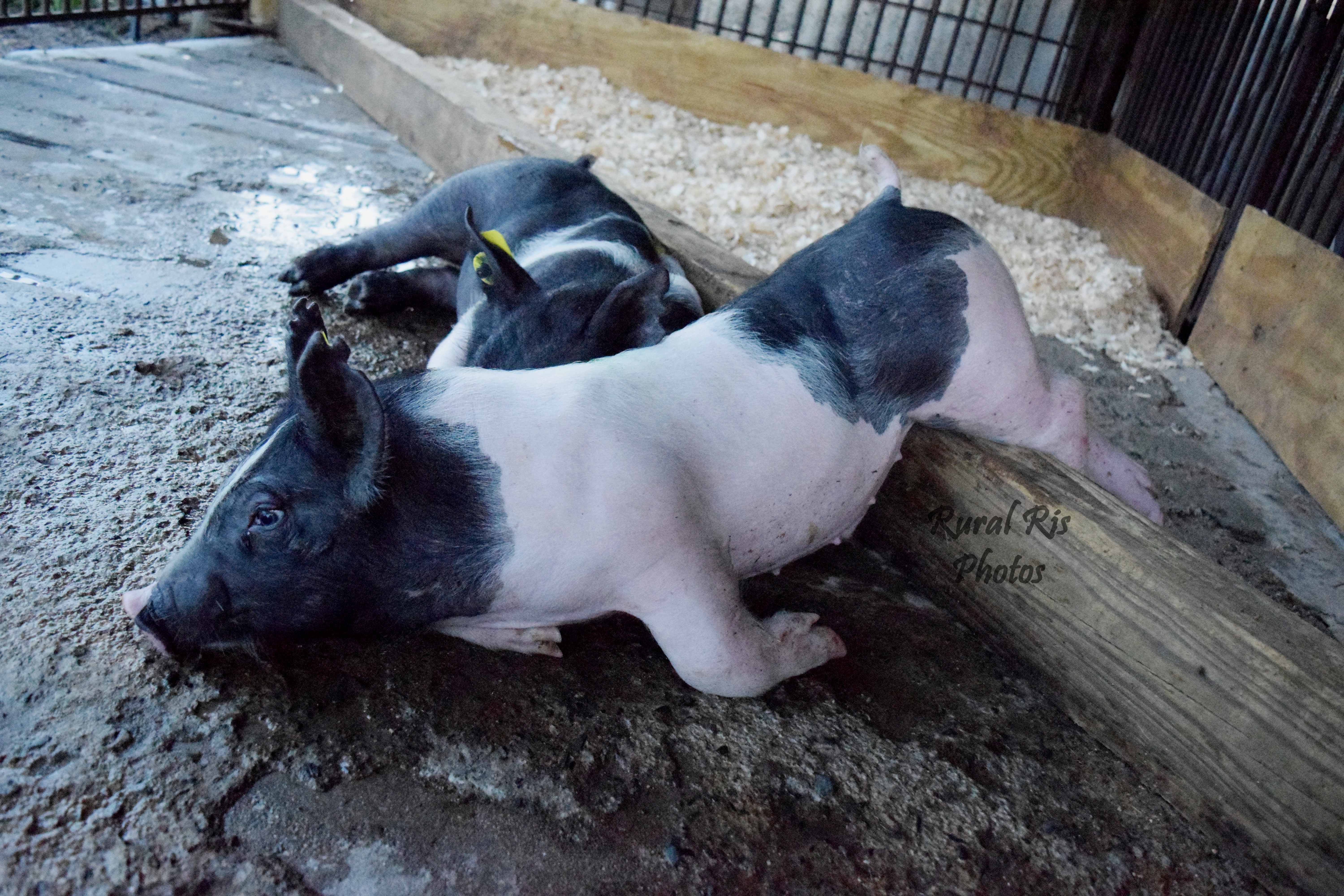
sale5It is truly exciting to see a great group of NC pig farmers come together to provide quality stock. Most of the pigs will be at the NC State Fair competing, so be sure to stop by the pig barn at the fair. For now, though, I would like to introduce you to our newest additions. I am no longer “pig-less”! They LOVE marshmallows.

sale13

sale11

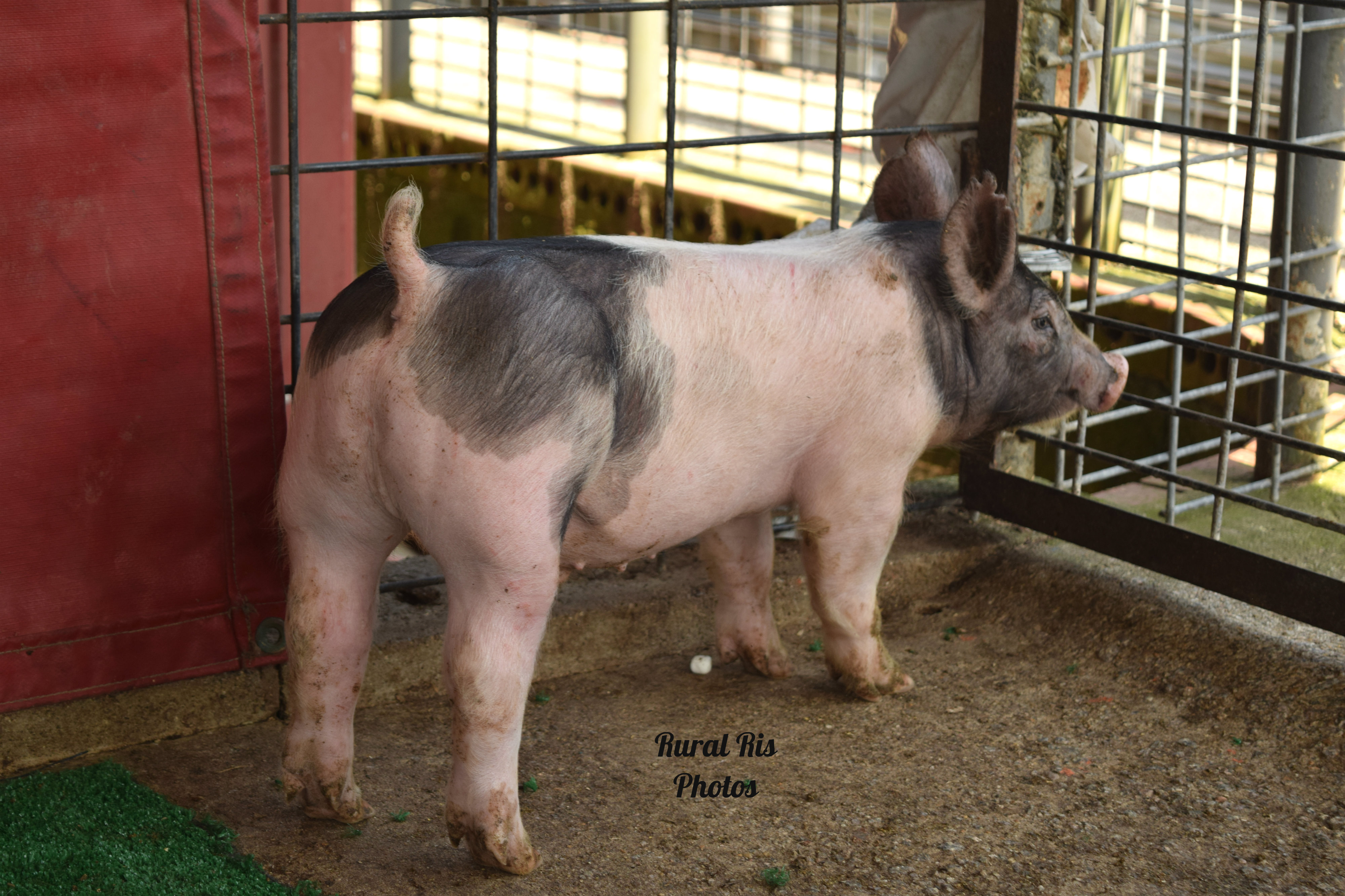
I am pleased to introduce to you my gilt, Alice:


alice b

alice cross

alice

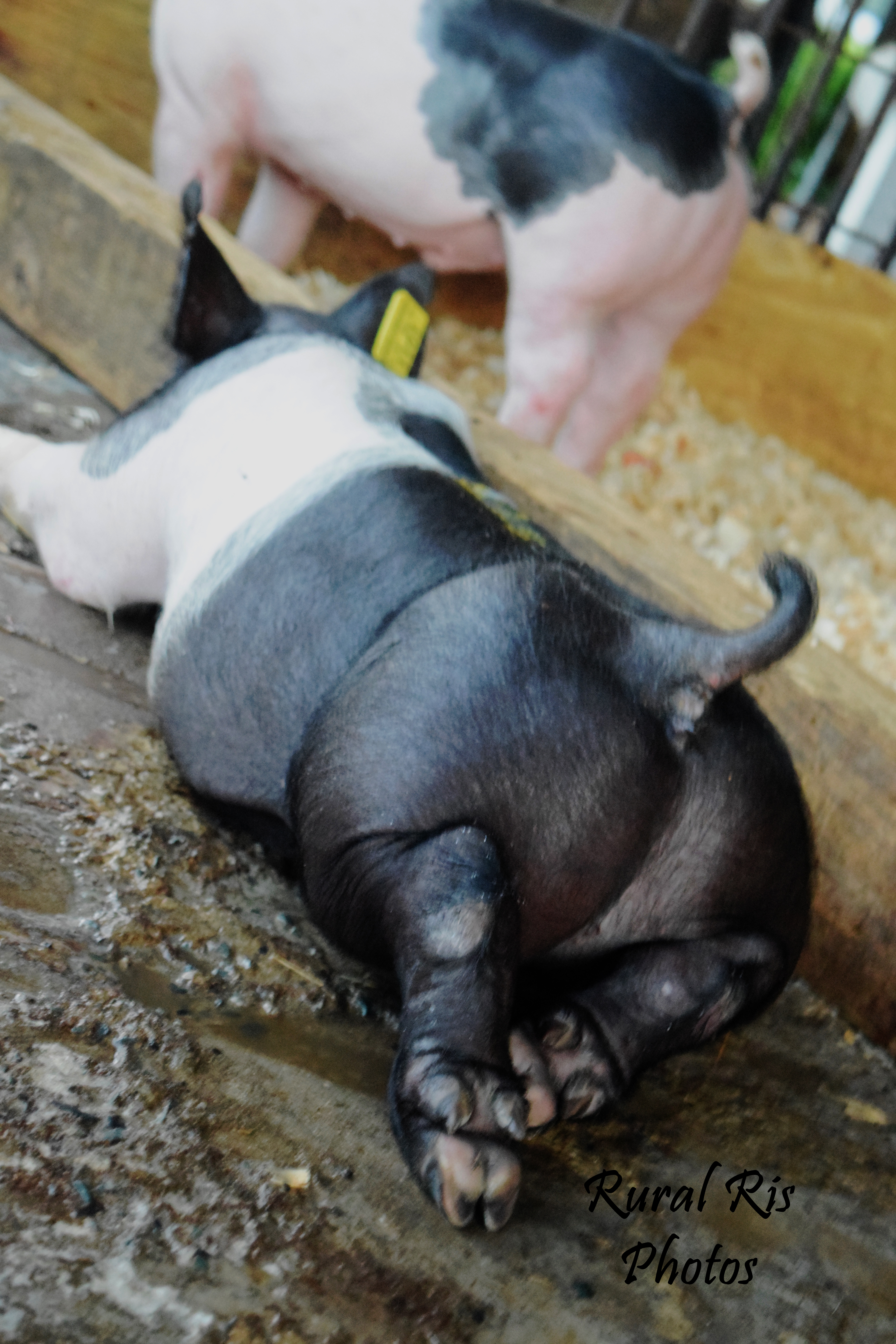
And, Alec’s barrow Gus:

gussy

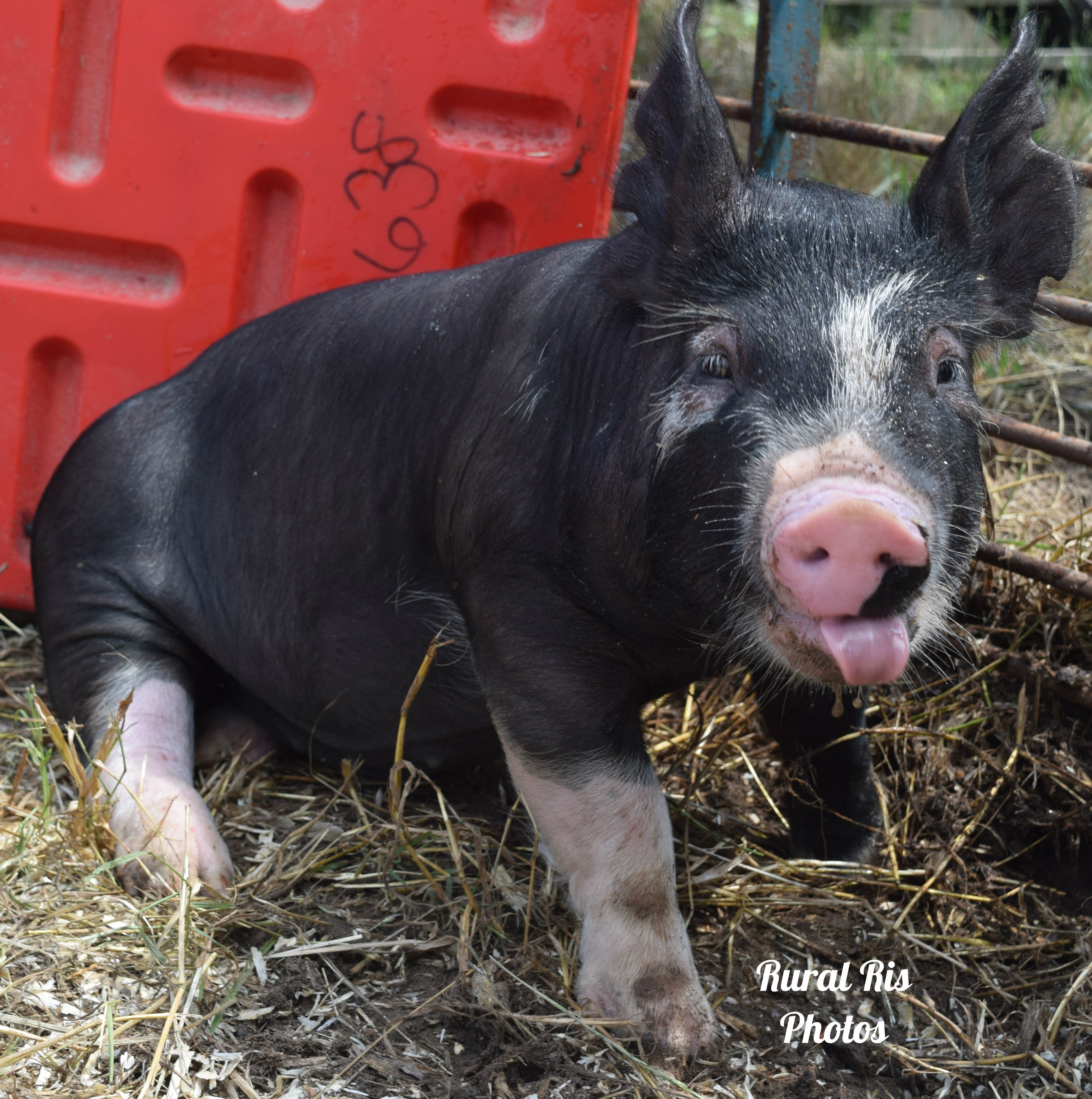
Sharp-EN18-3-lot69

gus butt up

We should be getting two more pigs for the boys soon too, so stay tuned.

Fact Filled Friday: Scrapie Tags *Bonus-Funny Story Included*


scrapieYesterday we took 4 animals (2 sheep and 2 goats) to the stockyard to be sold. While the story of getting them on the trailer has nothing to do with the purpose of this post, it is too funny not share, so I’m going to to go off track a bit.

Funny, irrelevant tangent:Our old large buck can be hard to handle. Not in the fact that he is aggressive, but in that he isn’t the friendliest fellow. He likes to be left alone, and is therefore, hard to catch. Well, it just so happened that he was snoozing in one of the shelters, so I rushed to block the entryway to trap him inside. Alec brought me a fence panel to lock him in. The shelter he was in is a grain bin cut in half, and we humans have to do a duck walk to get in there. So here we are– Alec, a 200 pound buck, and me blocking them both inside to duke it out. Alec grabbed the buck’s horns, and when he did, the buck bolted. He began to run in circles with Alec spinning on his butt like a spinning top, holding onto the buck’s horns. It was a funny sight to be sure. I tried videoing it, but was not nearly as coordinated as I needed to be (sorry, no video). The next step was to let the two wrestlers out of the shelter. The buck was pushing with all his might, and Alec still did not have his footing. I grabbed one horn and the buck’s beard, but at this point the buck and Alec were all sorts of tangled, Alec had to let go, and the buck and I went running. Alec yelled for me to let go; however, I’m a bit stubborn, so I held on until Alec got there. We both escorted him to the trailer. Phew!

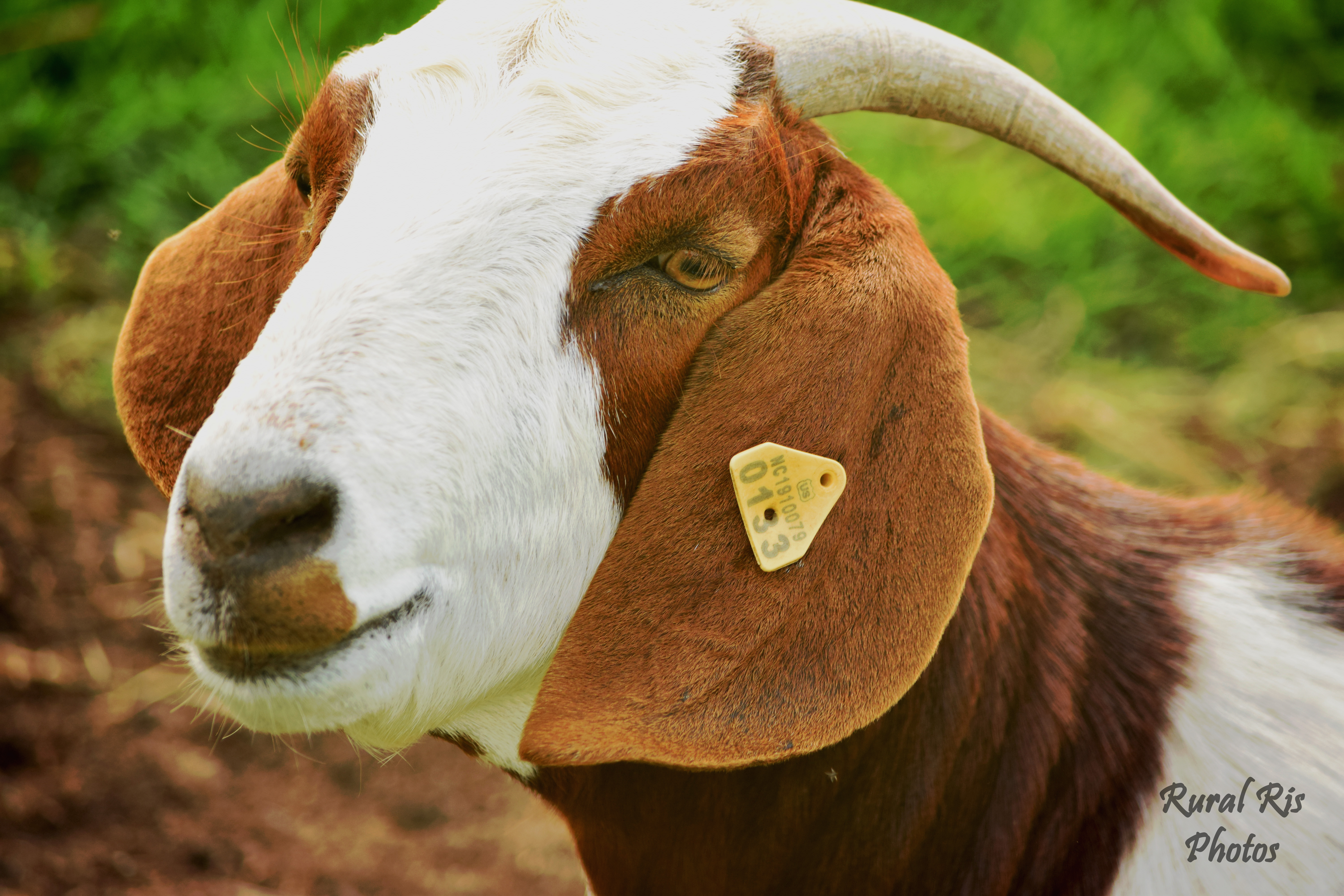
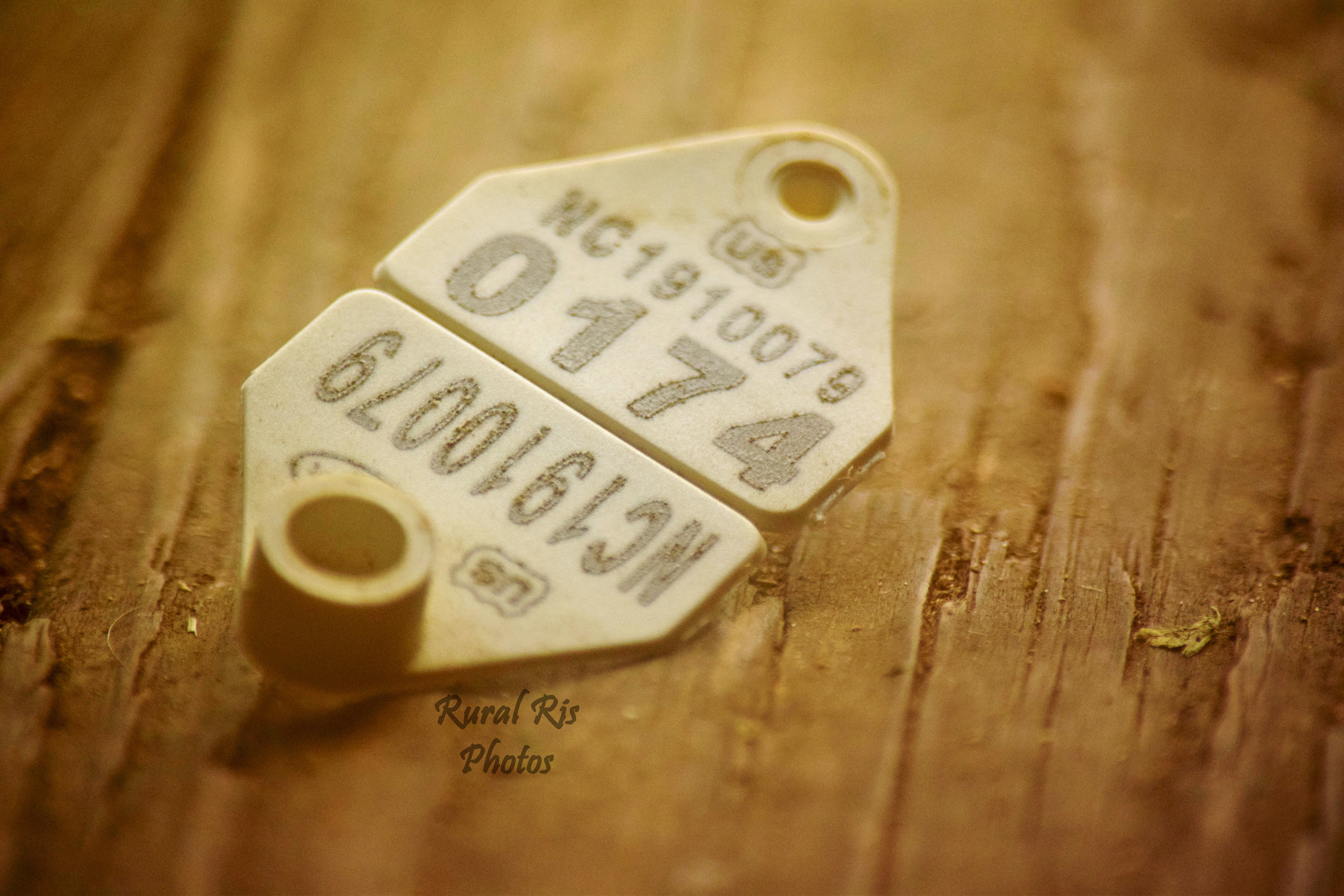
OK, back on track… before leaving for the stockyard, we had to make sure that all the animals we were selling had scrapie tags. It is required that goats and sheep have scrapie tags so that if they were to come down with scrapie disease, they could be tracked down to their place of origin. The tag not only has a number that represents that individual animal, but it also has a longer number that represents the farm from which they came. Ours looks something like this:

tag

Not all tags are scrapie tags and an animal can have more than one tag, but a scrapie tag is a must have. Why is this scrapie tag system so important? Well, scrapie disease is a very serious matter. It is the goat/sheep version of mad cow disease. It is degenerative disease affecting the central nervous system that is fatal. There are only two countries that do not have scrapie–Australia and New Zealand. In 1947, scrapie entered the United States through a Michigan flock of sheep. In 2001, the USDA started an aggressive program to help eradicate scrapie. Since that time, scrapie has been reduced by 85% in the US! This has been accomplished through the identification program as well as other measures. According to the National Scrapie Education Initiative, the program includes:

  • Identification of pre-clinical infected sheep through live-animal testing and active slaughter surveillance.
  • Effective tracing of infected animals to their flock/herd of origin made possible as a result of the new identification requirements.
  • Providing effective cleanup strategies that will allow producers to stay in business, preserve breeding stock, and remain economically viable. USDA/APHIS will do this by providing the following to exposed and infected flocks/herds that participate in cleanup plans:
    1. Indemnity for high risk, suspect, and scrapie positive sheep and goats, which owners agree to destroy,
    2. Scrapie live-animal testing,
    3. Genetic testing, and
    4. Testing of exposed animals that have been sold out of infected and source flocks/herds.

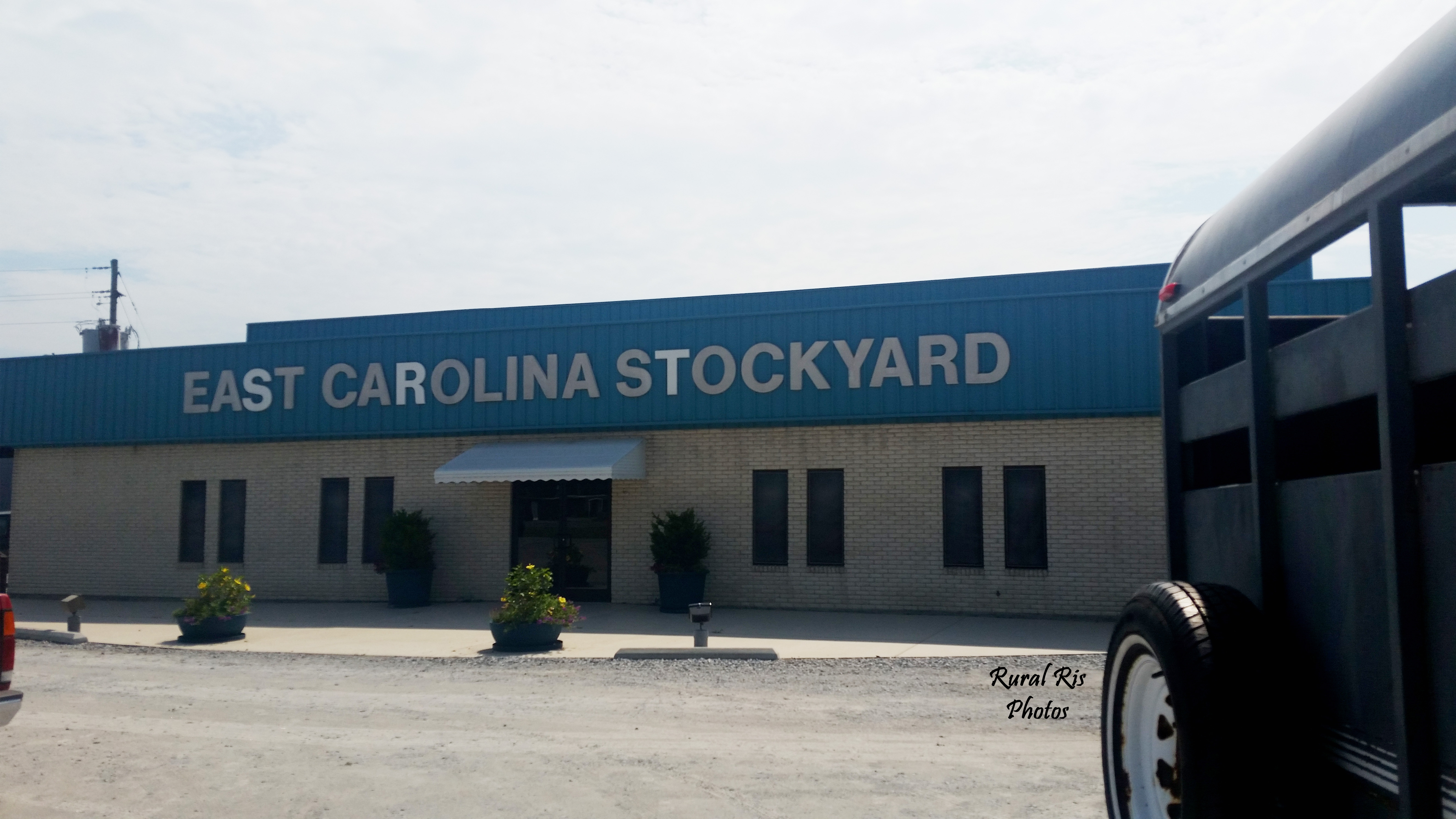
As you can see, this is serious business. At the stockyard that we brought the animals to, there is a sign that says all sheep and goats unloaded must have a scrapie tag by USDA regulations. stock

As a farm, we tag anything that goes off of our property. Interestingly, not all states have the same regulations. North Carolina does not require tags for animals that are wethers (castrated male) and animals less than 12 months of age going directly to slaughter; however, other states make no exceptions to tags. Regardless, it is important to not only be aware of your state regulations, but to follow them. In this way, we can help eradicate scrapie in the United States. There have been huge strides made in the last 14 years, and it is up to us farmers to continue those strides.

And that is your fact for this Friday.

A World Without Ag Wednesdays: Wheat

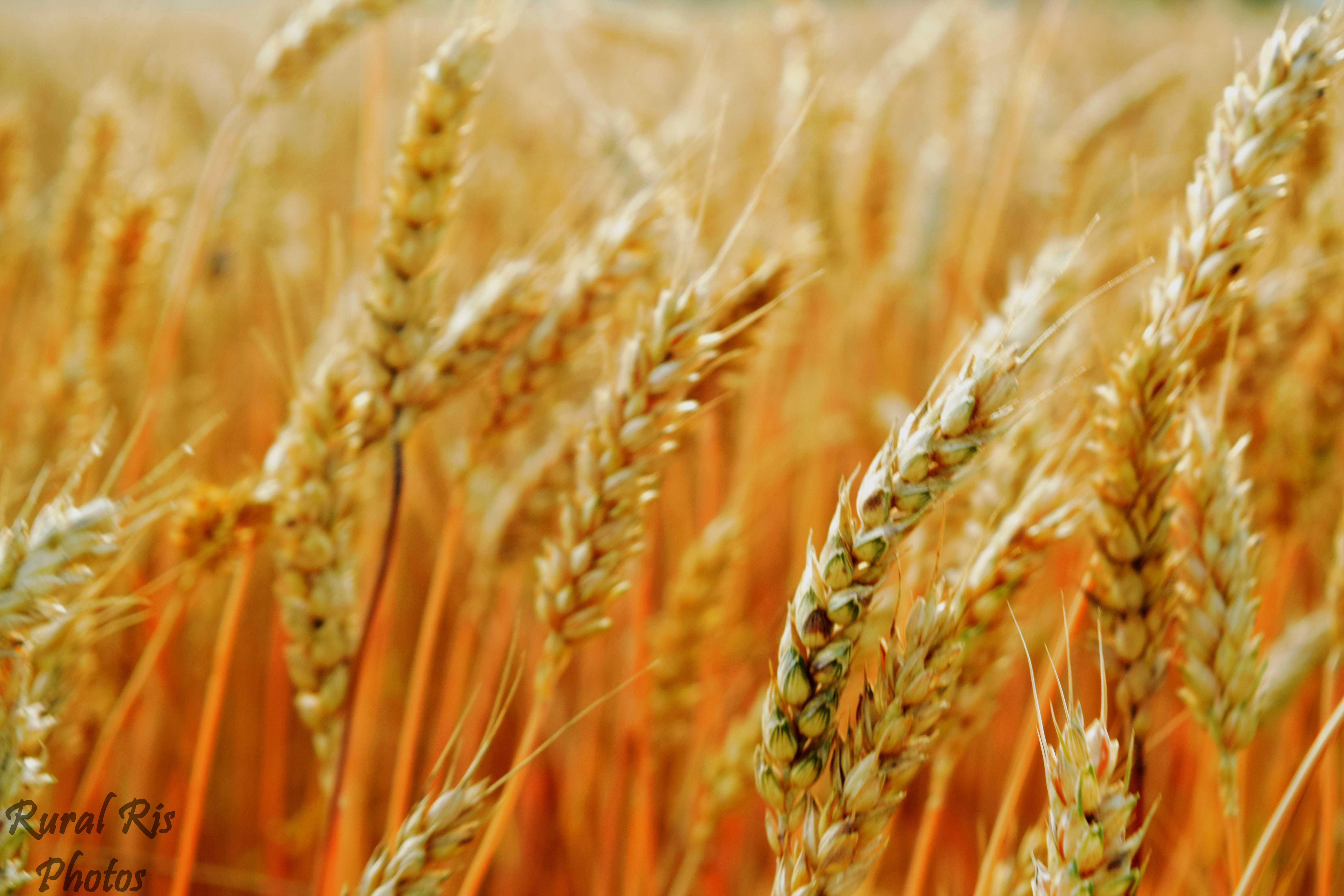
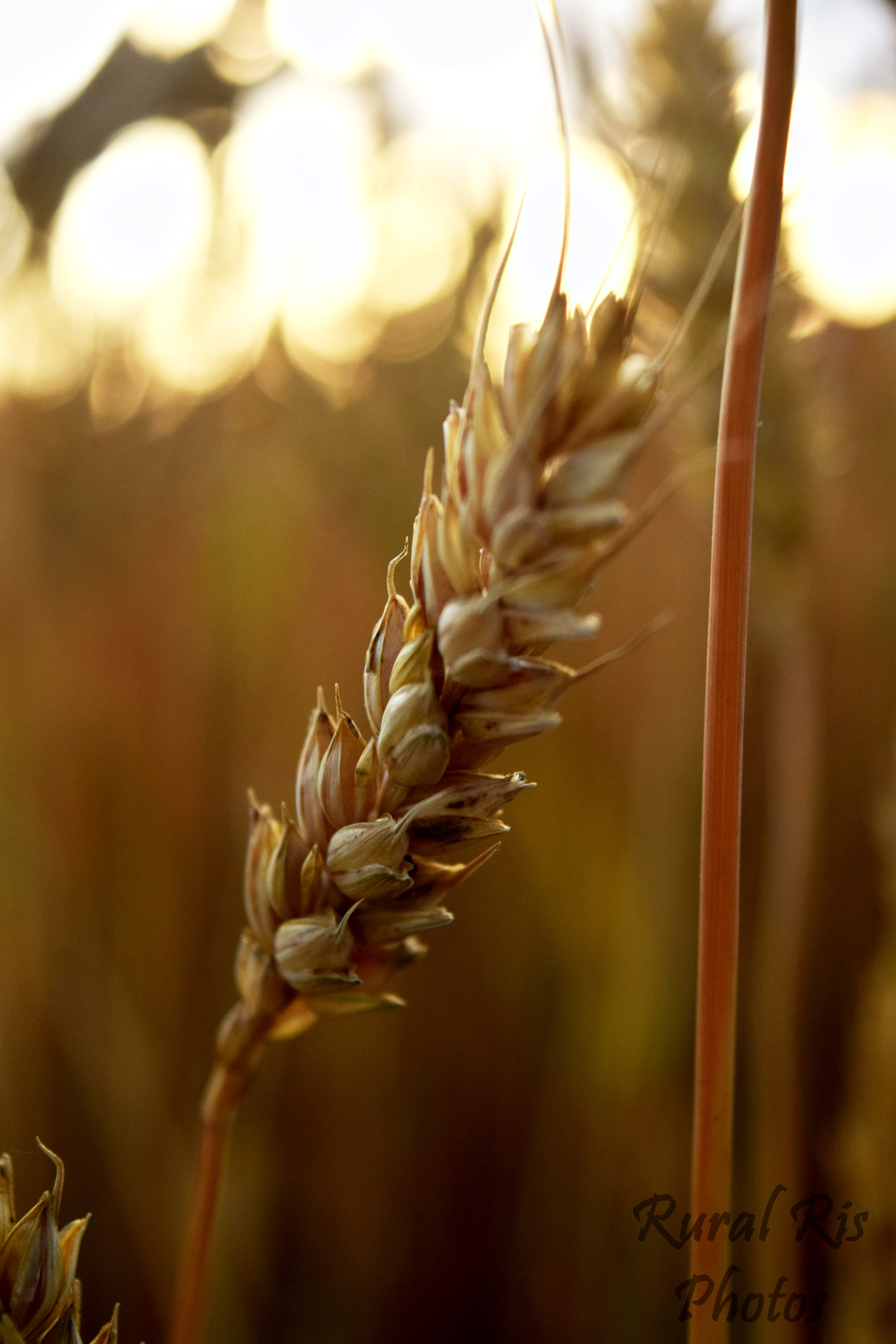
My favorite crop is wheat. Not only because it is one of the prettiest to me, but also because of what it produces. Without wheat, Olive Garden would be obsolete. Poof! Say good-bye to pasta and breadsticks. It is a very sad picture, no doubt. So, not only is it a picturesque crop, but it is also responsible for some pretty yummy things.

All around my house, they have begun to harvest the dried wheat. Many farmers burn the fields after the grain has been harvested to improve the soil.  Wheat is pretty popular in America as it is the primary grain used in US grain products. It is grown in 42 states with Kansas ranking at the top, producing enough wheat to make 36 million loaves of bread and enough to everyone in the world for about 2 weeks. That is a ton of amber waves of grain.

wheat3Past and Present of Wheat

Wheat originated in what is now Iraq and was first planted in America (1777) as a hobby crop. Now there are thousands of varieties of wheat that are separated into 6 categories:

  1. Hard Red Winter (HRW)
  2. Hard Red Spring (HRS)
  3. Soft Red Winter (SRW)
  4. Hard White (HW)
  5. Soft White (SW)
  6. Durum

The different types of wheat have special qualities. The red wheats have a distinctive flavor–nutty or earthy. The white wheats are sweeter. The harder wheats are great for pizza doughs, soft rolls and croissants even though they are harder to grind. although the soft red winter are easier to grind, they have lower protein levels than their harder red counterparts. Often times, wheat is mixed into a unique blend to create the perfect flour that has the protein, flavor, and softness or hardness that is desired for whatever it is being made into. Cakes and pastries are made from the soft white as this wheat is the sweetest variety. Durum wheat is the hardest wheat and is used for the highest quality pastas and noodles. Italy uses only durum wheat. It is also has some of the highest protein. The different wheats are more commonly grown in various areas (e.g. Hard red winter is popular in Kansas and hard red spring is often grown in northern states towards Canada).

wheatWheat Facts

  • A bushel of wheat weighs around 60 pounds
  • A bushel of wheat produces roughly 42 pounds of white flour and 60 pounds of whole-wheat flour
  • There are more than 600 pasta shapes in the world
  • Traditional tortillas used ground corn. Flour tortillas were not introduced until the 19th century
  • A bushel of wheat makes about 210 servings of spaghetti
  • One bushel of wheat contains approximately one million individual kernels.
  • One acre of wheat produces 40 bushels of wheat
  • Wheat is a member of the grass family.

I don’t know about you, but all this talk of bread and pasta has got me hungry. Bring on the carbs!

wheat2


Sources:
http://www.wheatworld.org/wheat-info/fast-facts/

http://www.onlygrainmills.com/a-wide-variety-of-ingredients-6-types-of-wheat/

Meet the New Faces of Food Network–The Brothers

Our family is heavily involved in 4-H, and one of the things that we participate in every year is presentations. It has taught all of us kids to learn public speaking skills and confidence–something that I have been extremely thankful for over the years. This year, was the boys’ first time doing a presentation. Following in their older brother’s footsteps, they chose to do the outdoor cookery category. In this section, they have to actually cook a piece of meat for judges on charcoal grills. Do you know how cute a 9 and 10 year old are grilling? Let’s just say they could be the stars of Food Network.

It isn’t just about grilling some scrumptious food, though. The kids have to field the judges’ questions about what temperature to cook the meat to, why they wear gloves (side note: Mom was quizzing Gid on why he should wear gloves, and was trying to get him to remember the word salmonella by thinking of fish. He had the worst time picking the right fish. If you hear him say the flounder disease, you know what he’s talking about), grill safety, and even nutritional facts about their meat. When they age up to senior level, they have to give an additional presentation discussing the industry and more for a chance to go to nationals. Impressed yet?

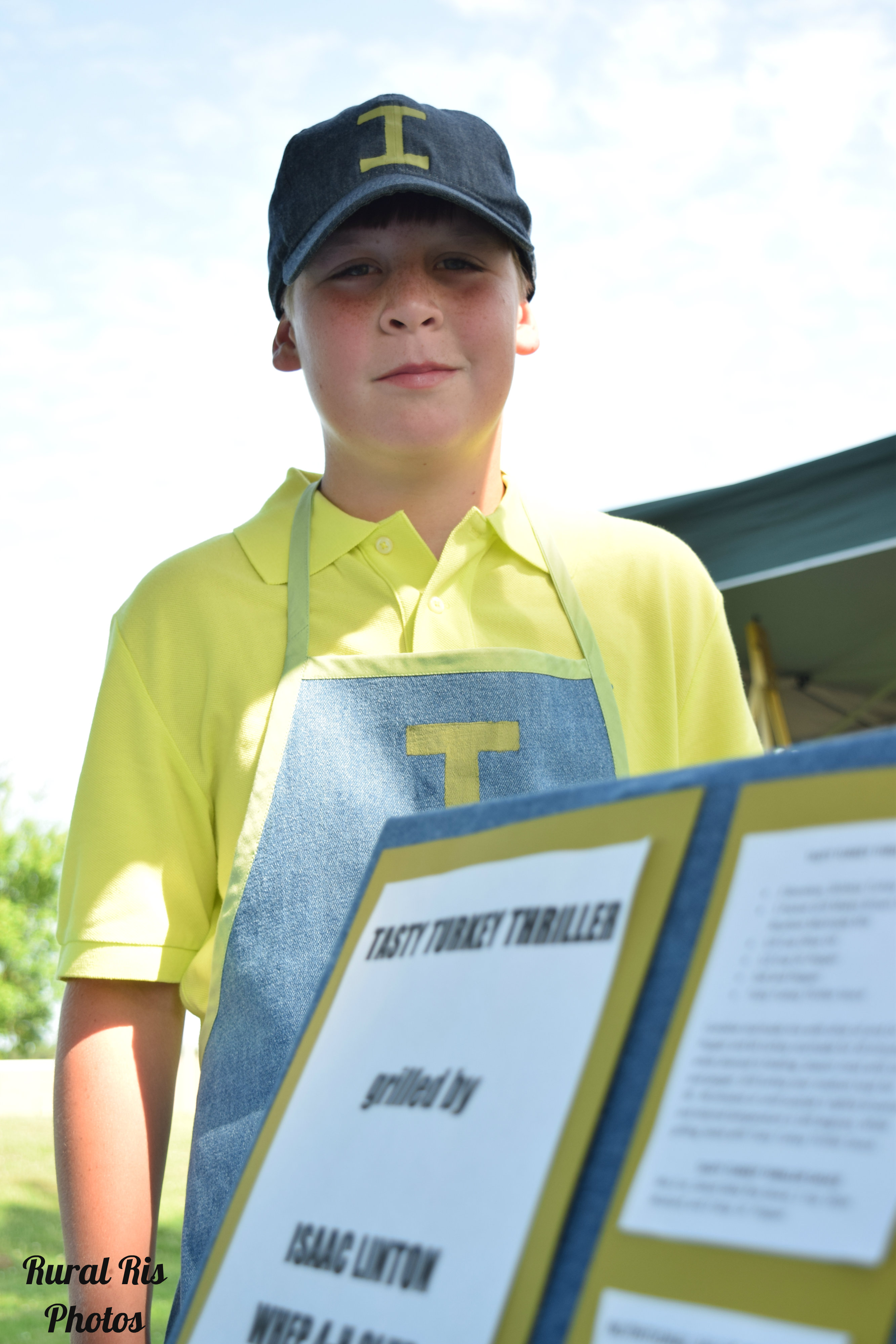
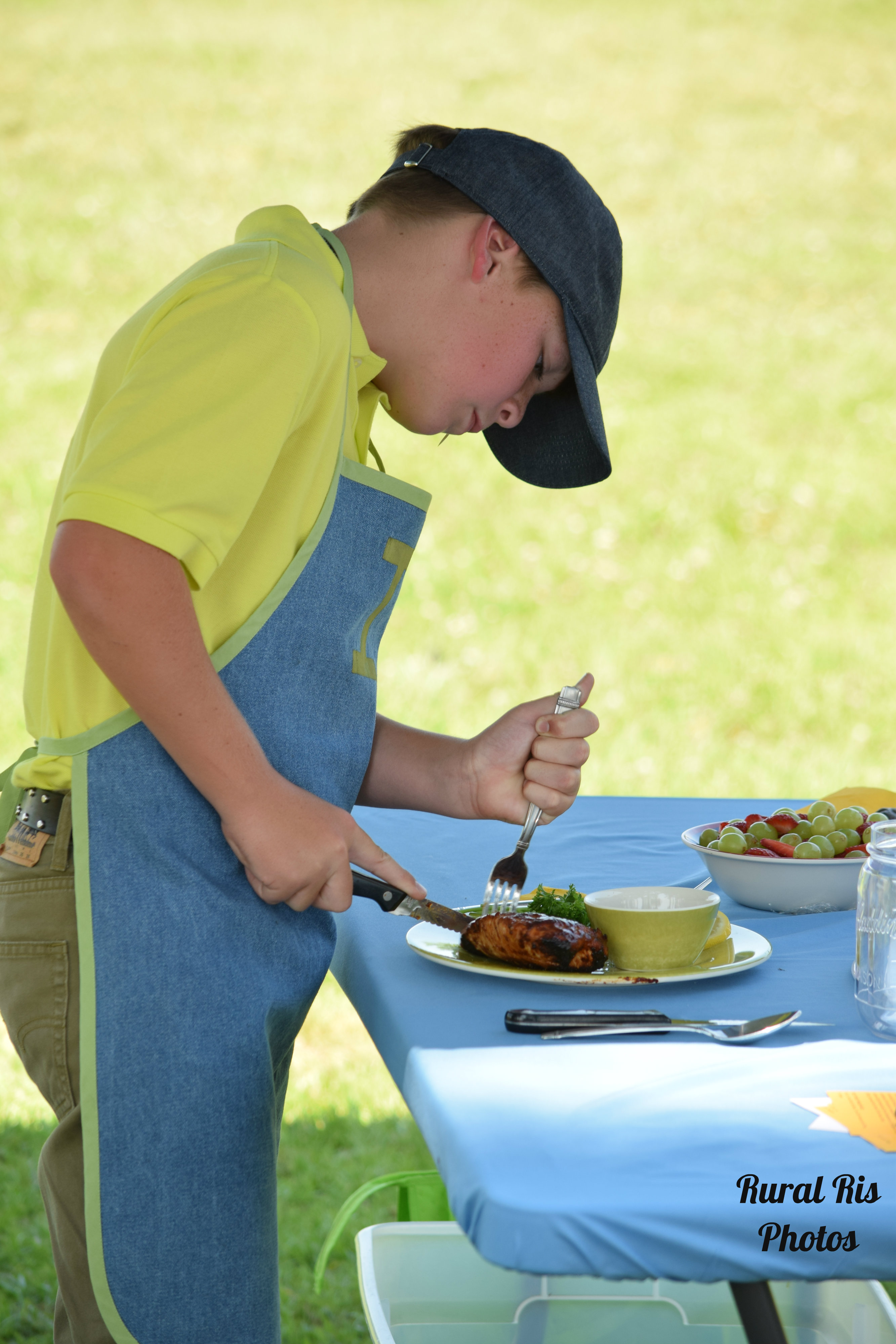
The boys had already grilled at the county level, and were now competing at the district level. Gideon is still a Cloverbud, so he was non-competitive. Isaac was a junior and ended up winning gold, so he will be headed  to state next month. They were both cooking turkey tenderloin. Now, I used to be a only turkey at Thanksgiving kind of girl, but when we started grilling turkey tenderloins for these presentations, I reevaluated life. It is so very good, especially if you follow their recipes (see below). I know I may be partial, but I think my brothers are just too cute and ever so talented.

turk gid

turk i

Waiting for the coals

turk raw

turk temp

turk cut

turk gid cut

turkey judge

turk judges

Clearly, it was superb

turk boys

turk family

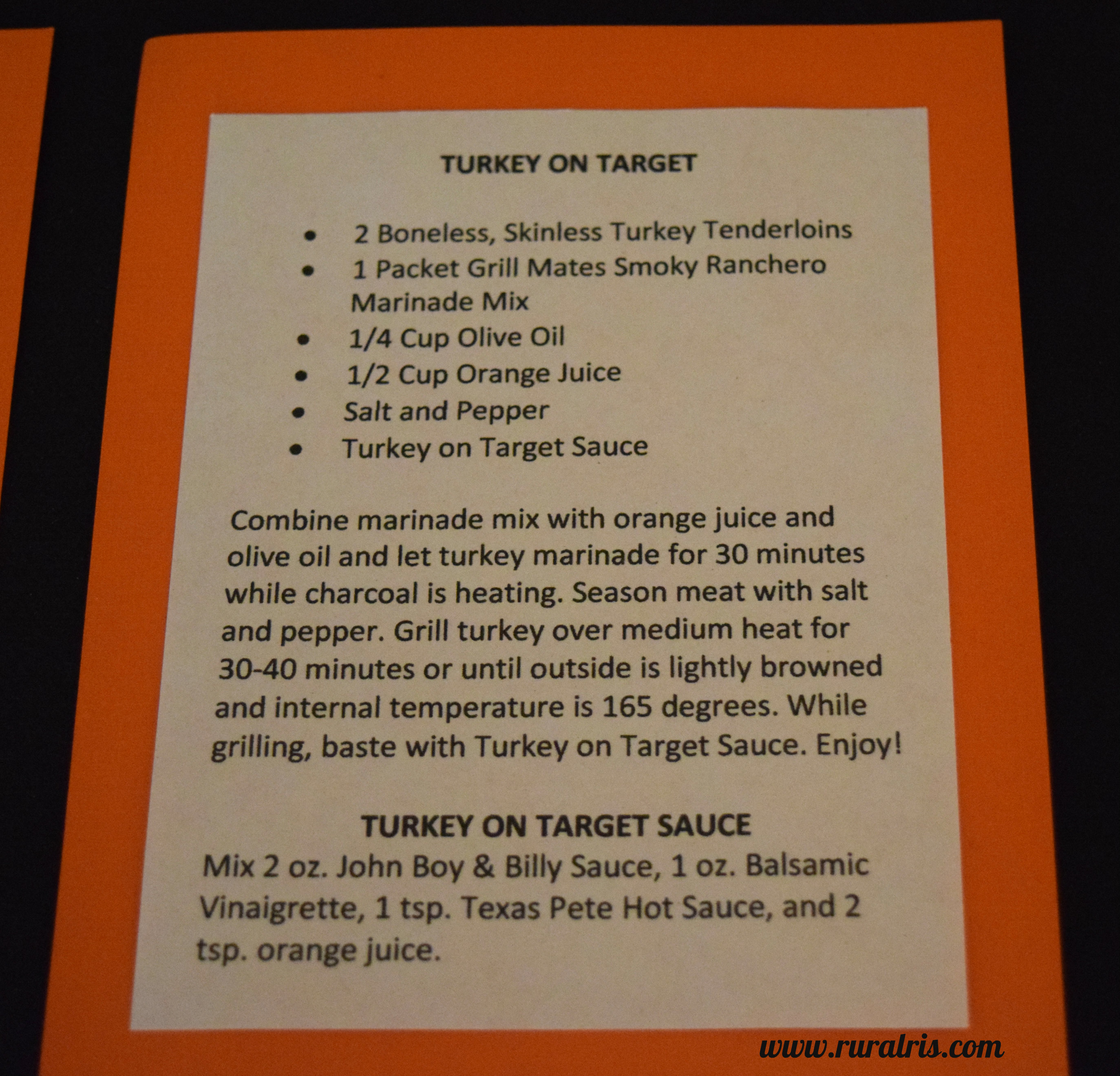
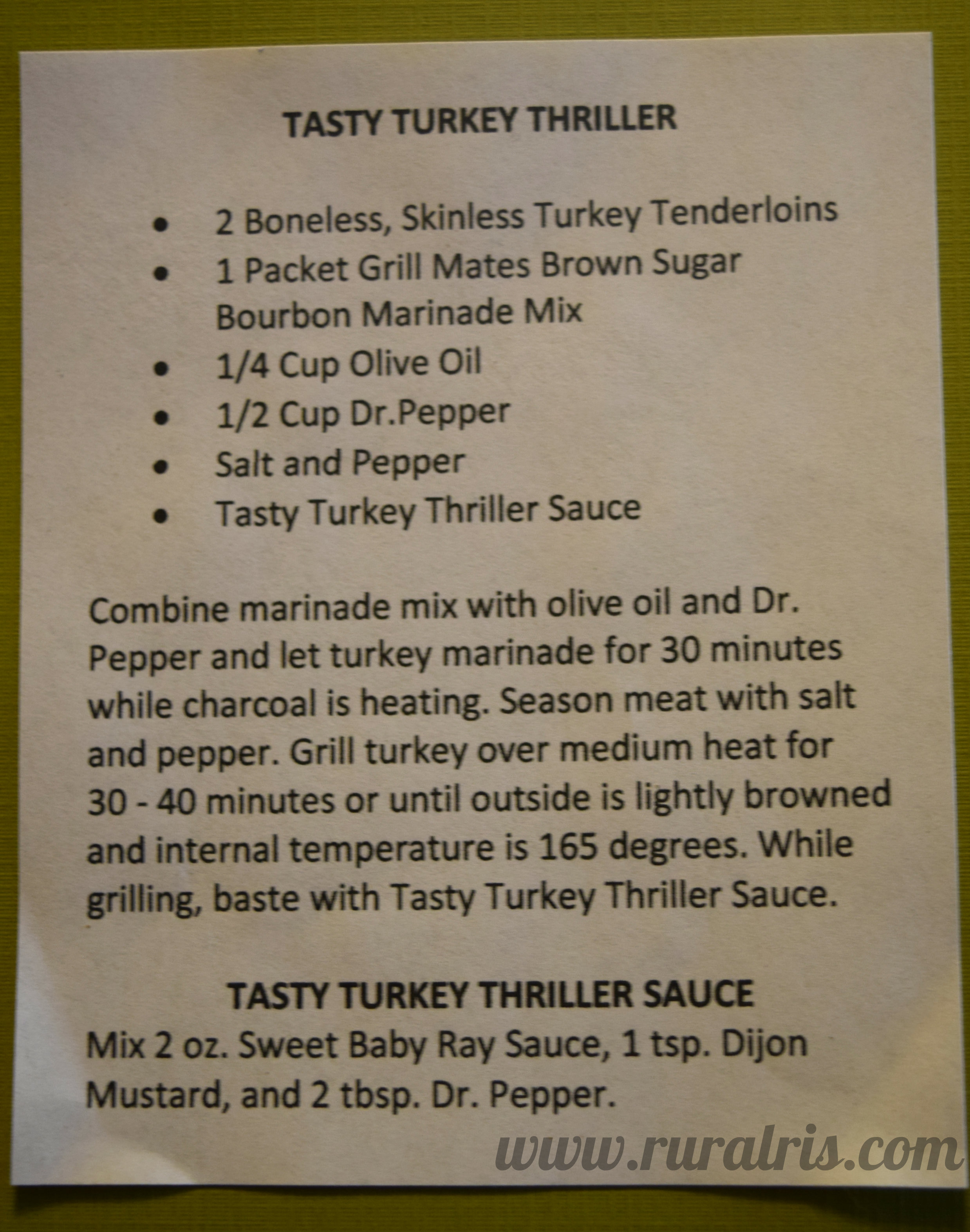
Isaac and Gideon have very opposite personalities. Isaac is more quiet and Gideon is sassy, so it is only fitting that their recipes parallel with their personalities. They have been kind enough to share their special recipes with you guys so you too may enjoy turkey this summer. Here is Gideon’s. It is has more of a kick.

turkey on targetIssac’s is more subdued and sweet.

tasty turkey

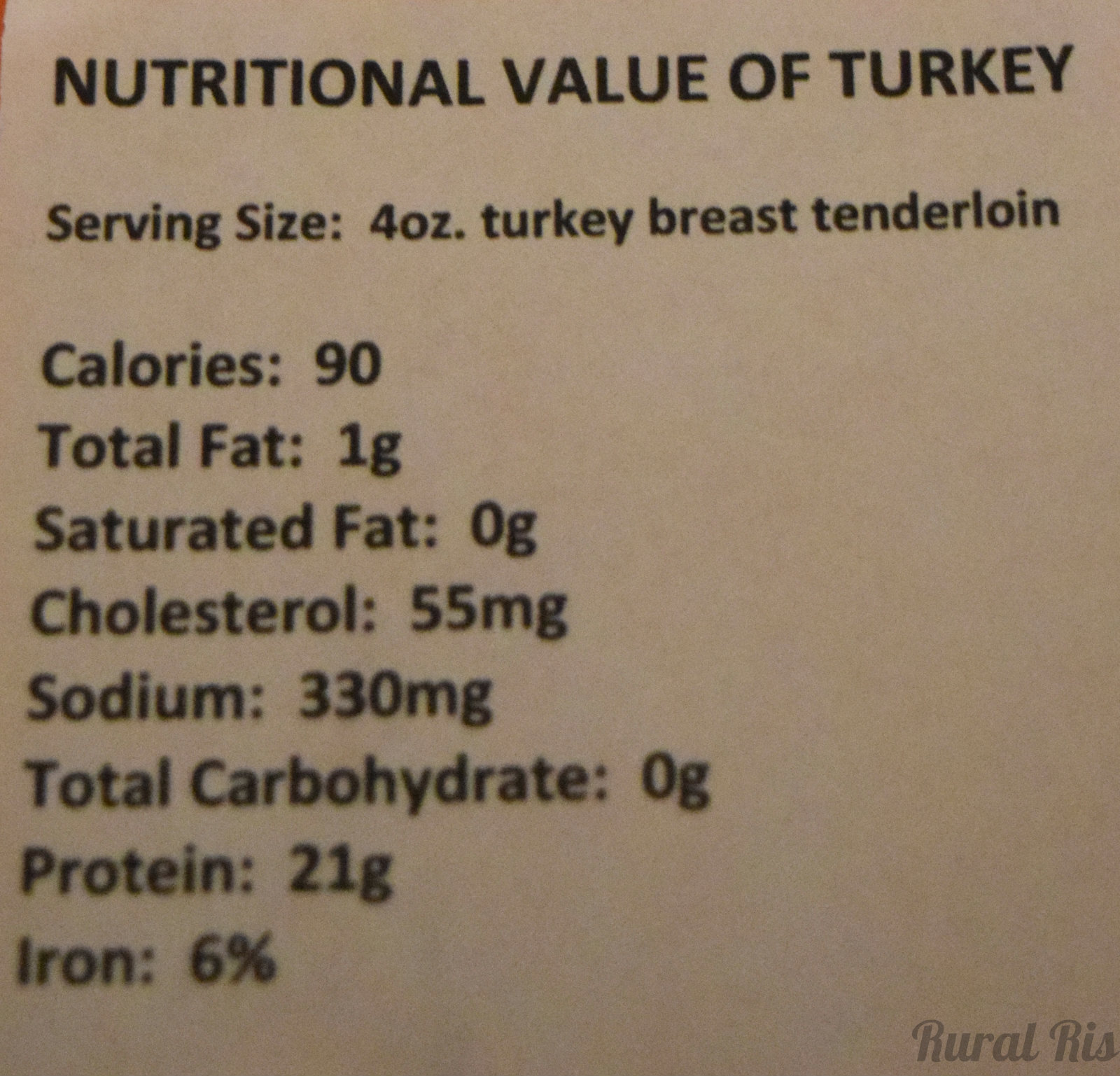
Not only is it delicious, but turkey is also nutritious.

turk nut

And don’t forget, turkey needs to be cooked to 165 degrees Fahrenheit and to wash your hands after handling raw meat lest you get “flounder diseases.”

I hope you enjoy the recipes and be sure to look out for Food Network’s new faces–The Brothers–coming soon. 😉

the bros

Sweating Like a Pig…but Pigs Don’t Sweat??

“I’m sweating like a pig” usually means that you are pretty gross and covered in perspiration. The problem, though, is if you were indeed sweating like a pig, you’d be super dry, with not one bead of sweat on your head. You see, pigs don’t sweat. All of a sudden the popular saying becomes problematic.

candidGood news, though. There is some logic behind the phrase. Bad news: there isn’t a definite source. There are a couple of myths about just where it came from.

1. More Irony

Some say that the phrase originates with pig iron. When heating up the metal to extreme temperatures, the ore would get hot enough to become liquid. Smelters would watch the metal for signs that it was cool enough to move and not drip everywhere. It was ready when droplets would form on the metal due to the air around it reaching dew point.

2. Roasting

Maybe the saying has its origins with pigs, but pigs on a rotisserie. When cooking a hog over an open fire on a rotisserie, the fat from the pig would drip down into the fire. This gave the appearance of the pig sweating.

3. Stinky Sweat

It could be that the phrase came from the simple concept that sweat is stinky and gross. Pigs are also stinky and can be gross.


Truth:

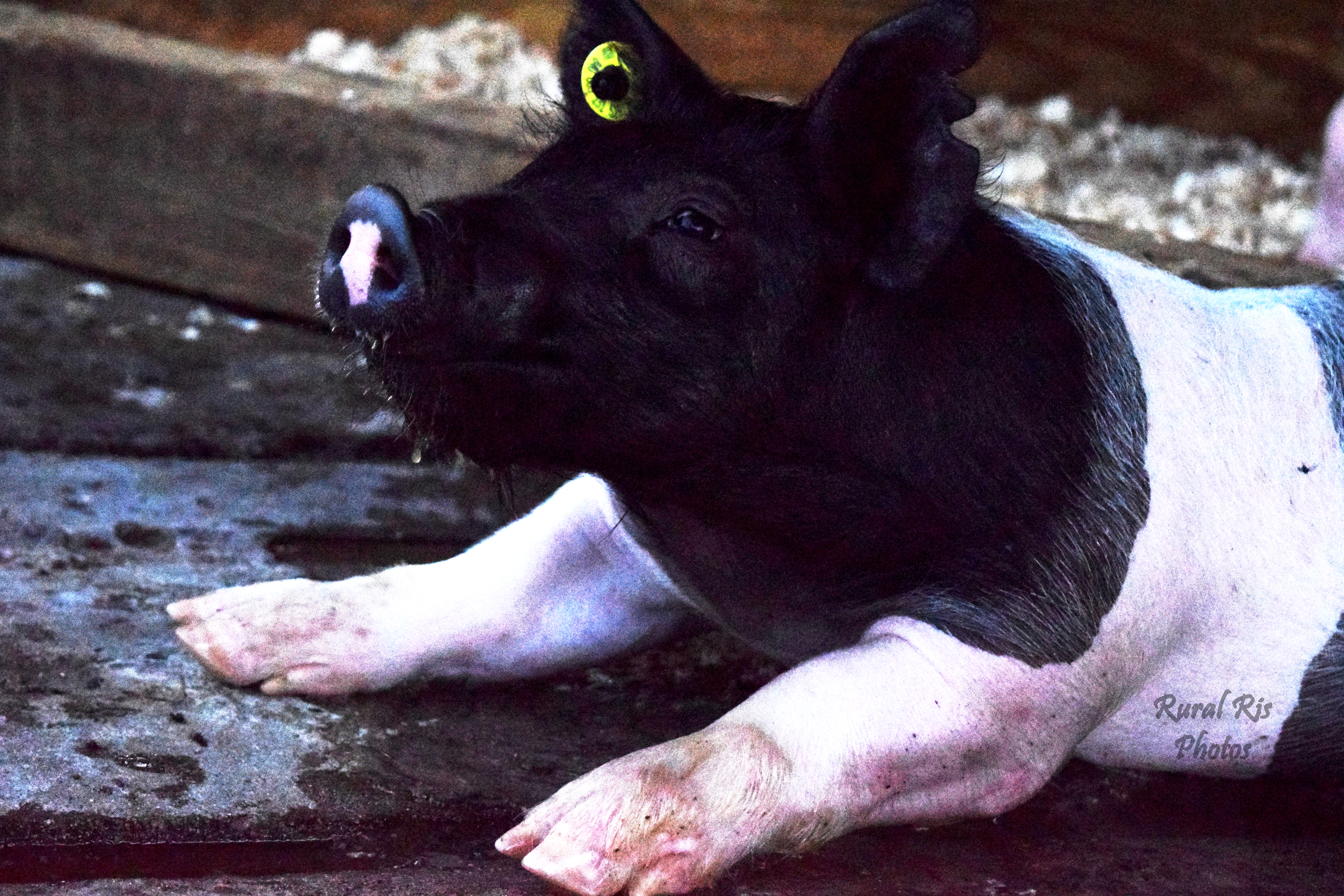
It is not for sure where exactly the phrase “sweating like a pig” came from, but the truth of the matter is pigs don’t sweat. Because they don’t perspire, they wallow in mud to keep cool. Lots of times pigs look super gross, and even like they are being kept in horrible conditions, but the truth is, they like the mud. Even if it is cooler, our pigs like to root in the mud and get messy.

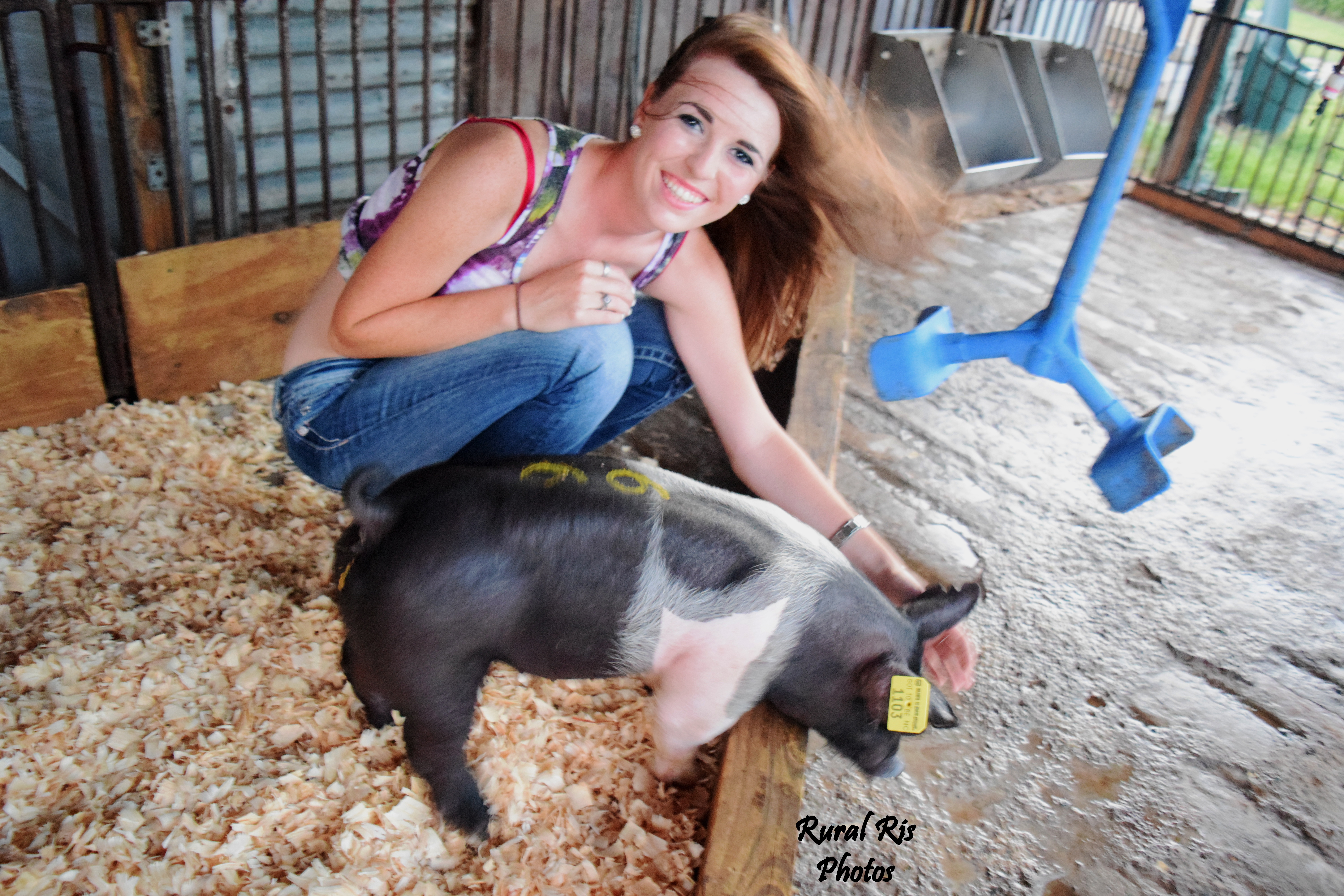
muddy pigOne of the great things about hog farms, is pigs can be kept inside with sprinkler systems. They absolutely love this. It is like their own personal sweating system. There are also fans for them too. They are really quite spoiled.


Pigs may be stinky animals and enjoy getting into muddy messes, but you can’t blame them for being sweaty AND stinky, just the stinky part.

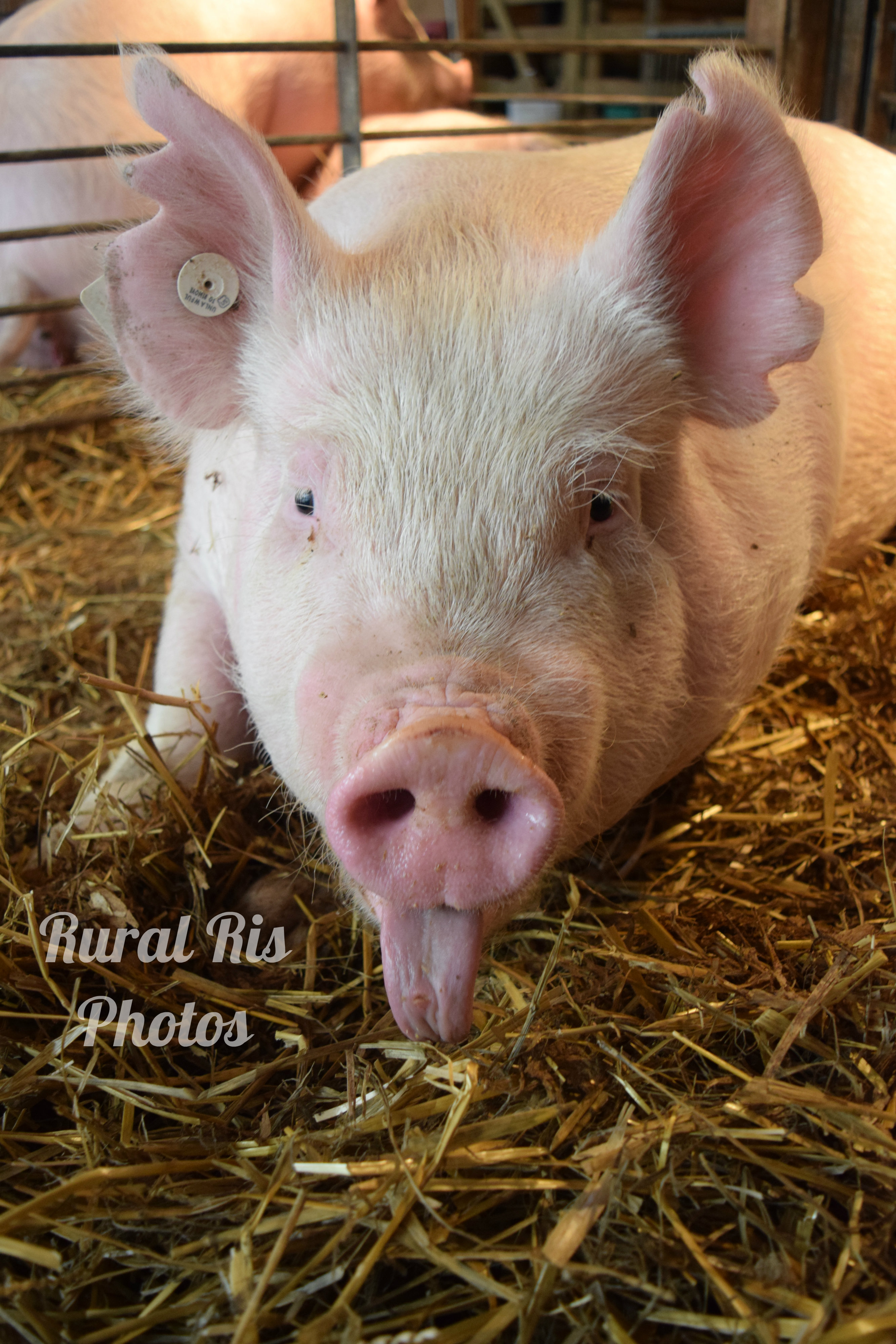
tonggueHappy Fact Filled Friday!


Sources:
http://www.neatorama.com/2011/08/29/the-expression-sweating-like-a-pig-has-nothing-to-do-with-pigs/

Sweating Like a Pig

http://www.livescience.com/32118-do-pigs-sweat.html

The Family Garden

Let me start by saying that this is a late post. I promise we are not just getting to planting a garden. Now that the disclaimer is out of the way, I want to share our family garden with you.

Every summer, we have some sort of garden. We don’t plant all of the same things every year; however, we do have our staples. The must haves for the garden include: tomatoes, potatoes, peppers, cucumbers, squash, onions, okra, and eggplant. We have experimented with gourds, pumpkins, watermelons, beans, corn, carrots, lettuce, and the coolest–loofa (if you are looking for something fascinating, plant loofas). When it comes to the “experimental” list, we don’t plant those every year, just when we get a bee in our bonnet.

I will say, that I am not a plant person. Sometimes I think I could be, but then it quickly fades. I LOVE picking the produce and of course eating it is great. So, even though I don’t really have a green thumb, I adore our garden. It is an entire family affair getting it planted and taking care of it. I love that aspect about it.

I really think more people should garden–even if it is a few pots of plants. Not only does it provide yummy delights, but is healthy, and really highlights where food comes from.

Stay tuned for updates on our garden and our favorite recipes from the garden! And without further delay, here is the (late) family garden.

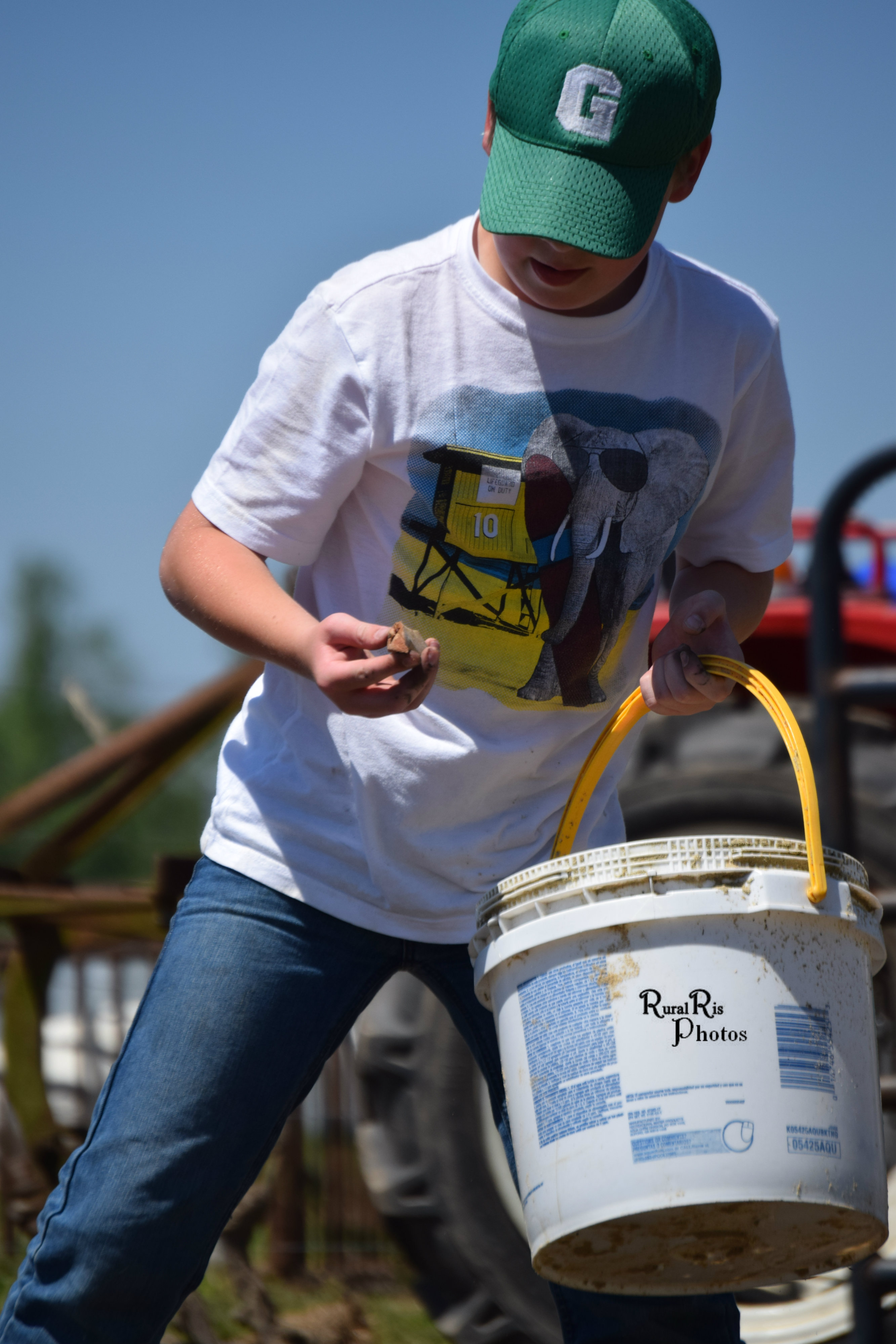
papa on tractor

Potatoes went in the ground a week before everything else.

isaac pot

After the potatoes, we planted everything else.
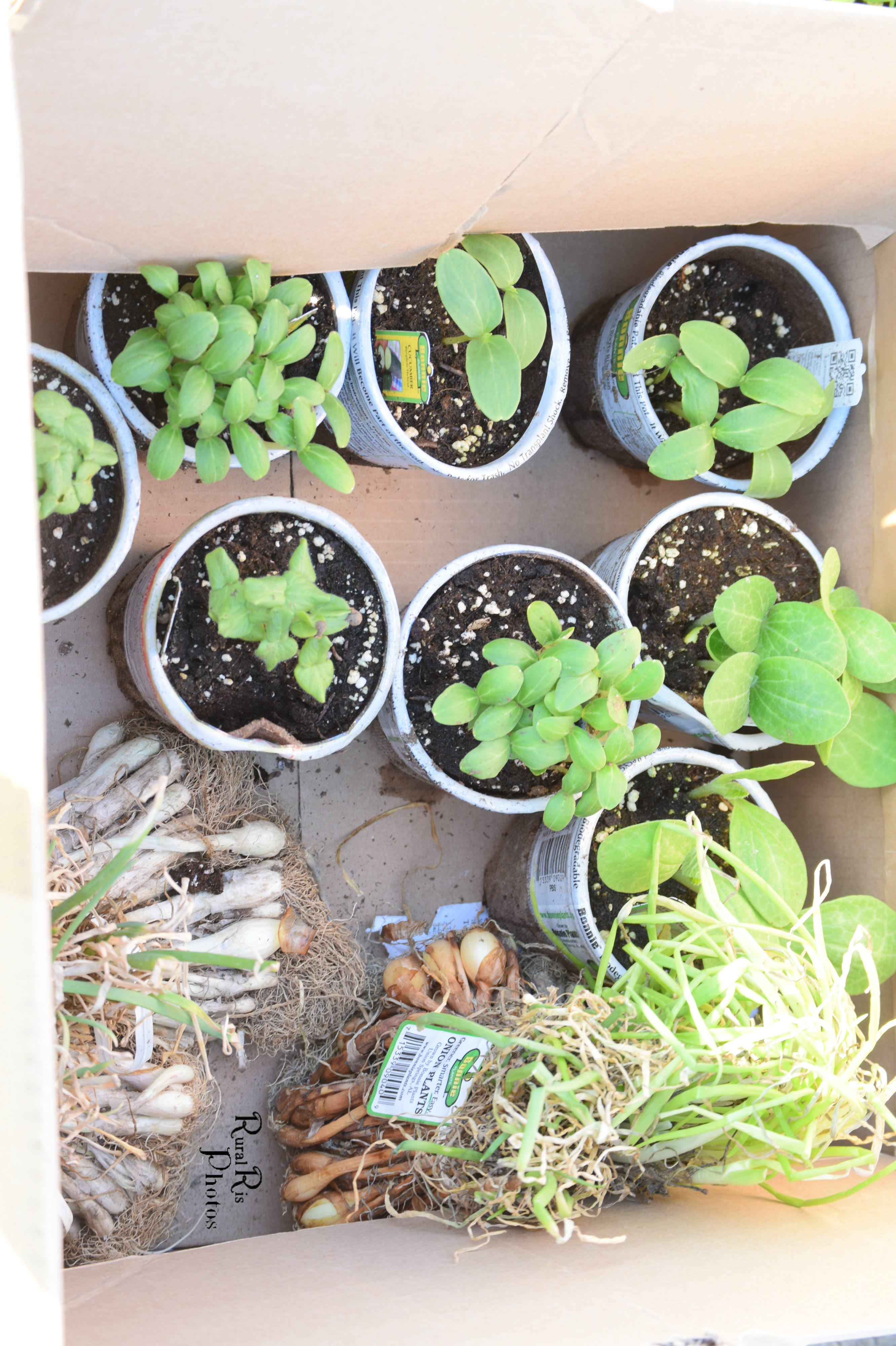
onions
Onions have layers…

dadplant

hands plant

squash

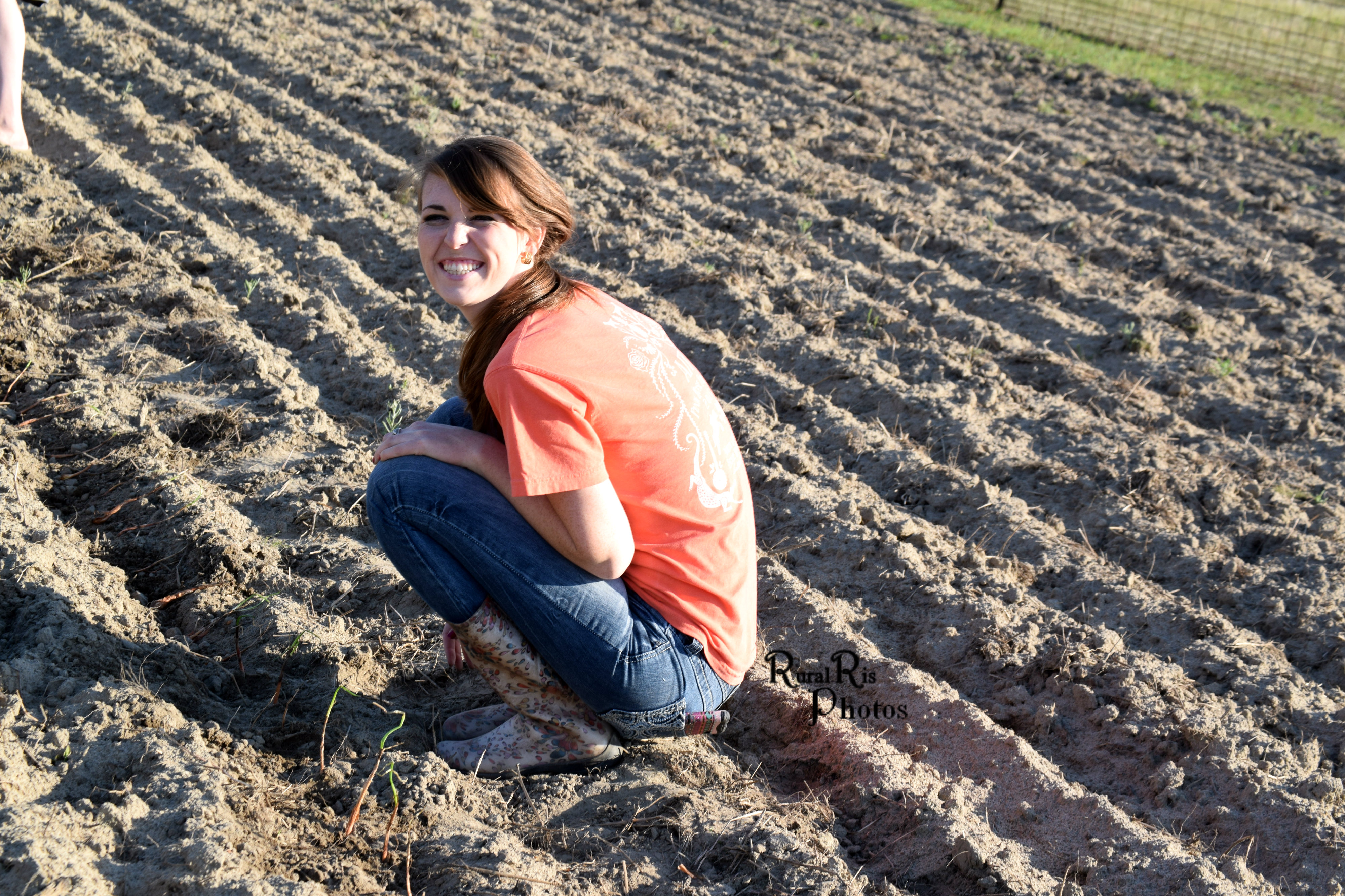
me planting

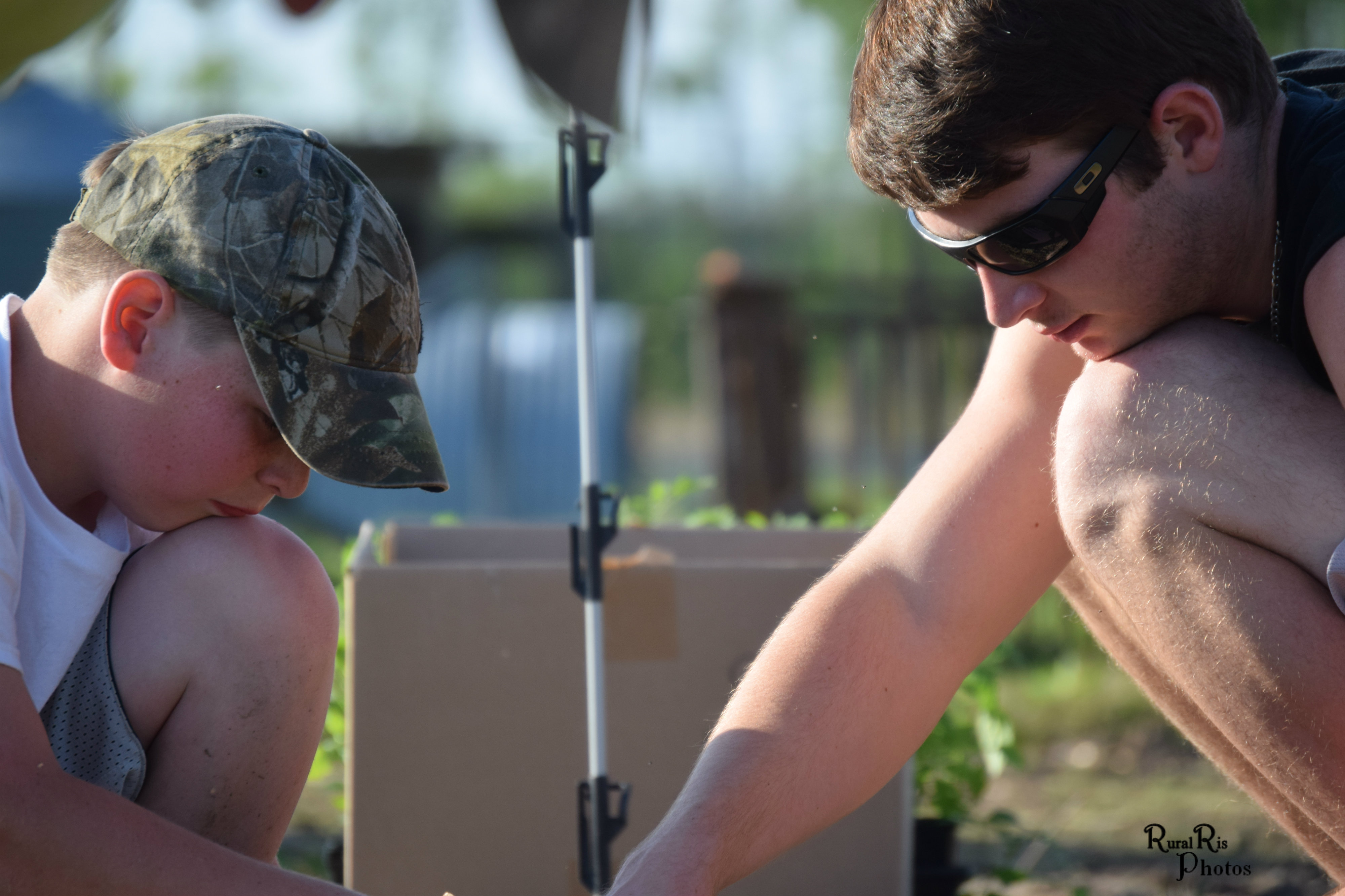
isaac alec plant

trio boys

whole family

giddd
Gideon’s middle name is Bob after my grandpa. They like to tease and say Papa is Bob the first and Gideon is Bob the third (his uncle is Bob the second)

bob 2

A World Without Ag Wednesdays: Strawberries

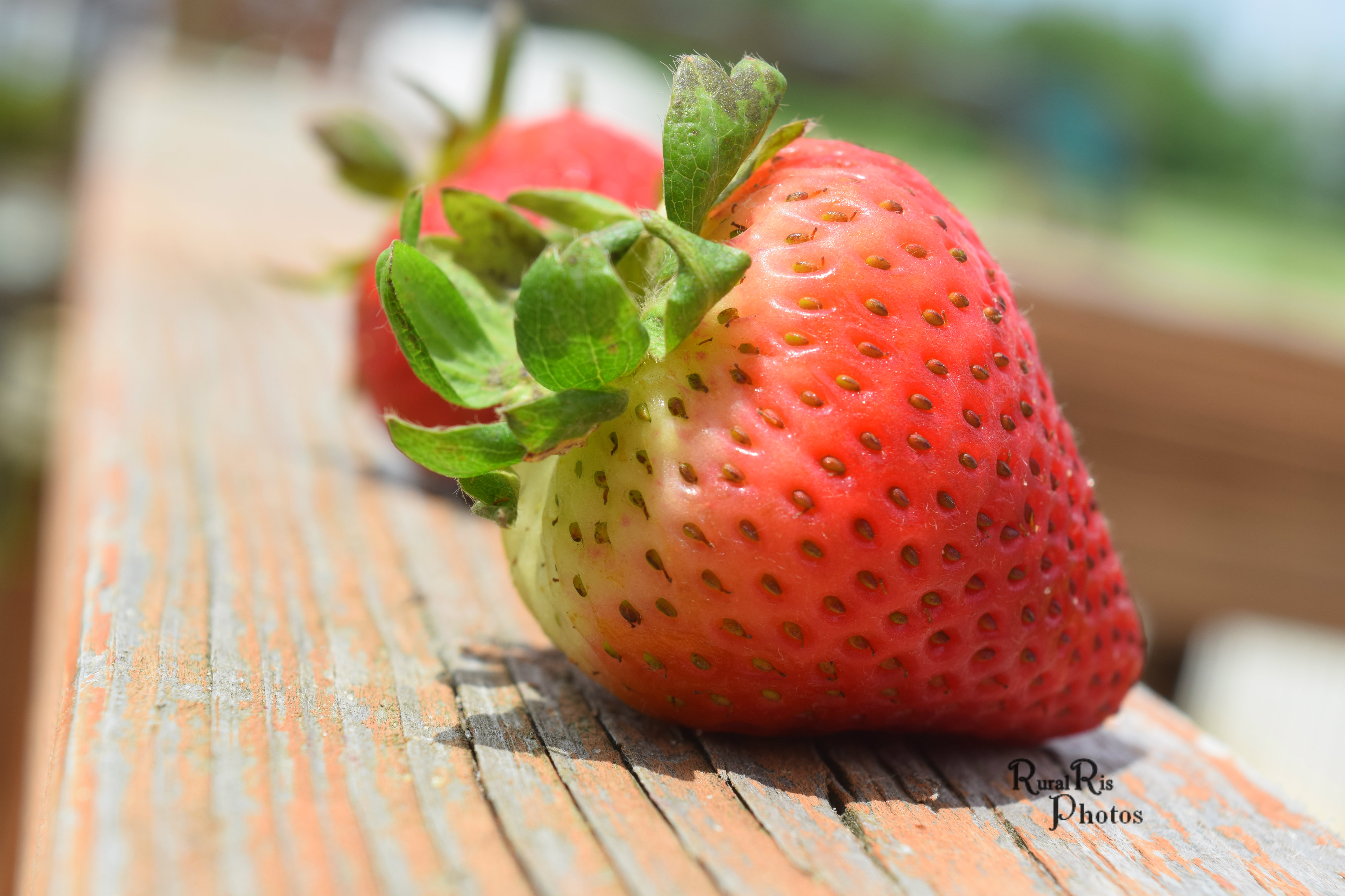
For as long as I can remember, the start of summer could be marked with delicious, red strawberries. As a child, it was a scavenger hunt trying to find the red ones ready to be picked in the field. There is nothing quite like biting into a ripe strawberry. Of course, this would be in no way possible, if it weren’t for farmers, both large and small, growing strawberries.

History

Strawberries are native to North America, as well as other regions. According to the University of Vermont, strawberries were eaten and referred to as far back as Roman times; however, they were not very popular because they were small and lacked the flavor that today’s strawberries have. They were used more for ornamental purposes. It wasn’t until the 1300’s that strawberries began to be cultivated in Europe. It took many years, and many varieties of strawberries from all around the world to create a fruit that is as popular as it is today. America’s strawberries gave hardiness, and Chilean strawberries gave size. While there were some accidental crosses, the first planned cross of strawberries occurred in Cambridge, MA by nurseryman, Charles Hovey. This strawberry was the start of most modern varieties. Throughout history, various people created different strawberry hybrids to have more vigor and resist disease. Once a lot of strawberry breeding and discovering had been done, it didn’t take long for strawberries to become one of the number one fruits in American households.

Strawberries by the Number

strawberry stat NEW

  • 36 billion pounds of strawberries were produced in 2012
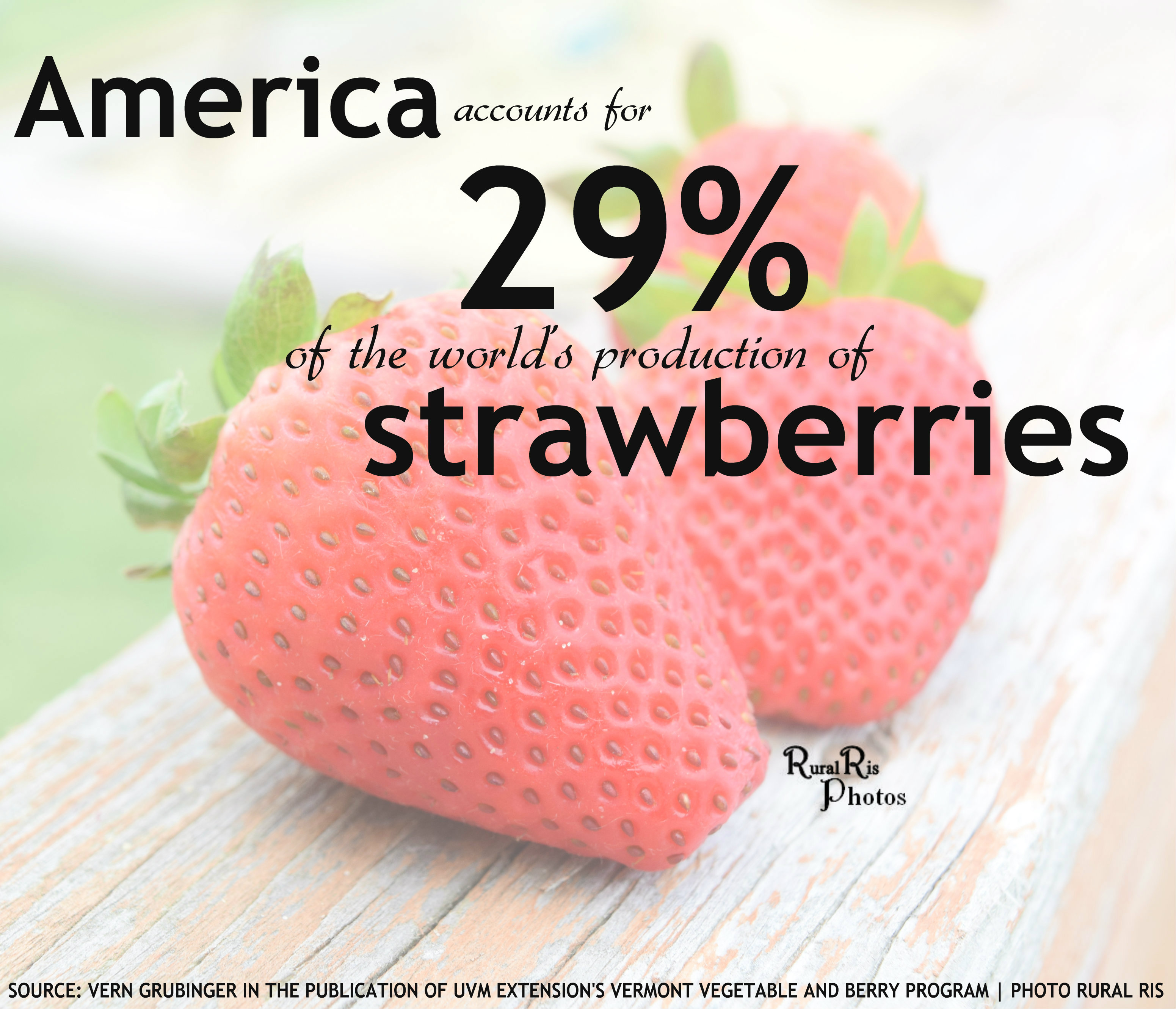
  • 94% of American households consume strawberries
  • California (the largest producer of strawberries) had 38,000 acres of strawberries in 2012, accounting for 75% of the nation’s strawberry crops

Growing and Producing Strawberries

There are typically two major types of strawberry farms–commercial and pick-your-own strawberry farms; however, the process of growing strawberries is relatively the same for both, just on different scales.

Although strawberries are perennial plants (come back every year) , farmers often treat them as annuals so that they can better maintain and prepare the land for them. To prepare the ground for strawberries, the land is plowed and mounded into flat rows where drip tape and black or white plastic are laid down on top of the rows. The drip tape will be used to water the plants, and the plastic helps with moisture, and temperatures, especially during the winter months when the majority of strawberries are planted. All this is done with a special piece of equipment. After the plastic has been laid, another piece of equipment is used to punch holes in the plastic for plants to go in the holes. It is important to note, that not every farm does things the same way. Some farms plant a green strawberry plant, while others plant the roots. In other cases, the rows are not covered in plastic, but are always mounded to help with moisture. There is also various equipment that is used depending on the scale of the farm. Here are two videos that show two varieties of strawberries being planted in two different ways on the same farm.

Pretty cool, huh? Throughout the winter months, the plants are fertilized and cared for by the farmers. The plants are even tested to determine if they are getting enough nutrients. Come March, most varieties of strawberry plants start to bloom. strawberries have to be picked daily because they ripen quickly, even on commercial farms. The picking season typically runs from April to June, and it takes 60-75 workers to keep 1 million strawberry plants picked. Of course, the pick-your-own strawberry farms, you are the one who picks the strawberries. There are also robots that have been developed to pick strawberries, but only if they are a certain level of red. Amazing! If you are curious how the large farms pick strawberries, here is another video. Start at minute 1:22.

Strawberry Facts

  • It is said that strawberries get their names from when growers used to (and sometimes still do) place straw around the berries. It is also said that kids used to sell the berries on grass straws as a straw of berries.
  • Strawberries have an average of 200 seeds per strawberry.
  • Strawberries are grown in every state of America.
  • Per capita, Americans eat 3.4 pounds of fresh strawberries per year.
  • Strawberries are the first fruit to ripen in the spring.
  • Strawberries are a member of the rose family.
  • Technically, strawberries are not a true berry because their seeds are on the outside.
  • Native Americans called strawberries, heart-seed berries, and would crush them into their corn meal bread. The colonist made their own version, giving us strawberry shortcake.
  • One cup of strawberries is only 55 calories.

Now, don’t you want some strawberries?

STRawberry

Sources:
http://extension.illinois.edu/strawberries/facts.cfm

http://www.pickyourown.org/strawberryfacts.htm

http://www.agmrc.org/commodities__products/fruits/strawberries/commodity-strawberry-profile/

http://www.uvm.edu/vtvegandberry/factsheets/strawberryhistory.html

Growing Strawberry Plants Commercially