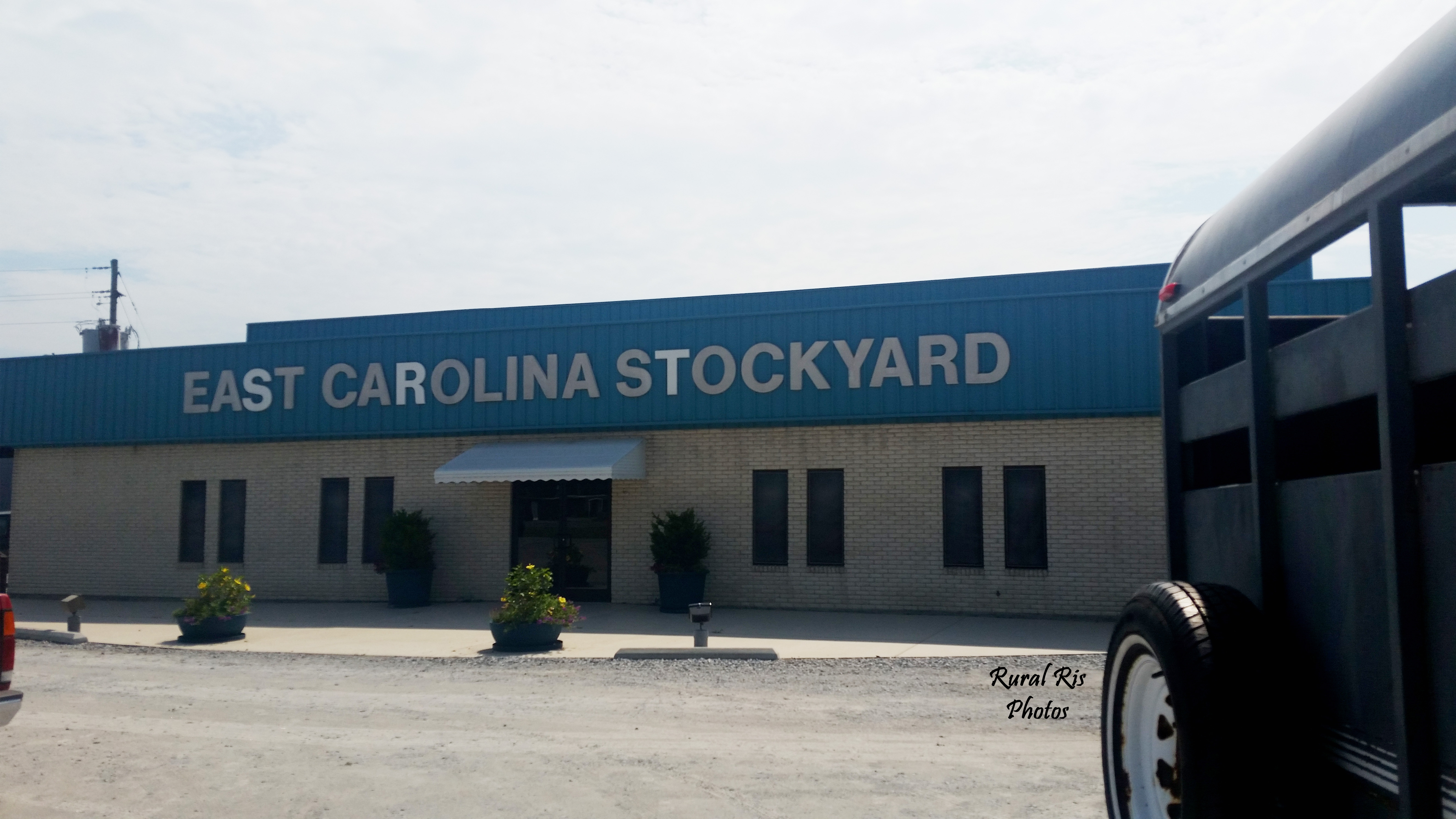
Yesterday we took 4 animals (2 sheep and 2 goats) to the stockyard to be sold. While the story of getting them on the trailer has nothing to do with the purpose of this post, it is too funny not share, so I’m going to to go off track a bit.
Funny, irrelevant tangent:Our old large buck can be hard to handle. Not in the fact that he is aggressive, but in that he isn’t the friendliest fellow. He likes to be left alone, and is therefore, hard to catch. Well, it just so happened that he was snoozing in one of the shelters, so I rushed to block the entryway to trap him inside. Alec brought me a fence panel to lock him in. The shelter he was in is a grain bin cut in half, and we humans have to do a duck walk to get in there. So here we are– Alec, a 200 pound buck, and me blocking them both inside to duke it out. Alec grabbed the buck’s horns, and when he did, the buck bolted. He began to run in circles with Alec spinning on his butt like a spinning top, holding onto the buck’s horns. It was a funny sight to be sure. I tried videoing it, but was not nearly as coordinated as I needed to be (sorry, no video). The next step was to let the two wrestlers out of the shelter. The buck was pushing with all his might, and Alec still did not have his footing. I grabbed one horn and the buck’s beard, but at this point the buck and Alec were all sorts of tangled, Alec had to let go, and the buck and I went running. Alec yelled for me to let go; however, I’m a bit stubborn, so I held on until Alec got there. We both escorted him to the trailer. Phew!
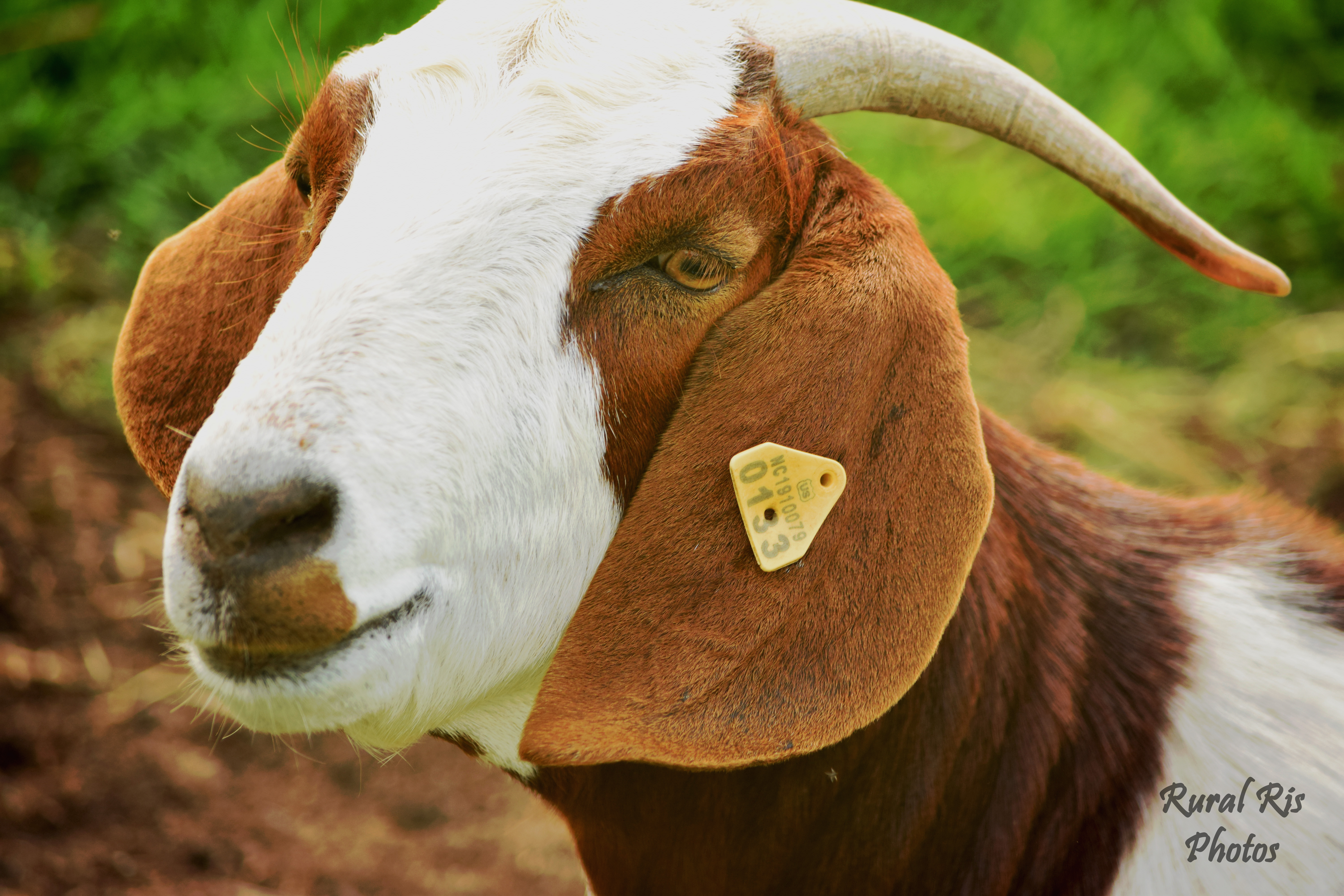
OK, back on track… before leaving for the stockyard, we had to make sure that all the animals we were selling had scrapie tags. It is required that goats and sheep have scrapie tags so that if they were to come down with scrapie disease, they could be tracked down to their place of origin. The tag not only has a number that represents that individual animal, but it also has a longer number that represents the farm from which they came. Ours looks something like this:
Not all tags are scrapie tags and an animal can have more than one tag, but a scrapie tag is a must have. Why is this scrapie tag system so important? Well, scrapie disease is a very serious matter. It is the goat/sheep version of mad cow disease. It is degenerative disease affecting the central nervous system that is fatal. There are only two countries that do not have scrapie–Australia and New Zealand. In 1947, scrapie entered the United States through a Michigan flock of sheep. In 2001, the USDA started an aggressive program to help eradicate scrapie. Since that time, scrapie has been reduced by 85% in the US! This has been accomplished through the identification program as well as other measures. According to the National Scrapie Education Initiative, the program includes:
Identification of pre-clinical infected sheep through live-animal testing and active slaughter surveillance.
Effective tracing of infected animals to their flock/herd of origin made possible as a result of the new identification requirements.
Providing effective cleanup strategies that will allow producers to stay in business, preserve breeding stock, and remain economically viable. USDA/APHIS will do this by providing the following to exposed and infected flocks/herds that participate in cleanup plans:
Indemnity for high risk, suspect, and scrapie positive sheep and goats, which owners agree to destroy,
Scrapie live-animal testing,
Genetic testing, and
Testing of exposed animals that have been sold out of infected and source flocks/herds.
As you can see, this is serious business. At the stockyard that we brought the animals to, there is a sign that says all sheep and goats unloaded must have a scrapie tag by USDA regulations.
As a farm, we tag anything that goes off of our property. Interestingly, not all states have the same regulations. North Carolina does not require tags for animals that are wethers (castrated male) and animals less than 12 months of age going directly to slaughter; however, other states make no exceptions to tags. Regardless, it is important to not only be aware of your state regulations, but to follow them. In this way, we can help eradicate scrapie in the United States. There have been huge strides made in the last 14 years, and it is up to us farmers to continue those strides.
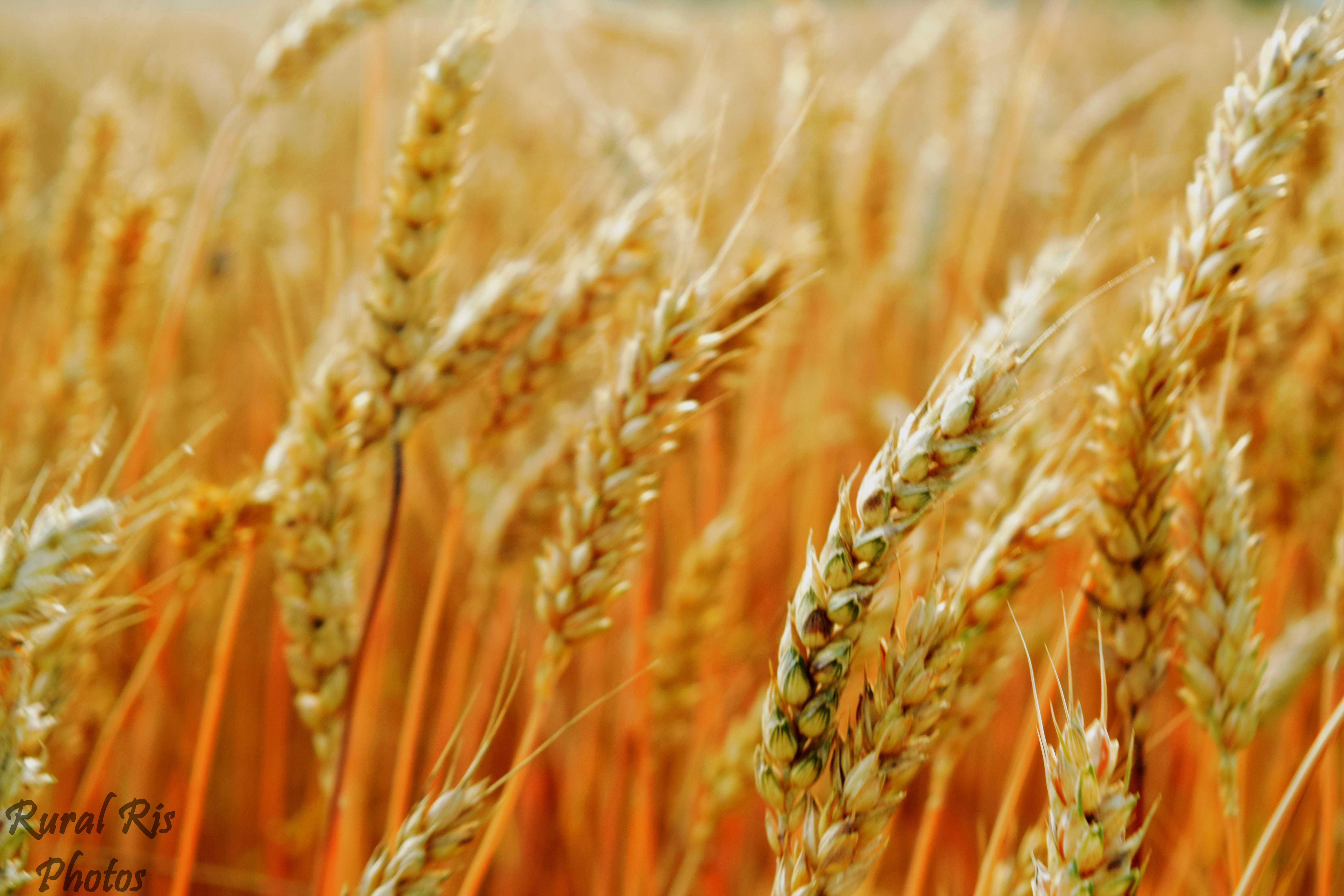
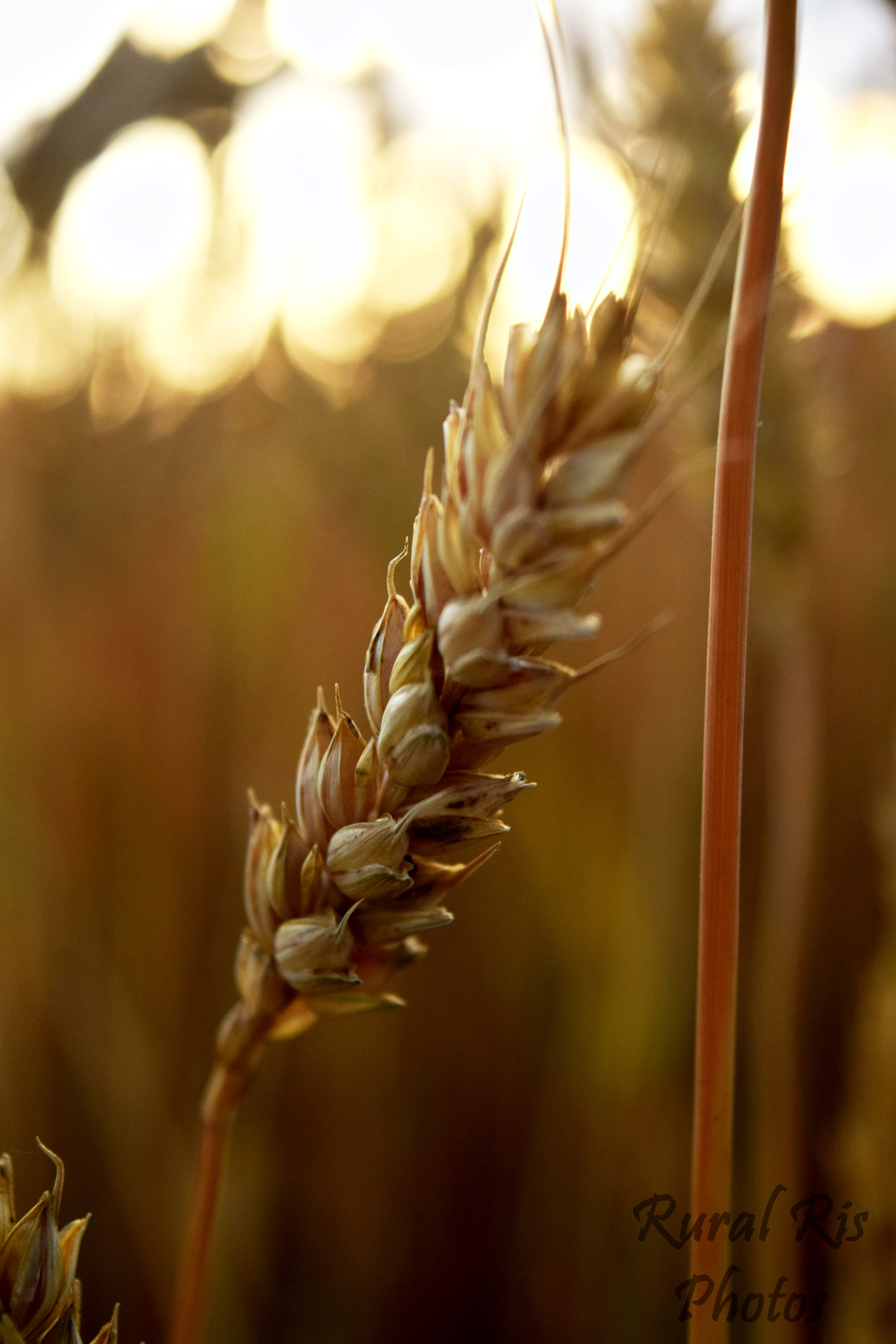
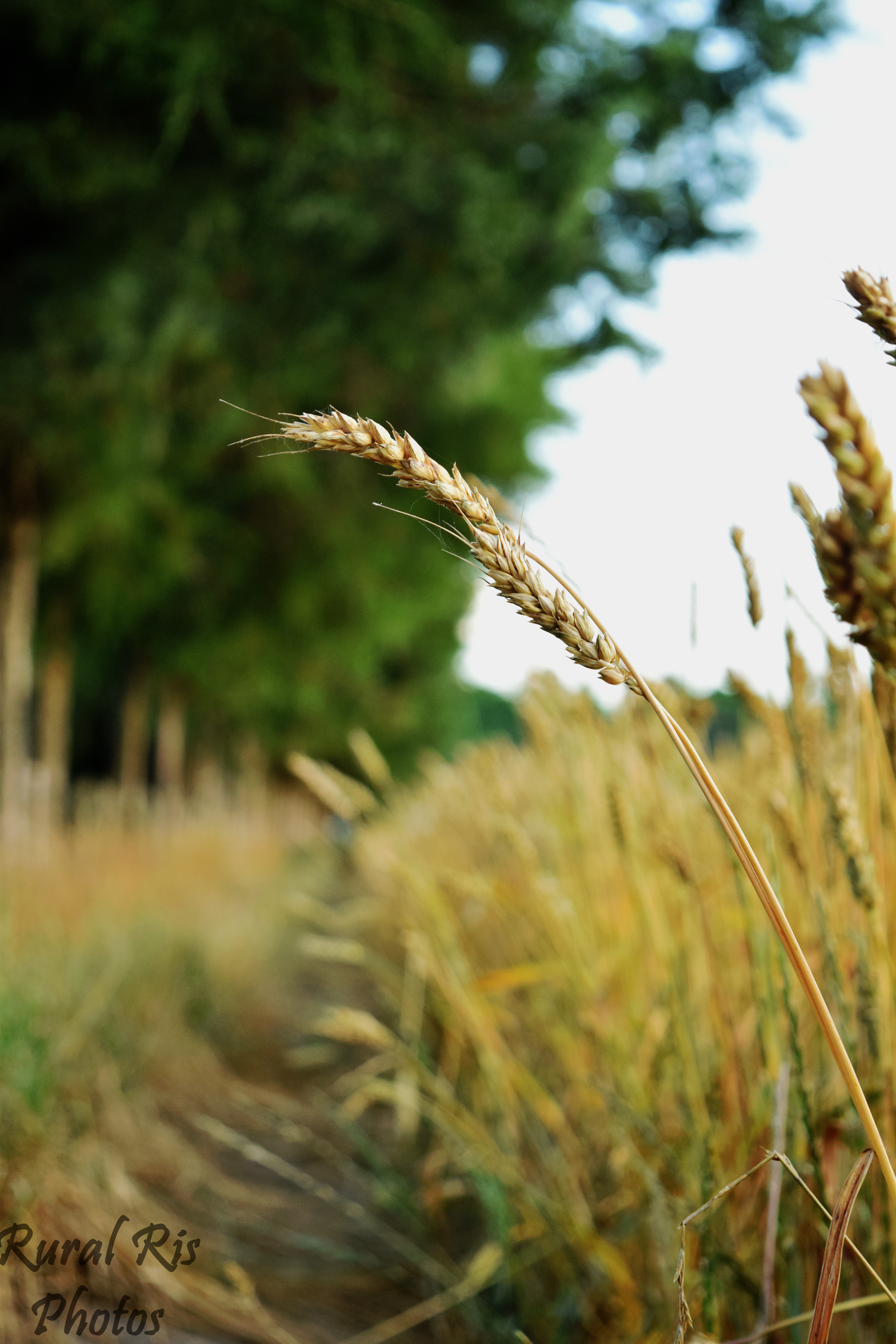
My favorite crop is wheat. Not only because it is one of the prettiest to me, but also because of what it produces. Without wheat, Olive Garden would be obsolete. Poof! Say good-bye to pasta and breadsticks. It is a very sad picture, no doubt. So, not only is it a picturesque crop, but it is also responsible for some pretty yummy things.
All around my house, they have begun to harvest the dried wheat. Many farmers burn the fields after the grain has been harvested to improve the soil. Wheat is pretty popular in America as it is the primary grain used in US grain products. It is grown in 42 states with Kansas ranking at the top, producing enough wheat to make 36 million loaves of bread and enough to everyone in the world for about 2 weeks. That is a ton of amber waves of grain.
Past and Present of Wheat
Wheat originated in what is now Iraq and was first planted in America (1777) as a hobby crop. Now there are thousands of varieties of wheat that are separated into 6 categories:
Hard Red Winter (HRW)
Hard Red Spring (HRS)
Soft Red Winter (SRW)
Hard White (HW)
Soft White (SW)
Durum
The different types of wheat have special qualities. The red wheats have a distinctive flavor–nutty or earthy. The white wheats are sweeter. The harder wheats are great for pizza doughs, soft rolls and croissants even though they are harder to grind. although the soft red winter are easier to grind, they have lower protein levels than their harder red counterparts. Often times, wheat is mixed into a unique blend to create the perfect flour that has the protein, flavor, and softness or hardness that is desired for whatever it is being made into. Cakes and pastries are made from the soft white as this wheat is the sweetest variety. Durum wheat is the hardest wheat and is used for the highest quality pastas and noodles. Italy uses only durum wheat. It is also has some of the highest protein. The different wheats are more commonly grown in various areas (e.g. Hard red winter is popular in Kansas and hard red spring is often grown in northern states towards Canada).
Wheat Facts
A bushel of wheat weighs around 60 pounds
A bushel of wheat produces roughly 42 pounds of white flour and 60 pounds of whole-wheat flour
There are more than 600 pasta shapes in the world
Traditional tortillas used ground corn. Flour tortillas were not introduced until the 19th century
A bushel of wheat makes about 210 servings of spaghetti
One bushel of wheat contains approximately one million individual kernels.
One acre of wheat produces 40 bushels of wheat
Wheat is a member of the grass family.
I don’t know about you, but all this talk of bread and pasta has got me hungry. Bring on the carbs!
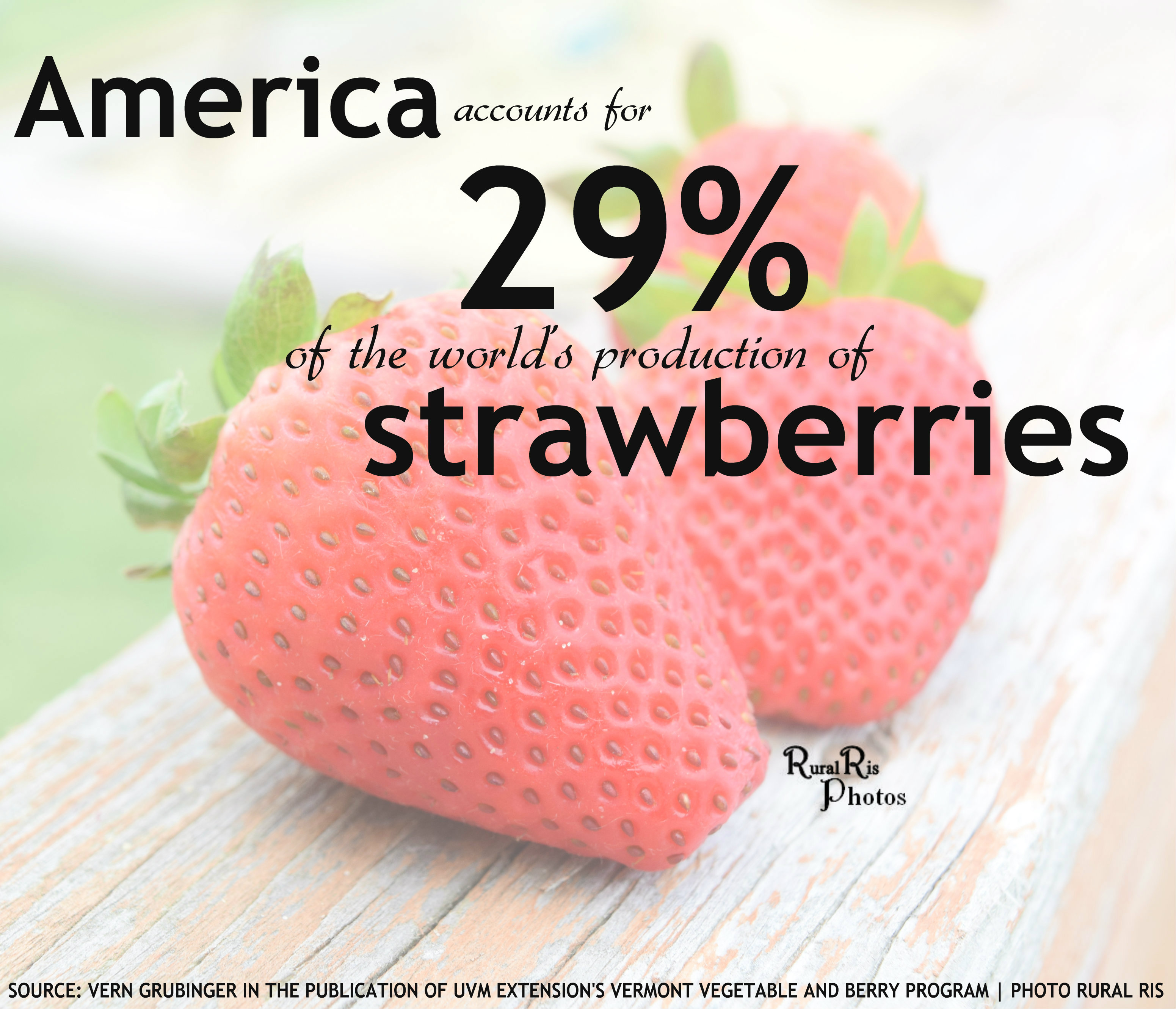
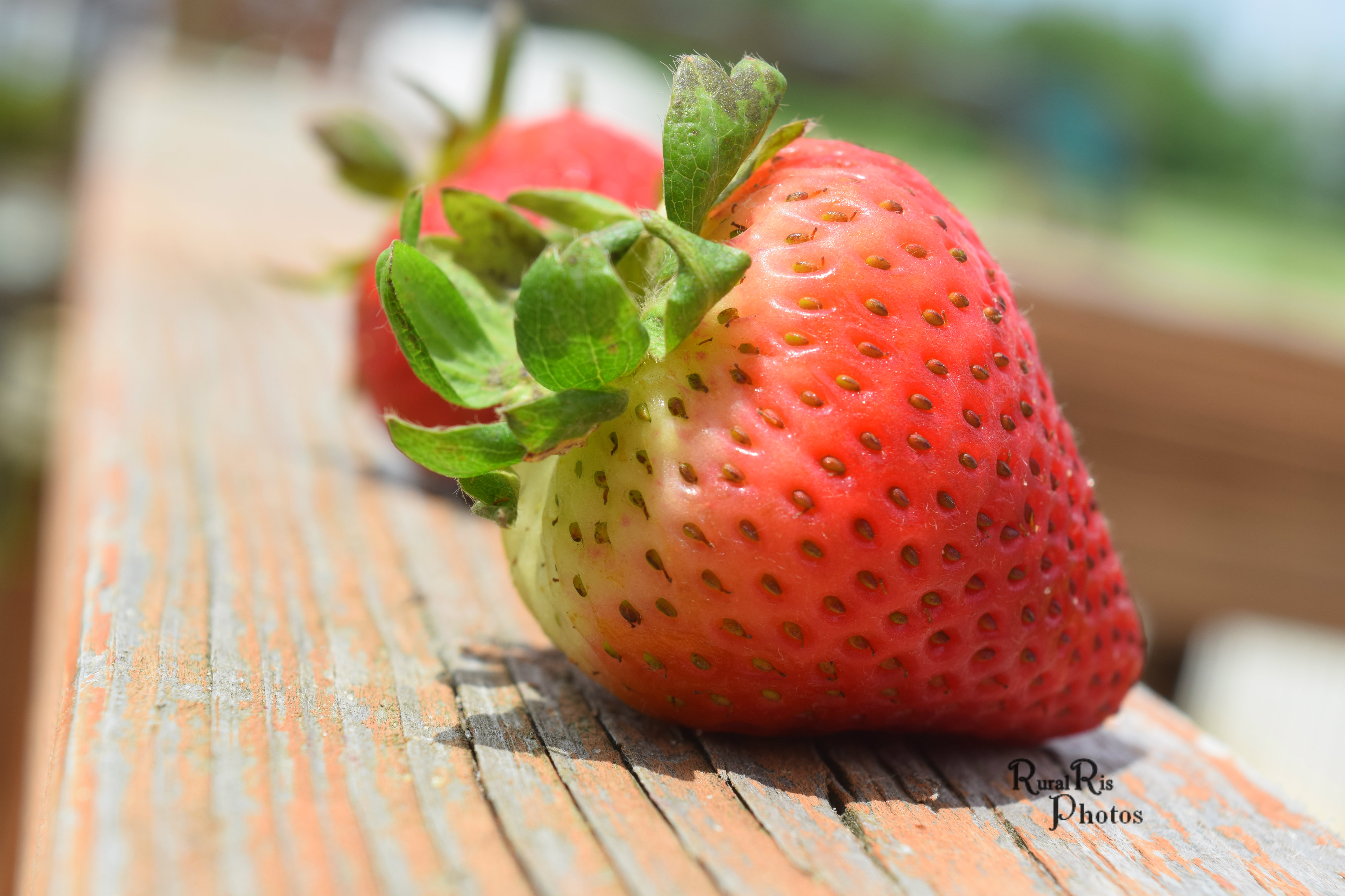
For as long as I can remember, the start of summer could be marked with delicious, red strawberries. As a child, it was a scavenger hunt trying to find the red ones ready to be picked in the field. There is nothing quite like biting into a ripe strawberry. Of course, this would be in no way possible, if it weren’t for farmers, both large and small, growing strawberries.
History
Strawberries are native to North America, as well as other regions. According to the University of Vermont, strawberries were eaten and referred to as far back as Roman times; however, they were not very popular because they were small and lacked the flavor that today’s strawberries have. They were used more for ornamental purposes. It wasn’t until the 1300’s that strawberries began to be cultivated in Europe. It took many years, and many varieties of strawberries from all around the world to create a fruit that is as popular as it is today. America’s strawberries gave hardiness, and Chilean strawberries gave size. While there were some accidental crosses, the first planned cross of strawberries occurred in Cambridge, MA by nurseryman, Charles Hovey. This strawberry was the start of most modern varieties. Throughout history, various people created different strawberry hybrids to have more vigor and resist disease. Once a lot of strawberry breeding and discovering had been done, it didn’t take long for strawberries to become one of the number one fruits in American households.
Strawberries by the Number
36 billion pounds of strawberries were produced in 2012
94% of American households consume strawberries
California (the largest producer of strawberries) had 38,000 acres of strawberries in 2012, accounting for 75% of the nation’s strawberry crops
Growing and Producing Strawberries
There are typically two major types of strawberry farms–commercial and pick-your-own strawberry farms; however, the process of growing strawberries is relatively the same for both, just on different scales.
Although strawberries are perennial plants (come back every year) , farmers often treat them as annuals so that they can better maintain and prepare the land for them. To prepare the ground for strawberries, the land is plowed and mounded into flat rows where drip tape and black or white plastic are laid down on top of the rows. The drip tape will be used to water the plants, and the plastic helps with moisture, and temperatures, especially during the winter months when the majority of strawberries are planted. All this is done with a special piece of equipment. After the plastic has been laid, another piece of equipment is used to punch holes in the plastic for plants to go in the holes. It is important to note, that not every farm does things the same way. Some farms plant a green strawberry plant, while others plant the roots. In other cases, the rows are not covered in plastic, but are always mounded to help with moisture. There is also various equipment that is used depending on the scale of the farm. Here are two videos that show two varieties of strawberries being planted in two different ways on the same farm.
Pretty cool, huh? Throughout the winter months, the plants are fertilized and cared for by the farmers. The plants are even tested to determine if they are getting enough nutrients. Come March, most varieties of strawberry plants start to bloom. strawberries have to be picked daily because they ripen quickly, even on commercial farms. The picking season typically runs from April to June, and it takes 60-75 workers to keep 1 million strawberry plants picked. Of course, the pick-your-own strawberry farms, you are the one who picks the strawberries. There are also robots that have been developed to pick strawberries, but only if they are a certain level of red. Amazing! If you are curious how the large farms pick strawberries, here is another video. Start at minute 1:22.
Strawberry Facts
It is said that strawberries get their names from when growers used to (and sometimes still do) place straw around the berries. It is also said that kids used to sell the berries on grass straws as a straw of berries.
Strawberries have an average of 200 seeds per strawberry.
Strawberries are grown in every state of America.
Per capita, Americans eat 3.4 pounds of fresh strawberries per year.
Strawberries are the first fruit to ripen in the spring.
Strawberries are a member of the rose family.
Technically, strawberries are not a true berry because their seeds are on the outside.
Native Americans called strawberries, heart-seed berries, and would crush them into their corn meal bread. The colonist made their own version, giving us strawberry shortcake.
I love when a few of my favorite things combine together to make a fun day. Last Saturday, my family and I went to the Got to Be NC Festival.
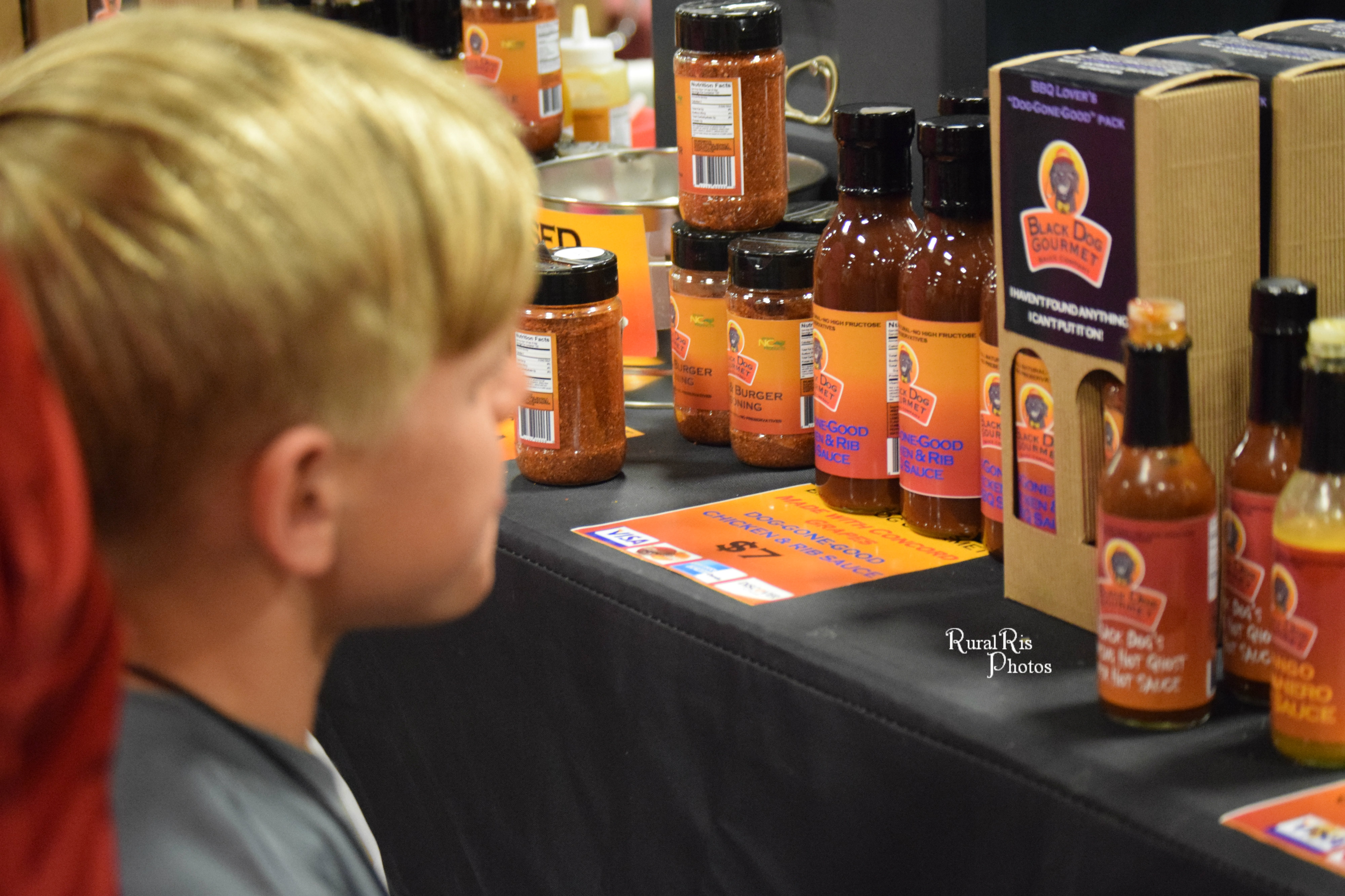
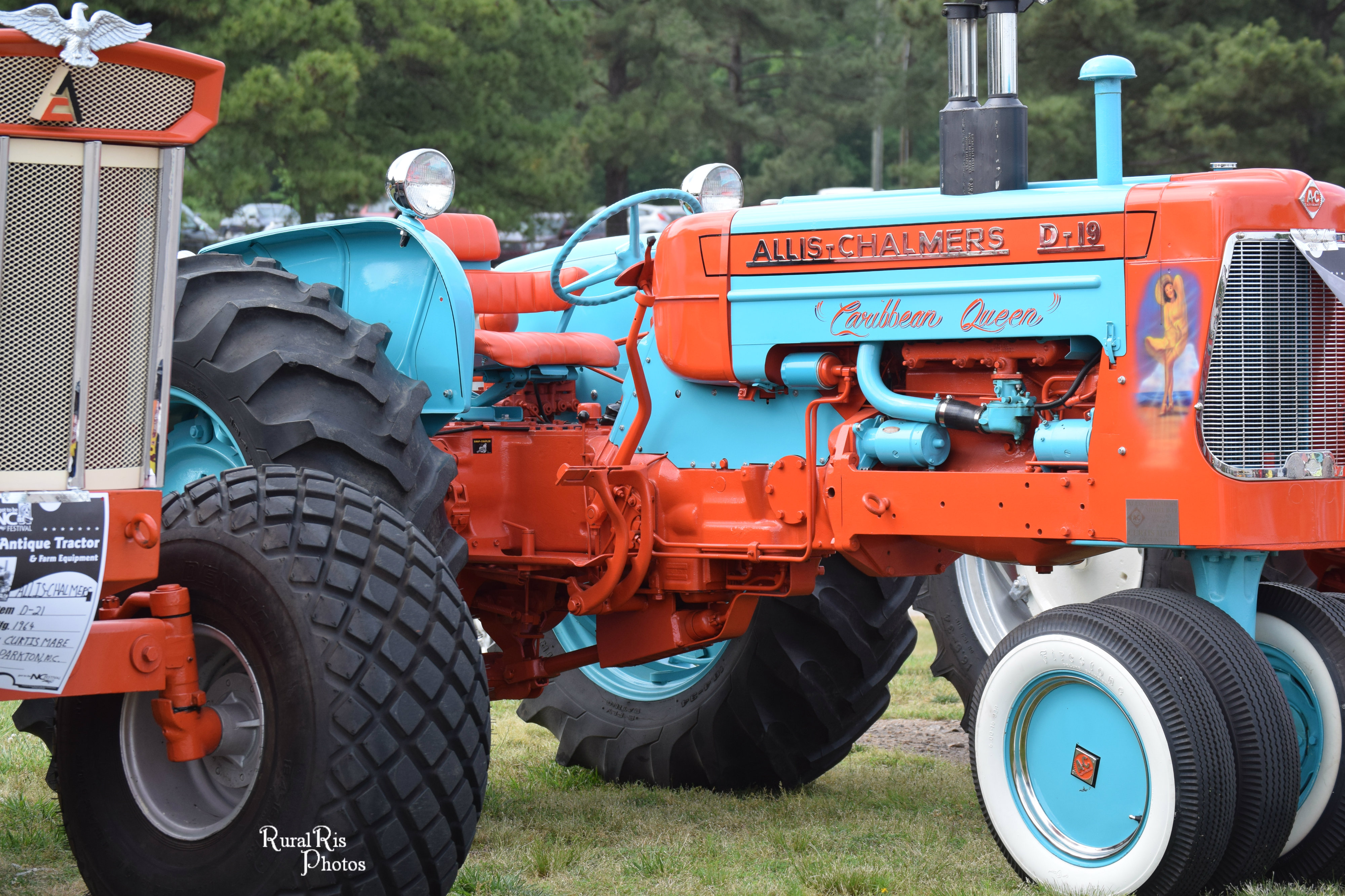
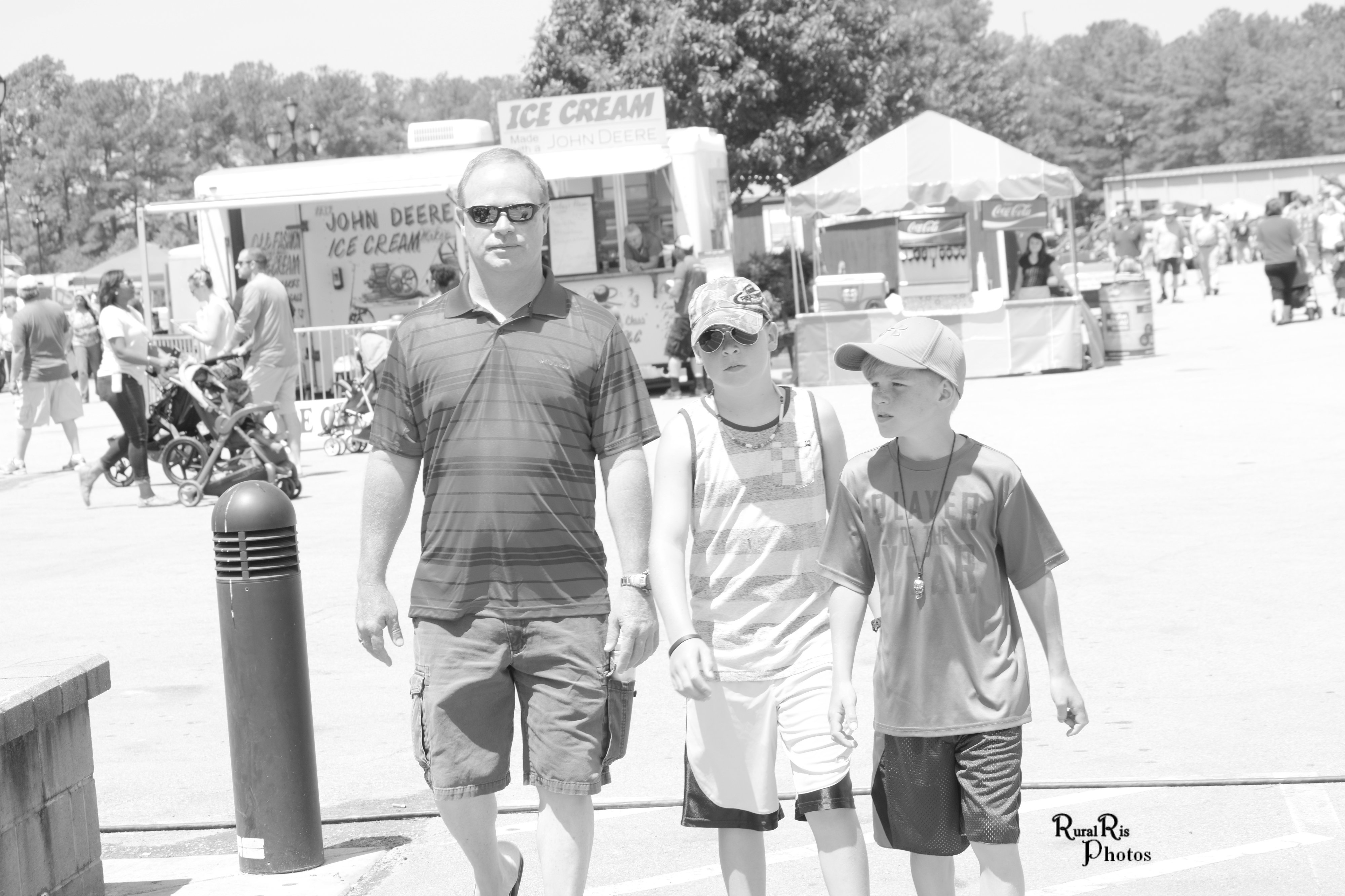
This event is held at the NC State Fairgrounds and hosts a ton of North Carolina vendors and products. There is a tractor parade, flea market, rides, and games. One of my favorite parts (actually it was the BEST part) was trying lots of food. One of the great things about the event is you can pay $2 for all-day access into a giant building filled with food vendors that are giving away all sorts of free food. FREE FOOD! After writing that, I’m realizing that the $2 negates the free part, but it is basically free and so very worth it. Even cooler was the fact that all of the food was NC based. There were peanuts, hot sauces, mints, wine, dips, Bright Leaf hot dogs, and so much more. My favorites had to be Cherry Orchard Food’s pretzel dip mixes (we got the buffalo bleu and chili, cheese, bacon flavors) and the pickled green beans and Bloody Mary mix by Bruce Julian. Of course, I could have stayed at the Bright leaf hotdog station forever, but I feel like that is a given. Gideon was in heaven with all of the hot sauce samples (the boy absolutely loves hot sauce and has never found one he couldn’t handle). Isaac was obsessed with Sunshine Energy drink. Thankfully, he didn’t get wound up off of the samples. All in all, the $2 was absolutely worth it!
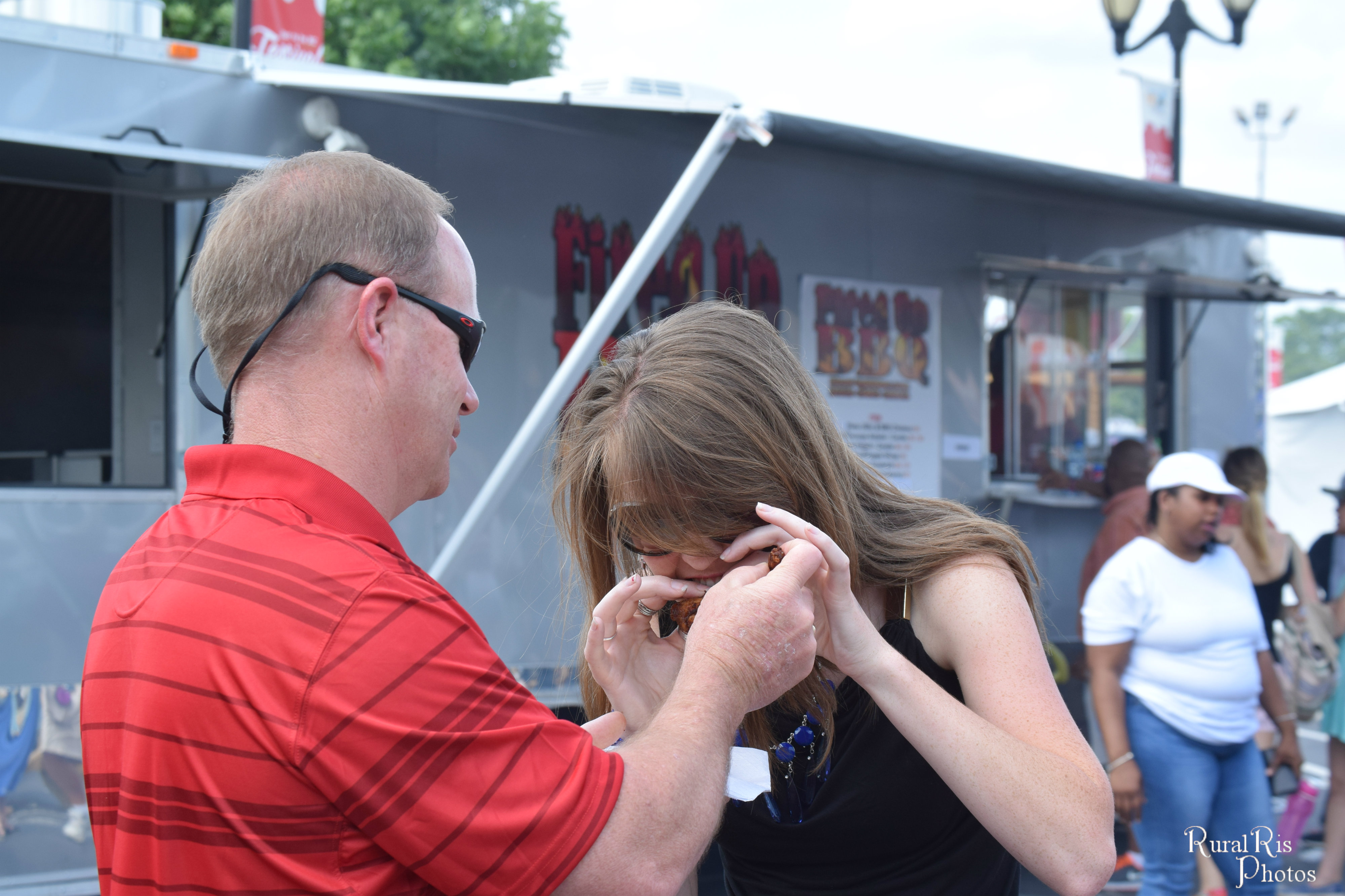
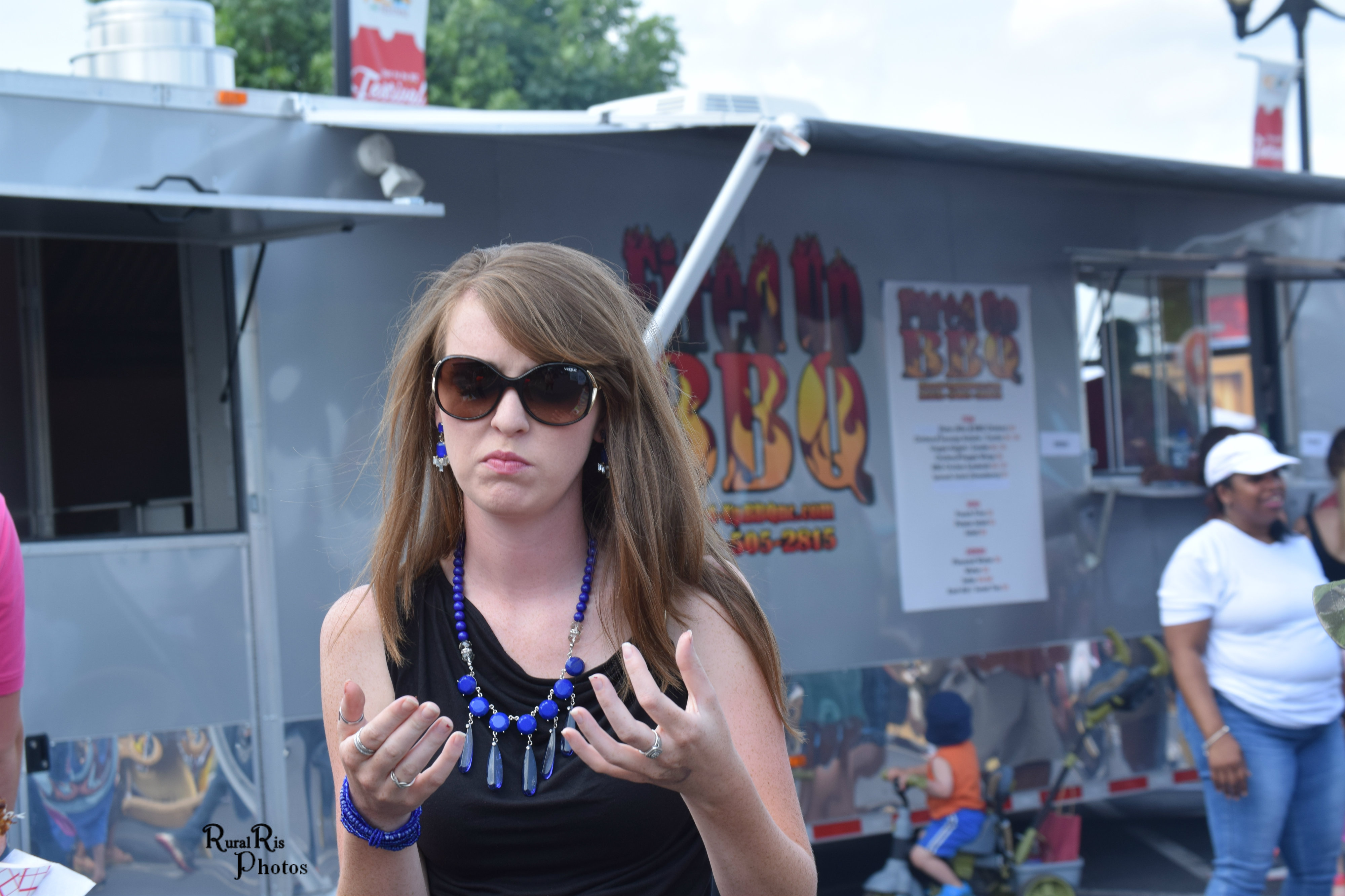
I paid another $2 to try some very odd food. I ordered deep fried sweet tea. It was essentially a doughnut drenched in very syrupy tea. While it wasn’t bad, it was too sweet for me. Daddy ordered frog legs. Now, if you know me, you know I HATE frogs. I am utterly petrified of them, yet somehow, for some reason, I ate a bite of the frog legs.
Obviously, I was thinking about what I just did…
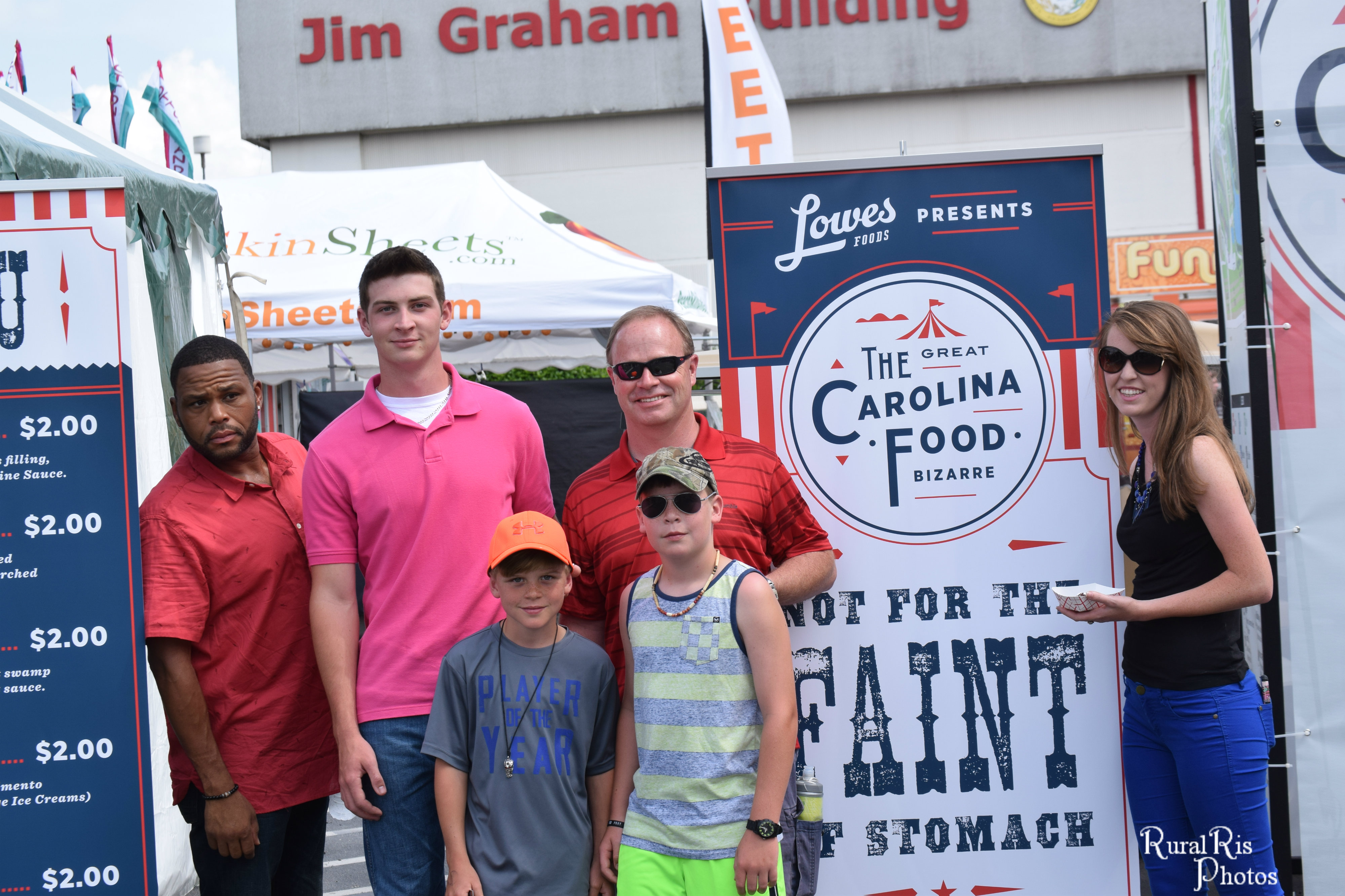
I know. I may be going insane, but it wasn’t half bad until I actually thought about it. Then it wasn’t so good. I can cross it off my bucket list, though (not that it was really on it). Adding to the craziness, was our photo bomb guy. Do you recognize him?
He is Anthony Anderson, an actor. He has played in movies like Transformers. He was at the festival, filming for a food show, and he totally photo bombed us! Too funny!
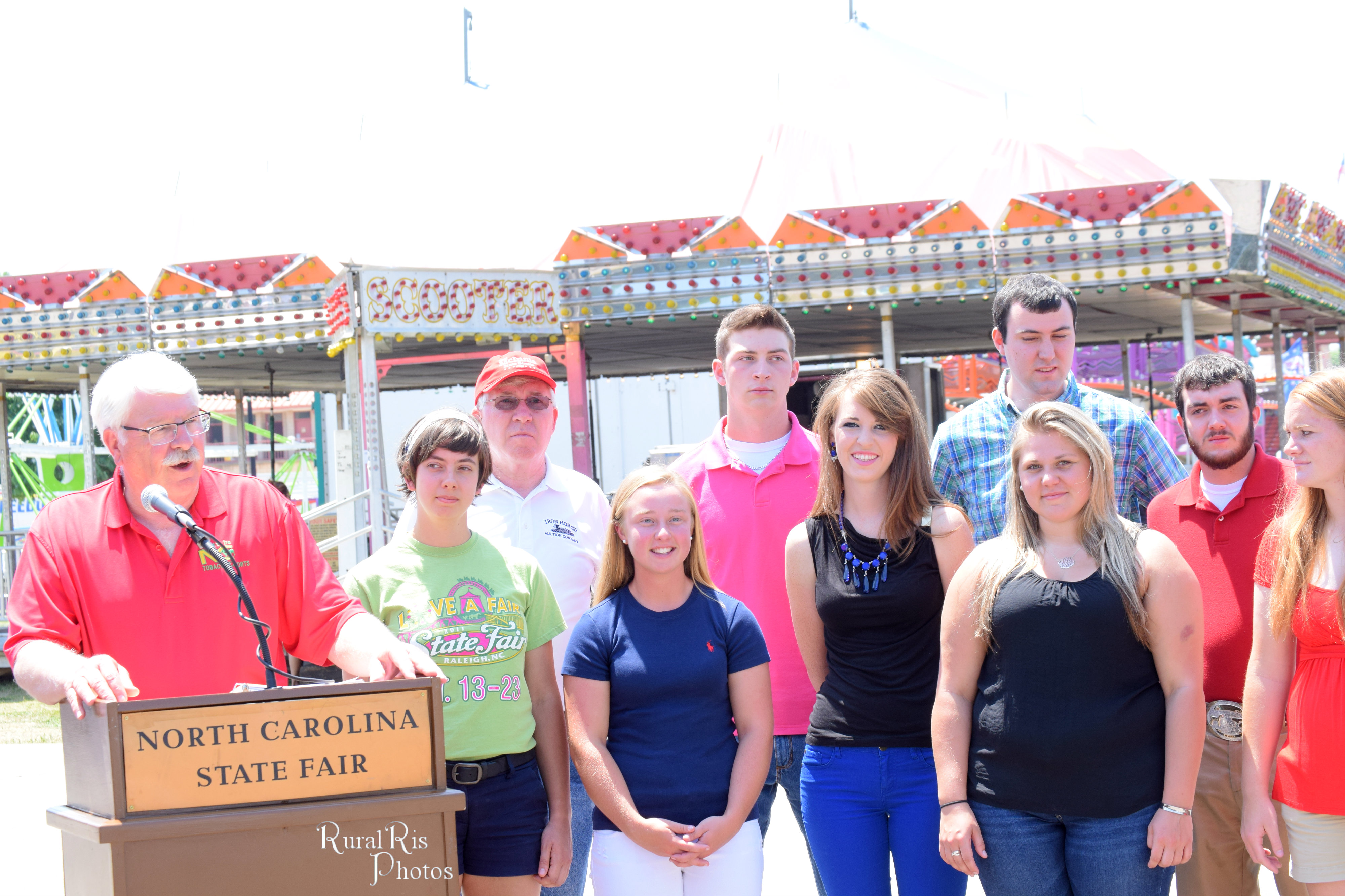
Our main point in being at the event was not food, believe it or not. My brother, Alec, and I both received NC State Fair Livestock scholarships along with 22 others and were invited to come to the shin dig for a ceremony. The scholarship is brand new, and was started with a change to the NC State Fair livestock sale. A percentage of the proceeds of the Sale of Champions goes to the scholarship fund. Awesome, huh? Alec and I were very honored to receive the scholarship and participate in the festivities. We met the NC Commissioner of Agriculture and got to ride in the tractor parade. Our families were able to ride in the parade too. It was perfect.
It was also a nice final hurrah. Garrett and his family (he and his sister also received the scholarship) were able to come to the festival. Garrett was leaving that day to drive to Illinois where he would be working as an intern all summer for Maschoff’s, a large hog company. I’m super proud of him, but it was bittersweet to see him go.
I jokingly told him I was now single for the summer. No worries, I’ve only gone on one date so far. They were short, blonde and cute. Don’t you agree?
The rest of the day was spent walking around and enjoying everything.
So, there you go–a quick recap of some of the happenings around. I strongly recommend the Got to Be NC Festival and definitely the $2 entry to try all the NC based foods.
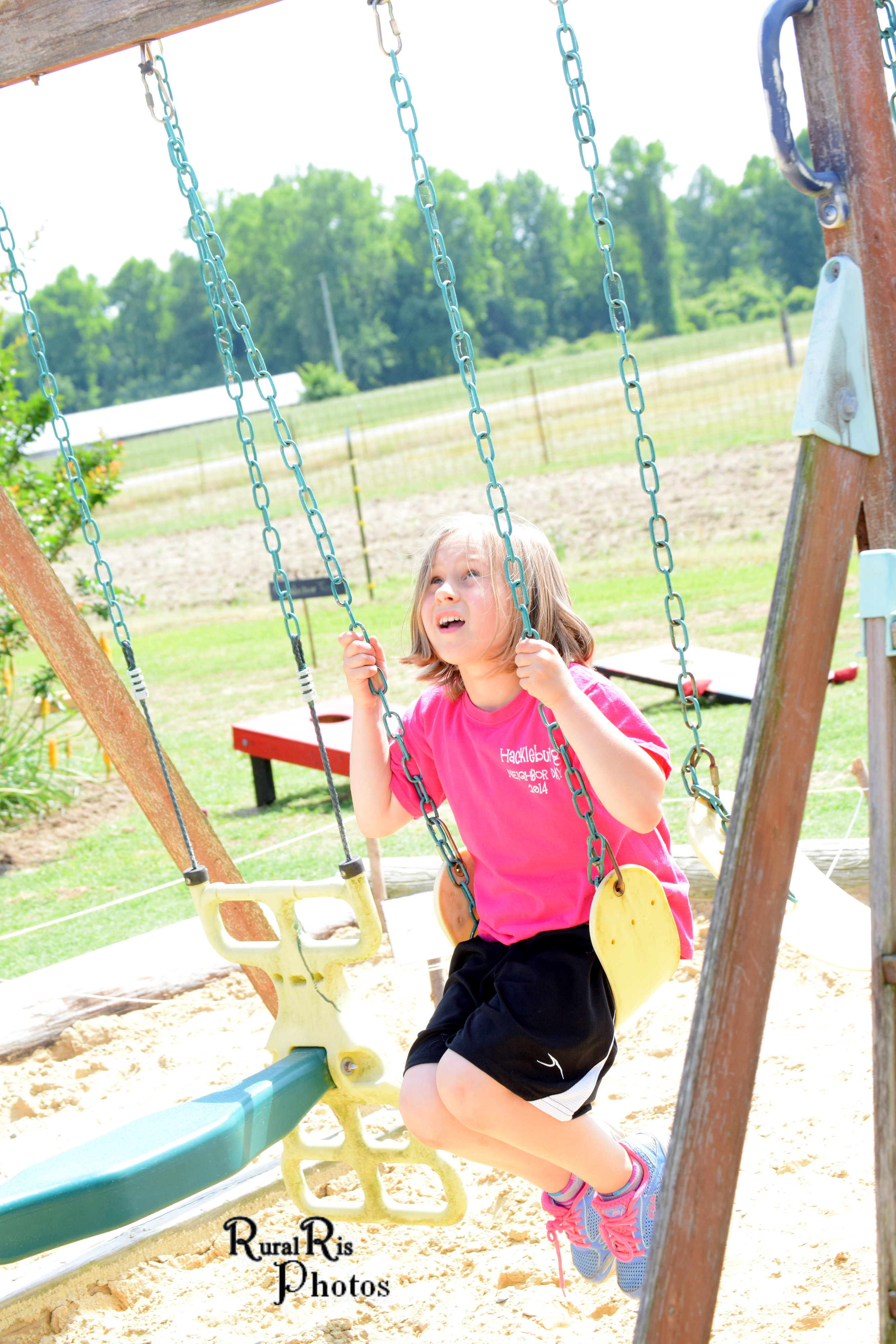
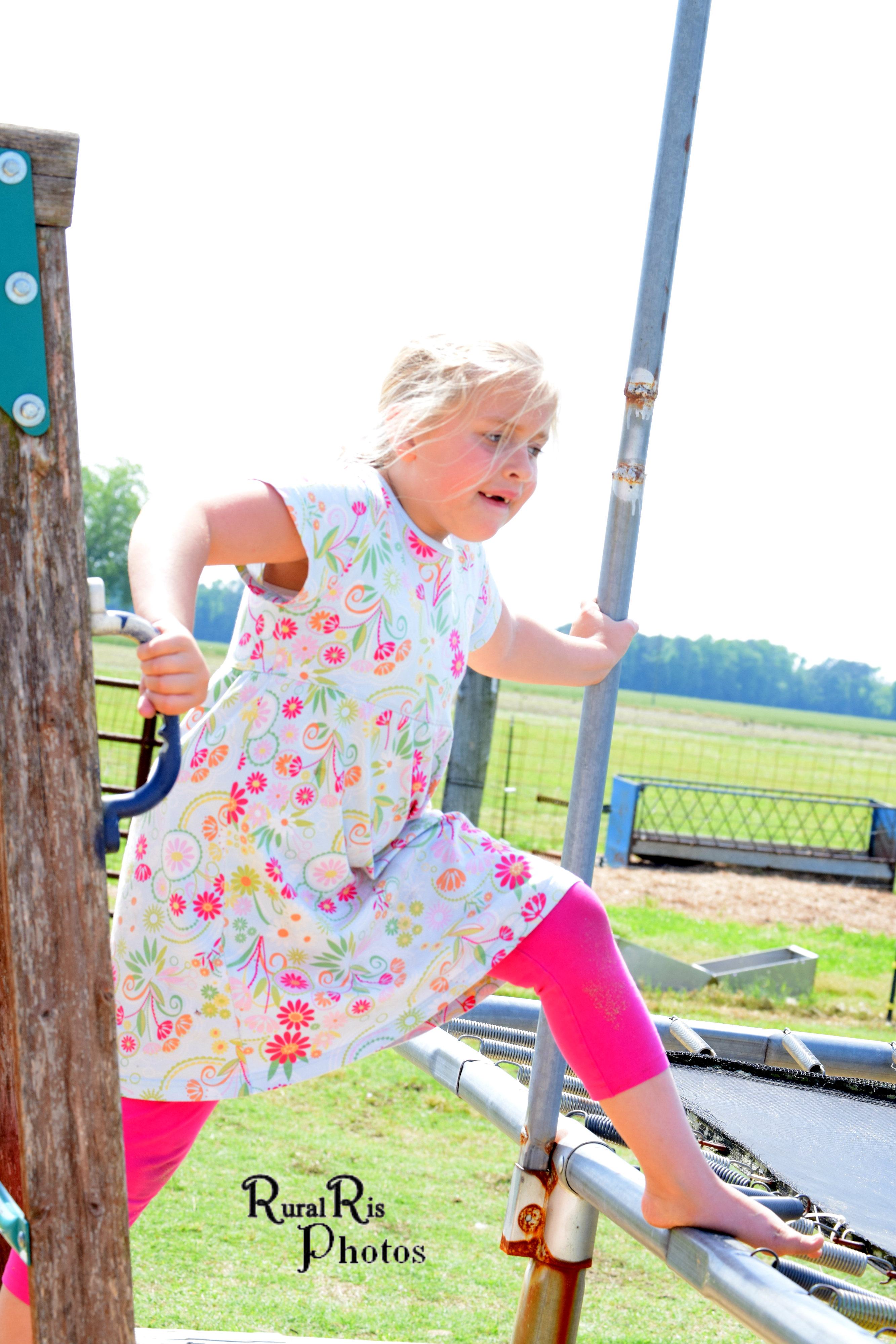
One of my favorite things to do is share agriculture with others (I’m sure it is in no way obvious), especially kids. This past week, we had a passel of kids come out and visit the farm, and it was a blast!
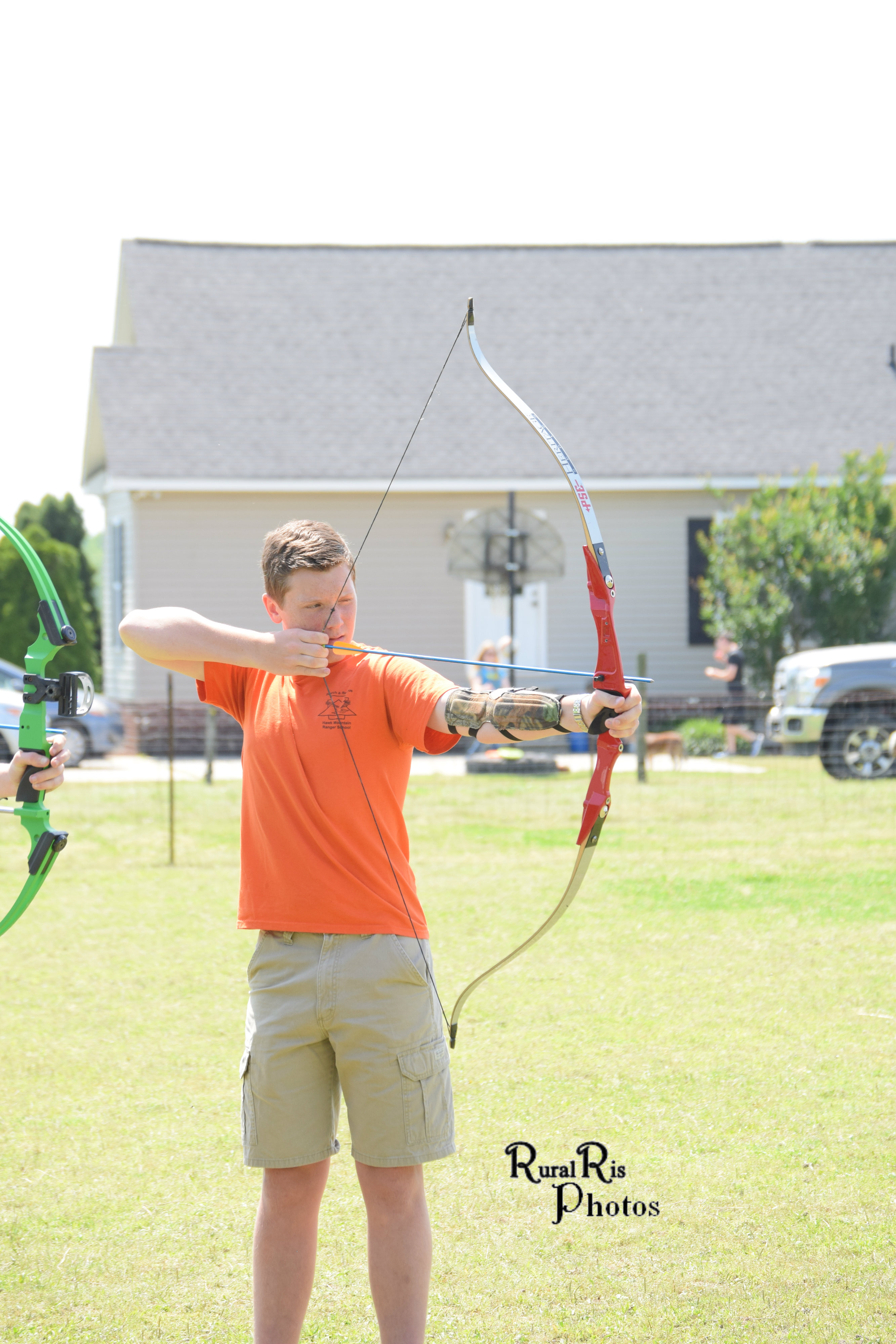
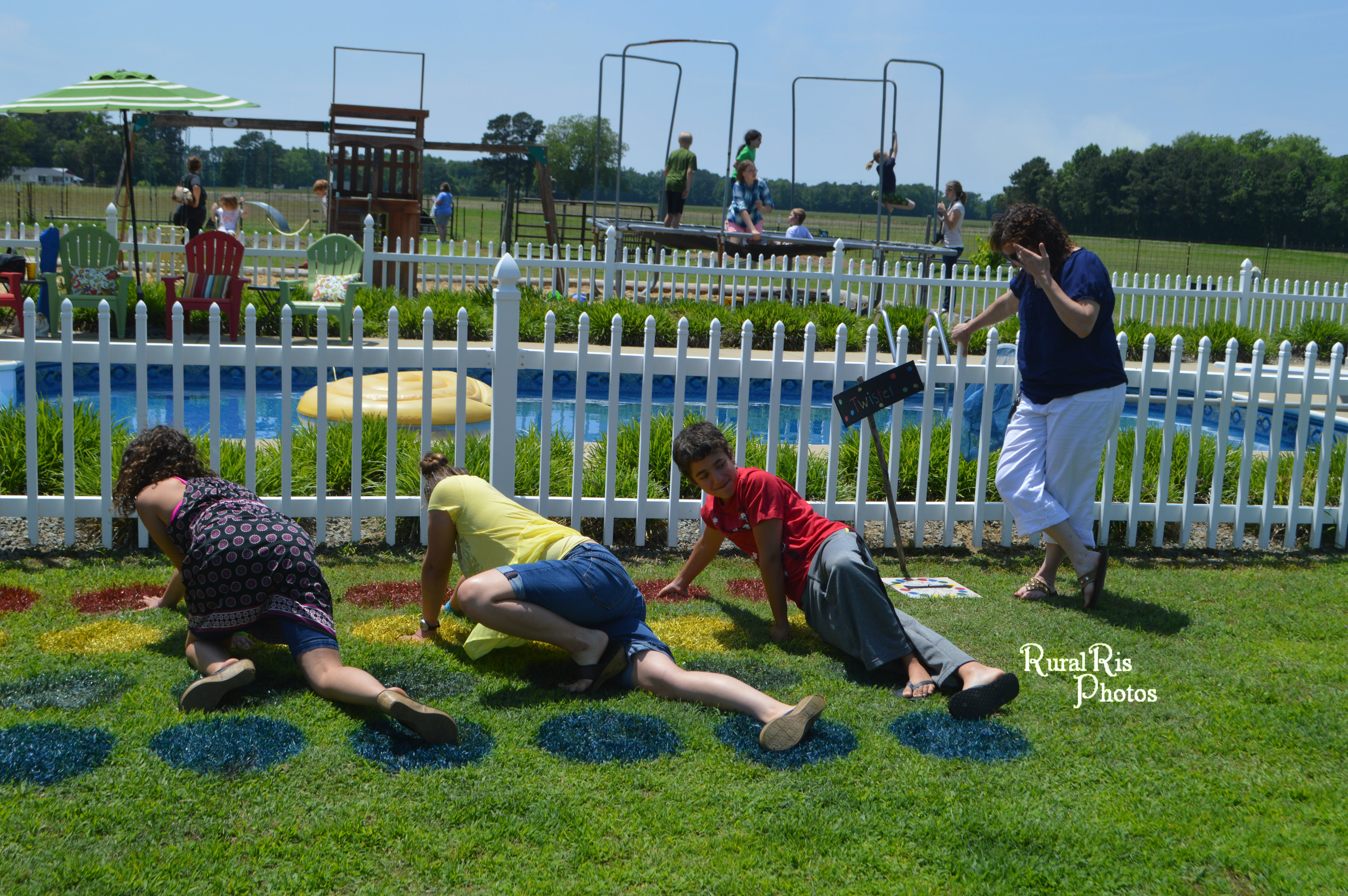
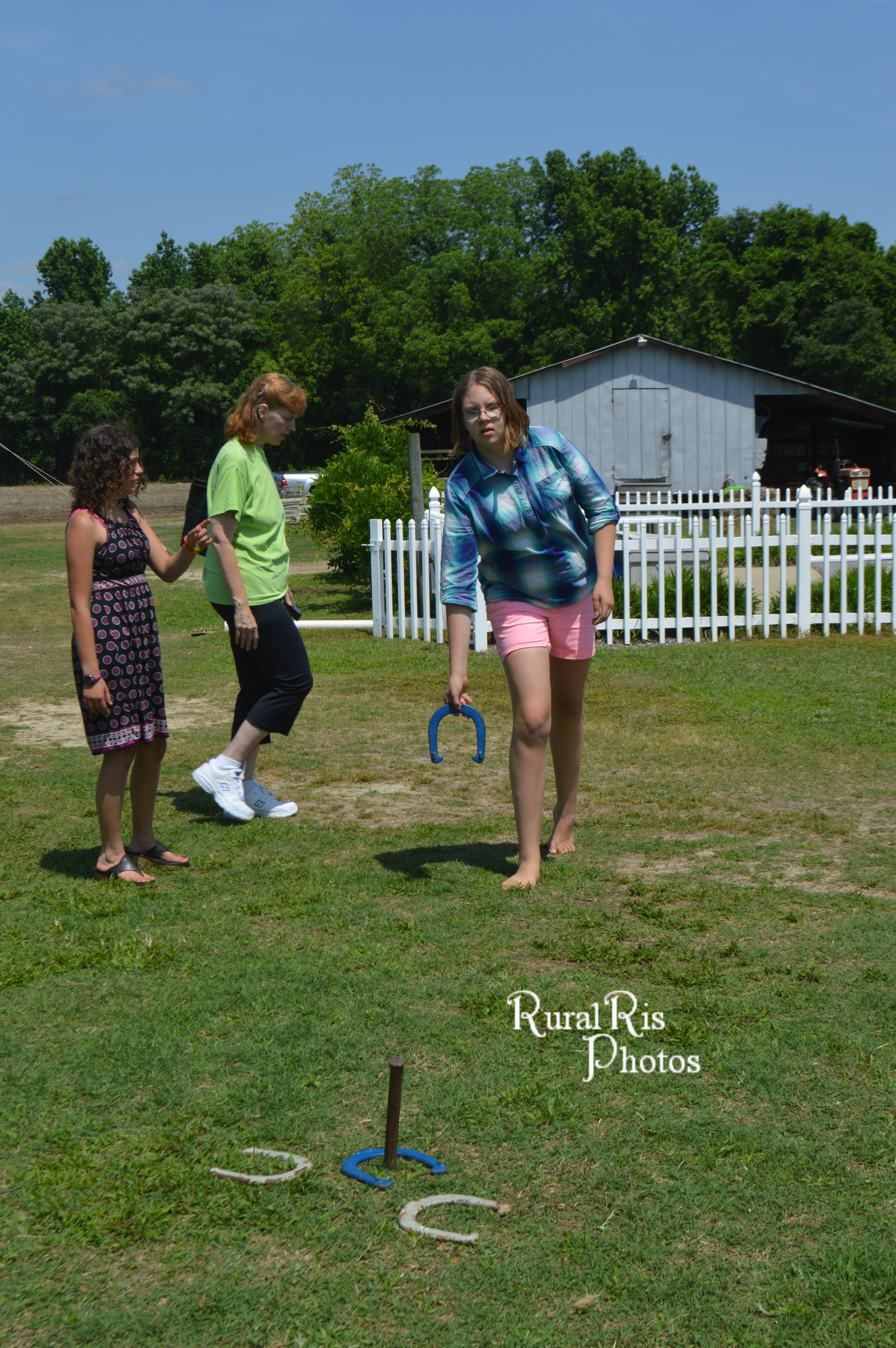
Mom’s 4-H club came out for their end of the year party. We had a ton of games for them to play like giant Jenga, lawn Twister, Kerplunk, giant tic-tac-toe, corn hole, washer toss, horseshoes, pick-up sticks, and even a fossil dig! We also set up an archery station and hay ride. While it was a lot of work making all of the games, it was also a lot of fun. We went through a ton of spray paint and hot glue. We also may or may not have used chainsaws, battled mosquitoes, and gotten sunburnt while preparing for the big day. It looked great in the end, if I do say so myself.
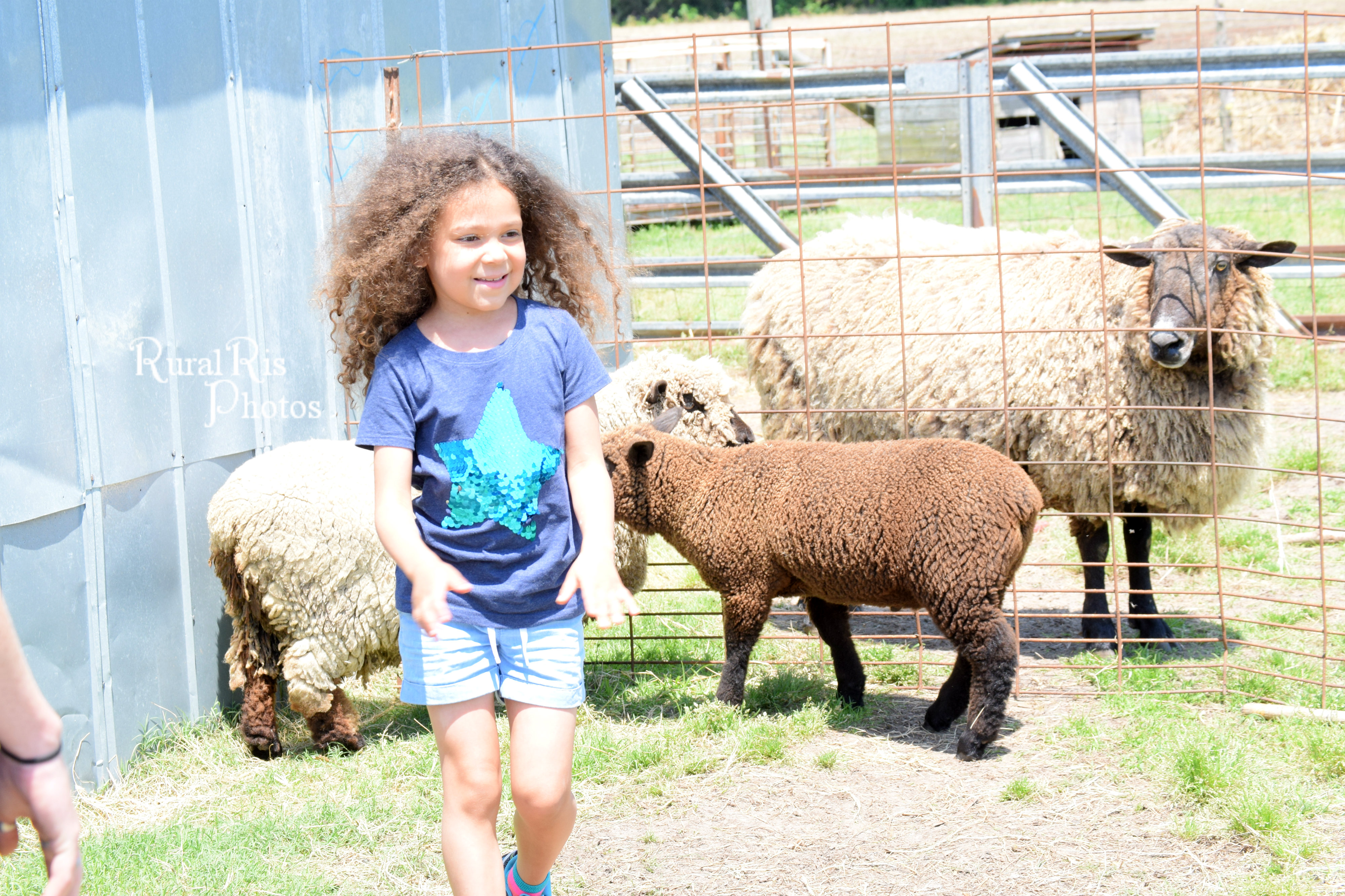
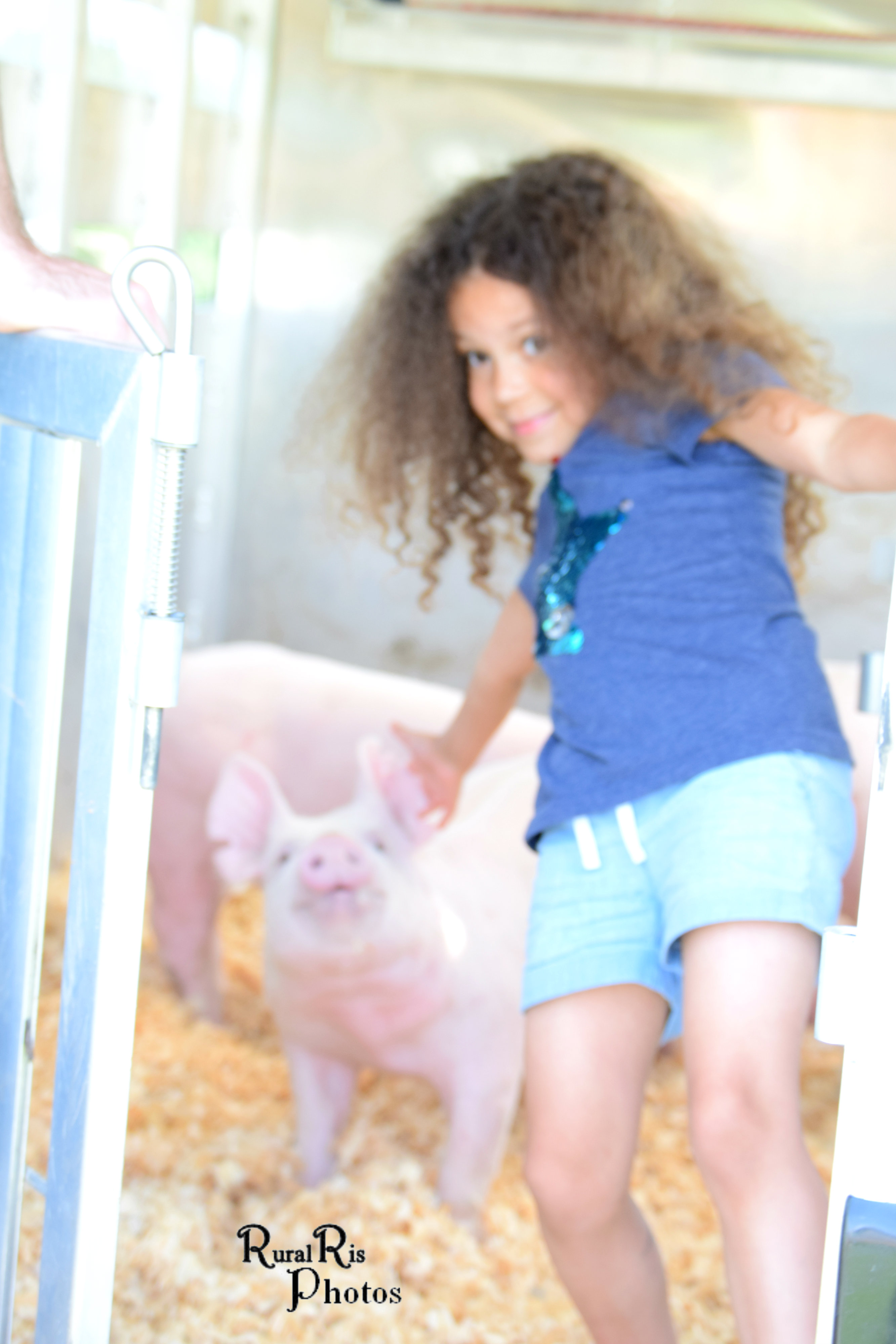
The games were ready, but we were inviting the group to a farm. It only makes sense to introduce them to a bit of farm life. We penned up a few of the more friendly animals and the babies for the kids (and parents) to interact with. Minus Dodger, all the animals behaved. Dodger was nice to the people, but he has jealousy issues and did not want to share the attention. Since he decided to be a bully to the other animals, I tied him up outside the pen beside me.
The day ended up being a great success. Some of the kids had never been on a farm before, so that was really special to have them experience farm life. I watched some kids walk into the pen, very hesitant and somewhat nervous, but by the end of the day, they were going in there and catching the goats all on their own. They cracked up at the goats nibbling their clothes and even fed the animals treats. Many questions were asked, and it was so fun to answer them. Garrett even brought pigs from his farm to let the kids see and touch. All in all, the kids were able to interact with a donkey, goats, sheep, and pigs.
I think it is so important to share agriculture and farm life with others. When only 2% of the population live on farms, many do not get to experience what it is like. Sure, they didn’t learn what it is like to shovel manure, give shots, or trim hooves, but they did get to have a hands-on experience with livestock and learn a bit too. To me, that is what it is all about. Take a look at some more pictures from the day, and if anyone wants to come back out, especially to learn the dirty side of farming, then come on!
If you drive down many Eastern North Carolina roads, you may see a billboard that looks like this:
They are doing just what they say–raising a stink, but it is a stench much worse than any pig poop could possibly smell. These billboards are part of a campaign started by the Waterkeeper Alliance organization to blame hog farmers for polluting local waterways. Although their aim is to make a positive difference in the community, this organization is causing harm, defaming an industry, and do not have their facts straight.
It is important that not just the other side of the story is told, but that facts are put out there, so that the public can be informed. Pollution is a serious issue that should not be taken lightly; however, there are a few things that the Waterkeeper Alliance isn’t telling you–things you should know to get the whole picture.
Who is the Waterkeeper Alliance?
The Waterkeeper Alliance organization is an international group represented by 240 local groups on 6 continents. They are environmentalists who focus on maintaining and promoting clean waterways. They have been active in campaigns against dairy farmers in New York and hog farmers in North Carolina along with various other campaigns. Last year (2014), they, along with their local subsidiary, The Neuse Riverkeeper Foundation filed an intent to sue against a NC farm, that gave the farm 90 days to complete a list of demands or else the organization would file suit against the farm. Although the farm worked with the organization to meet demands, the Waterkeeper Alliance has launched the billboard campaign against all NC hog farmers.
What claims have been made by the Waterkeper Alliance?
The Waterkeeper Alliance makes many claims that can be found on their website. Here are a few to note:
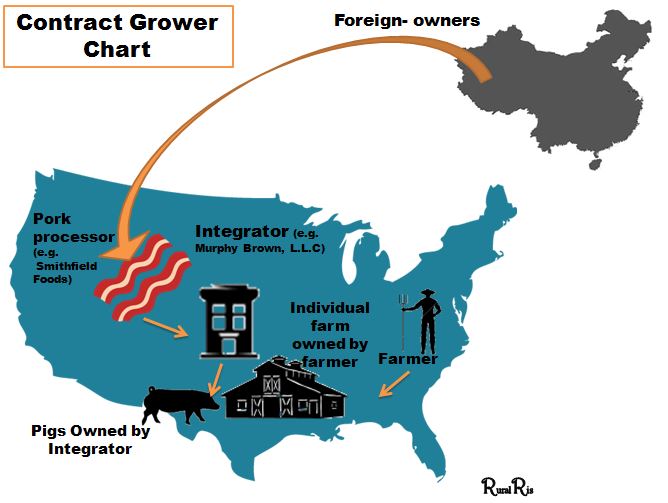
Waterkeeper Alliance seeks to expose the fact that foreign-owned corporations are reaping the profits made possible by the antiquated lagoon and sprayfield system of hog waste disposal, while placing an unfair burden on local contract growers.
Many people “are unaware of how much environmental damage and human pain and suffering these industrial swine operations are inflicting on people and their environment,” Rick Dove, North Carolina CAFO manager for Waterkeeper Alliance
“For too long, factory farms in North Carolina have been disproportionately located in minority communities where residents are forced to endure the smell, water quality impacts and the embarrassment associated with the facilities operating near their homes. Through this campaign and multiple other fronts, we’re working toward the day when people living near these operations are granted their right to swimmable, drinkable and fishable waterways,” Marc Yaggi, executive director at Waterkeeper Alliance
“Using so-called lagoons and sprayfields to dispose of hog waste is an outhouse method that must be replaced. A number of systems that will do away with lagoons and sprayfields have been tested and approved for implementation. It is time to put an end to this problem and the best place to start is by educating the public about what is happening to their water, air and communities.” Rick Dove,North Carolina CAFO manager for Waterkeeper Alliance
There is a lot packed into these claims, so let’s dissect them and look at what the hog farm scene looks like.
Hog Farm Fast Facts:
First, let’s make sure we don’t call large hog farms factories. Even though they are on a much larger scale, they are still a farm, and should be called as such. The majority of these farms are still family operated too.
The hog farming chain can be a little confusing with its many parts. Here is a chart that will hopefully help.
North Carolina is the second largest producer of hogs in the U.S. and contributes $2.9 billion to the economy
Large hog farms keep pig waste in large pits called lagoons.
No new lagoons are allowed to be built
Hog waste is used as fertilizer for crops.
What are the Waterkeeper Alliance not telling you?
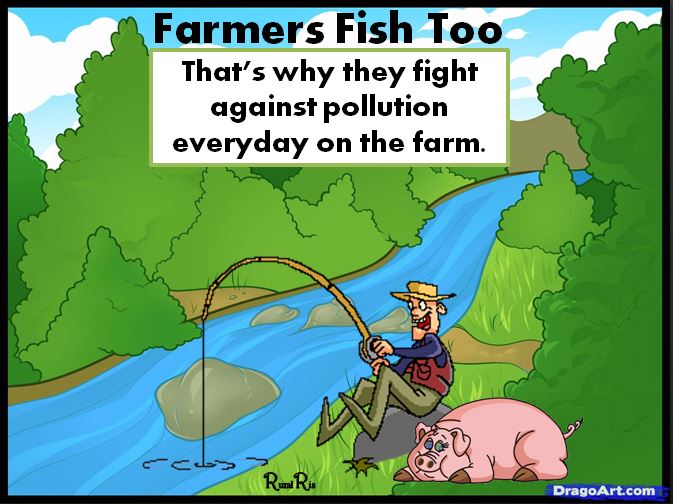
The Waterkeeper Alliance makes it sound like pig farmers have absolutely no concern for the environment, and they are irresponsible with the waste from the farms. This is the farthest from the truth. Farmers are some of the most avid hunters and fishermen out there. Why would they want to pollute the very waters that provide that recreation? In addition, many of their families live within the vicinity of these farms. Would farmers purposely pollute and cause damage to their own family? I don’t think so.
Even if farmers didn’t care (which they most certainly do) they are required by law to adhere to strict regulations as to when, where, and how they can deposit and manage the waste in the hog lagoons. These regulations are put in place by the Department of Water Quality and are monitored throughout the year. Hog waste is never allowed to be dumped into waterways; however, human waste is permitted to be dumped in the rivers once it has been treated. Although the majority of pollutants have been removed from the waste, the volume put in streams is still high and the pollutant mass can still be high in streams (NCSU).
The Waterkeeper Alliance demands a waste water treatment facility to deal with the hog waste in a more environmentally friendly way; however, human waste water treatment facilities are not perfect either. According to the EPA, there are over 22,000- 75,000 sanitary sewer overflows (SSO’s) that occur each year due to blockages, line breaks, sewer defects that allow storm water and groundwater to overload the system, lapses in sewer system operation and maintenance, power failures, inadequate sewer design and vandalism. The only thing a hog waste water treatment facility is going to do is cost the pork industry millions of dollars, driving the cost of bacon and porkchops through the roof. According to Feeding America, North Carolina is ranked in the top 10 states for food insecurity, and higher pork prices will only drive food insecurity up.
The Waterkeeper Alliance draws on various studies that show the effect of hog farms and hog waste on the surrounding community; however, these studies often show inconclusive data and rely on speculation. Yet, the Waterkeeper Alliance states them as fact. Beyond any of this, though, are the facts that they are hiding about the regulations that hog farmers have to abide by:
Lagoons are required to have substantial grass planted around its banks to prevent erosion.
Crops meant for direct human consumption, are not allowed to have hog waste sprayed on them as fertilizer.
Lagoons must be kept under a certain level at all times to prevent overflows into waterways.
Rain is stressful to a hog farmer as it increases the levels of the lagoons and soaks the fields to where they cannot be sprayed on. With no where for the rising lagoon water to be sprayed, hog farmers often times have to hire tanks to haul it away. They have even flown men in from other states to help in the effort of managing the lagoons during a heavy rain season.
Hog farmers have to take lagoon samples of the waste to make sure the nitrogen and phosphorus levels are appropriate within 30 days of spraying on fields.
If hog farmers know a neighbor is having a party or an outdoor function, they try not to spray as to disturb them.
The majority of farms are off of a dirt path away from most homes. By law, they must be 1,500 feet from a residence and 2,500 feet from a school, church, hospital, or park.
Farms are inspected twice a year by the Department of Environment and Natural Resources (DENR). According to the NC Pork Council, during 2000, 98% of the 6,000 inspections of NC’s 2,500 hog farms were found to have no direct discharges of organic waste water to the surface waters of the state and 94% found no signs of over-application to fields.
If there happens to be a hog waste spill in the rivers, the farm is required to report it and could be fined.
Spills are typically caused by equipment malfunctions.
The organization claims that there are better innovative ways to deal with hog waste out there, but hog farms are stuck on the antiquated ways of spraying on fields. Many hog farms are collaborating with scientists and innovators on various ways to improve hog waste management. Many of these innovations are in a trial period or are so expensive that the cost outweighs any benefit. The goal is to provide affordable pork to the public and do so in an ethical manner. Farmers are being ethical and careful in how they manage hog waste.
The Waterkeeper Alliance may also tell you that the Neuse is one of the most polluted rivers and fish are at an all time low; however, the Neuse River basin does not boast the most amount of hog farms. The Caper Fear River Basin has the most hog farms. If hog farms were the cause of the river pollution, then why is the river basin with the most concentrated hog farms, not the most polluted? It doesn’t add up.
While the Waterkeeper Alliance is not calling for an end to large pig farms, they are saying some nasty things that does not tell the whole story by any means. It is ok for them or anyone to ask questions and even challenge certain practices. It is important that hog farmers look at ways to constantly improve, but the current billboard campaign does not ask questions and challenges in an unhealthy manner. The Waterkeepr Alliance is suggesting that hog farmers are unethical in their environmental practices, but the Waterkeepr Alliance is not being ethical in their efforts by defaming an industry, causing the potential for increased pork prices, and not telling the whole story.
If you see these billboards remember that there is another side to those signs. They look something like this:
Every animal (minus the poultry) that has come on our farm has been named. For over a decade, I took the lead in naming everything. I even had a name book and have frequented baby naming sites solely for the purposes of naming animals. Some of my favorite names have been London, Cairo, and Fancy. Some of the more unique ones have been Technical Difficulties (he was always causing issues) and Slim Jim. Naming an animal was always thought out, and often times, they would go days without a name just to make sure their name matched their personality. It is one of my favorite parts of having livestock; however, my job has begun to be taken over by my little brothers recently. That is a tough pill to swallow.
It isn’t that I necessarily mind that they are naming the animals (I make sure I get a few to name), but it is more what they are naming them. The latest twin goats that were born are just an example.
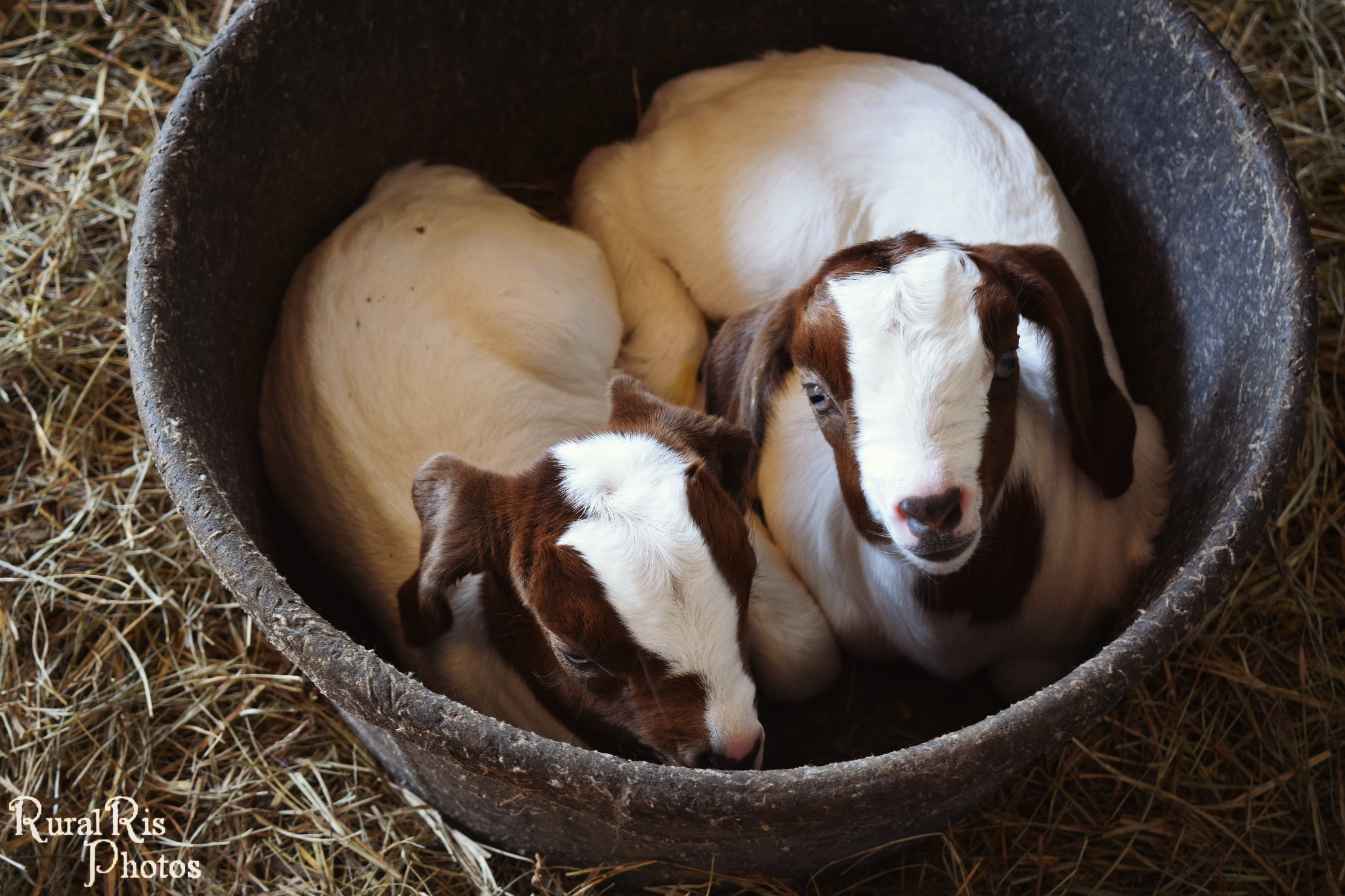
Lady had her first set of kids this week–two big girls (11 and 8 pounds). They are really beautiful, and I was quite excited about how they looked. I felt that they should have pretty names, but Isaac and Gideon wanted to name them. I was ok with this and was hoping I could throw some good names they liked out there. I was wrong.
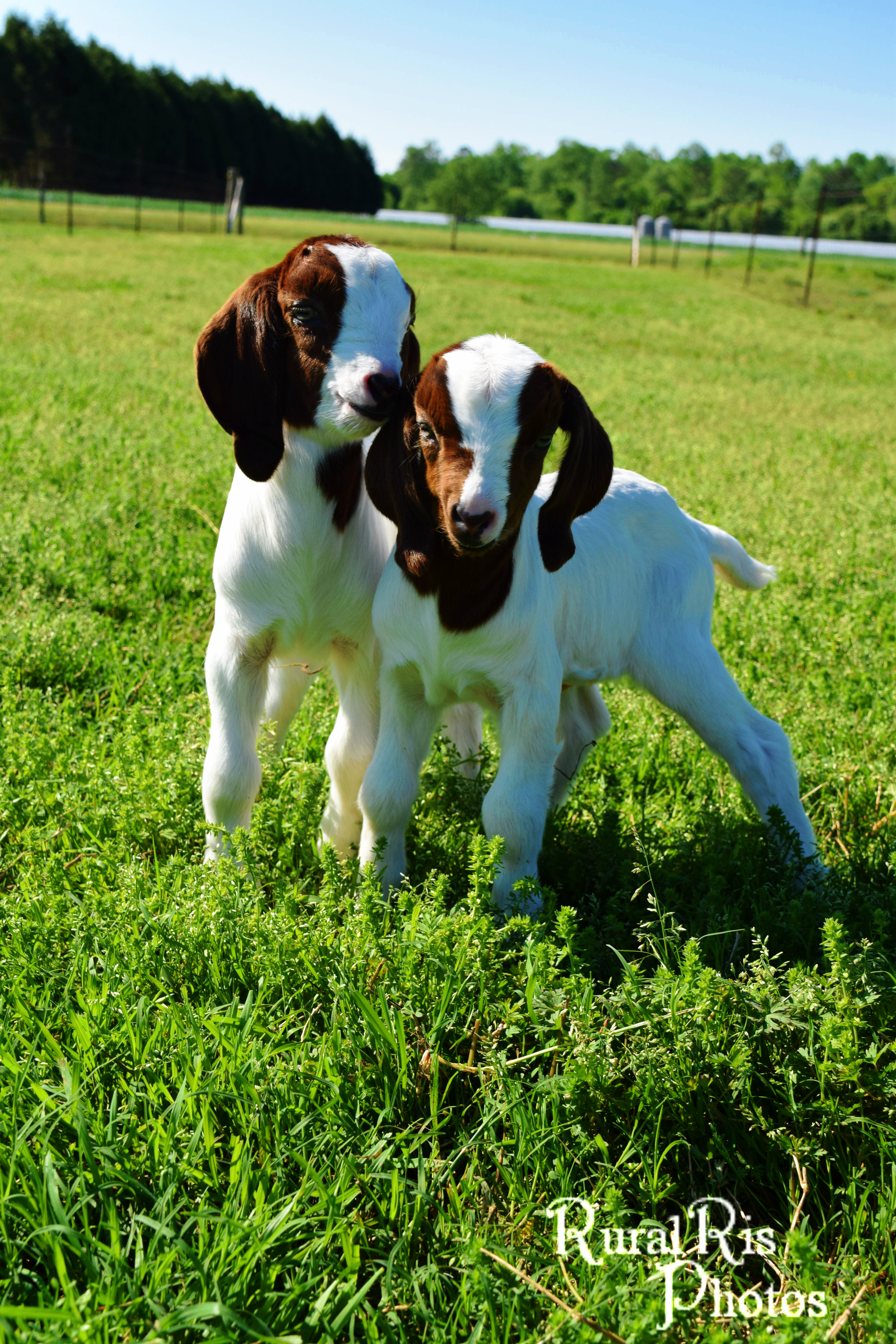
Mud Pie is on the left and Tres is on the right
I found the babies and called for the boys to come out and come look. The following conversation ensued:
Isaac: “Lady! Look how pretty your babies are. Aren’t you a good momma? Risa, Lady is my show goat, that means I name the babies right?”
Me: “Lady is yours but the buck is mine.”
Isaac: “That’s true. Can I still name them?”
Me: “We will talk about different names, but you can name them.”
Gideon: “Tres! We should name that one Tres. That is the number 3 in Spanish right?”
Me: “Let’s just wait until tomorrow to name them that way we can think on it.”
The next day while we were feeding, Isaac and Gideon came riding up on the golfcart saying “How are Tres and Mud doing?”
Me: “Who and who?”
Gideon: “That’s their names–Tres and Mud.”
All I could think was dear heavens, I’m going to have pretty little does named after wet dirt and the other after a foreign number 3.
Me: “Ummm… well… I was thinking since the mom is named Lady, we could do something like Duchess.”
Grandma: “What about Maddie and Tae? They are country singer girls that were on TV.”
Gideon: “No, no, Tres. Her name is Tres.”
Isaac: “How about Mud Pie?”
Me: “Why Mud?”
Isaac: “Her face looks like mud to me.”
Me: “Alright…”
Later I went in the house and told Mom: “I need a hug. I have baby goats named after Spanish 3 and mud.”
She laughed.
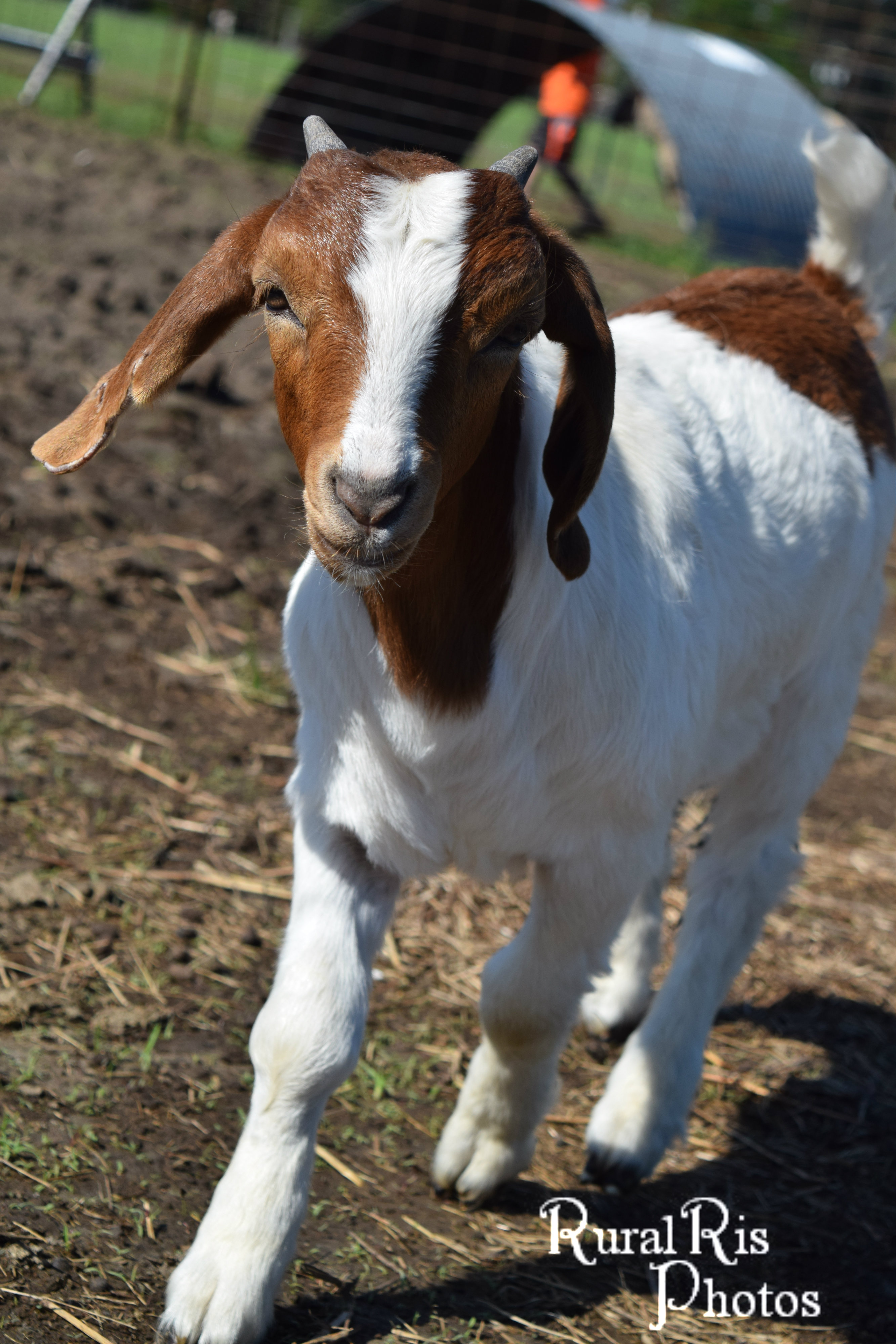
Mud Pie has a brown spot on her booty
So, yes, I swallowed the pill, stepped down from my position as namer and relinquished the reigns to an 8 and 10 year old. I’ve had a good run (I’m still adamant that I get to name things; I just have to share, and the boys are good with this), and at least I could name some of the babies this year. Speaking of those guys, here are some updated pictures of all the little ones. They are growing super fast.
Miracle is such a big girl now
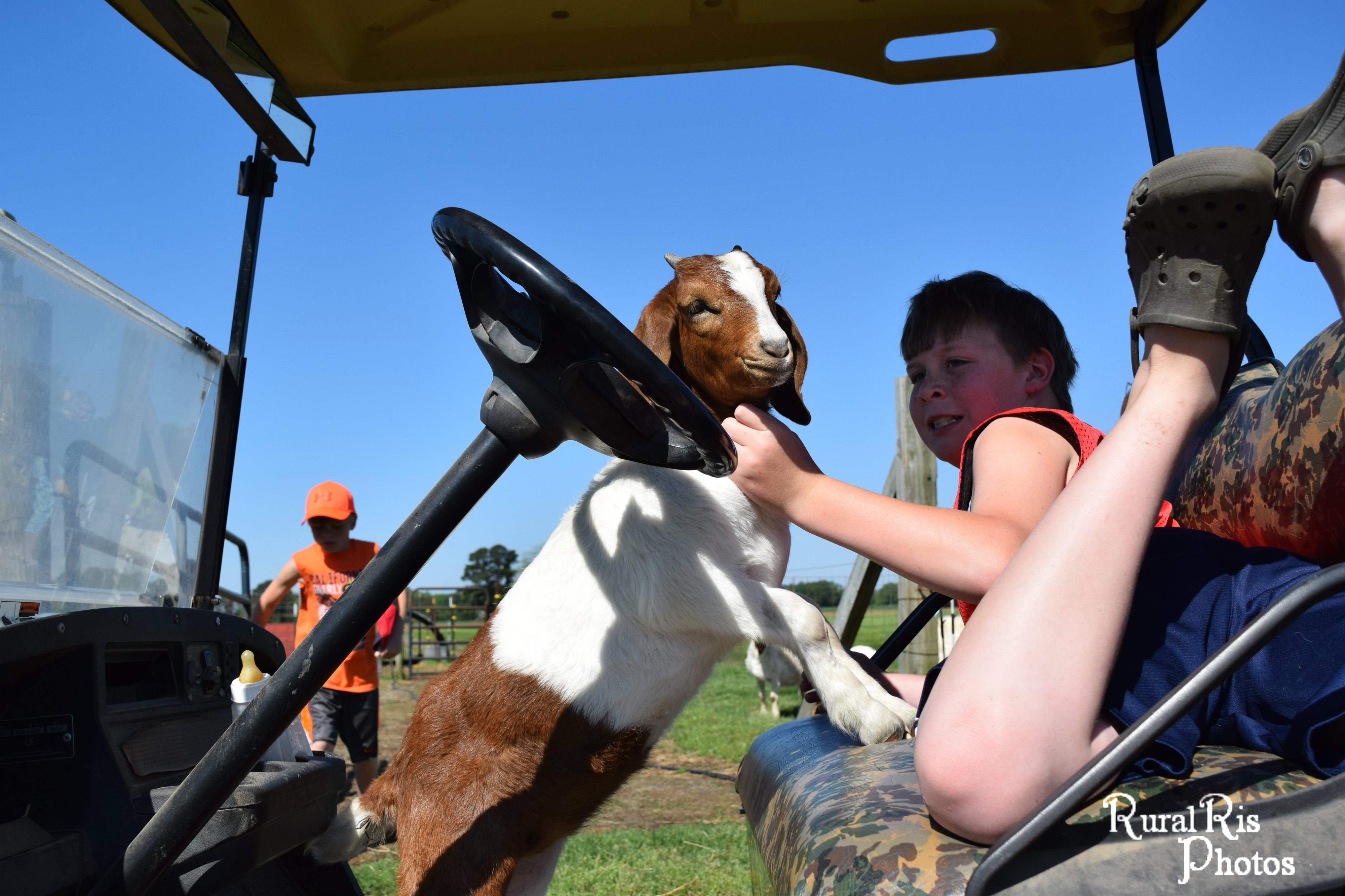
If we let Miracle out, she likes to run around with the boys.She even thinks she is big enough to driveCash man is a stud, even though Miracle is out growing himLilly is the diva of the group. She is prissy, loves to climb, and knows she is special.Grover has to belly crawl to nurse from mom these days. He will be weaned before too long.
This week was Ag Awareness Week at school (NC State University). In the common area of the brickyard, where a lot of students congregate, were booths and displays set up spreading awareness about agriculture. There were live animals, tractors, and ag students available to answer questions. It thrills me that this event takes place. What a great way to educate and advocate for agriculture!
But, I have an issue with Ag Awareness Week. There shouldn’t be a need for awareness about ag. Let me say that again. There should NOT be a need for ag awareness. Sure, less than 2 % of the population are farmers, but those are not the only ones who should know about ag.
Why is it that in today’s society, school systems require kids to take mandatory classes in English, math, science, art, and history, but not agriculture when they partake in it 3 times a day at the table? Elementary and beyond, even in universities, agriculture is not among the forefront subjects of education. This is truly bizarre to me if you consider the prevalence that agriculture plays in our day to day lives, community, and economy. Think about this:
Food, regardless of type, is needed for human survival. That food comes from some type of agriculture (large or small).
America’s net farm income for last year, 2014, was $108 billion. (source)
22 million people work in agriculture related fields. (source)
There are over 200 available careers in the agriculture industry. (source)
Aside from the fact that food comes into play in our day to day lives, the influence that agriculture has on our economy and the job market is pretty astounding, and yet, we are not doing a sufficient job in our education system of educating our kids about these opportunities nor its impact. We are failing our kids in the ag literacy front. They may be able to read, but they can’t read ag.
Yeah, sure, schools have classes available for students to take about agriculture. We have ag teachers in schools and whole ag degrees in college, but it is optional for kids. English, math, history, art, and science all have special teachers for their respective subjects, and you can major in them in college, but they are also mandatory at some level in our kids’ education. The previous subjects like math and English are so valuable to a child’s proper education because they will utilize most of it on a day to day basis. So, why, if agriculture is enjoyed at least 3 times a day, is it not mandatory for a child to learn about where their food comes from and how it is made? In my opinion, this is a serious oversight and tragedy that our society is experiencing.
Because so many students go through elementary school, middle school, high school, and even college without gaining much of an understanding about the agriculture industry, they are missing out on valuable job opportunities, career paths, and the foundations of making educated decisions about what they eat. They never go through life appreciating what farmers do to feed a growing population. People grow up either not thinking about where the food they are consuming comes from, or developing misconceptions about farming in their heads. If and when they are finally exposed to real agriculture and farming, they are often shocked, and this has led to a lot of controversy.
Even worse, is that it is a cycle. Adults are ag illiterate and do not understand it, and then go and pass that on to their children a lot of the time. I have helped with Farm Animal Days in the past and observed mothers tell their kids to look at the puppy I was holding. In reality, I was holding a baby goat. The sad truth was they didn’t know the difference even with a college degree. Potentially more heartbreaking, was watching parents snatch their children’s hands from touching some animals or even dirt, to prevent germs. Animals can get pretty gross sometimes, but they aren’t toxic. I have had an individual in a restaurant ask what I had in the trailer in the parking lot. When we told her it was a pig, she wanted to know if it was big or small. We said it was a smaller pig, weighing around 230 pounds or so. This was a shock to her. People don’t realize pigs get twice that size.
My point in all this is that our society is generally illiterate. I’m not talking about the kind where you can’t read. I’m talking about the kind where you can’t read an anti-farming article and be able to pick out some of the discrepancies. I’m talking about the kind of illiterate that cannot distinguish a goat from a puppy or know how big a pig can get. An illiteracy that does not realize what contributions agriculture makes on the economy and the job market, and that there are opportunities besides being a farmer that are available in the agriculture industry. Beyond even that, many kids are missing out on valuable character building that farming provides such as responsibility, hard work, and ethics. This isn’t to say they don’t receive these character building traits from other places, but farming provides another avenue for it.
Because of this illiteracy, we are forced to hold Ag Awareness Week and recognize Ag Day that promotes more ag literacy. Guys, we shouldn’t have to have these special weeks and days to create awareness. It should already be there. Education should recognize agriculture as a subject that holds equal importance to art, math, science, and English. After all, everyone needs food. Until that happens, though, I say rock on to Ag Awareness Week. Keep up the good fight in educating, and maybe one day, we will live in an ag literate society.
We all know what this looks like. Sure there are many different types of girls, but a girl is a girl– xx chromosome plain and simple. For me being a girl means being able to wear dresses. It means makeup and heels. Being a girl means I give directions via landmarks and eat chocolate as stress relief. I am prone to bursts of emotional breakdowns and like to talk about my feelings, but I am also more than a dressed up emotional female. I am, and always have been strong-willed and independent. When I was two, my dad put me in time out and told me not to get out of that chair until he came back. When he came back, I was clear across the room. I hadn’t gotten out of my chair, I had taken the chair with me and scooted to the spot I wanted. Dad laughed and said that I was going to be trouble.
I am opinionated and at times a little cold-hearted, much to my mother’s chagrin. I am smart, competitive, sassy, and classy. Being a girl means that I have the joy to be a daughter, granddaughter, sister, girlfriend, and hopefully, one day a mother.I embrace being a girl and all of its feminine qualities–even in farming. For me, it is feminine farming.
Feminine farming looks different for every woman out there who farms. In case you were wondering, that is 1 million lady farmers. While each one is different, they all share a common goal of feeding the world, and I am one of them.
For me, feminine farming has evolved in the 13 years I have lived on a farm. I started with a “I have something to prove” attitude, always wanting to show up the boys. If they were lifting feed bags, I wanted to lift just as much. If we were wrangling goats, I wanted to be the last one to back down. So many times, my dad and grandpa would fuss at me for not letting my brother or them take care of it. I didn’t want them to take care of it, because I knew I COULD do it. I was missing the point that I SHOULD NOT necessarily do the heavy lifting that the guys were more capable of doing.
I won’t lie, that mentality is not in the past. It still comes up and I have to remember that my 6’4″ brother is better equipped to move the huge stack of 50 pound feed bags than I am. That doesn’t mean I don’t do things. I still get muddy, poopy and gross. I wrestle pigs and goats. I can drive a nail and work power tools to fix the fences and pens, but I have also embraced my more feminine side when it comes to farming. My muck boots are pink, and my jeans have bling on them. Sometimes, I have to run out in the pasture in heels to get a goat’s head unstuck. Somehow, I still can’t back a trailer like the boys can, so I let them deal with that.
Just because I am a farmer, does not mean I wear coveralls, and have manure on me all the time (only when required).
Just because I am a girl, does not mean that I am helpless in the barns. Because I am a girl who is a farmer and enjoy partaking in feminine farming, I bring a little pink in the barn. I like to hold “conversations” with the animals and cuddle the newborns, naming everything that comes on our property. I let the guys lift the feed bags when they are there. I like to dress up and wear heels, but I’m not afraid to go rescue an animal in those heels. I curl my hair for livestock shows and wear the sparkliest belt I can find, even though, I may be wiping a pig’s butt at the same time. I paint my nails, even though I know it will only last a day after working outside on the farm.
I am a girl. I am a farmer, and daily I practice feminine farming.
If you have not met Grover, here is our little Southdown/Leicester cross lamb.
Isn’t he just the cutest? I thought so too 🙂
Today Grover, like any lamb on our farm, got his tail docked. Docking a sheep’s tail is not simply for aesthetic reasons, it has health reasons too. It isn’t cruel, but rather, it is beneficial to the animal.
Why do we dock?
It isn’t because the tail looks a little funny, although, I must say, it does look funny.
If the tail was not docked, the wool that grows on the tail would become caked with feces and urine. This isn’t just gross when it comes to shearing time, but it also is unsanitary for the sheep and can cause irritation. In addition, docking also reduces the chances of fly strike, a painful condition caused by blowflies laying eggs in the fleece and the maggots burrow into the sheep’s flesh. The sheep often dies within a few days of fly strike occurring. Some studies have also shown that docking tails increases growth rates. For these reasons, we dock the lambs’ tails within the first week of life. Some sheep do not necessarily need to have their tails docked. Hair sheep, do not have the thick wool, and it does not pose as much of a problem.
How do we dock?
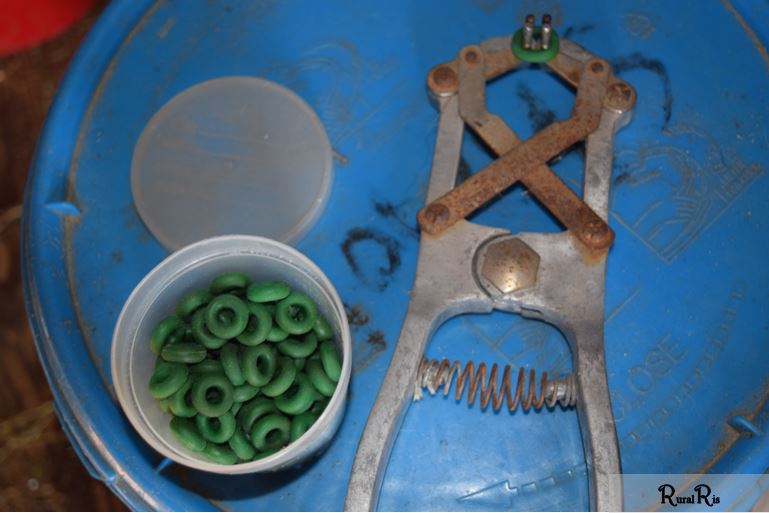
There are different ways to dock a lamb’s tail. We use an elastrator (we also use this to castrate).
The elastrator tool puts a thick rubber ring or band on the tail, cutting off blood circulation. Around 10 days later the tail falls off. It is inhumane to use the elastrator on older lambs, which is why it should be done after 24 hours old but not after 1 week. Another tool to dock is an electric docker.
This tool cuts and cauterizes the tail simultaneously. It can be done in older lambs, but it is still best to do it on young lambs.
Are there negatives of docking?
Yes, if done incorrectly. It is important when docking lambs to not make the tail too short. If the tail is too short, it increases the chances of a rectal prolapse.
I’m making sure to leave a certain amount of tail.
Does it hurt?
A little. The younger the lamb, the less stress it causes, though. When we put the band on Grover’s tail, he did a little butt wiggle, and went straight back to mom. He acted like nothing was wrong. We have had some lambs be a little more sensitive, and act like there is something on their butt, which there is. They are always fine within the hour, though.
A quick drink from mom is all Grover needs
Is docking tails inhumane?
No, it is not. I have read where some people think that farmers have bred sheep to be unnatural in their wool production, and that is the only reason that we have to dock tails. While there are different breeds that have various kinds of wool, sheep naturally have wool. Farmers did not breed sheep to have an excess of wool. Those in the wild, do not have the same type of fiber as a domestic sheep, and do not even need to be sheared. For thousands of years, sheep have needed to been shorn for their fleece. It isn’t a new phenomenon caused by selective breeding. Farmers breed for quality of wool and quantity, but regardless of the quantity, any amount of wool on the tail will cause unsanitary conditions. While docking may cause some discomfort, it is often no more uncomfortable than getting a vaccination shot.
Docking is beneficial to the lamb. It is not just for the farmer’s sake, but also the animals. Grover did not seem to mind one bit about his procedure. He didn’t cry or really squirm. I think he was more concerned that his mom was calling for him and we were touching his butt. He was just dandy.
 Yesterday we took 4 animals (2 sheep and 2 goats) to the stockyard to be sold. While the story of getting them on the trailer has nothing to do with the purpose of this post, it is too funny not share, so I’m going to to go off track a bit.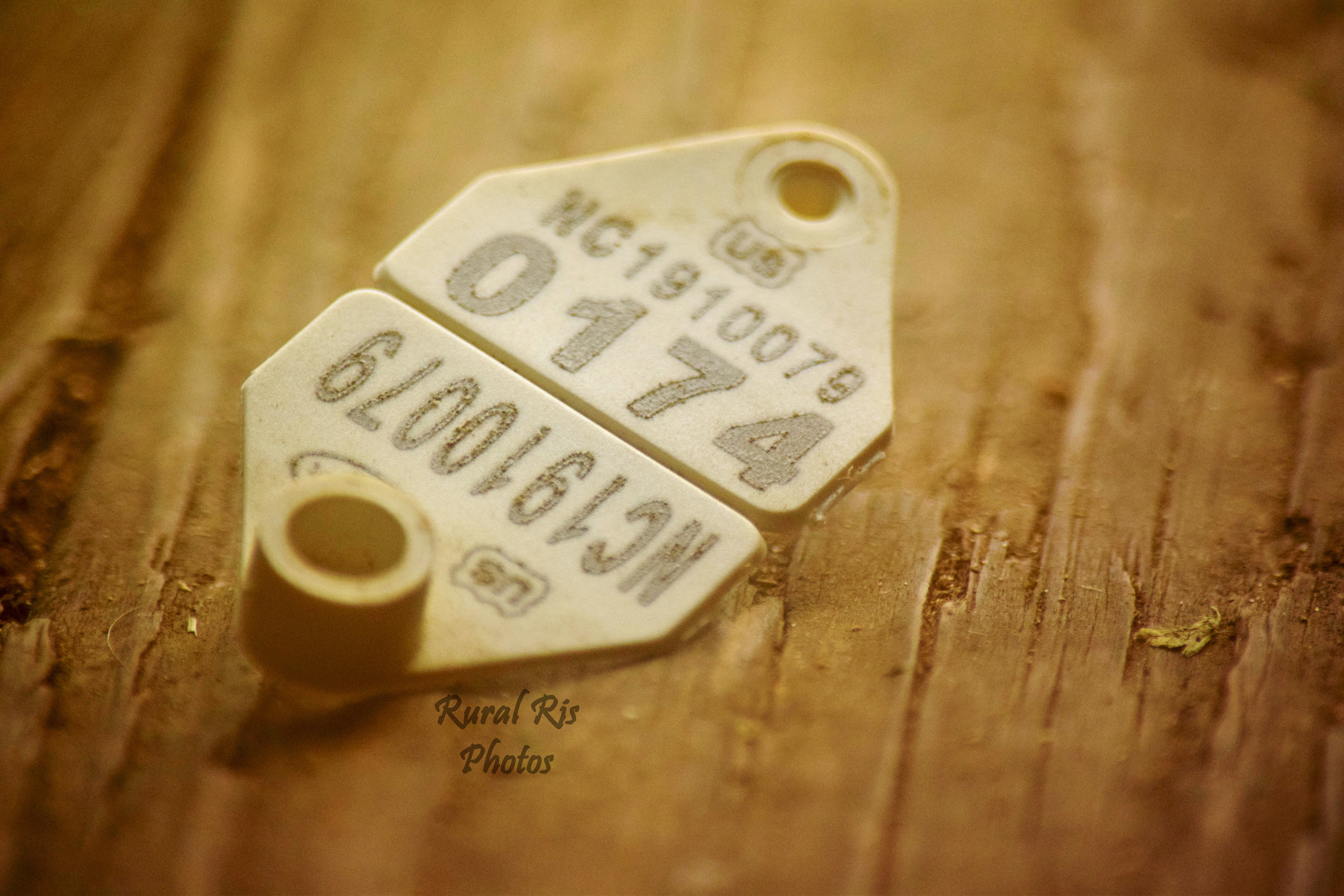



















 Rural Ris